On this page
- The six Bengali seasons
- Bangladesh weather month by month
- Winter (December–February): the easy choice
- Spring and pre-monsoon (March–May): festivals and heat
- Monsoon (June–September): green, wet and quiet
- Autumn (October–November): the shoulder season
- Region by region: when to go where
- Festivals and holidays that affect travel
- Prices, crowds and how to choose
- Questions
The short answer: November to February. Skies are clear, humidity drops, temperatures sit comfortably in the twenties, and every region — from the Sundarbans to the beach — is at its best. It’s also peak season for domestic tourism, so book Cox’s Bazar and Sundarbans cruises early.
The short version
- November to February is the best time for a first trip: dry, sunny and comfortably warm across the whole country.
- April and May are the hottest months, and the monsoon from June to September brings heavy rain, green landscapes and quieter hotels.
- Bengalis divide the year into six seasons, and each one has its own food, festivals and travel highlights.
- Eid dates move with the lunar calendar; check them before you book, because transport fills up and many businesses close.
The longer answer depends on what you want from the trip. Bangladesh is a low-lying river delta with a tropical monsoon climate, so the year swings between a dry season and a very wet one, with a short, intensely hot spell in between. Each has something to offer. The monsoon is the time for swamp forests, waterfalls and the haor wetlands of the north-east; spring is when the country celebrates its New Year; winter is the easy, reliable choice. This guide walks through the seasons as Bengalis themselves count them, gives you a month-by-month table, and then looks at the best timing for each region and the festivals and holidays that affect travel.
The six Bengali seasons
Western travellers tend to think of Bangladesh as having three seasons — cool, hot and wet — and for packing purposes that works. But the Bengali calendar divides the year into six ritu (seasons) of roughly two months each, and you will hear them mentioned in songs, poems, festival names and everyday conversation. Knowing them helps you understand why people get excited about particular foods, flowers and festivals at particular times of year. The dates below are approximate, because the Bengali months begin in the middle of the Western ones.
Grishma — summer (mid-April to mid-June)
The Bengali year opens in the heat. Grishma covers the months of Boishakh and Joishtho, and it is the hottest, most draining part of the year, with strong sun and high humidity before the rains arrive. Sudden evening storms break the heat now and then. The reward is fruit: mangoes, jackfruit — the national fruit — and lychees all come into season, and markets are piled high with them.
Barsha — the rains (mid-June to mid-August)
Barsha is the heart of the monsoon. Rain can fall for hours or days at a time, rivers rise and much of the low-lying countryside floods for weeks, as it does every year. This is also hilsa season, when the national fish is at its most plentiful. For travellers it means slow journeys, rough seas and real mud, but also dramatic skies and a landscape in every shade of green.
Sharat — early autumn (mid-August to mid-October)
The rains begin to ease and the sky clears between showers. White kash grass flowers along riverbanks and on sandbanks, a sight that is almost a national symbol of Sharat. Durga Puja, the biggest Hindu festival, usually falls in this season. It is still warm and humid, but the countryside is lush and the light is beautiful.
Hemanta — late autumn (mid-October to mid-December)
Hemanta is harvest time. The main rice crop is gathered and new rice is celebrated in villages with sweets and rice dishes in a tradition called Nobanno. The weather turns pleasantly dry and warm, the evenings start to cool, and this is the beginning of the main travel season.
Sheet — winter (mid-December to mid-February)
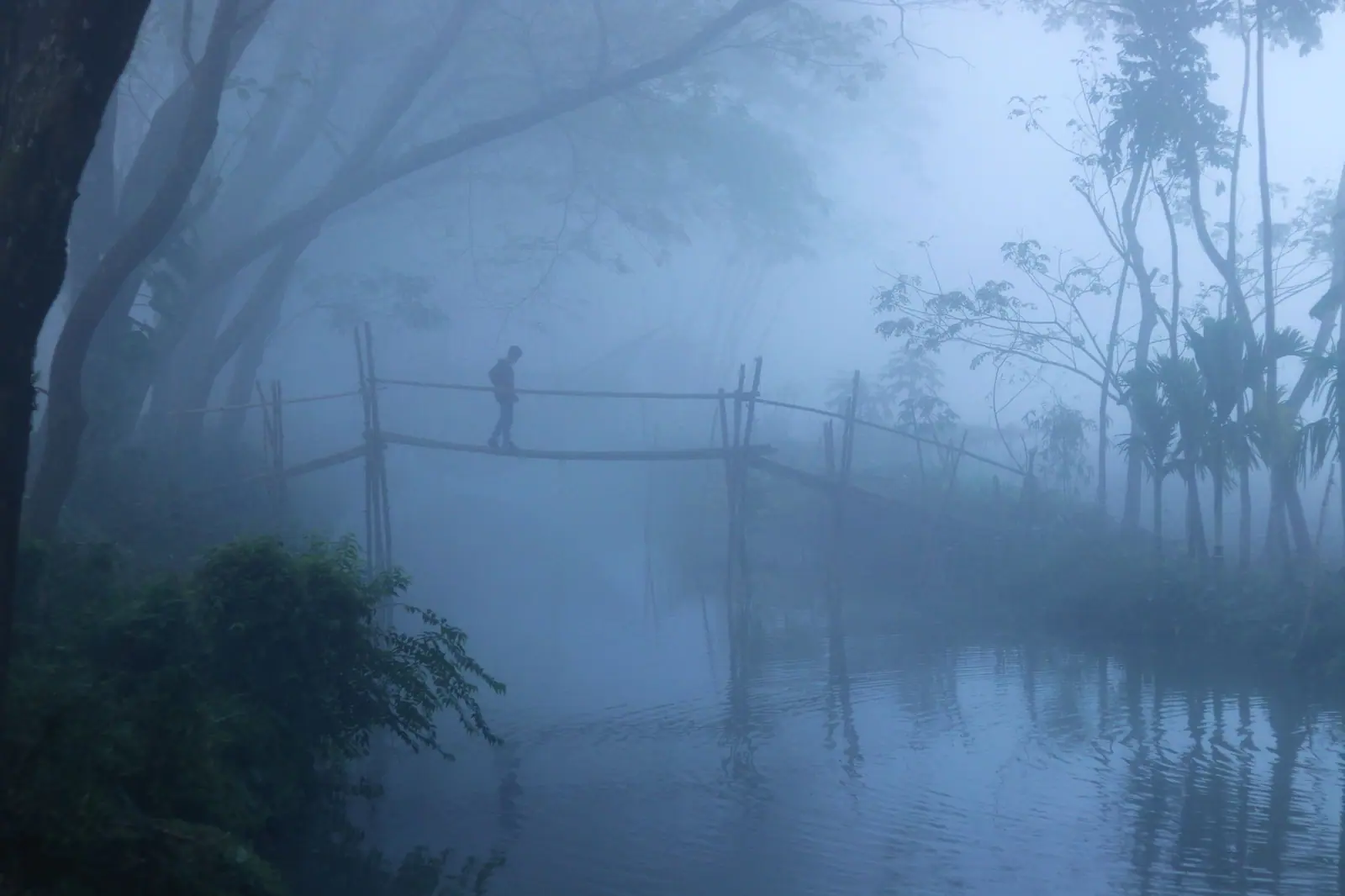
Sheet is the Bengali winter: cool, dry and sunny, with foggy mornings, especially in the north. It is the season of pitha (rice cakes) and date-palm jaggery, of migratory birds on the wetlands and of the busiest tourist months. Nights can be genuinely cold in the north-west.
Basanta — spring (mid-February to mid-April)
Basanta begins with Pohela Falgun, the first day of spring, when many people — especially women — wear yellow and orange and wear flowers in their hair. Trees such as the red silk-cotton (shimul) and the flame-red palash bloom. Temperatures climb steadily through March, and by early April the heat of Grishma is on its way again.
Bangladesh weather month by month
Use this table as a planning guide rather than a forecast. Temperatures are typical ranges for Dhaka and the central plains; the north-west runs cooler in winter and hotter in spring, and the coast and Sylhet are more humid. Monsoon timing varies from year to year by a couple of weeks either way.
| Month | Weather | Travel verdict | Worth knowing |
|---|---|---|---|
| January | Cool and dry; foggy mornings; nights can drop close to 10°C in the north | Excellent | Peak season; Sundarbans cruises and beach busy; fog can delay early flights and ferries |
| February | Dry, warm days, cool nights | Excellent | 21 February is Shaheed Dibosh / International Mother Language Day; Pohela Falgun in mid-February |
| March | Warming fast; mostly dry | Very good | Early March is a sweet spot; 26 March is Independence Day |
| April | Hot and humid, often in the high 30s; nor’wester storms | Fair | Pohela Boishakh on 14 April; cyclone risk on the coast begins |
| May | Hottest and most humid; storms; pre-monsoon showers | Fair to poor | Mango season starts in late May; cyclone risk continues |
| June | Monsoon arrives; heavy rain | For monsoon lovers | Sea trips rough; Sylhet’s waterfalls and haors start to fill |
| July | Wettest stretch; flooding in low areas | For monsoon lovers | Quiet hotels; hilsa season; slow road travel |
| August | Very wet, hot and humid | For monsoon lovers | Ratargul and Tanguar Haor at high water |
| September | Rain easing; still humid | Fair | Durga Puja often falls in late September or October |
| October | Drier and clearer; warm | Very good | Late October is a sweet spot; watch for cyclones in the Bay of Bengal |
| November | Dry, sunny, pleasantly warm | Excellent | Main season begins; cyclone risk lingers early in the month |
| December | Cool, dry and sunny | Excellent | 16 December is Victory Day; Christmas and New Year holidays are busy at resorts |
Winter (December–February): the easy choice
Cool, dry and sunny. Mornings can be foggy and surprisingly cold in the north, dipping close to ten degrees in January. This is prime time for Sundarbans cruises, birdwatching as migratory species arrive, and the beach. 16 December is Victory Day and 21 February is International Mother Language Day, both marked across the country.
Winter is when everything works. Roads are dry, rivers are calm, and boat trips into the mangroves of the Sundarbans run on a regular schedule. Tea country around Sreemangal is cool and green, ideal for walking, and Old Dhaka is at its most pleasant for exploring on foot. Wetlands such as Tanguar Haor and Baikka Beel draw large numbers of ducks and waders; you will see far more birds in these months than at any other time.
The flip side is demand. Bangladeshi families travel during the winter school holidays, so Cox’s Bazar hotels, Sundarbans cruises and domestic flights fill up, especially around weekends (Friday and Saturday), Victory Day and the end of December. Book a few weeks ahead for the beach and the mangroves.
Two winter dates have a special weight. On 16 December, Victory Day, the country marks the end of the 1971 Liberation War. On 21 February, Shaheed Dibosh, people gather from just after midnight at Shaheed Minar monuments across the country to lay flowers in memory of the students killed in 1952 while demanding recognition for the Bangla language; UNESCO later declared the date International Mother Language Day. It is a solemn, moving occasion. All through February, Dhaka also hosts the Ekushey Book Fair, a month-long book fair centred on the Bangla Academy area.
Spring and pre-monsoon (March–May): festivals and heat
Temperatures climb fast and can reach the high thirties or above by April. Afternoon storms known as nor’westers bring sudden wind and rain. Pohela Boishakh, the Bengali New Year on 14 April, fills the streets with colour. Mango season starts in late May, especially around Rajshahi.
March is still very good for travel, particularly the first half. By April the heat is intense, and the west of the country — around Rajshahi, Jashore and Chuadanga — tends to be hottest. Plan sightseeing for the early morning and late afternoon, rest in the middle of the day and drink more water than you think you need. Nor’westers, known locally as kalbaishakhi, can arrive with little warning: the sky darkens, strong winds pick up dust and debris, and a downpour follows. They are a real hazard on rivers, so avoid small boats if the sky looks threatening.
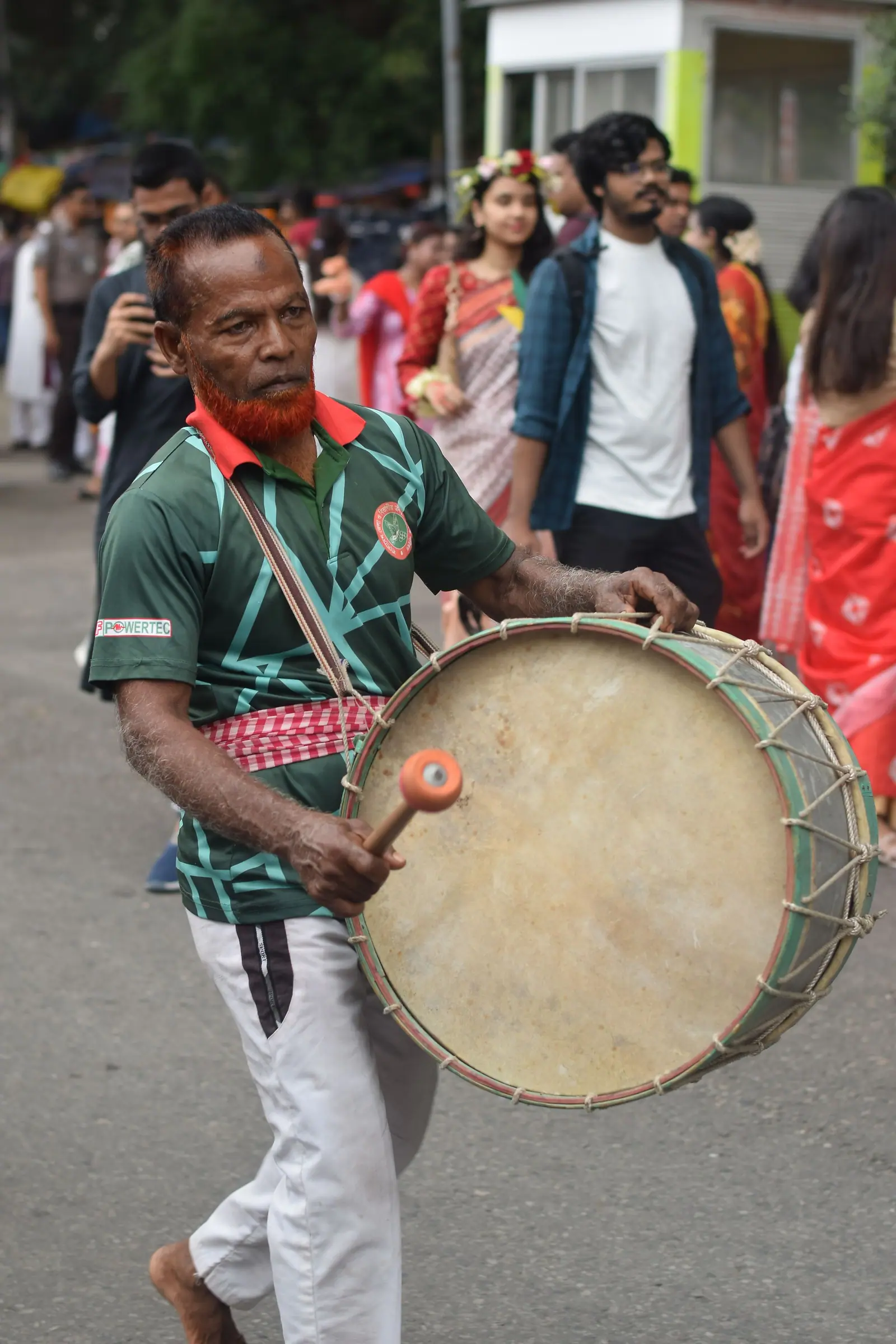
Pohela Boishakh is the reason many people choose this season. On 14 April, Dhaka wakes early for music under the trees of Ramna Park, and a large, colourful procession with giant masks and figures sets off from the Faculty of Fine Arts at Dhaka University. People wear red and white, eat panta bhat (soaked rice) with fried hilsa, and fairs spring up in towns and villages. It is a public holiday and is celebrated by Bangladeshis of all faiths.
The pre-monsoon months also bring the first cyclone season. Cyclones that form in the Bay of Bengal can strike the coast in April and May. Bangladesh has an extensive warning system and cyclone shelters, and most travellers are never affected, but if you are heading to the coast, Cox’s Bazar or the islands, keep an eye on the weather and follow the advice of your hotel and local authorities.
Monsoon (June–September): green, wet and quiet
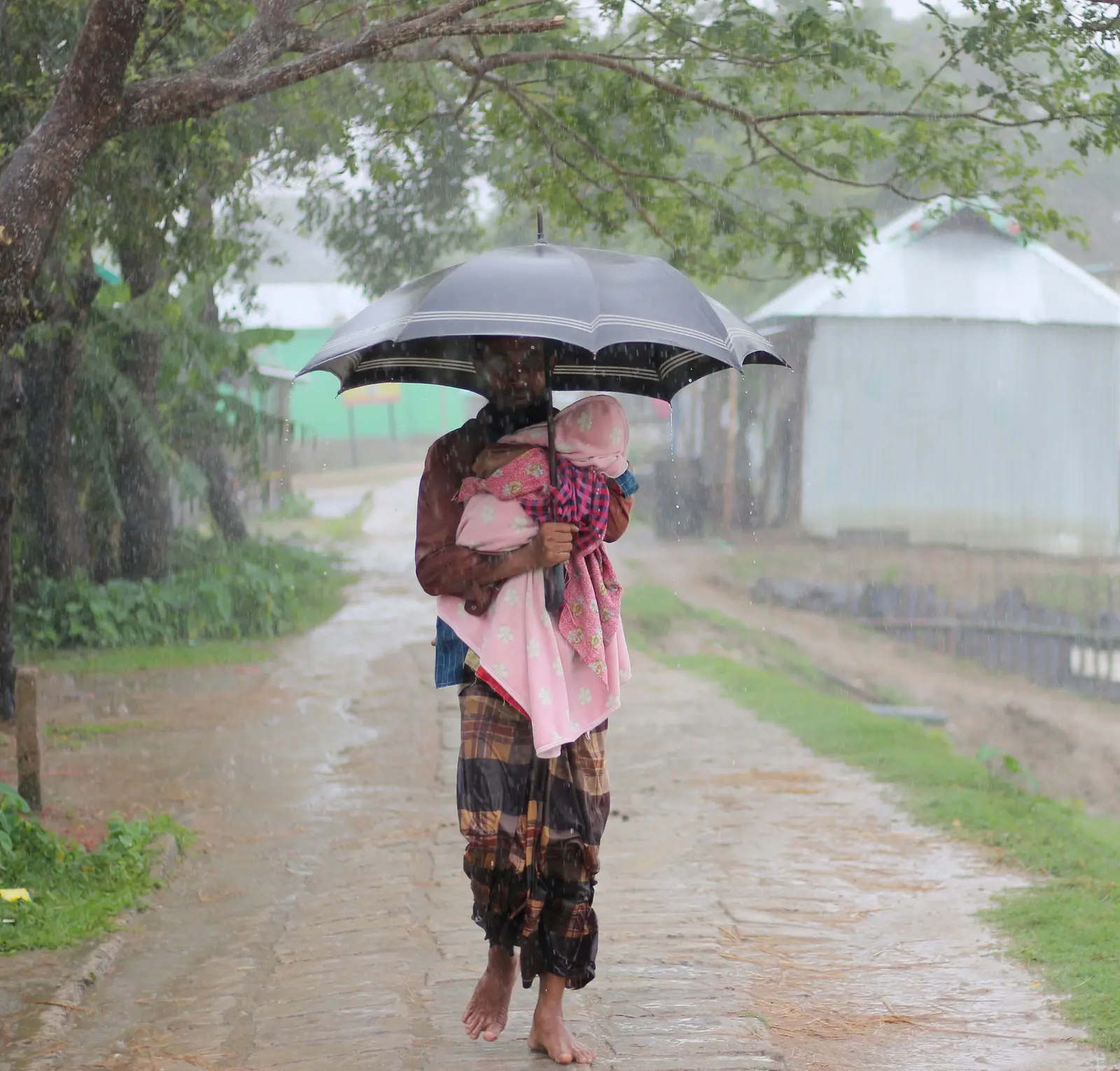
Heavy rain, high rivers and the quietest hotels of the year. Travel is slower and some roads flood, but the countryside is spectacularly green and the swamp forests and waterfalls of Sylhet come alive. Sea trips and the Sundarbans are rough.
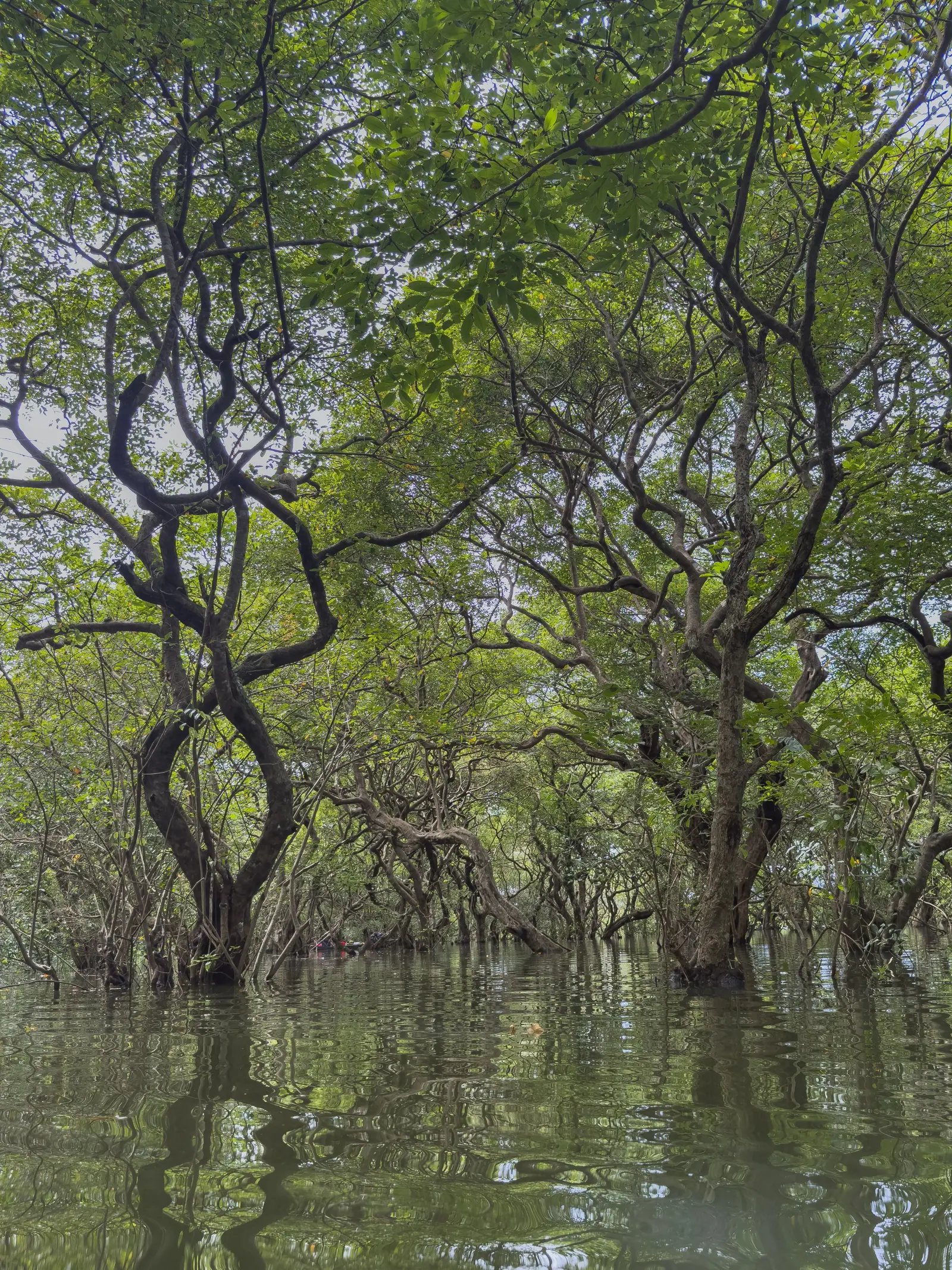
The monsoon is not for everyone, but it is the season that shapes the country, and some places only make sense in it. Ratargul, Sylhet’s freshwater swamp forest, is best explored by small boat when the water is high. Tanguar Haor, a huge seasonal wetland near the Indian border, becomes an inland sea that people explore on traditional houseboats. Waterfalls in the Sylhet hills and around the Chittagong Hill Tracts are at full force, and the tea gardens of Sreemangal are at their most vivid.
Rain does not usually fall all day every day; a typical pattern is heavy bursts followed by breaks. Still, expect delays. Roads in low-lying areas flood, landslides can close hill roads in the south-east, and urban streets in Dhaka and Chattogram can be waterlogged after a big downpour. Domestic flights and trains are the most reliable ways to move between regions. On the coast the sea is rough and dangerous: swimming at Cox’s Bazar is not advisable in this season, and boat services to some islands are suspended.
The Sundarbans are also affected. The Forest Department closes the forest to visitors and fishing for three months each summer for the breeding season (1 June to 31 August in 2026), and the main cruise season runs from about autumn to spring. Check with operators before planning a mangrove trip in or near the monsoon.
Autumn (October–November): the shoulder season
The rains ease, skies clear and harvest begins. Durga Puja usually falls in September or October and is the biggest Hindu festival of the year. Keep an eye on forecasts: the Bay of Bengal can produce cyclones in October and November, as it can in April and May.
From mid-October onwards the weather becomes reliably pleasant, and the country is still green after the rains. Hotels are quieter than in December and January, and the wetlands still hold enough water for boat trips. Durga Puja is a joyful time to be in Dhaka: elaborate clay images of the goddess are displayed in decorated pavilions called mandaps, including at Dhakeshwari Temple and across Old Dhaka, and visitors are generally welcome to look around respectfully. The festival ends with the images being carried to rivers and immersed.
Late in the season, after the rice harvest, villages celebrate Nobanno with new-rice sweets and pitha. By November the main tourist season is under way, and cruise operators in the Sundarbans are back in full swing.
Region by region: when to go where
Bangladesh is compact, but its regions peak at different times. If you have flexibility, match your trip to the places you most want to see.
- Dhaka: November to February for walking Old Dhaka and the river; avoid the April–May heat if you can. Traffic is lighter during Eid, when much of the city goes home, but many shops and restaurants close. See where to stay in Dhaka.
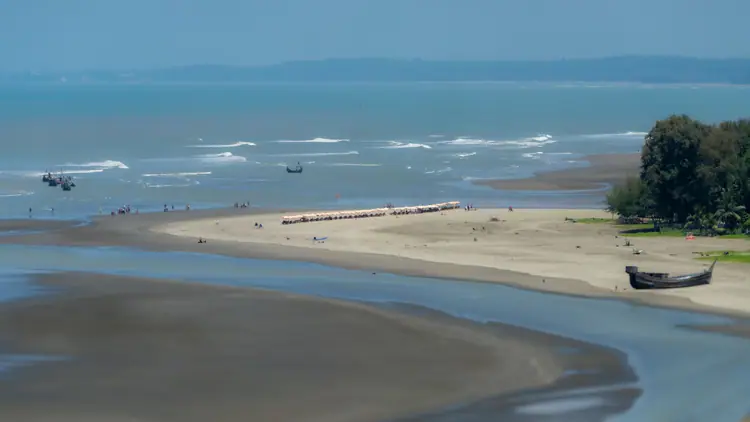
- Cox’s Bazar and the coast: November to March for calm seas and sunshine. The monsoon brings rough, dangerous surf. Access to Saint Martin’s Island has been restricted by the government in recent seasons, with limited months and visitor numbers — check the current rules before you plan around it.
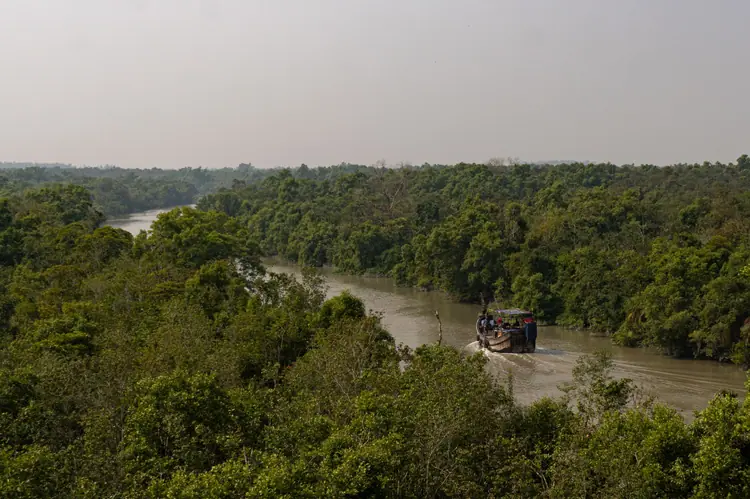
- Sundarbans and Khulna: roughly November to February is best for calm water and wildlife spotting. It closes to visitors for the summer breeding season, June to August. Base yourself in Khulna.
- Sylhet and Sreemangal: two good seasons. Winter is ideal for tea-garden walks and birding; the monsoon is best for Ratargul, Tanguar Haor, waterfalls and the rivers near Jaflong. See Sylhet.
- Chittagong Hill Tracts: October to March for dry trails and clear views. Rain makes hill roads slippery and prone to landslides. Foreigners need permits for parts of the region, so travel with an experienced operator.
- Rajshahi and the north-west: winter for the archaeological sites around Paharpur and Mahasthangarh, late May to July for mangoes around Rajshahi and Chapai Nawabganj. Expect fierce heat in April and May and cold, foggy mornings in January.
If you are trying to fit several regions into one trip, the 10-day itinerary works best between November and March, and the getting around guide explains how flights, trains and launches connect the regions.
Festivals and holidays that affect travel
Public holidays can make a trip memorable, but they also change how the country works. Fixed-date national days are easy to plan around; religious festivals are not, because they follow the Islamic lunar calendar or the Hindu calendar.
- 21 February — Shaheed Dibosh / International Mother Language Day. Solemn ceremonies at Shaheed Minar monuments, starting just after midnight. Central Dhaka around the Central Shaheed Minar is very crowded.
- 26 March — Independence Day. A public holiday with official ceremonies and flags across the country.
- 14 April — Pohela Boishakh. The Bengali New Year, celebrated with processions, music, fairs and food. Streets in central Dhaka are packed and some roads close.
- Durga Puja. Usually September or October. Pavilions across Hindu neighbourhoods and towns; the final day of immersion processions is the busiest.
- 16 December — Victory Day. Commemorations, parades and a busy domestic holiday weekend at the beach and in tourist areas.
- Eid al-Fitr and Eid al-Adha. Eid al-Fitr and Eid al-Adha move each year with the lunar calendar. Transport is packed and many businesses close for several days.
Because the Islamic year is about eleven days shorter than the solar year, Ramadan and both Eids arrive roughly eleven days earlier each year, and the exact date depends on the sighting of the moon. In the days before each Eid, millions of people travel from the cities to their home villages. Buses, trains, launches and flights sell out, roads are heavily congested, and fares rise. During the holiday itself, Dhaka becomes strikingly quiet, but many shops, restaurants and offices close for several days. Eid al-Adha also involves the sacrifice of animals, and you will see cattle markets and street slaughter in cities and villages around the festival.
- During Ramadan, restaurants may open only after sunset outside hotels — but the iftar markets are a highlight.
Ramadan itself is a rewarding time to visit if you are relaxed about schedules. Office hours are shortened, the traffic peaks shortly before sunset as people rush home to break the fast, and evening iftar markets, such as the one at Chawkbazar in Old Dhaka, are a feast for the senses. Be discreet about eating, drinking and smoking in public during daylight hours. Our food guide has more on what to try.
Prices, crowds and how to choose
Hotel prices in Bangladesh follow demand rather than weather. The highest rates are in the winter peak, around Victory Day and New Year, and during long holiday weekends at Cox’s Bazar and Sylhet. The monsoon is usually the quietest period, and rates outside Dhaka often ease. Business hotels in Dhaka are less seasonal and tend to be busiest on weekdays. Rates change often, so treat any figures you see as indicative and compare when you book.
Here is a simple way to decide:
- First trip, want everything to work: November to February.
- Want good weather with fewer crowds: late October, November, or the first half of March.
- Want festivals and culture: February for Mother Language Day and the book fair, or mid-April for Pohela Boishakh.
- Want green landscapes, wetlands and quiet hotels: July to September, accepting slower travel and rain.
- Want to avoid: April and May if you dislike heat, and the days immediately before Eid for long-distance travel.
Whatever season you choose, pack for it: light cotton for the heat, a warm layer for winter mornings in the north, and quick-dry clothes and sandals for the monsoon. Our guide to what to wear in Bangladesh covers it in detail, and it is worth reading is Bangladesh safe? for weather-related safety advice, including cyclones and flooding.
Questions and answers
What is the best month to visit Bangladesh?
For most travellers, December or January is the safest bet: dry, sunny days, cool evenings and calm rivers for Sundarbans cruises. If you prefer fewer crowds and slightly lower prices, aim for November or the first half of March, when the weather is still very good but domestic tourism is less intense than over the winter holidays.
Is it worth visiting Bangladesh during the monsoon?
Yes, if you are flexible and want to see the country at its greenest. Sylhet’s swamp forests, haor wetlands and waterfalls are at their most impressive, and hotel prices drop. The trade-offs are slower travel, flooding in low-lying areas, rough seas on the coast, dengue risk and possible closures in the Sundarbans, so build in spare days.
When is Pohela Boishakh?
Pohela Boishakh, the Bengali New Year, is celebrated in Bangladesh on 14 April every year. It is a public holiday with processions, music, fairs and special food such as panta bhat and fried hilsa. Central Dhaka is extremely busy on the day, so arrive early, travel light and expect road closures around the university area and Ramna Park.
When is Eid in Bangladesh?
Eid al-Fitr and Eid al-Adha follow the Islamic lunar calendar, so they move about eleven days earlier each year and the exact day depends on the moon sighting. Look up the expected dates for your travel year before booking. Transport is extremely busy in the days before each Eid and many businesses close for several days around them.
When is cyclone season in Bangladesh?
Cyclones from the Bay of Bengal are most likely in two windows: April to May before the monsoon, and October to November after it. Most travellers are never affected, but if you plan to be on the coast, at Cox’s Bazar or on the islands during those months, follow forecasts and the instructions of your hotel and local authorities.
How cold does Bangladesh get in winter?
Daytime temperatures in winter are usually comfortable and in the twenties, but nights and early mornings can feel cold, especially in the north and north-west, where January lows can dip close to ten degrees or below during cold spells. Dense fog is common on winter mornings. A fleece or light jacket is enough for most travellers.
When is Ramadan in Bangladesh in 2027?
It is expected to begin around 8 or 9 February 2027 and to end with Eid al-Fitr around 10 March, depending on the sighting of the moon. That places it inside the main dry season. Sights still open, but with shorter hours, daytime restaurants are fewer, and trains, buses and flights fill up in the last week before Eid.
Is Bangladesh too hot to visit in April?
It is the hardest month for sightseeing, with temperatures often in the high thirties and sudden evening storms, but it can be managed. Start at dawn, rest indoors in the middle of the day and choose an air-conditioned base. Pohela Boishakh on 14 April is the reward. If heat affects you badly, choose November to early March instead.