On this page
Distances in Bangladesh are short but journeys can be slow, so the right transport makes a big difference. As a rule: fly for long hops, take the train when you can get an AC seat, and use cars or ride-hailing for everything in between.
The short version
- Fly for long hops: most domestic flights from Dhaka take under an hour.
- Take the train when you can get an AC seat, and book as soon as sales open.
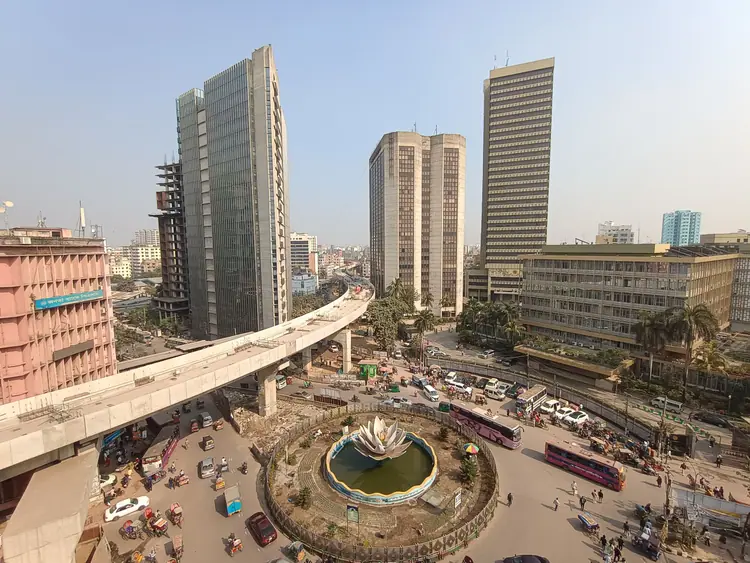
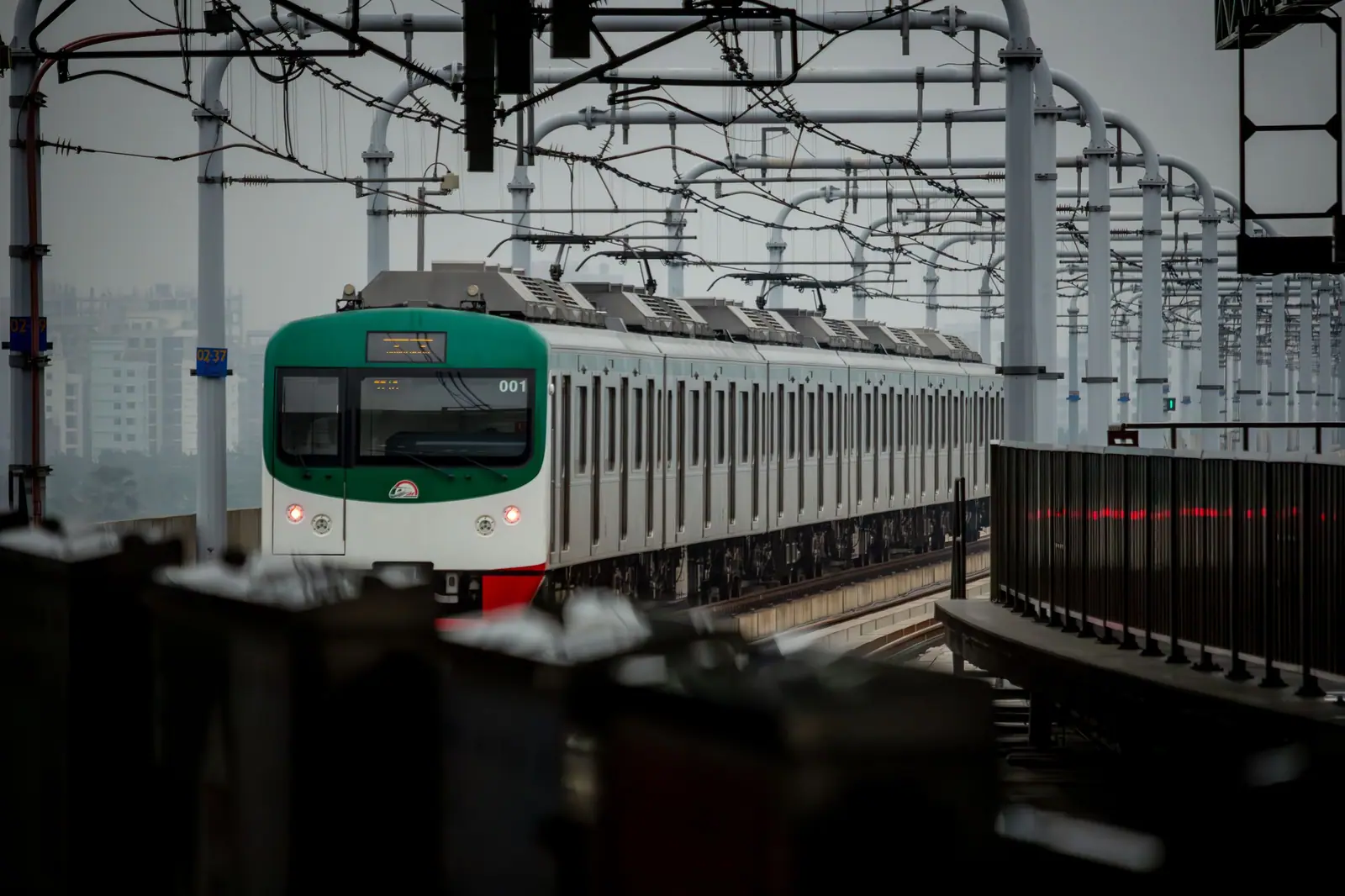
- In Dhaka, the MRT Line 6 metro and the elevated expressway bypass the worst traffic.
- Agree fares before you ride a CNG or cycle rickshaw, and carry small notes.
The country is a river delta, and that shapes everything. Roads funnel onto a handful of big bridges, traffic in and around Dhaka can add hours to any trip, and the rivers that once made boats the main way to travel are still crossed by ferries and launches every day. This guide goes mode by mode, from the fastest to the slowest, then covers city transport and a few rules that make every journey easier.
Choosing the right transport
Most first-time visitors use a mix: a couple of domestic flights for the longest legs, one train journey for the scenery, and cars, ride-hailing and rickshaws in town. The table compares the main options on the routes travellers use most. Times are typical and can stretch a lot around holidays; costs are rough per-person planning ranges that change with fuel prices and season, so check locally.
| Mode | Best for | Typical time from Dhaka | Approximate cost (check locally) | How to book |
|---|---|---|---|---|
| Domestic flight | Cox’s Bazar, Sylhet, Jashore (for Khulna), Chattogram | Under 1 h in the air | Around BDT 4,000–12,000 (US$35–100) one way | Airline websites and apps, agents |
| Intercity train, AC | Sreemangal, Sylhet, Chattogram, Cox’s Bazar | About 4–5 h to Sreemangal; overnight-length to Cox’s Bazar | Often under BDT 1,500 (US$12) for an AC seat | Bangladesh Railway e-ticketing or station counters |
| AC coach | Any city pair, especially Khulna | About 4–5 h to Khulna via the Padma Bridge | Roughly BDT 800–2,500 (US$7–21) | Company counters, online platforms |
| Overnight launch | Barishal and the southern delta | Overnight | Cabins roughly BDT 1,000–5,000 (US$8–40) | Sadarghat ticket offices, often on the day |
| Car and driver | Day trips, rural areas, families | Varies | Roughly BDT 6,000–12,000 (US$50–100) a day | Hotels, tour operators |
Domestic flights
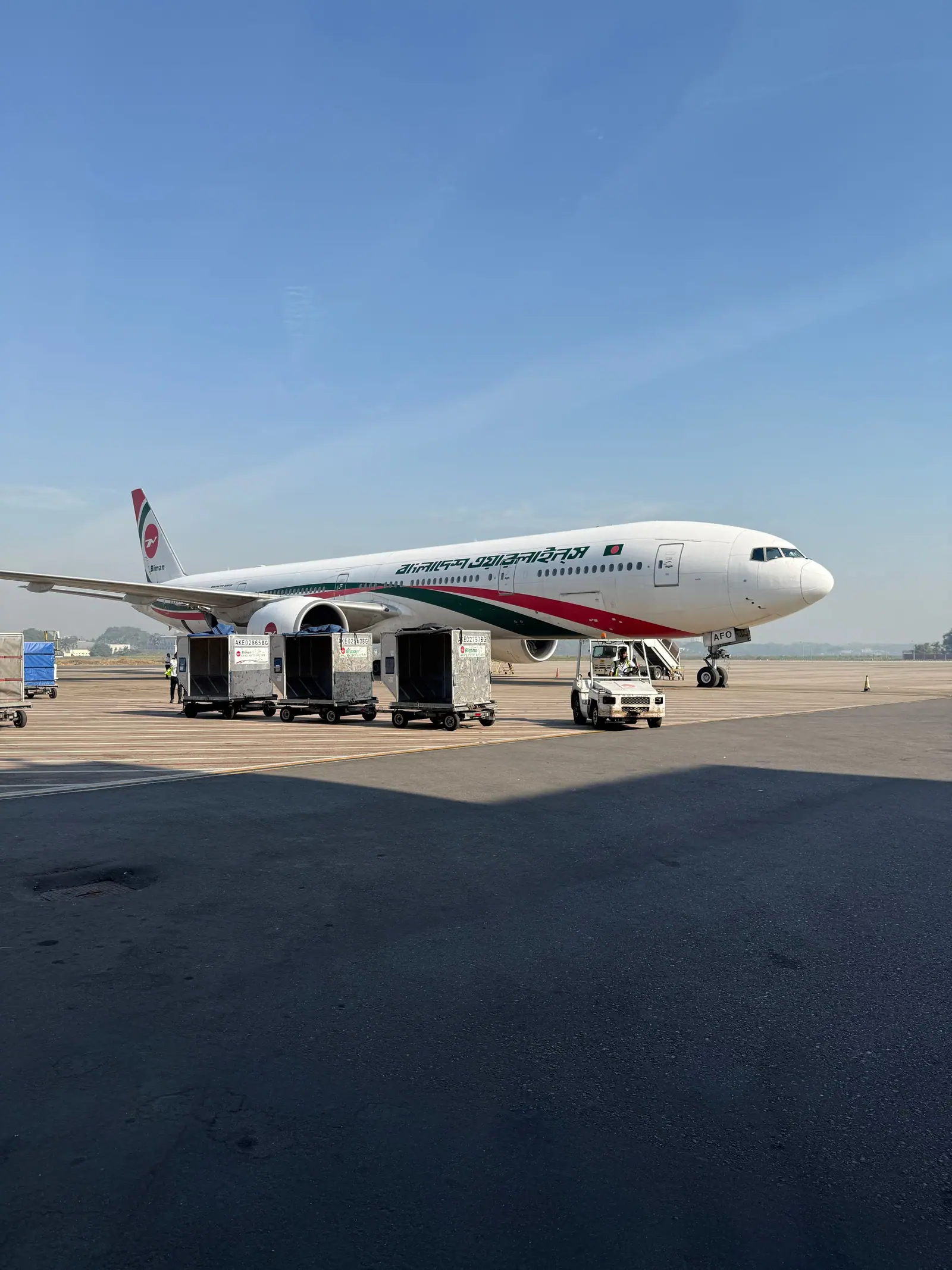
Biman Bangladesh Airlines, US-Bangla, Novoair and Air Astra connect Dhaka with Cox’s Bazar, Chattogram, Sylhet, Jashore, Saidpur and Rajshahi, with a thinner service to Barishal at times. Most flights take under an hour and are good value; book online and carry your passport.
Flying is the obvious way to save time on the two longest trips in a typical itinerary: Dhaka to Cox’s Bazar and Dhaka to Sylhet. For the Sundarbans, Jashore is the nearest airport to Khulna, though the road transfer of roughly one and a half to two hours means driving all the way from Dhaka is often just as quick now the Padma Bridge is open. Saidpur and Rajshahi serve the north and west. Barishal has had a thin, on-and-off service, so check before relying on it.
Domestic flights in Bangladesh nearly all run through Dhaka, so going from one region to another — Sylhet to Cox’s Bazar, for example — usually means connecting in the capital. Leave plenty of time between flights, because delays happen, especially in fog in mid-winter mornings and in monsoon storms. Fares rise sharply around Eid and in the December holiday peak, when Bangladeshis travel home or to the beach.
Trains
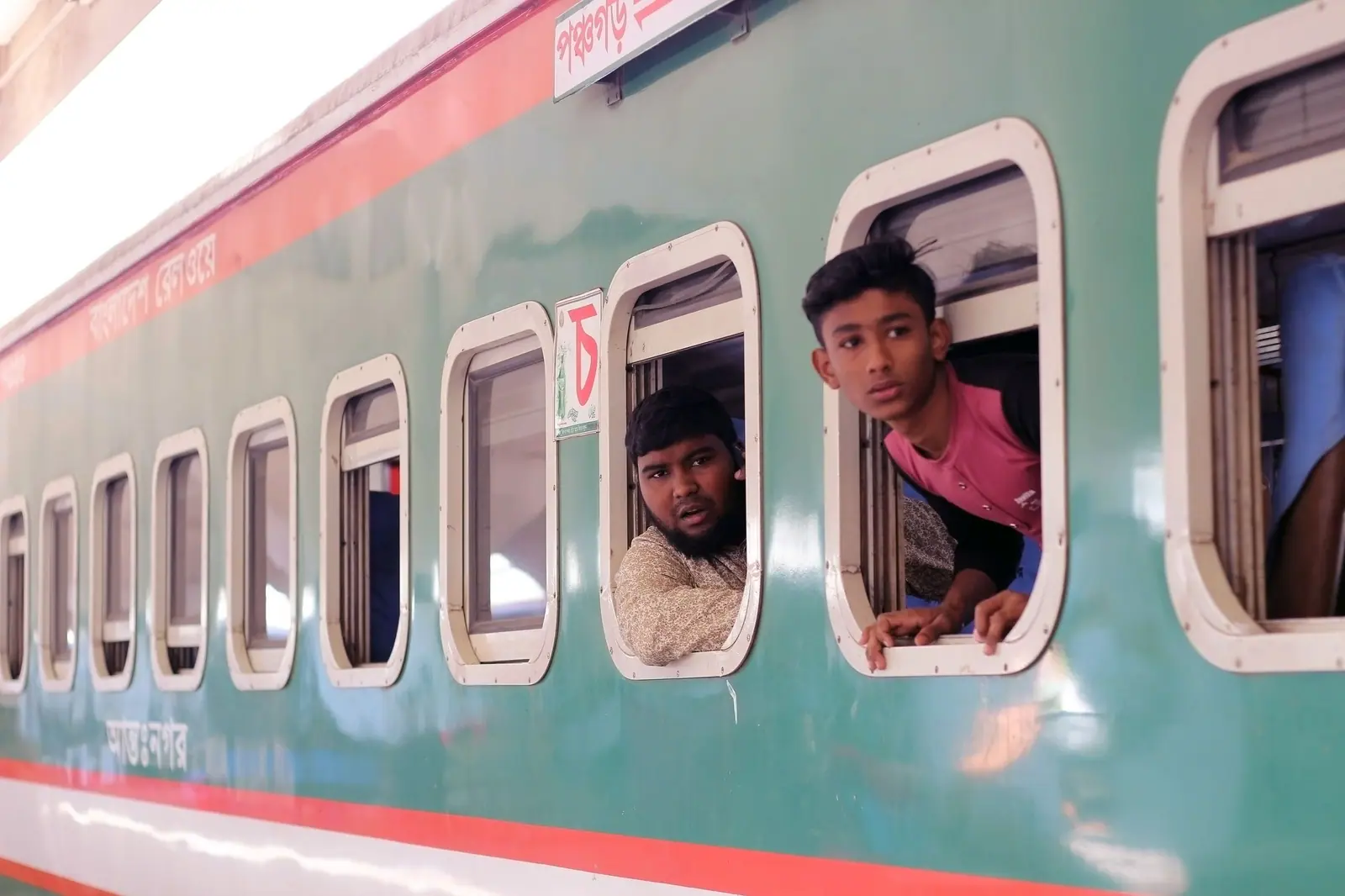
Bangladesh Railway runs comfortable intercity trains to Sylhet, Chattogram, Cox’s Bazar, Rajshahi and Khulna. Choose AC chair or AC berth classes and book through the official online ticketing service as soon as sales open — popular routes sell out, especially near holidays.
Trains are the most relaxed way to see the countryside. The line north-east to Sreemangal and Sylhet passes through rice fields, ponds and villages, and since a new line reached Cox’s Bazar in late 2023 you can ride the rails all the way to the beach. In Dhaka, most intercity services start at Kamalapur station in the south-east of the city, and many also stop at Airport station in the north, which saves a long crosstown drive if you are staying in Gulshan, Banani or Uttara.
Classes worth knowing
- AC berth — sleeper compartments on some longer and overnight trains; the most comfortable option, and the first to sell out.
- AC seat / AC chair — reclining seats in an air-conditioned carriage, listed as Snigdha (AC chair) or the slightly roomier AC_S (AC seat). The best choice for daytime trips.
- Non-AC chair — numbered seats with fans and open windows; simpler and busier, fine for short hops in the cool season.
Tickets are sold on the official e-ticketing site, eticket.railway.gov.bd, and its app, and at station counters. Sales open a fixed number of days before departure and the best seats on popular routes go quickly. Online registration is designed around Bangladeshi national ID details, so many foreign visitors find it easier to buy at a station counter with their passport, or ask their hotel or a local agent to help. Rules change, so check the current requirements before you rely on one method.
How to book train and bus tickets
- 1 · Check the route and train
Look up the trains on your route on the official e-ticketing site or ask your hotel. Note the train name, departure time and which Dhaka station it uses (Kamalapur or Airport).
- 2 · Note when sales open
Tickets are released a set number of days before travel. Find out the release day for your date and plan to buy that day for AC seats on popular routes.
- 3 · Choose a way to buy
Register online if the system accepts your details, or buy at a station counter with your passport. Hotels and local agents can also buy on your behalf for a small fee.
- 4 · Pick your class
Choose AC berth for overnight trips or AC seat for daytime journeys. If AC is sold out, a non-AC chair is acceptable for shorter hops in winter.
- 5 · Keep the ticket and passport together
Save the e-ticket or keep the printed one, and carry the passport used to book. Staff may check both.
- 6 · For buses, book with a known company
Buy AC coach tickets at the operator’s own counter or through an established online platform, choose a seat away from the back axle, and confirm the boarding point.
- 7 · Arrive early
Get to the station or bus counter 30–45 minutes ahead. Platforms and counters are crowded and announcements are mostly in Bangla, so ask staff to point you to the right train or coach.
Buses
AC coaches from established companies run between all major cities and are the budget long-distance option. Overnight buses save a hotel night but can be tiring; road safety standards vary.
Long-distance coaches leave from big terminals such as Gabtoli, Sayedabad and Mohakhali, but the better AC companies also run their own counters around the city, which are much easier to use. Ask your hotel which operators they trust on your route, buy a seat in advance, and avoid non-AC buses for long journeys. Since the Padma Bridge opened in 2022, coaches to Khulna and the south-west take the bridge and are much quicker than they used to be. Dhaka’s city buses, by contrast, are crowded and hard to navigate without Bangla; most visitors skip them.
River launches and ferries
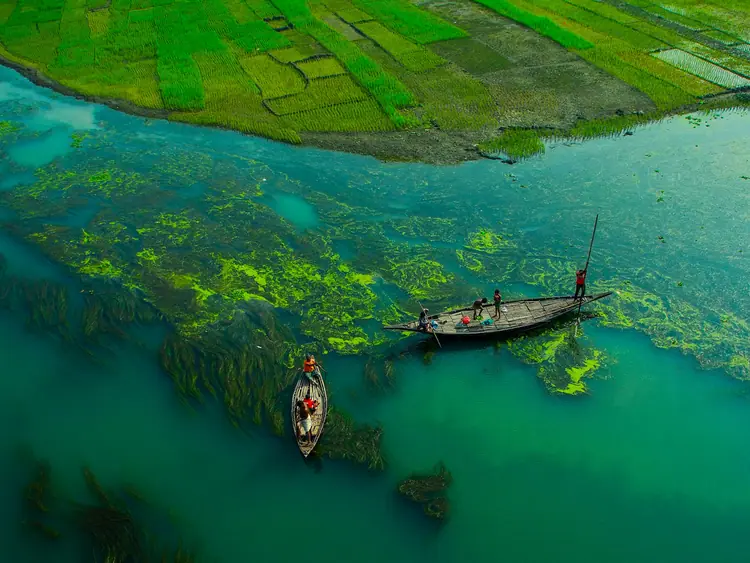
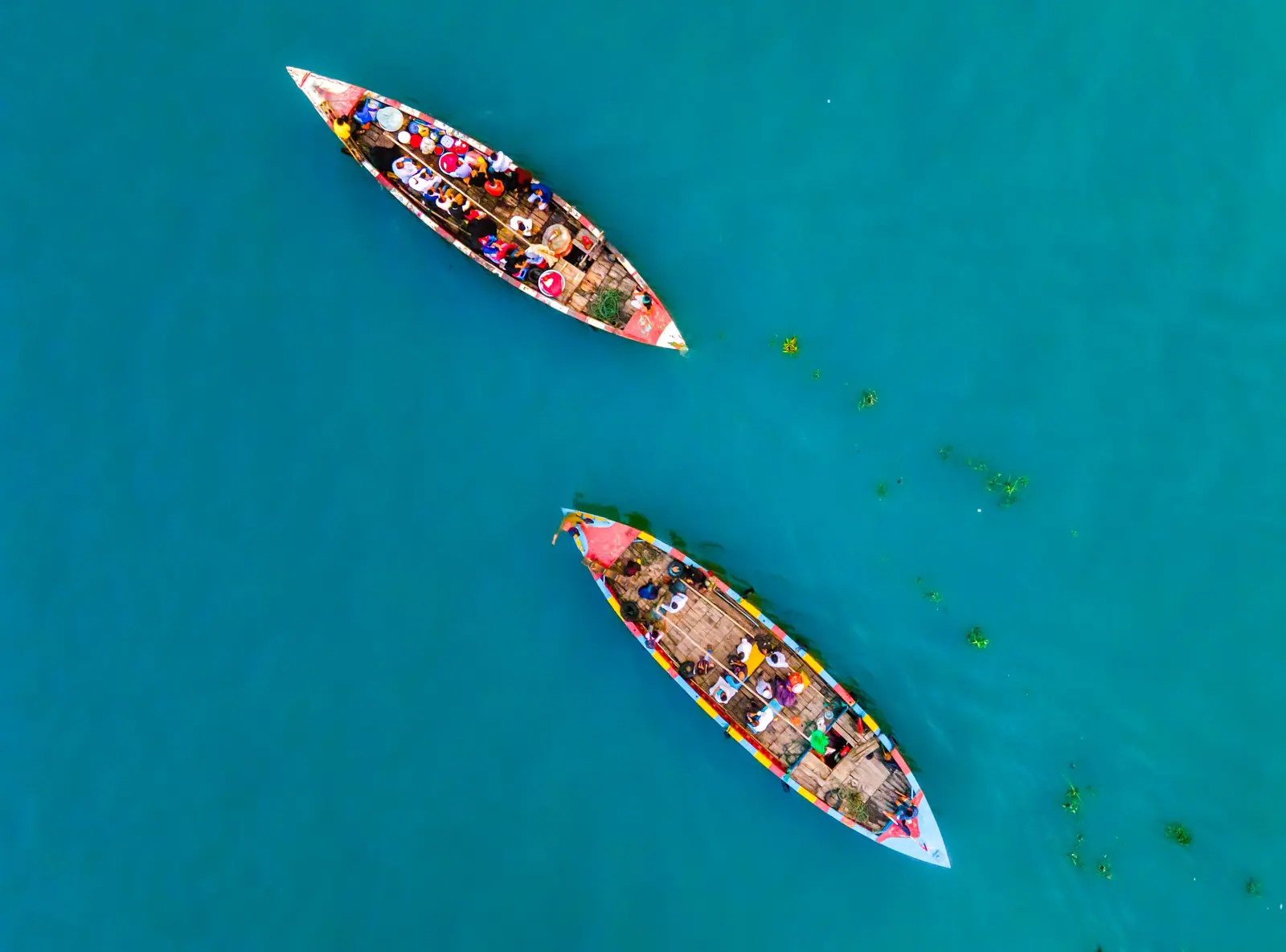
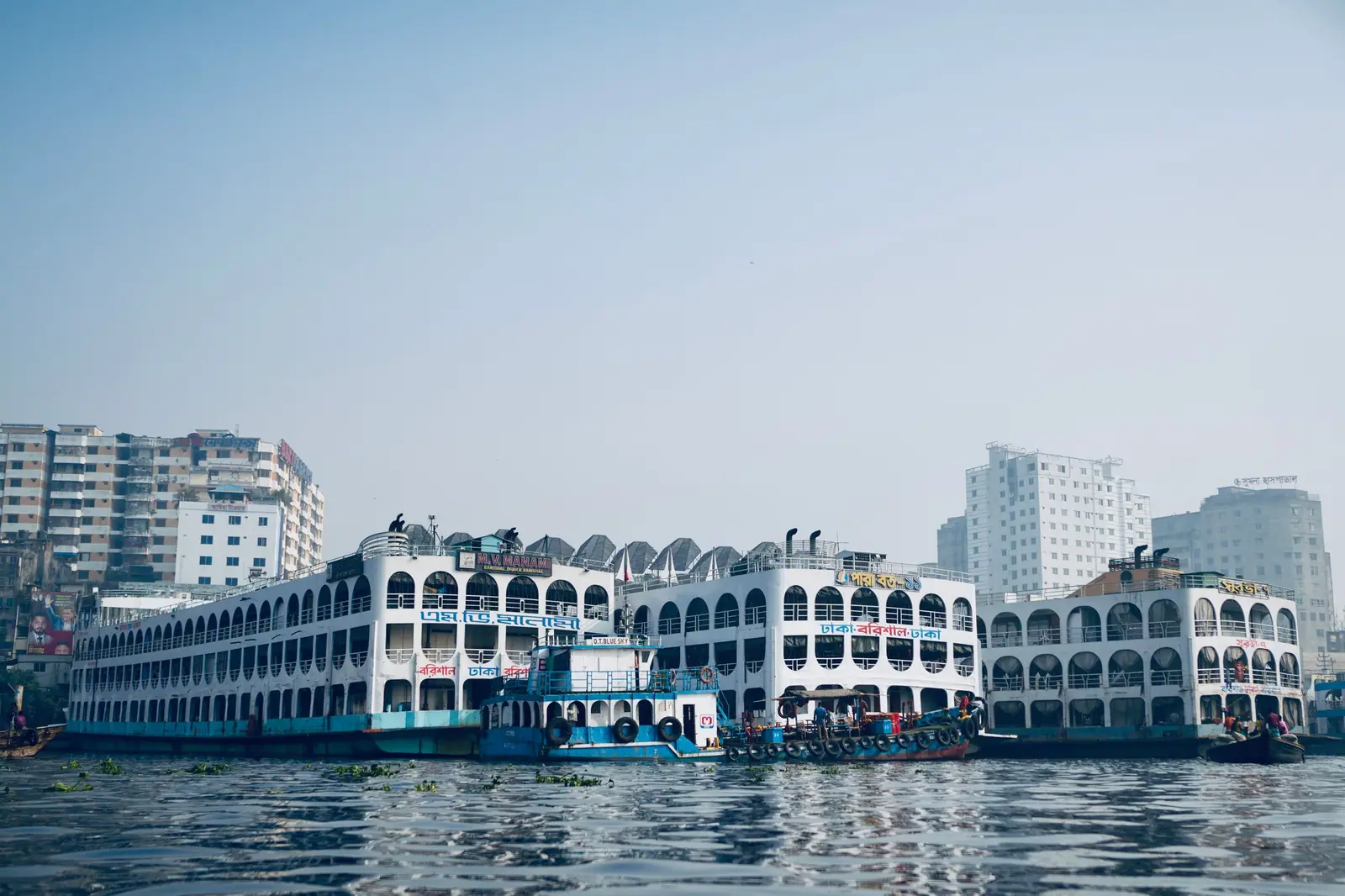
Large overnight passenger launches sail from Sadarghat in Dhaka to Barishal and other southern towns. Book a private cabin for a memorable night on the river.
These multi-deck boats leave Sadarghat in the evening and arrive early the next morning. Deck passengers spread mats on the open floor; cabins range from simple singles to larger family and VIP rooms with private bathrooms. Cabins can sell out on weekends and before holidays, so buy your ticket in advance, ideally with help from a hotel or local contact. Arrive early, as Sadarghat is chaotic at departure time and it can take a while to find the right boat. New bridges mean fewer people use the launches than before, so check which routes are running when you travel.
For shorter crossings you will meet country boats and small ferries everywhere, including at Sadarghat itself, where wooden boats row passengers across the Buriganga all day. In the Sundarbans, boats are the only way in: visitors join organised cruises from Khulna or Mongla, described in our Sundarbans boat trip guide.
In the cities
- Dhaka metro (MRT Line 6) runs between Uttara and Motijheel and skips the traffic.
- Ride-hailing apps such as Uber and Pathao work in Dhaka, Chattogram and Sylhet.
- CNGs — green auto-rickshaws — need a fare agreed before you set off.
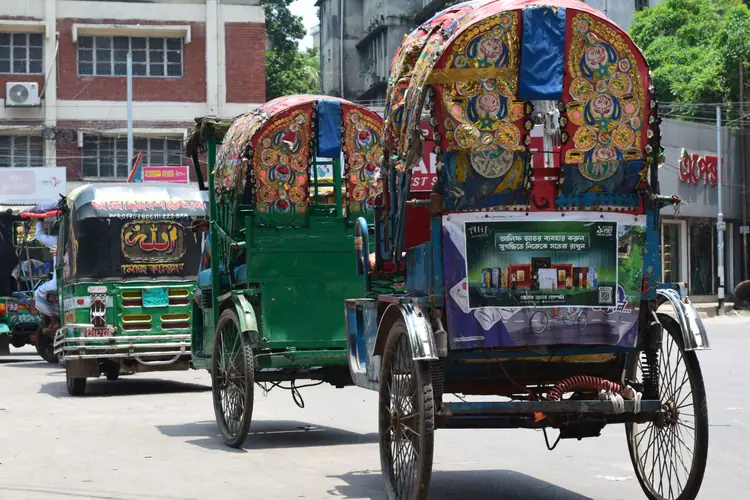
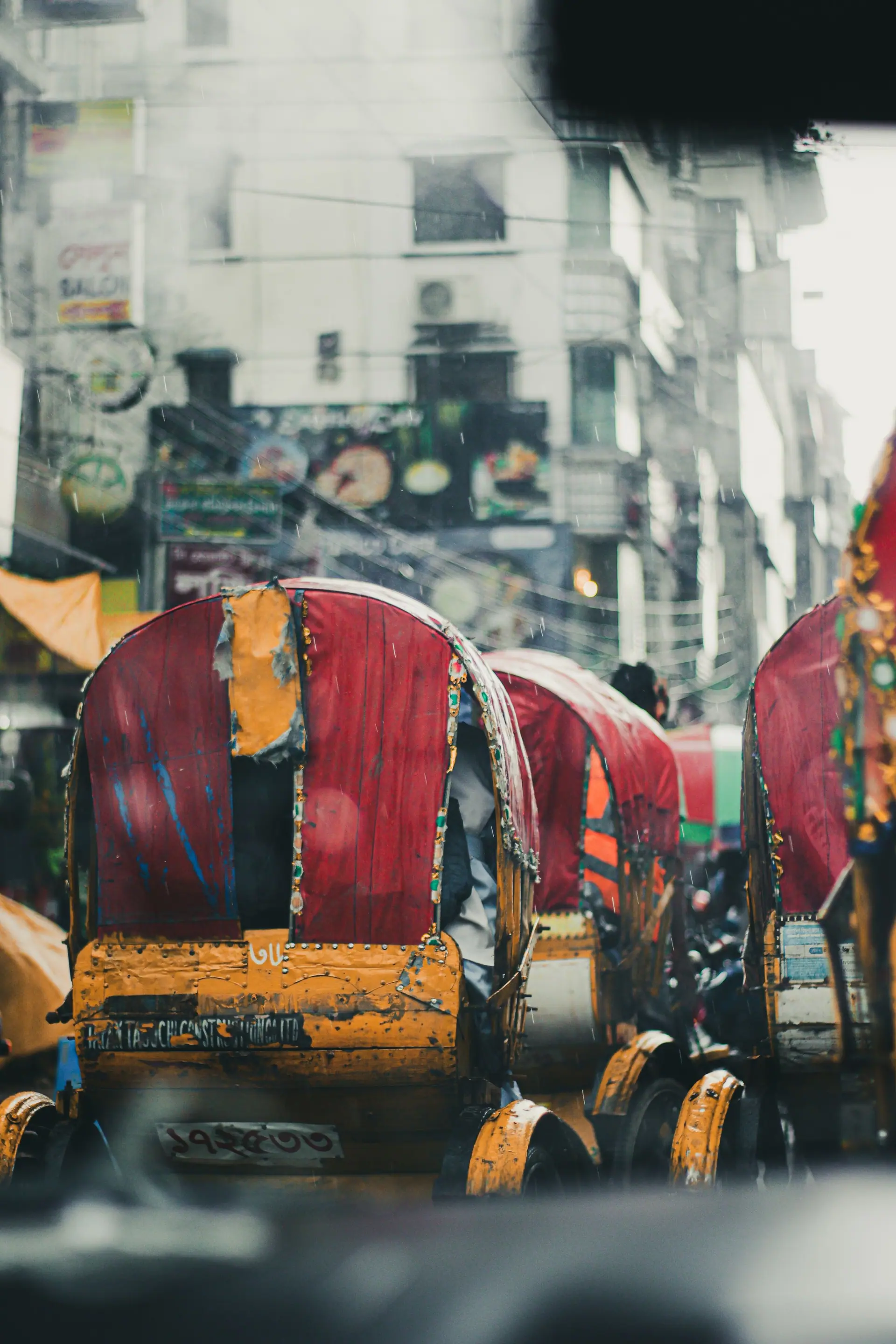
- Cycle rickshaws are ideal for short trips and the old city; agree the price first.
Dhaka metro and the elevated expressway
MRT Line 6 is an elevated line running north–south from Uttara through Mirpur, Agargaon, Farmgate, Karwan Bazar, Shahbagh and the university area to Motijheel. Trains are clean, air-conditioned and frequent at busy times, and fares are low and depend on distance. Buy single-journey tickets from machines or counters, or a stored-value card if you will ride often. Hours are shorter on Fridays; check current times at the station. The line does not serve Gulshan or Banani directly, so from those areas you will need a short ride to the nearest station.
The Dhaka Elevated Expressway is a toll road on pillars above the main north–south corridor, starting near the airport and running towards the centre, with ramps down to areas such as Banani, Mohakhali and Farmgate. Cars pay a small toll, and on a bad traffic day it can save a lot of time. Ride-hailing drivers and hotel cars use it routinely; just say you are happy to pay the toll.
Ride-hailing, CNGs and rickshaws
Ride-hailing is the easiest way for visitors to get around the cities: the price is shown up front, the route is tracked and you do not need to explain the destination in Bangla. Pathao and Uber both offer cars and motorbikes; cars are the better choice with luggage or in heavy traffic. CNGs — three-wheelers powered by compressed natural gas, painted green — have meters, but in practice drivers quote a fare, so agree it before you get in. Cycle rickshaws handle short trips and the narrow lanes of the old city, where cars struggle; a short ride costs little, but agree the price first and expect to pay more as a foreigner.
Car and driver, and a few golden rules
For day trips and rural areas, hiring a car with a driver through your hotel is the most comfortable choice. Self-driving isn’t recommended. Traffic rules are loosely followed, roads are shared with buses, trucks, rickshaws and livestock, and a local driver will know the routes, the tolls and where to stop. Confirm in advance whether fuel, tolls, parking and the driver’s meals and overnight costs are included.
- Plan around Friday, the weekly day off: Dhaka’s roads are quietest on Friday mornings.
- Avoid travelling just before and after the two Eid holidays, when trains, buses and launches are overwhelmed.
- Carry your passport for flights, trains and hotel check-ins.
- Download offline maps and keep your hotel’s address written in Bangla for drivers.
- Allow extra time for anything that crosses Dhaka, especially in the evening rush.
If you are planning a route, our ten-day itinerary shows how these modes fit together, and the airport guide covers your first journey into the city. Before you travel, read our overview of safety in Bangladesh alongside your government’s official advice.
Questions and answers
Can foreigners book Bangladesh train tickets online?
Sometimes, but it is not always straightforward. The official e-ticketing system is built around Bangladeshi ID details, so many visitors buy at a station counter with their passport or ask a hotel or agent to book for them. Whichever route you use, try to buy on the day sales open for your date, especially for AC seats.
Are Uber and Pathao safe to use in Dhaka?
They are widely used by locals and visitors and are generally the simplest option for getting around the city. Share your trip with someone, check the number plate and driver match the app, and sit in the back of a car. For long trips with luggage, choose a car rather than a motorbike ride.
Is it better to take a bus or a train between cities?
If you can get an AC seat, the train is usually more comfortable and safer, and the scenery is better. Buses run more often and cover routes without a good rail link, so they are a useful fallback. Choose an established AC company and travel by day where possible.
How do I pay for transport in Bangladesh?
Domestic flights can be paid by card online. Trains, buses and launches take cash at counters, with some online card or mobile payments. Ride-hailing apps accept cash, and sometimes cards. Rickshaws, CNGs and tolls are cash only, so keep a stack of small notes.
Do I need a car and driver for the whole trip?
No. Most travellers hire one for specific days — a drive to Khulna, a tea country circuit or a day on the Marine Drive — and use flights, trains and ride-hailing in between. A full-trip driver suits families and people who want maximum comfort, but it costs more and is not necessary.
Is travelling during the monsoon difficult?
It is slower rather than impossible. Heavy rain causes waterlogging in Dhaka, flight delays and occasional cancellations, and some river services and boat trips are suspended in rough weather. Build in extra time, avoid tight connections and check the latest weather warnings before river journeys.
Is there a train to Cox’s Bazar from Dhaka?
Yes. Direct trains have run between Dhaka and Cox’s Bazar since December 2023, taking roughly eight to ten hours, and the station is a short ride from the beach hotels. Air-conditioned seats and berths go first, so look on the day sales open. Heavy monsoon rain has occasionally closed the last section of the line, so check in wet months.
Can tourists drive themselves in Bangladesh?
It is legal with the right licence and an international driving permit, but few visitors do it. Traffic mixes trucks, buses, rickshaws, animals and people on foot, signs are often in Bangla, and night roads are poorly lit. A car with a driver is easy to arrange through a hotel, takes care of parking and route-finding, and is the normal choice even for residents.