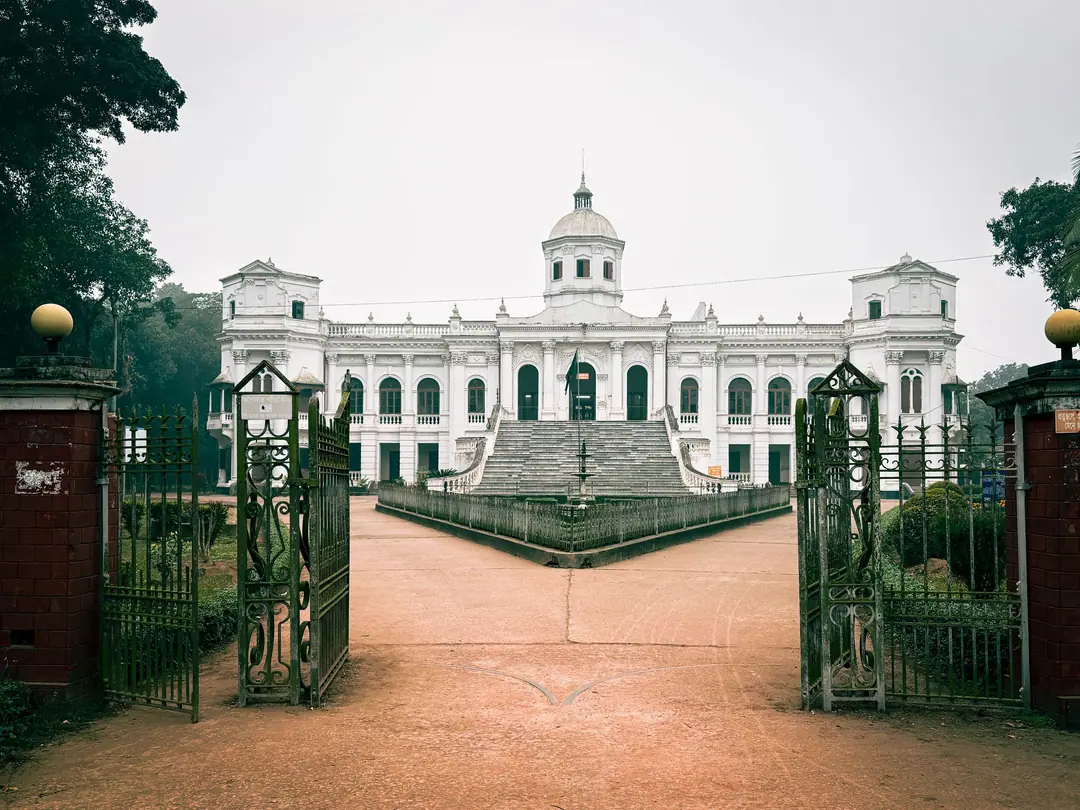
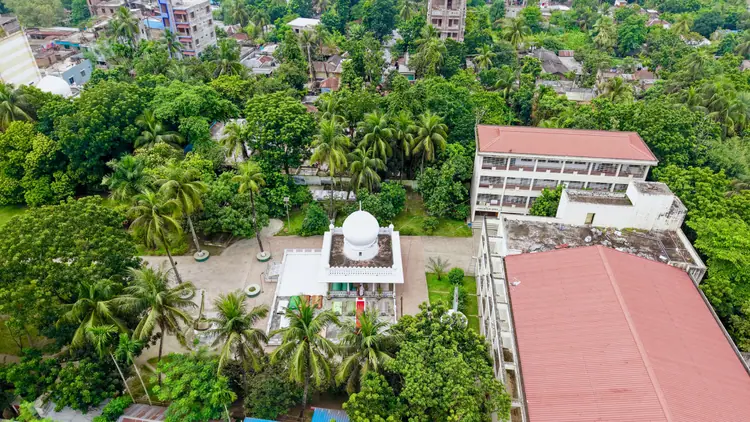
TAJHAT PALACERangpur
THE FAR NORTHWhere the rivers enter. A zamindar’s white palace, terracotta temples at Kantajew, and on the clearest mornings, Kanchenjunga on the horizon from Tetulia.
Rickshaw bells in Dhaka, tea on the Sylhet hills, tigers in the mangroves and around 120 kilometres of beach. Follow the water down.
START UPSTREAM ↓Bangladesh’s rivers run north to south, from the Himalayan foothills to the Bay of Bengal. So does this guide — eight divisions, top to bottom, with the hotels of every division one tap away.
Where to stay, region by region
TAJHAT PALACEWhere the rivers enter. A zamindar’s white palace, terracotta temples at Kantajew, and on the clearest mornings, Kanchenjunga on the horizon from Tetulia.
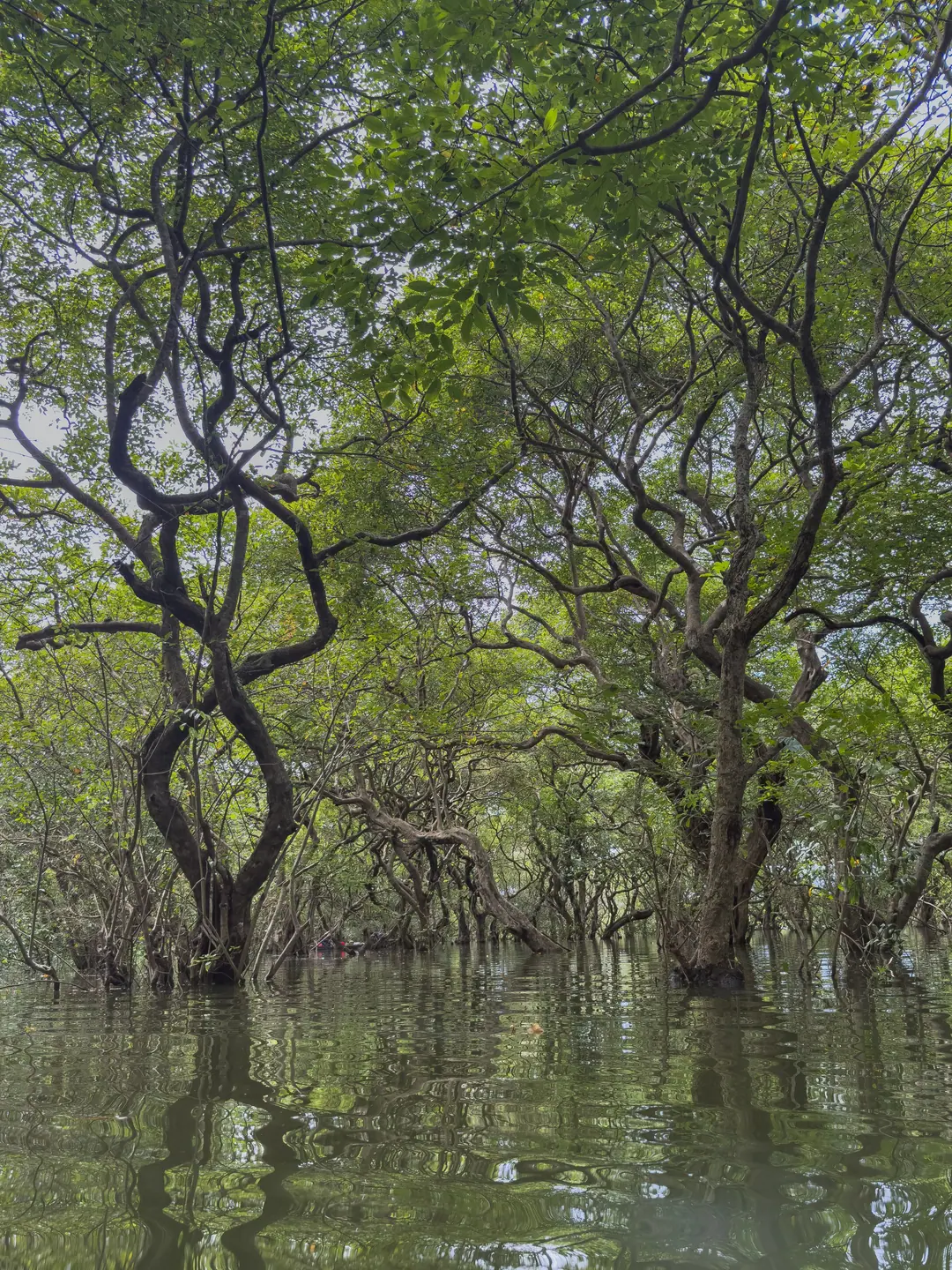
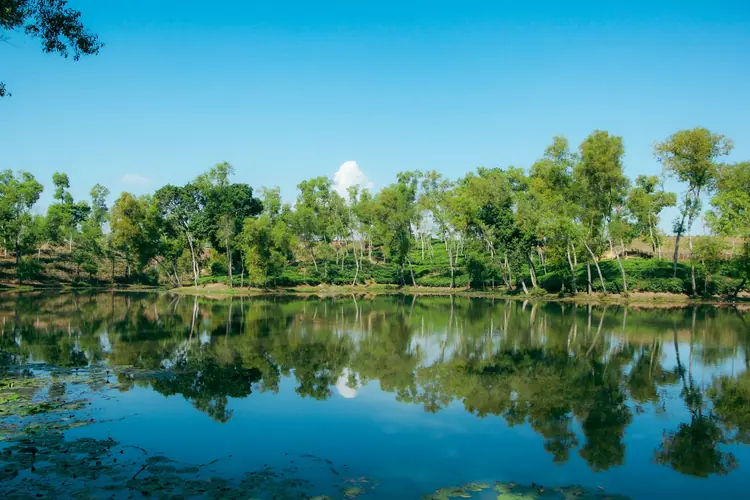
RATARGULRolling tea estates around Sreemangal, a swamp forest you paddle through, and clear rivers under the Meghalaya hills at Jaflong.
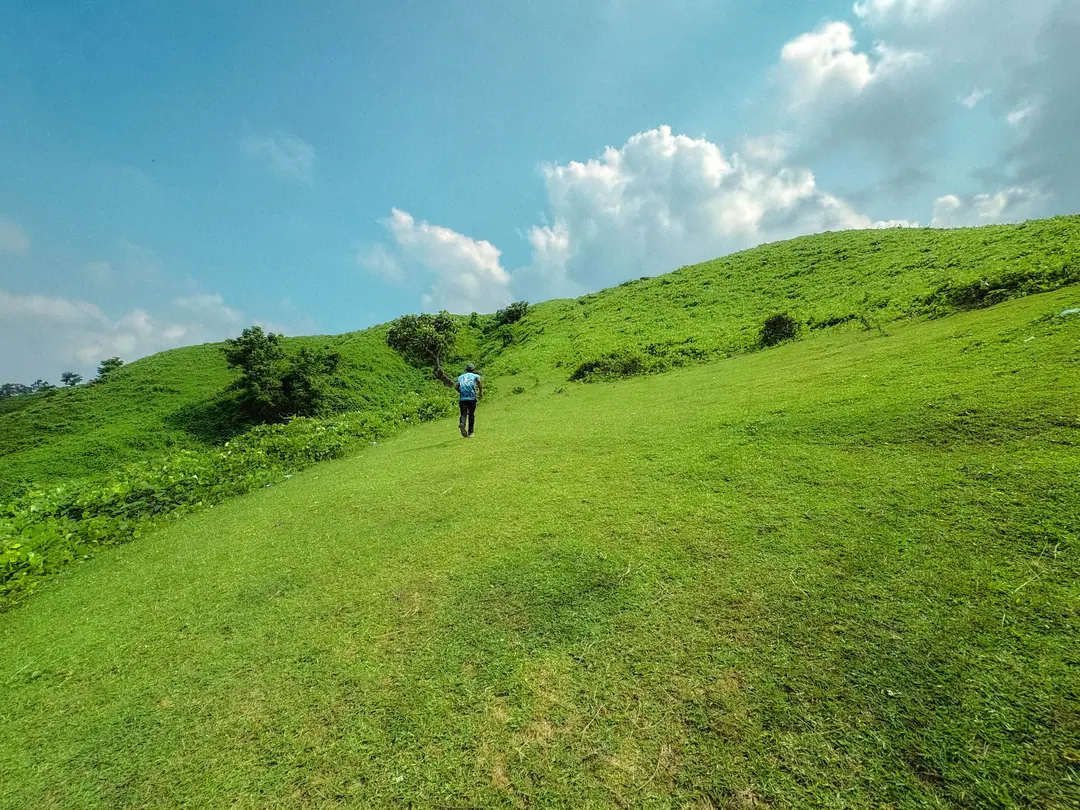
NETROKONAGreen hills along the Garo border, Birishiri’s blue-green clay lakes and the slow, wide Brahmaputra.
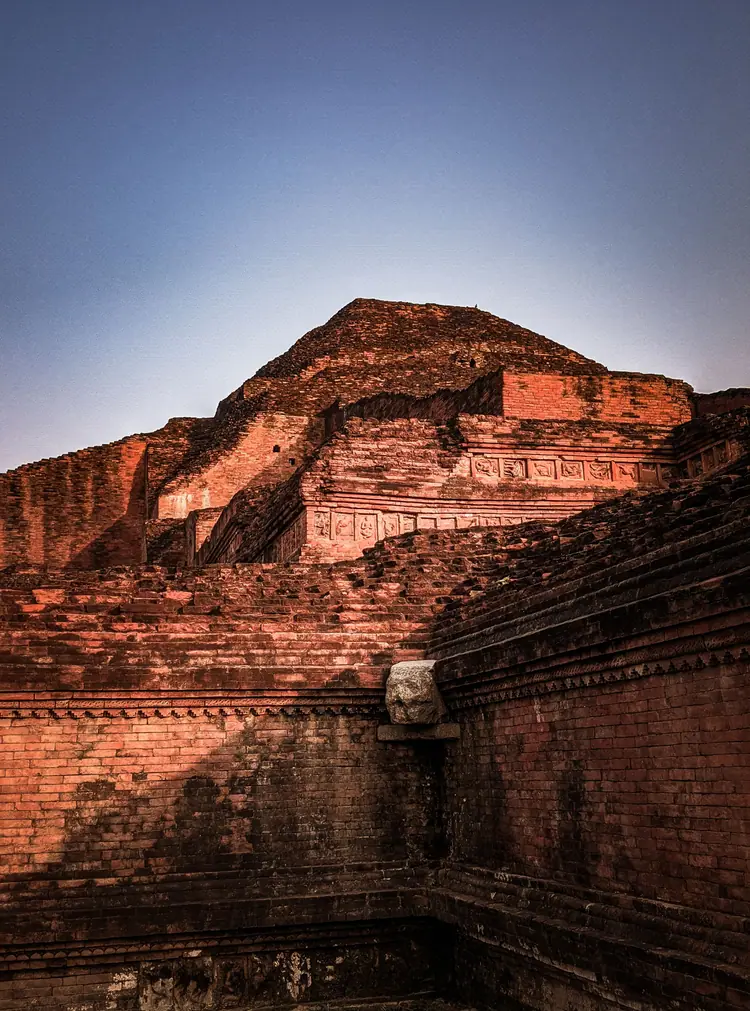
PABNAThe great Buddhist monastery at Paharpur, a UNESCO site, Puthia’s temple cluster and the country’s best mangoes in early summer.
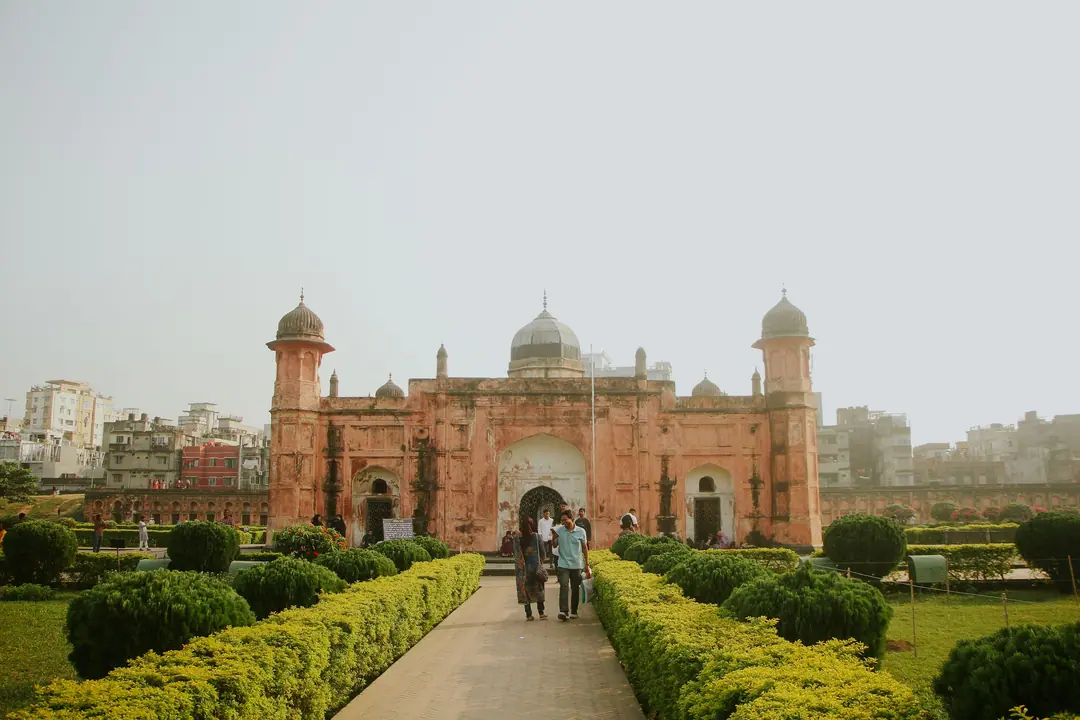
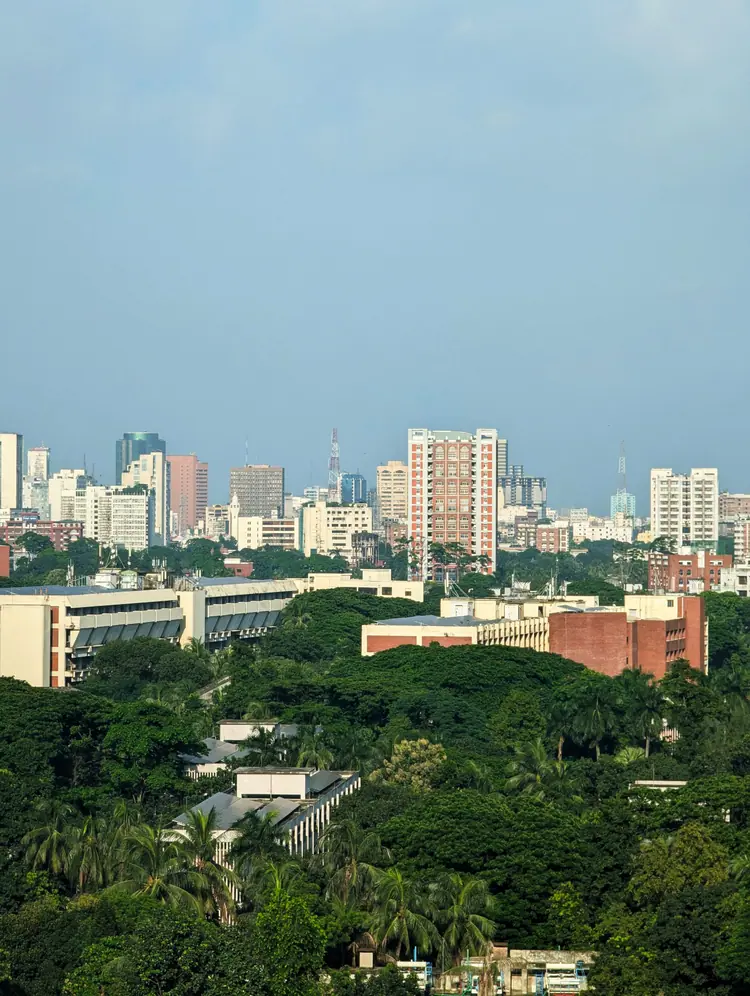
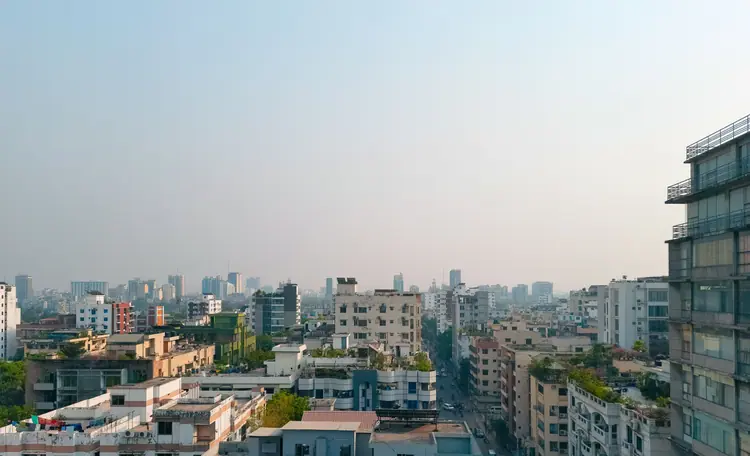
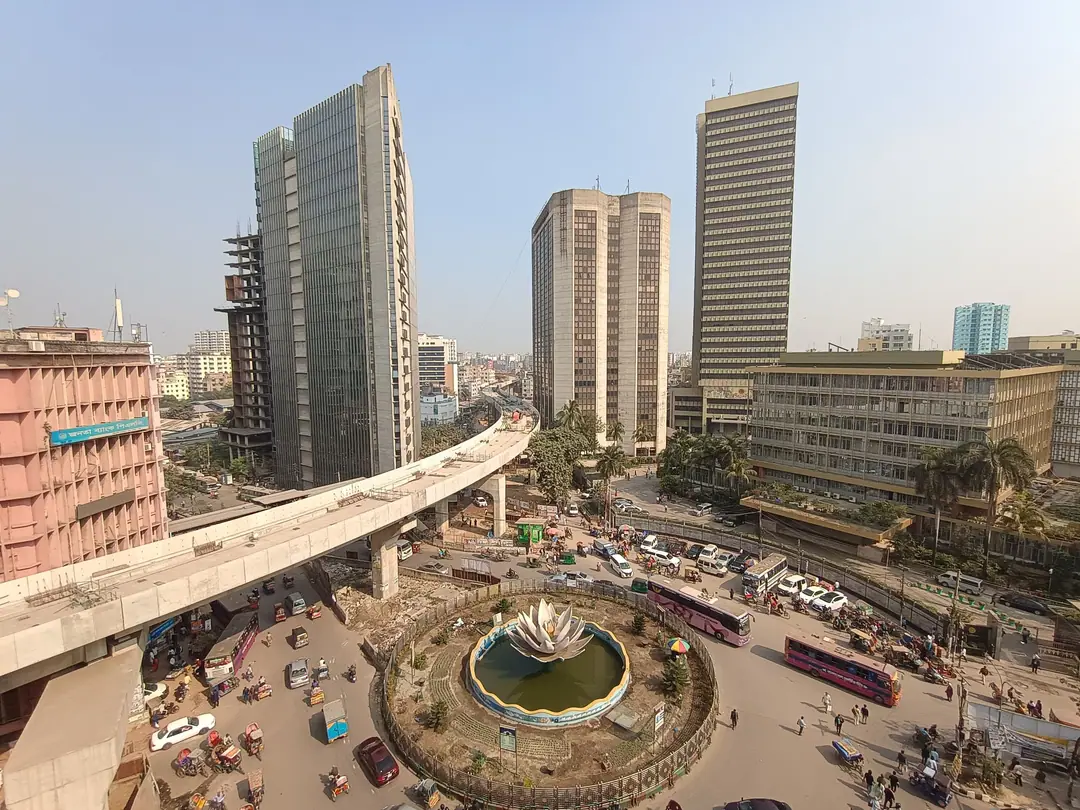
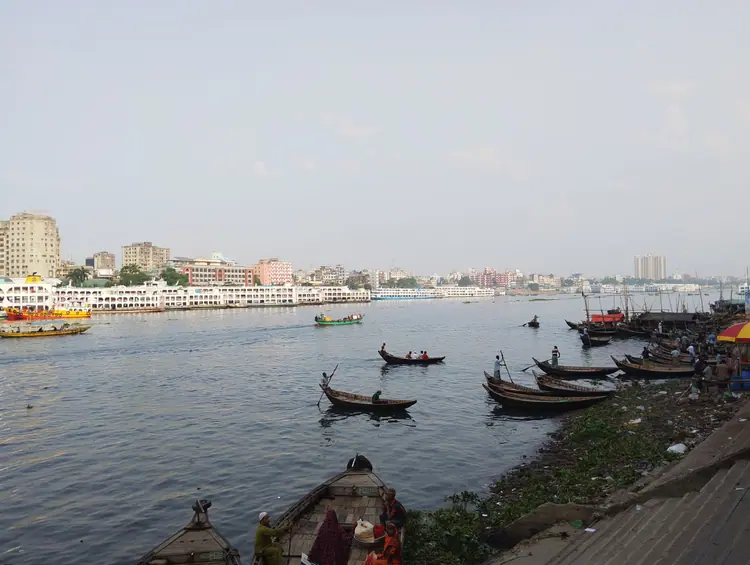
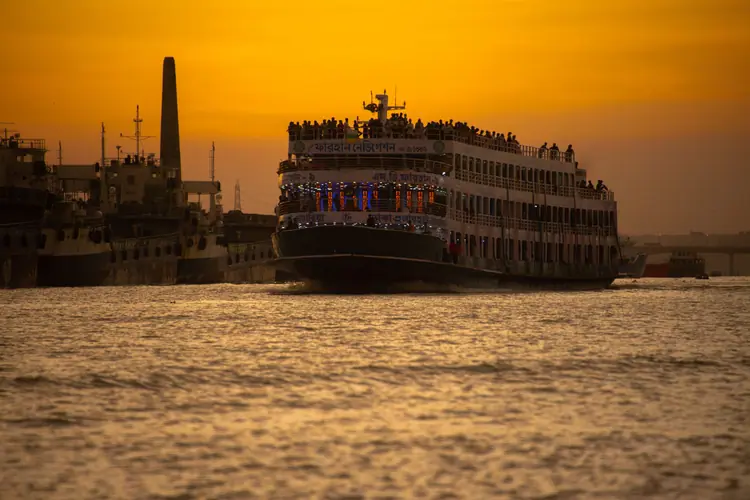
LALBAGH FORTMughal forts, the pink Ahsan Manzil, boats crowding Sadarghat — a city of painted rickshaws. Sleep in Gulshan or Banani, spend your days in the old city.
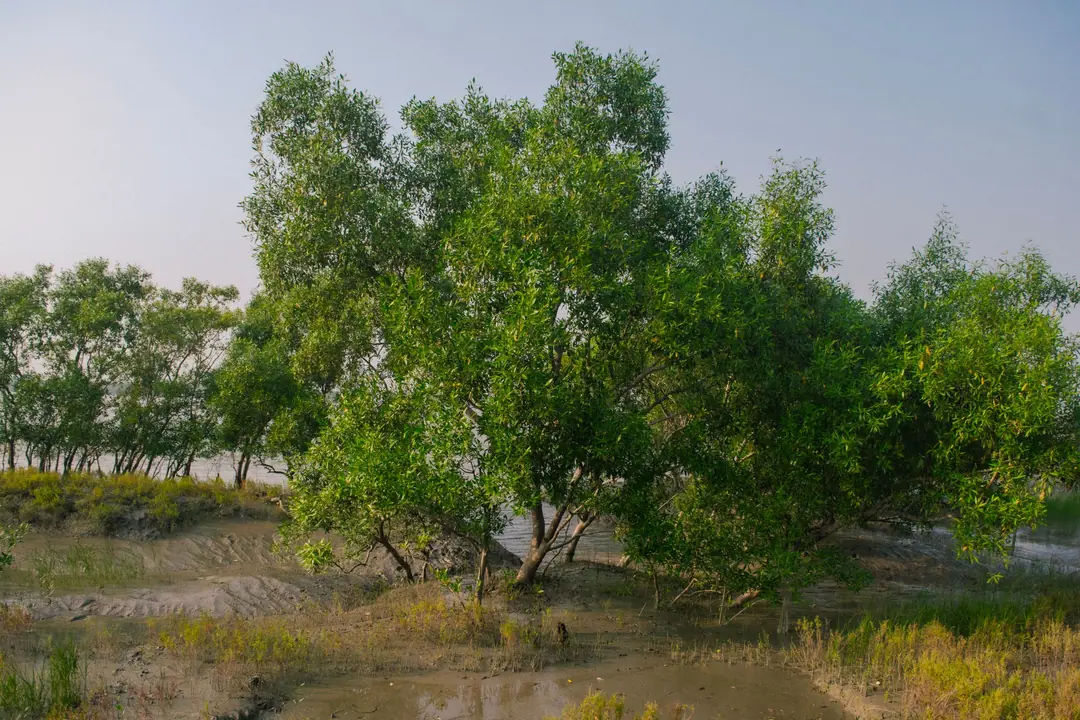
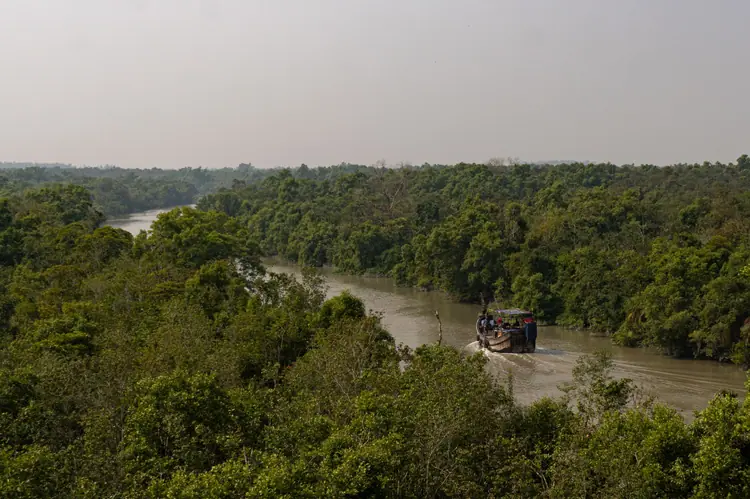
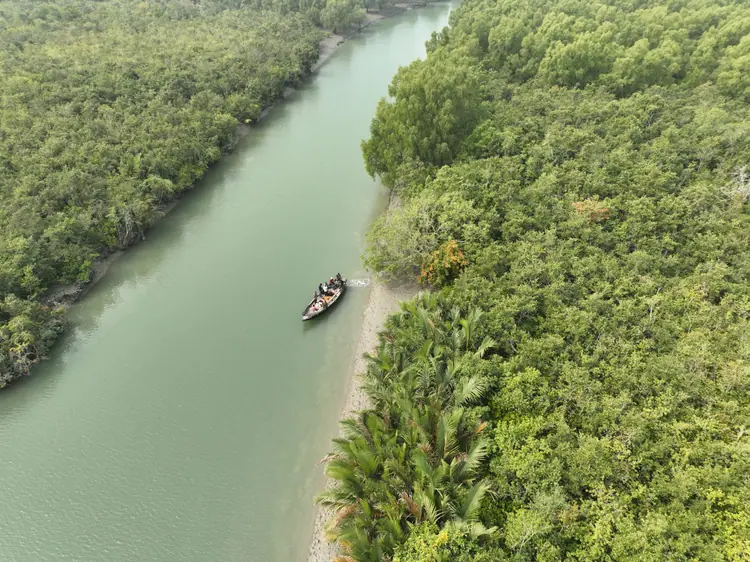
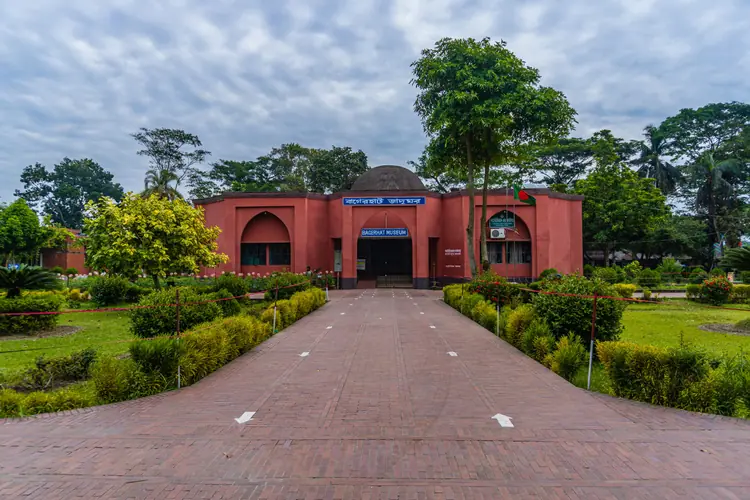
SUNDARBANSA vast mangrove forest, home of the Royal Bengal tiger — plus the Sixty Dome Mosque in Bagerhat.
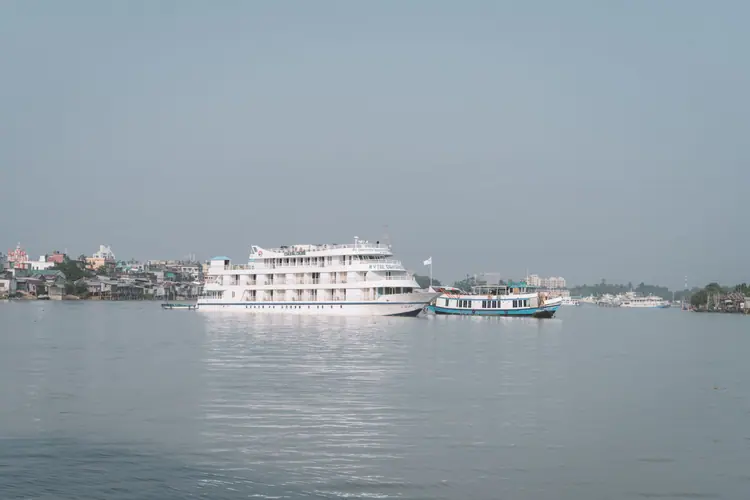
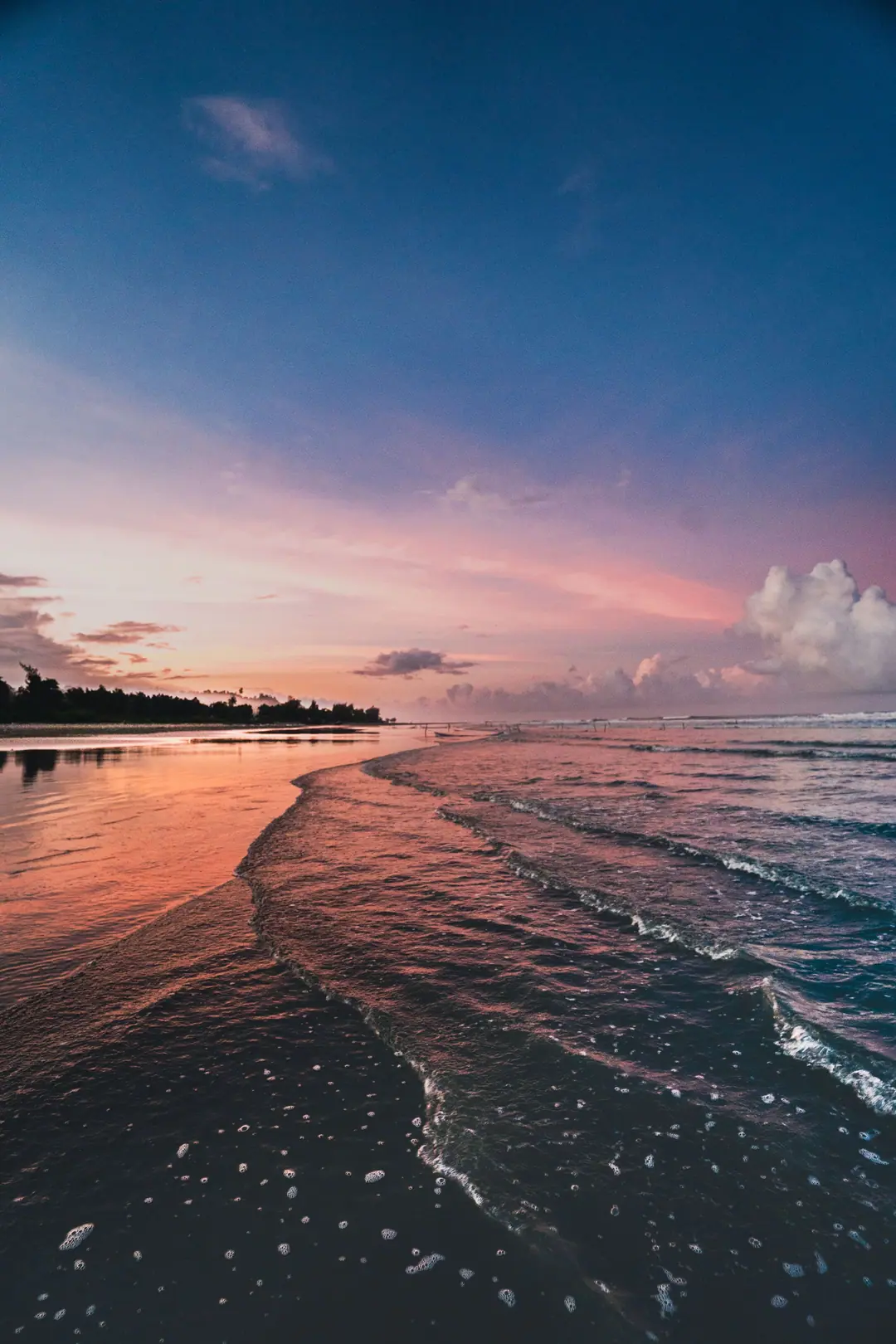
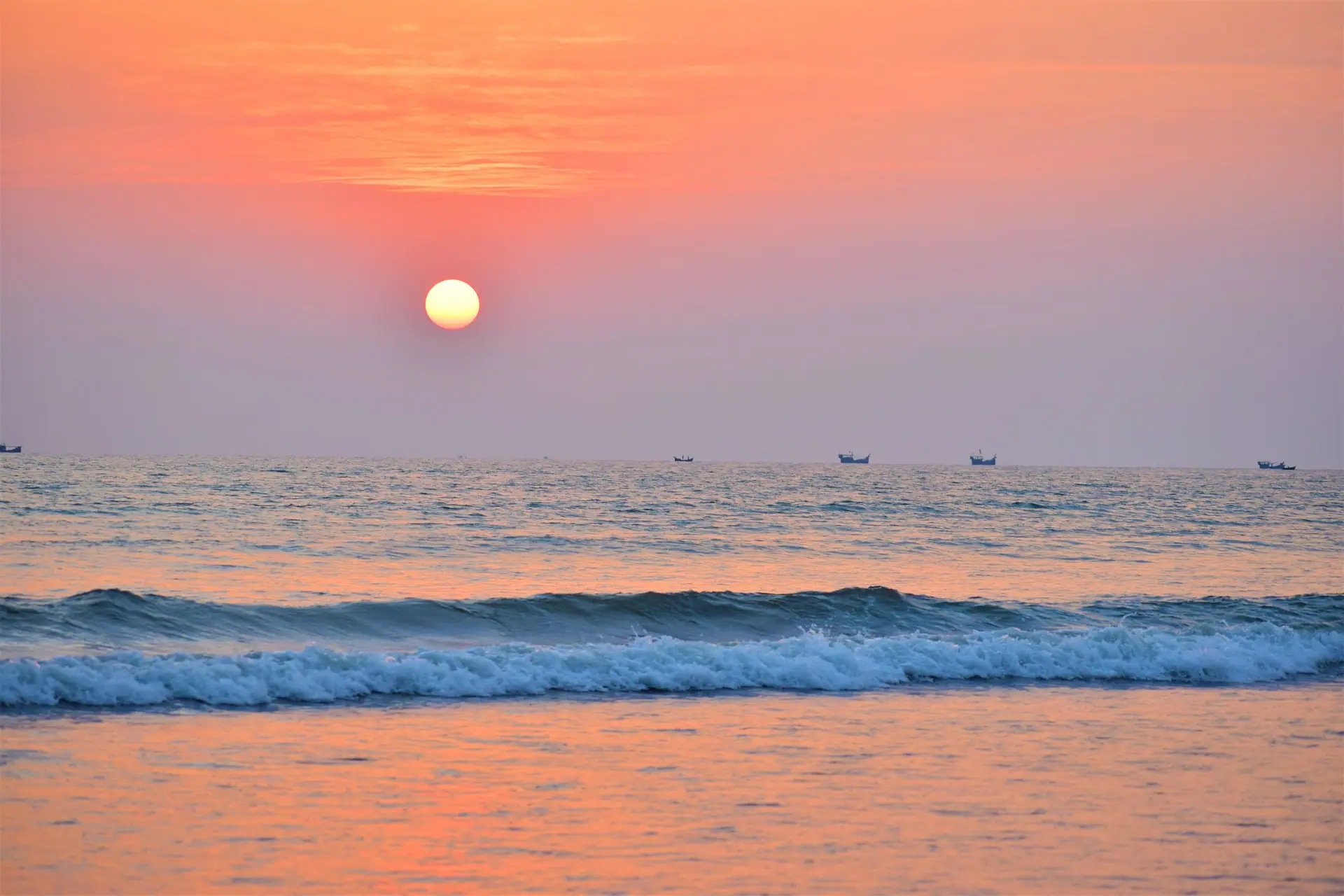
BARISHALCanals, floating guava markets and overnight river launches from Dhaka. Kuakata beach sees the sun rise and set over the sea.
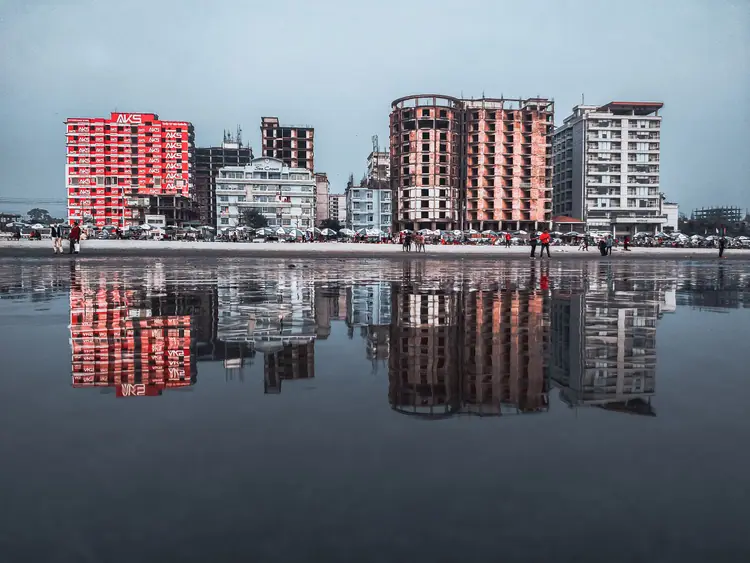
COX’S BAZARCox’s Bazar’s unbroken sea beach, Inani’s coral rocks and the Marine Drive — then inland to Rangamati’s lake and the Bandarban hills.
The Bay of Bengal.
21.4°N · END OF THE LINE
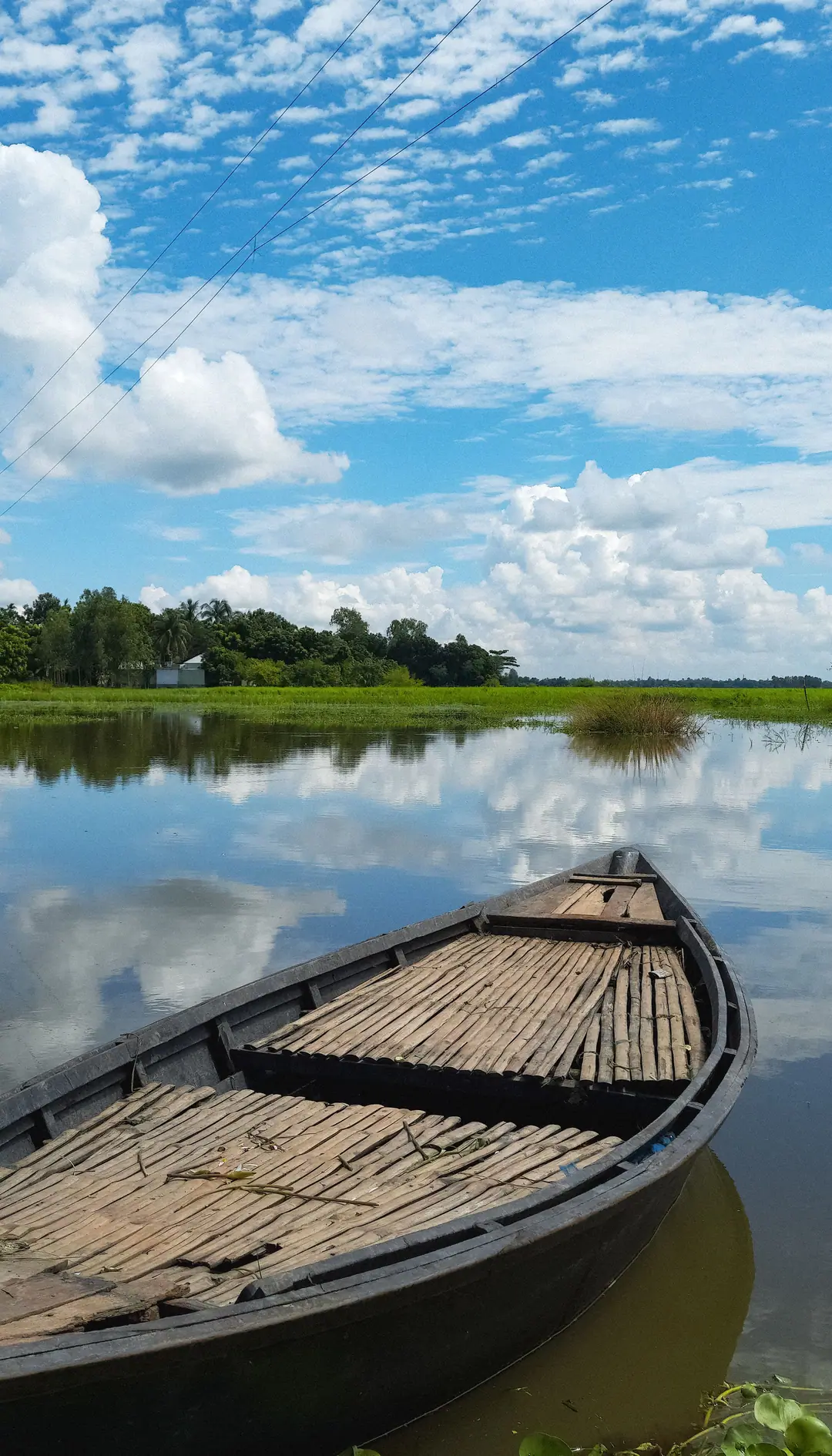
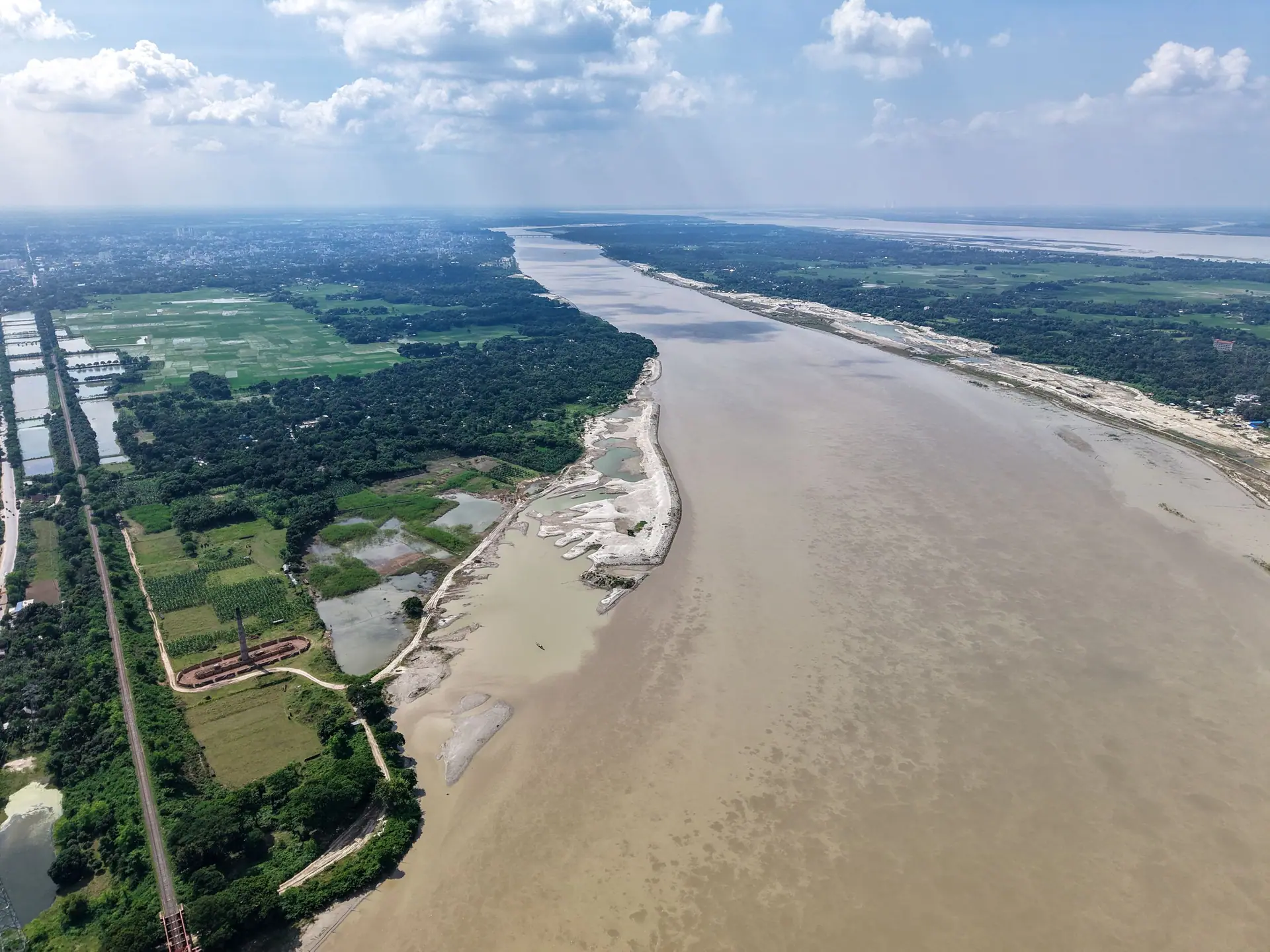
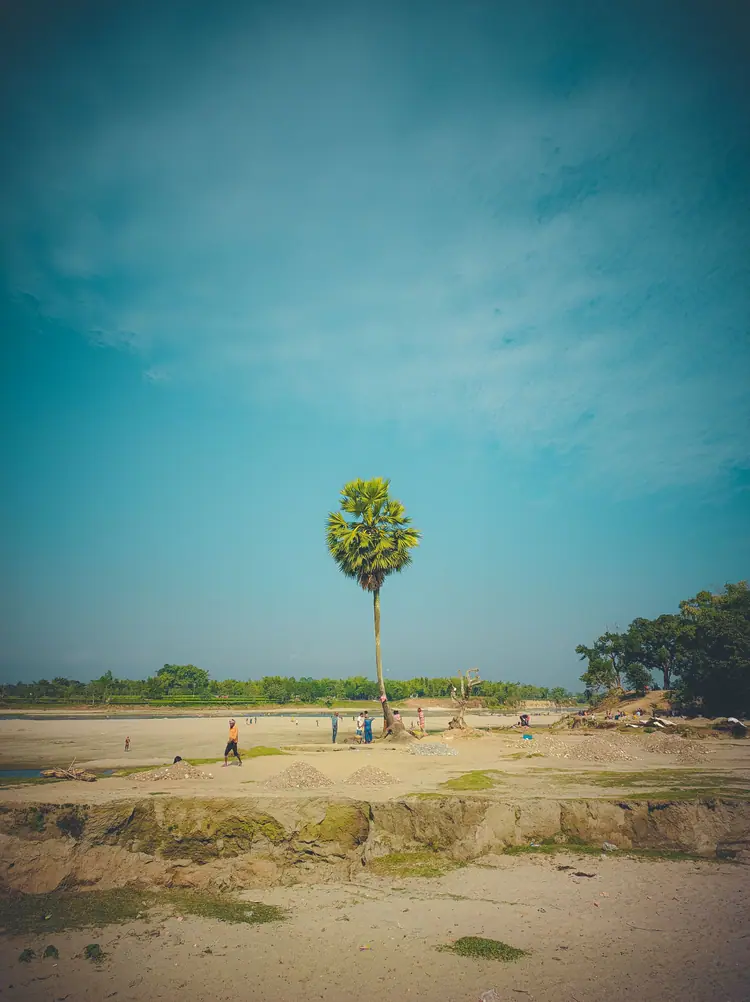
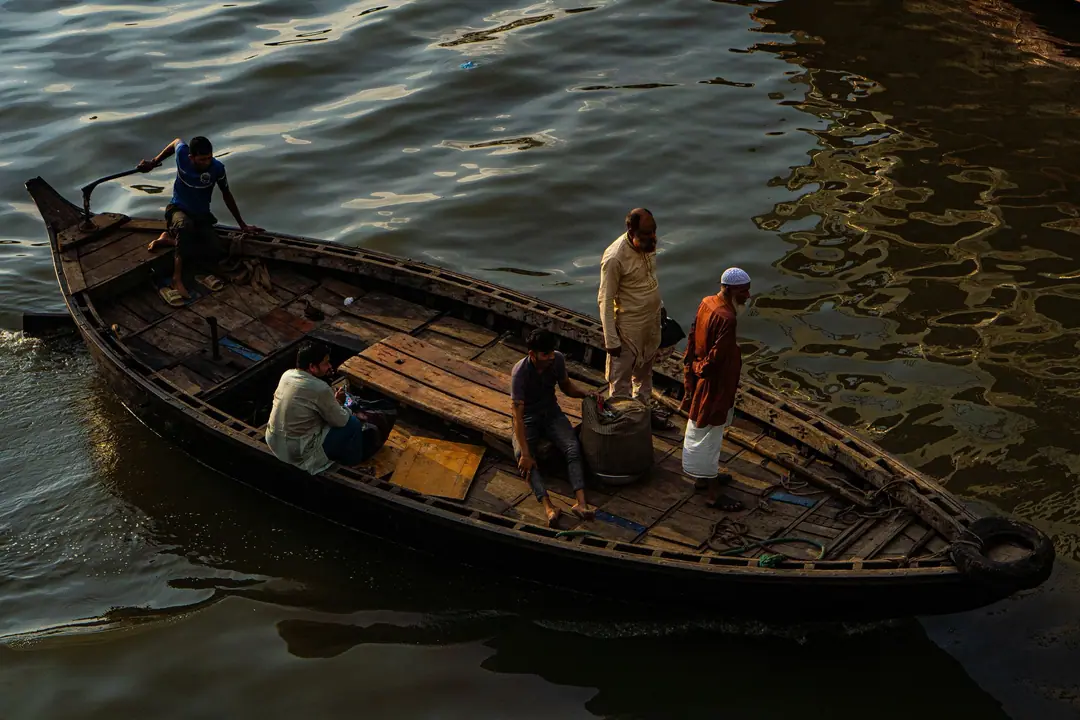
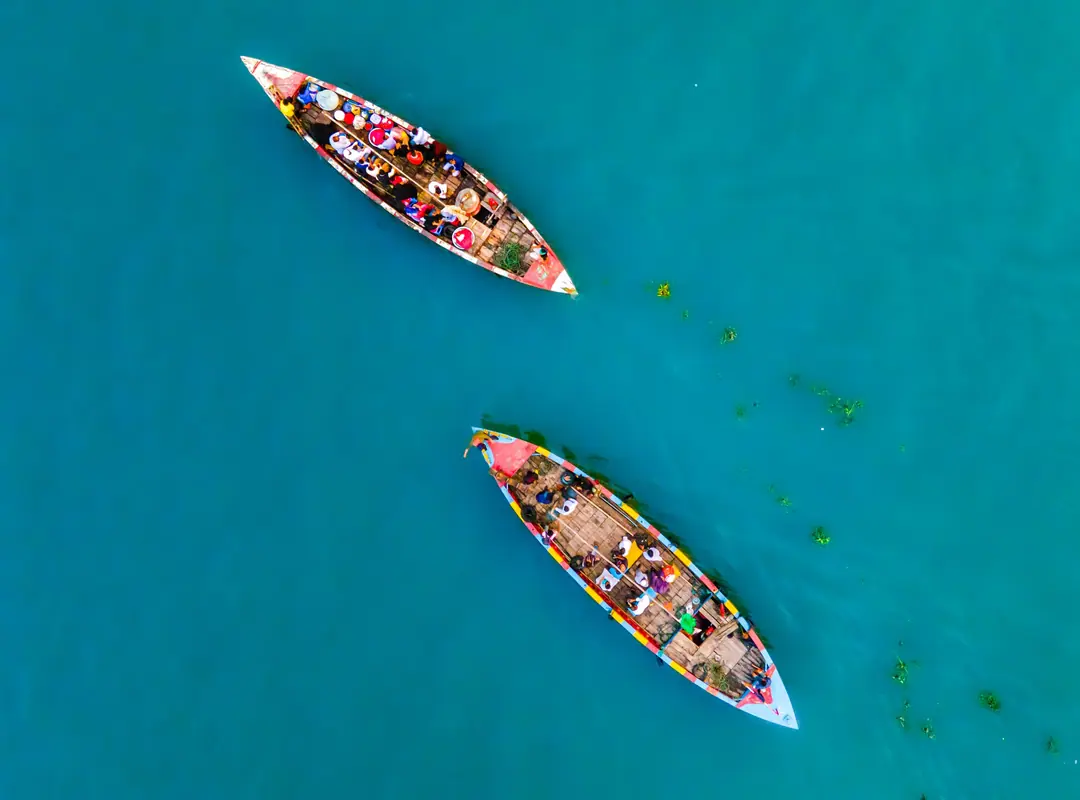
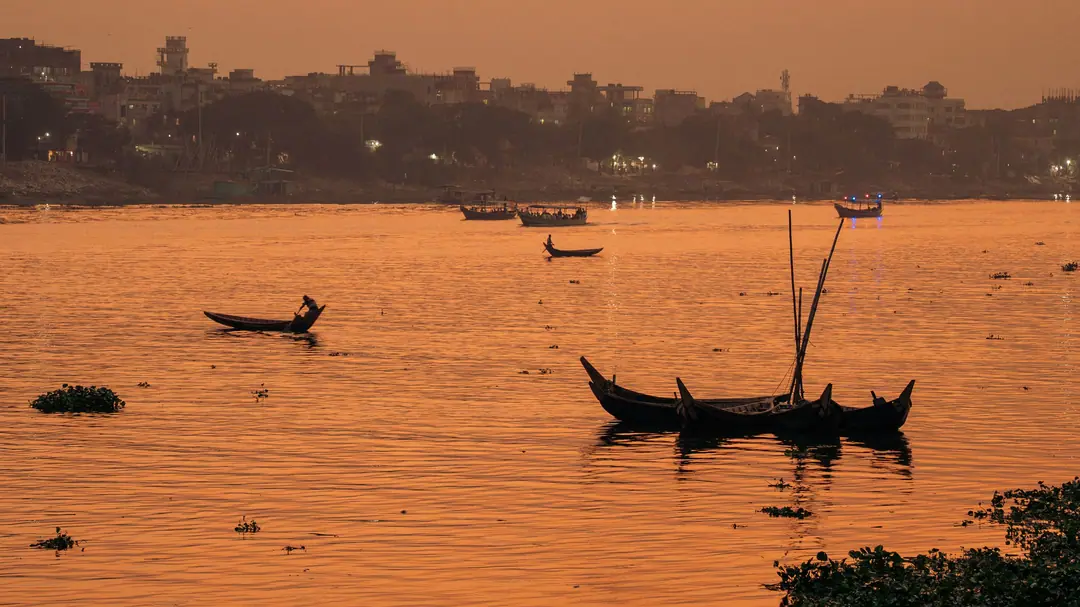
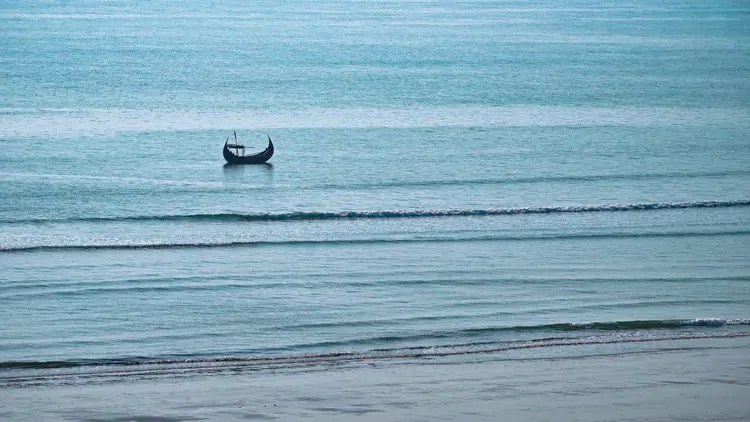
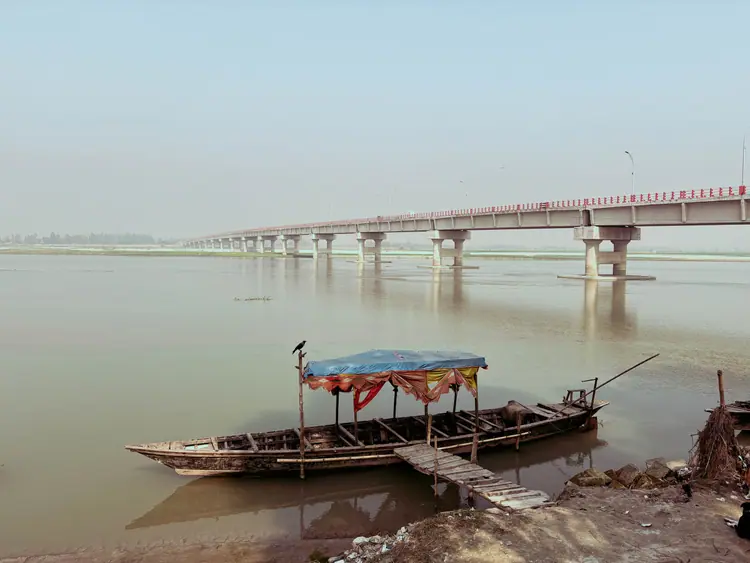
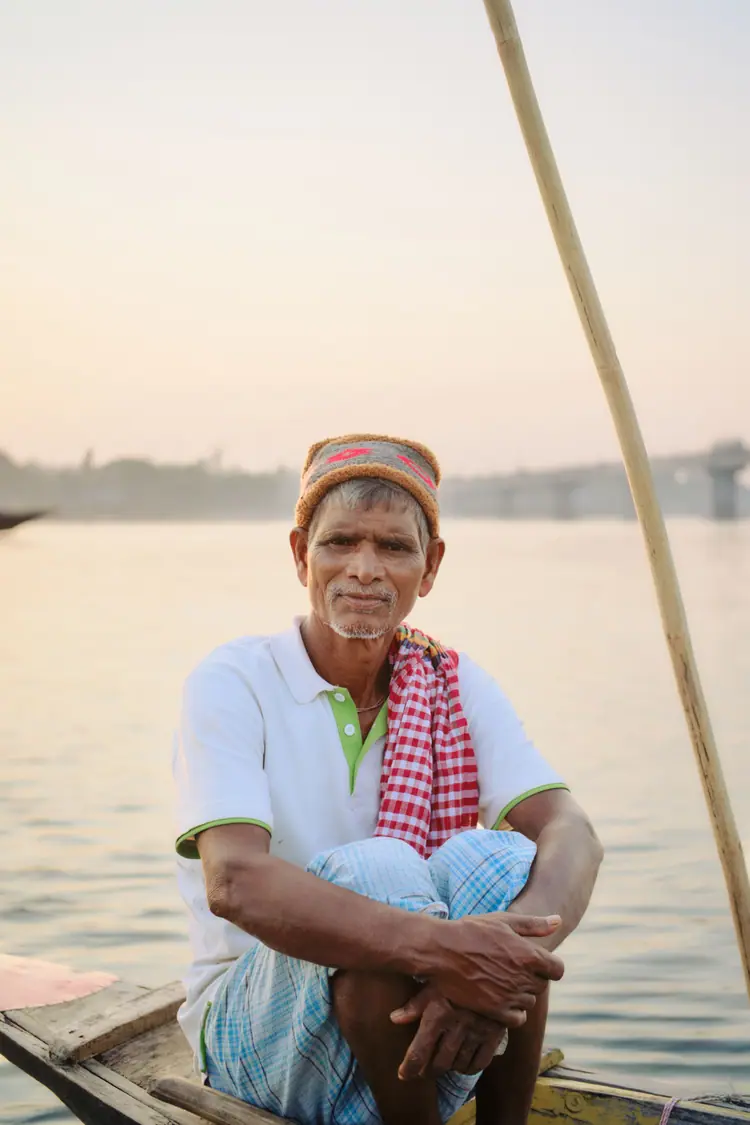
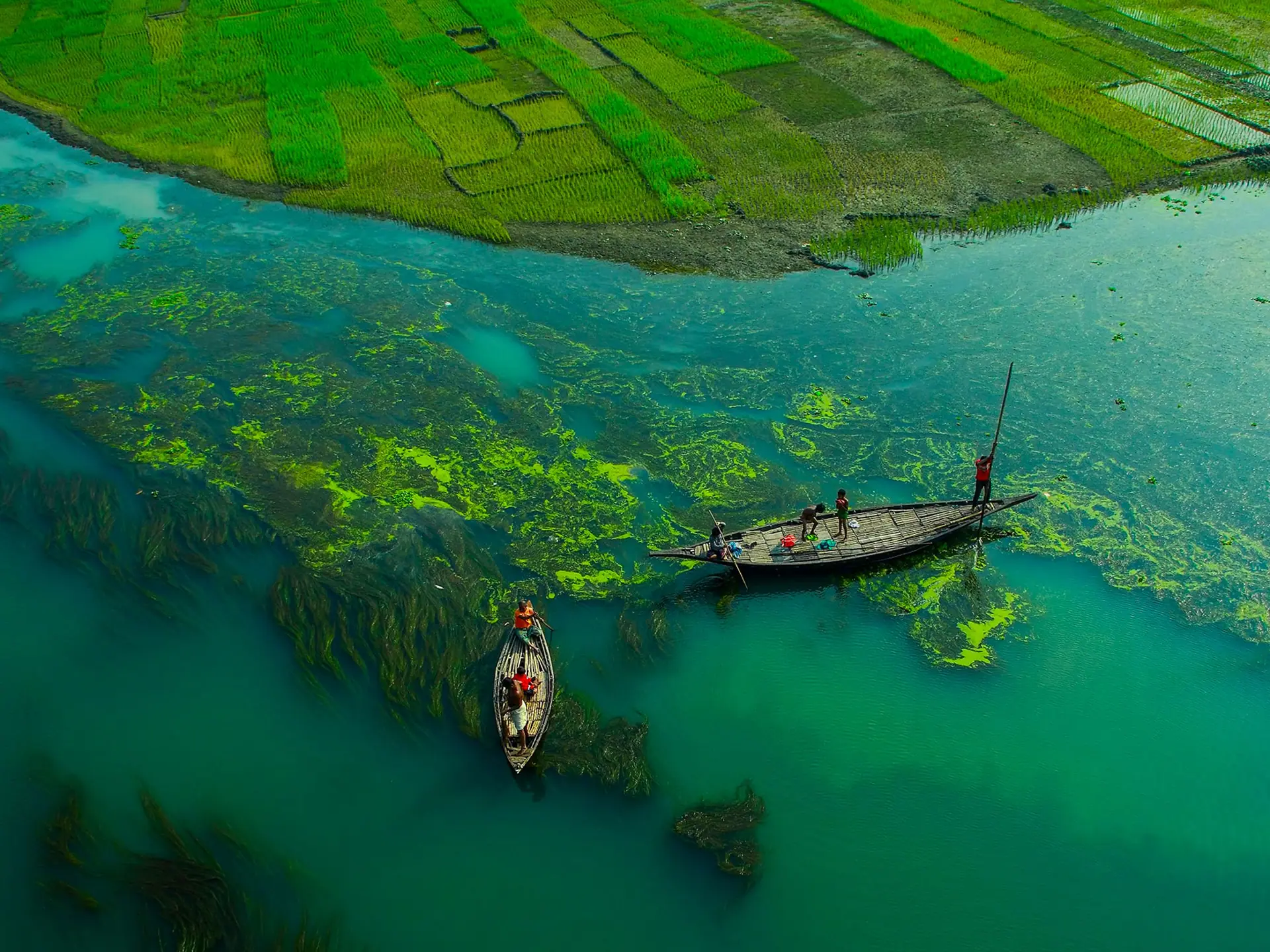
The Padma, the Jamuna and the Meghna carry Himalayan water south to the Bay of Bengal. Out here, the boat is still the bus.
KHULNA
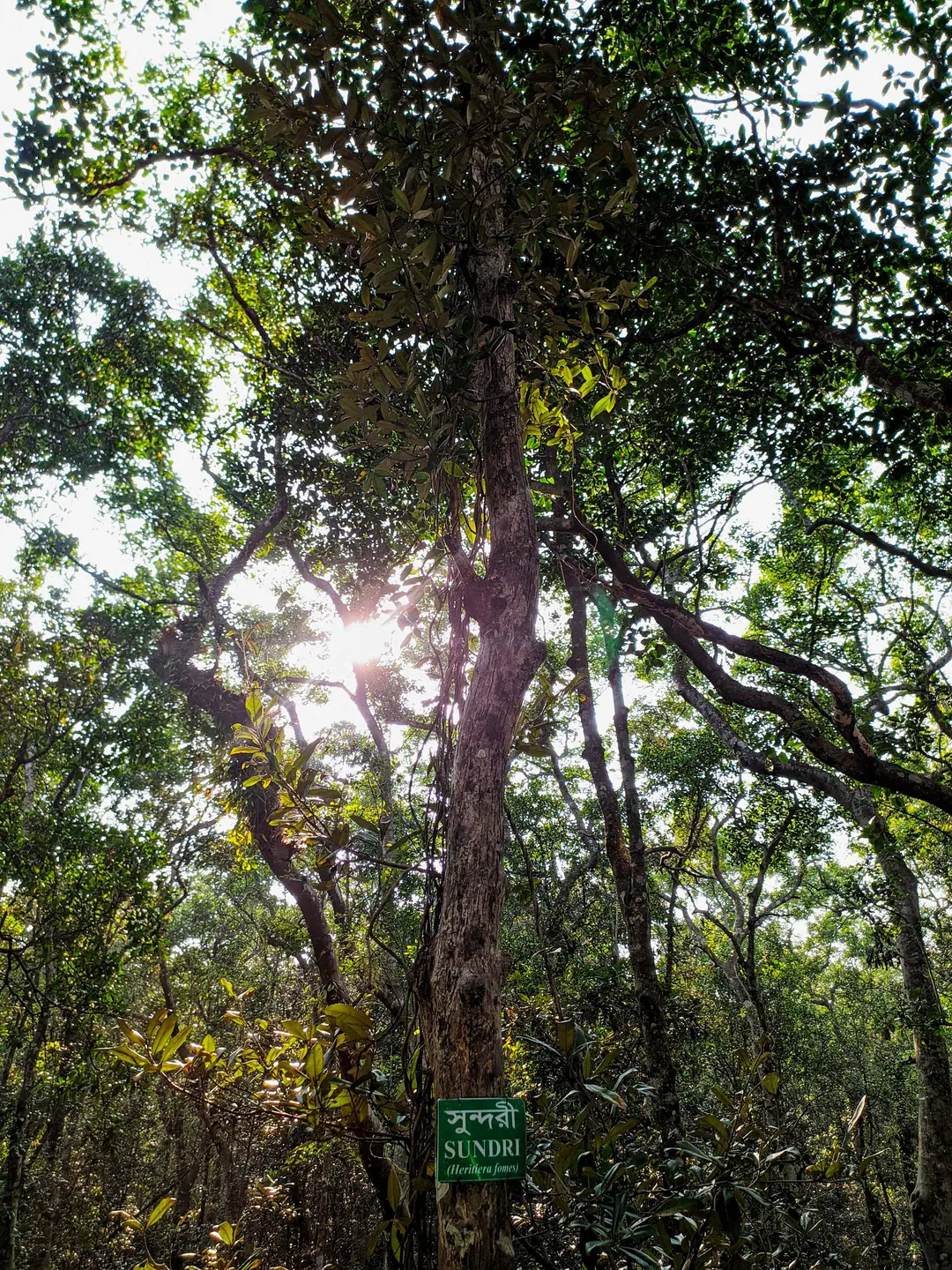
The Sundarbans
সুন্দরবনMangrove forest shared with India. You enter by boat, with a licensed guide.Hotels nearby
BARISHAL
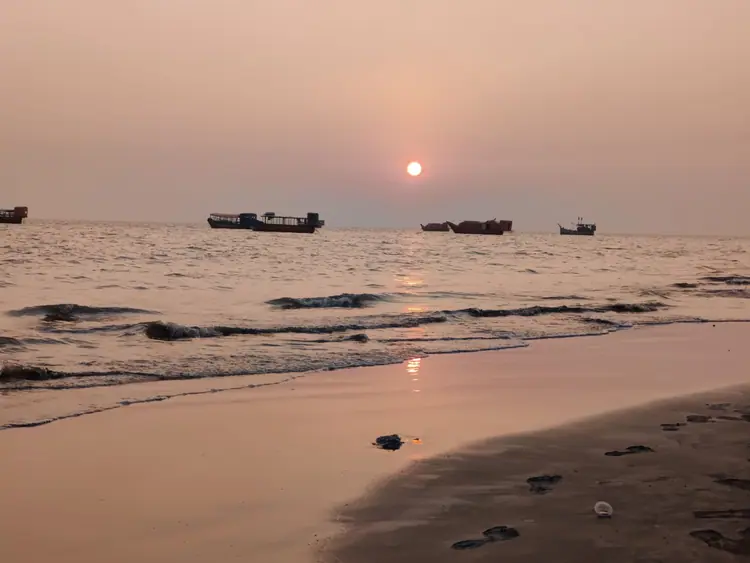
Kuakata
কুয়াকাটাA beach where you can watch the sun both rise and set over the sea.Hotels nearby
SYLHET
Ratargul
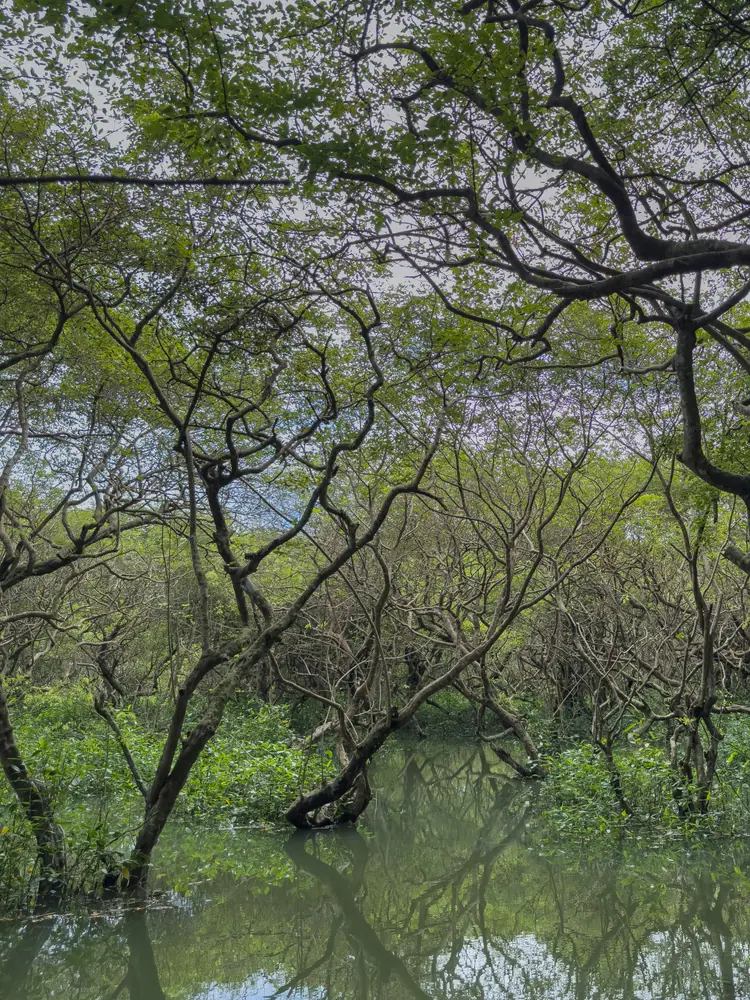
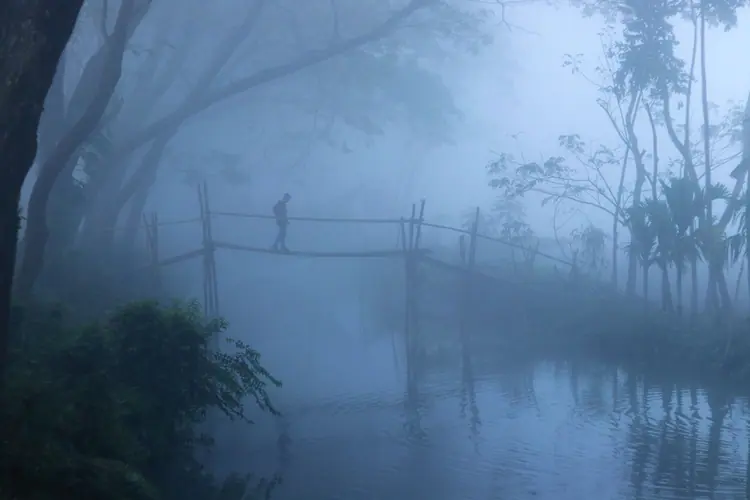
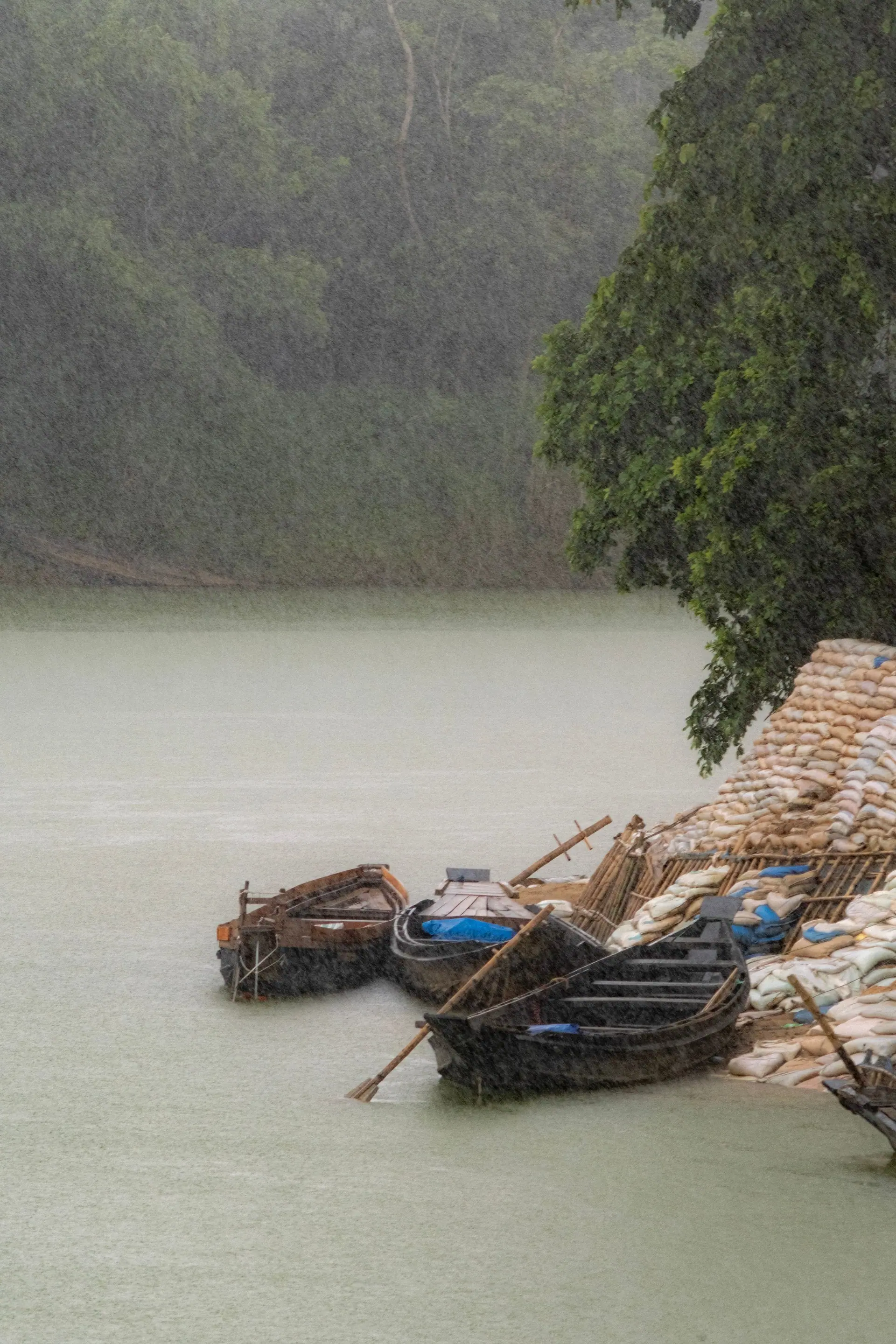
রাতারগুলA swamp forest you paddle through — best in the monsoon.Hotels nearby
TEKNAF
Saint Martin’s
সেন্টমার্টিনThe only coral island. Visits are restricted to certain months — check first.Hotels nearby
OLD DHAKA
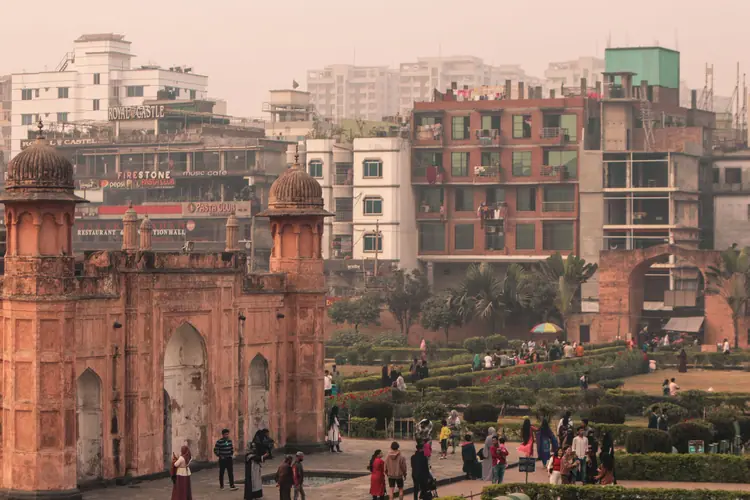
Lalbagh Fort
লালবাগ কেল্লাAn unfinished 17th-century Mughal fort in the heart of the old city.Hotels nearby
BANDARBAN
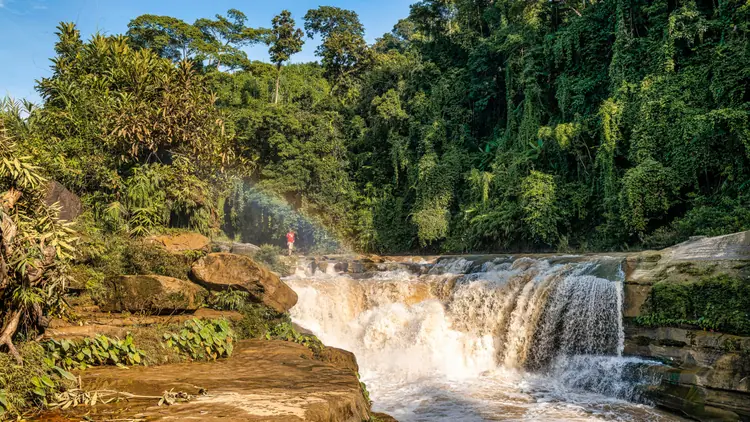
Nafa-khum
নাফাখুমA waterfall deep in the hill tracts. Foreign visitors may need a permit.Hotels nearby
NAOGAON
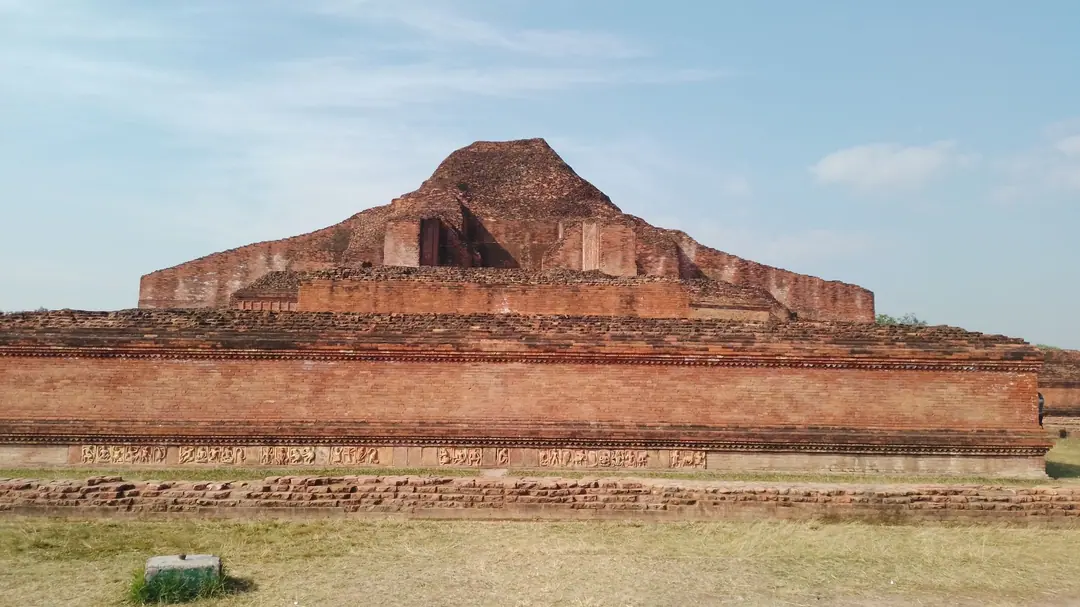
Paharpur
পাহাড়পুরSomapura Mahavihara, an 8th-century Buddhist monastery and UNESCO site.Hotels nearby
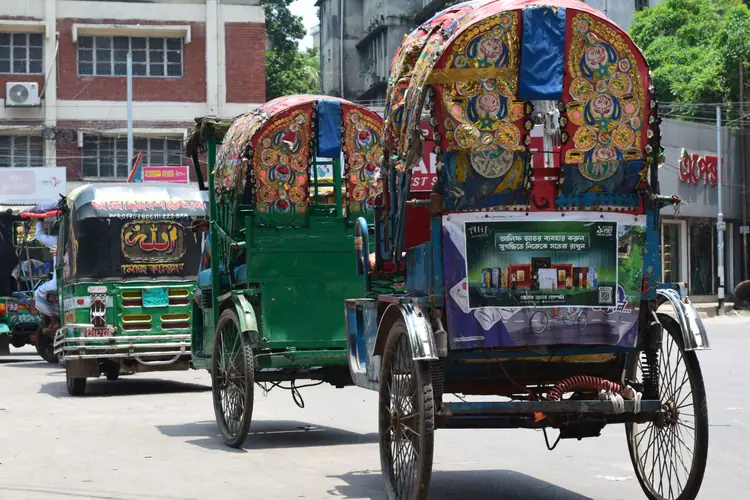
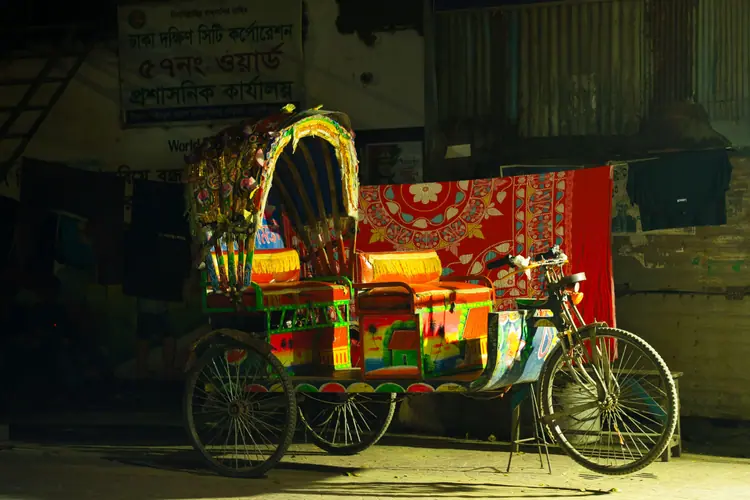
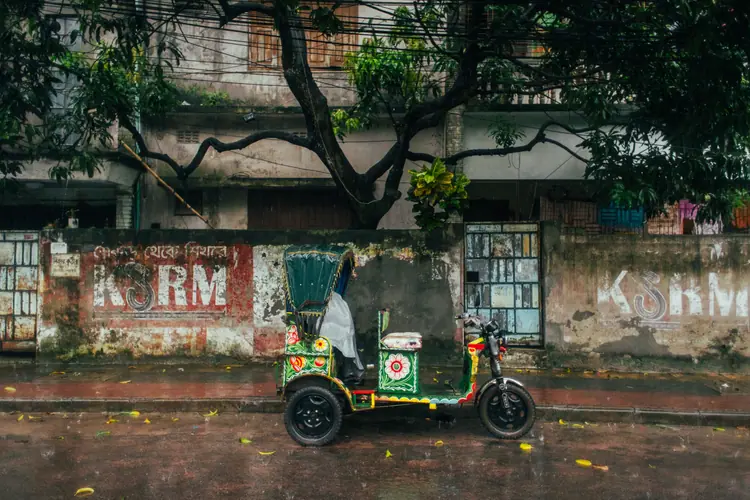
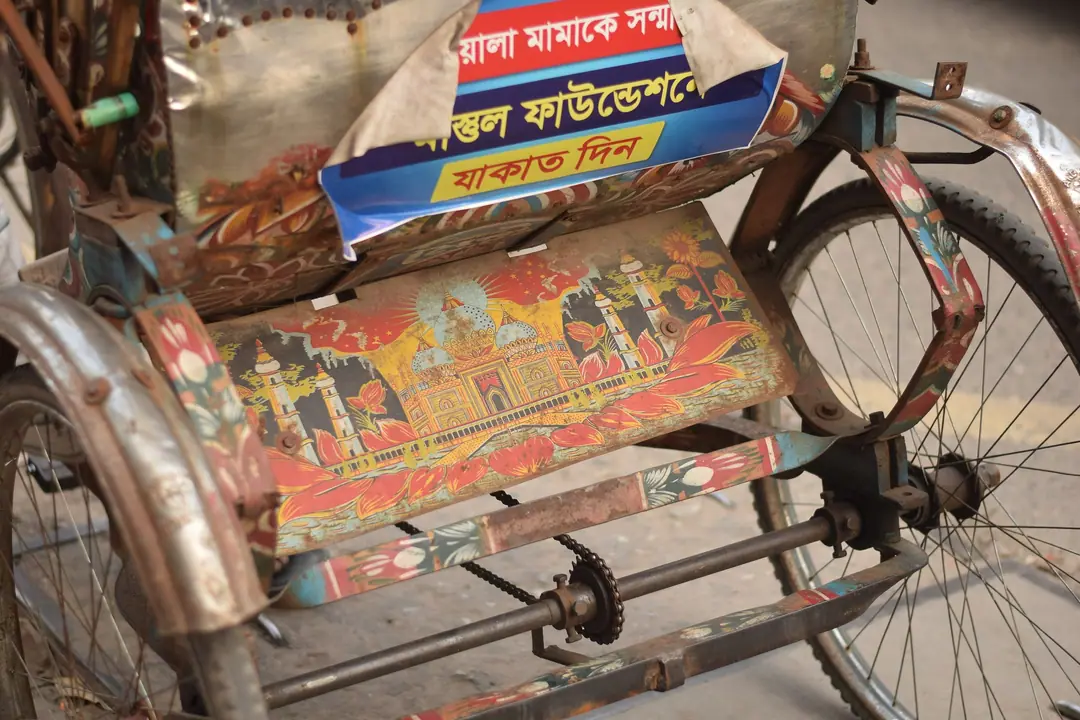
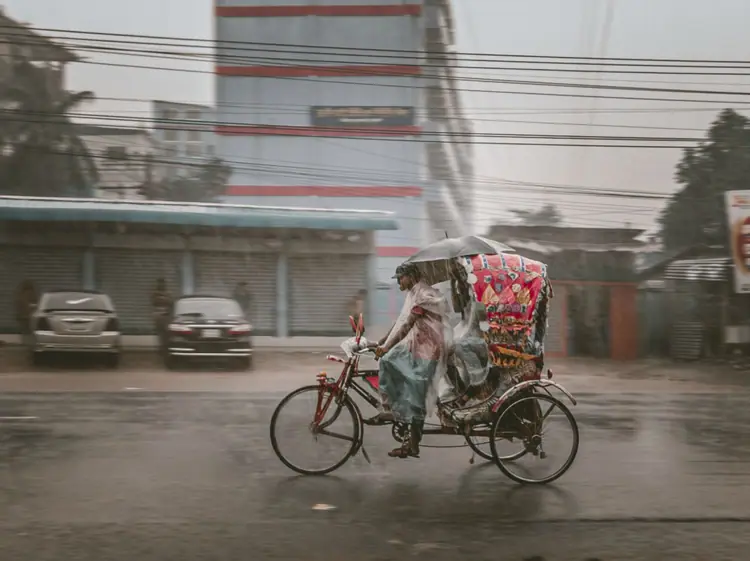
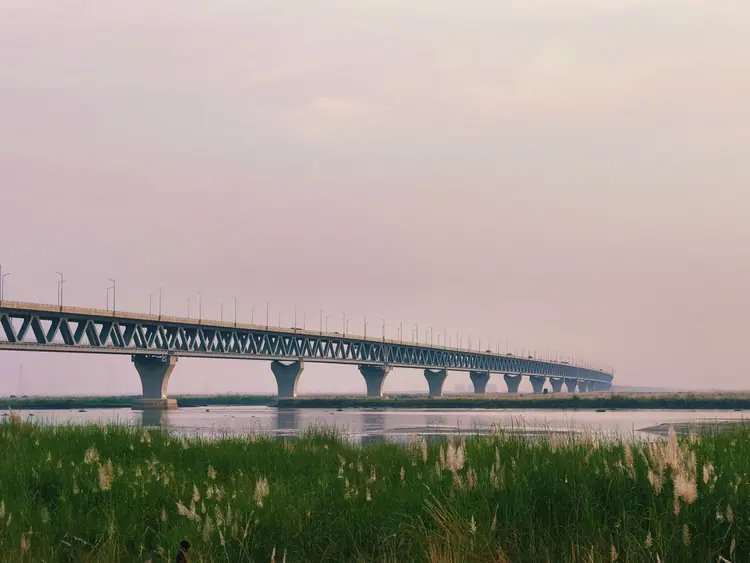
Film stars, peacocks, mosques and the Padma bridge, hand-painted on tin and stitched onto hoods. In 2023 UNESCO added the rickshaws of Dhaka and their painting to its list of Intangible Cultural Heritage.
Move your cursor over the picture to bring back the colour.Touch and drag across the picture to bring back the colour.


DHAKA · RICKSHAW ART

The Sundarbans stand between the Bay of Bengal and millions of homes. Every booking made through IMPT funds one tonne of CO₂, included in the price, never added to your bill.
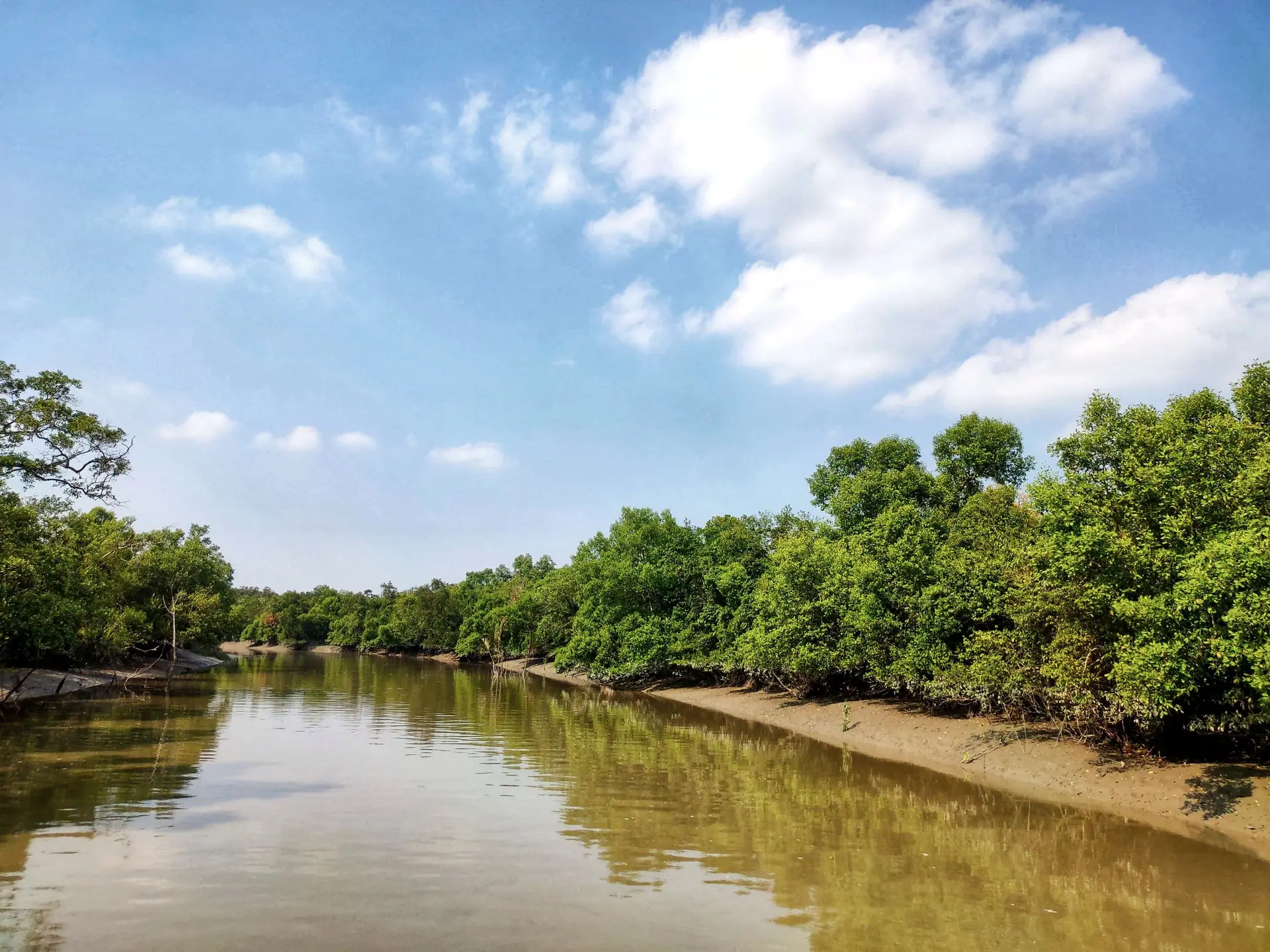
How a booking funds CO₂The world’s largest mangrove forest, shared with India and listed by UNESCO. No roads go in — you enter by boat, on tidal channels, with a licensed guide.
Trips leave from Khulna and Mongla, usually two or three days on a boat with cabins. Go November to February, when the water is calm and the birds arrive. Tigers are rarely seen — their tracks on the mud banks are not.


The Bengali calendar splits the year into six ritu. Turn the wheel to see what each one brings — the marker shows the season Bangladesh is in right now.


Pohela Boishakh opens the Bengali year on 14 April with parades and red-and-white saris. Hot and humid — Rajshahi’s mango harvest begins in late May.
Heavy rain, swollen rivers and quieter hotels. Ratargul’s swamp forest is at its best; the sea and the Sundarbans are rough.
White kash flowers on the riverbanks and blue skies after the rains. Durga Puja fills the temples, usually in September or October.
Harvest season: dry roads, warm days, gold fields. On the clearest mornings, Kanchenjunga shows on the horizon from Tetulia.
Cool, dry and sunny — peak season. Sundarbans cruises run, migratory birds arrive and Cox’s Bazar books up early. Mornings can be foggy.
Pohela Falgun welcomes spring in yellow in mid-February; 21 February is International Mother Language Day. Warming fast by April.
Tap a month — the wheel turns to its season. The one you’re reading this in is marked.
হেমন্ত Hemanta
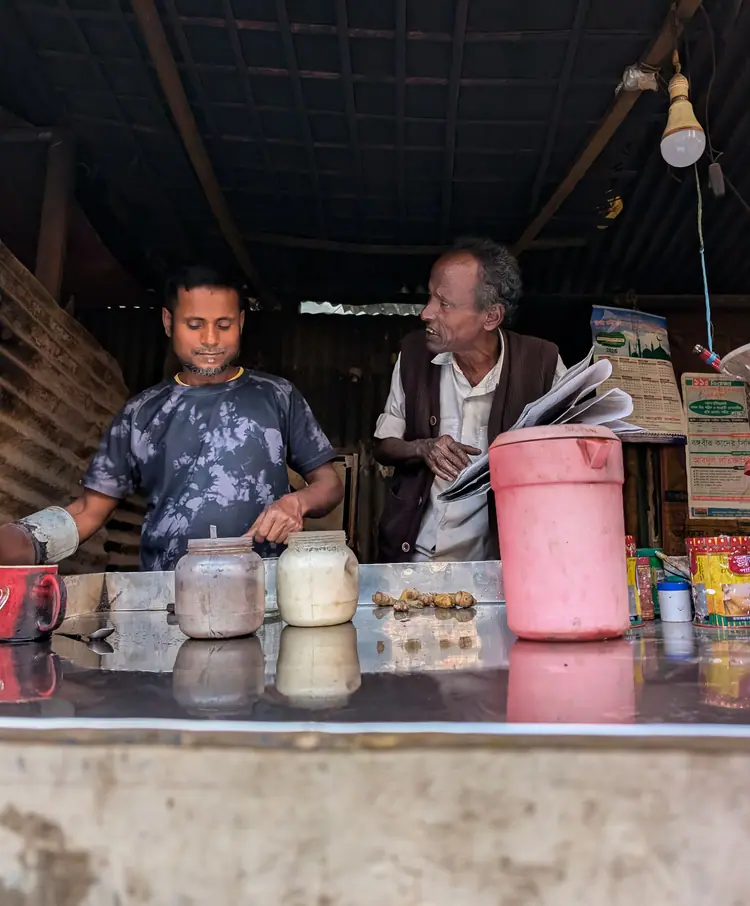
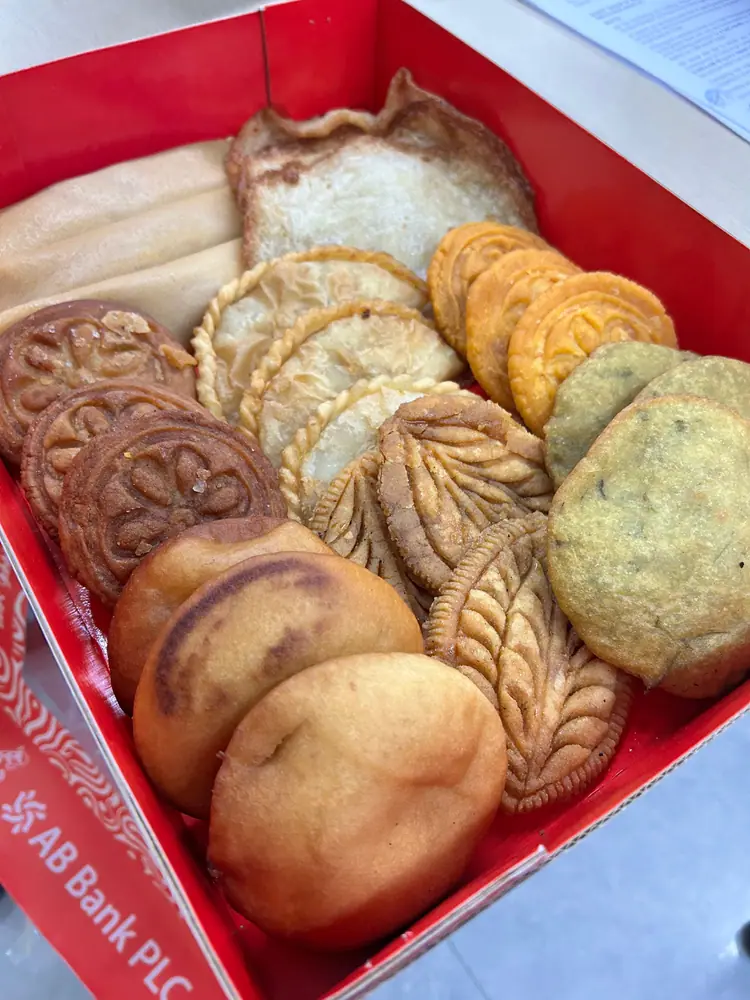
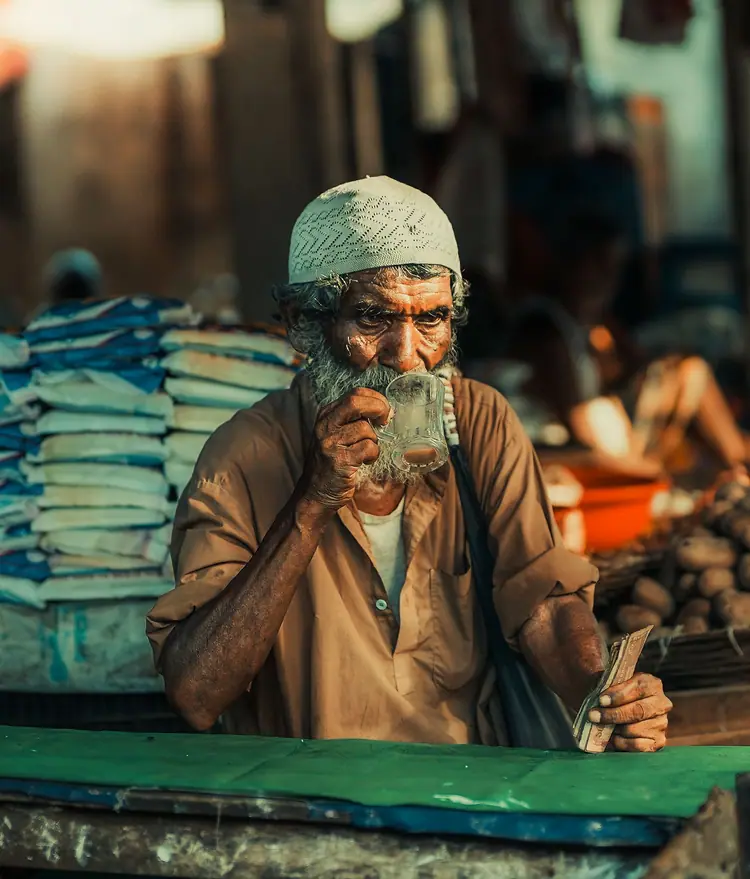
Milk tea in a small glass, snacks fried to order at a market stall, winter pitha off a clay stove. Every town in this guide has somewhere to eat after dark.
The Bangladeshi food guide →


Stays from the IMPT hotel database, five-star first. Pick a division, then go straight to your dates.
Showing all 12 hotels


Live prices open in the IMPT app. Every booking funds one tonne of CO₂.
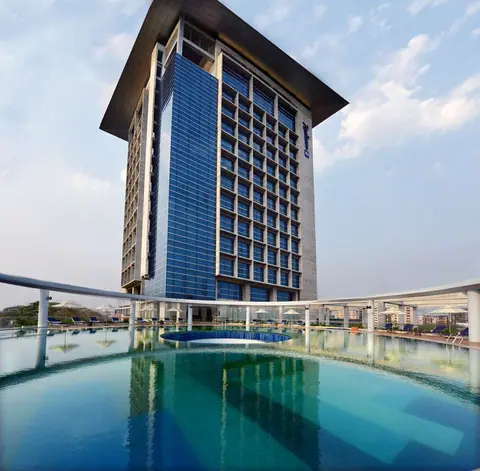
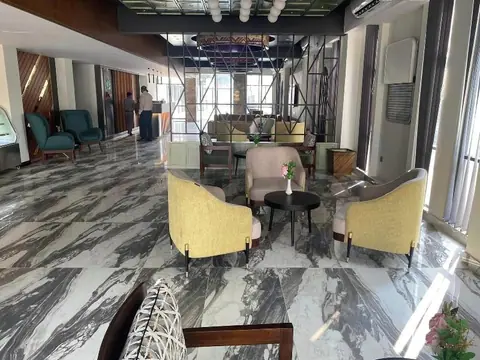
All hotelsA beach resort, a tea-estate bungalow, a cabin on the tide or a tower in the capital. Each one opens a live search for that place in the IMPT app.
01Pools and sea views along Cox’s Bazar’s Marine Drive, with the beach across the road.
Stays in Cox’s Bazar
02Verandas over the estates around Sreemangal. Mist in the morning, birdsong all day.
Stays in Sreemangal
03Two or three nights on a river boat, moving with the tide through the mangroves.
Stays in Khulna
04International hotels in Gulshan and Banani — calmer streets, rooftop pools, the metro nearby.
Stays in GulshanFour hundred years of capital in a few square kilometres: Mughal forts, merchant palaces and the river that built it all. Hire a rickshaw by the hour and let the driver lead.


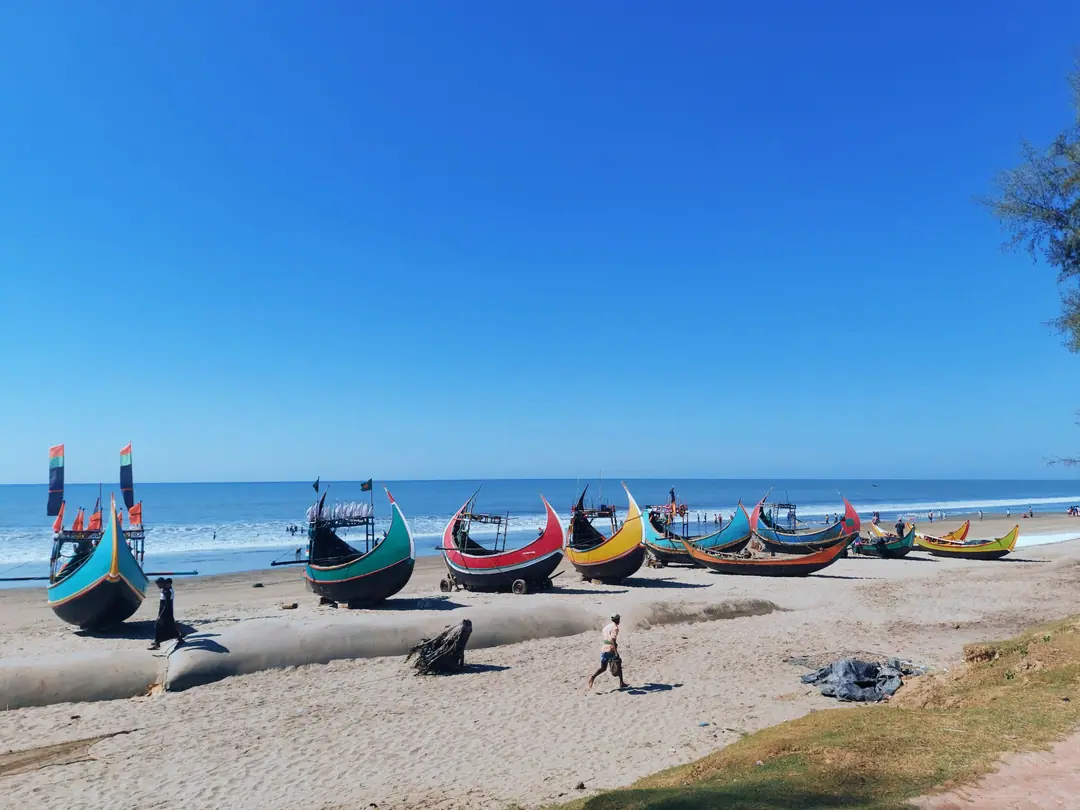
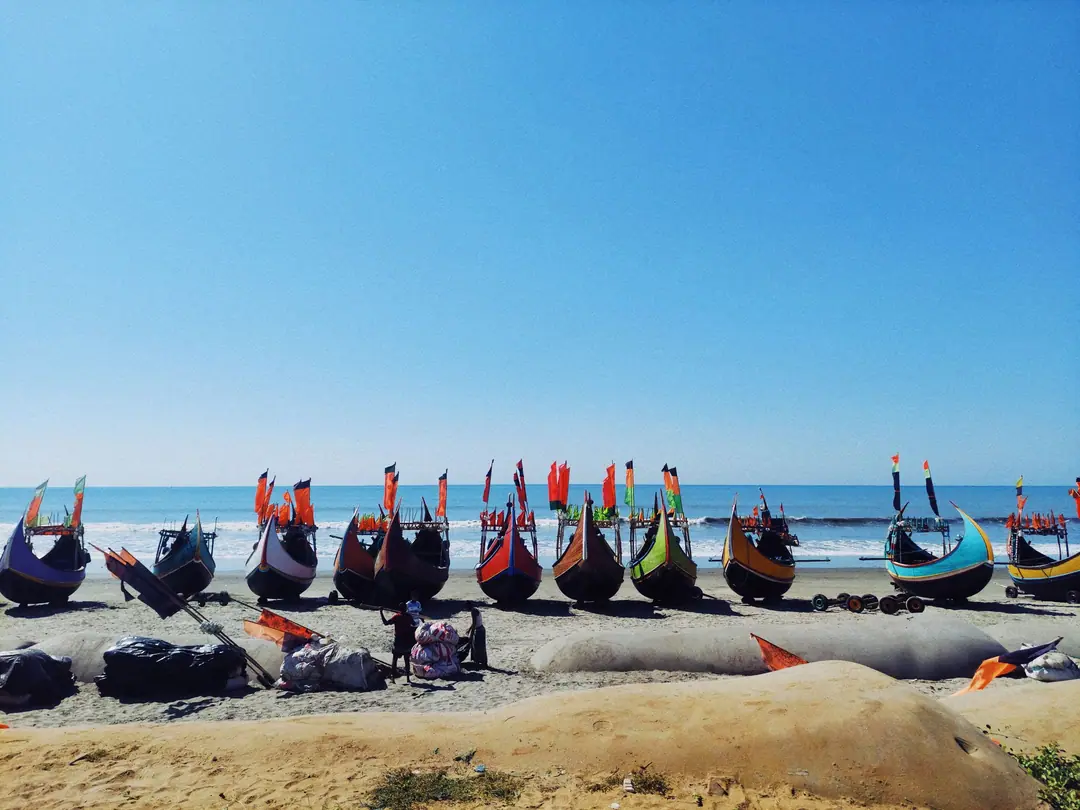
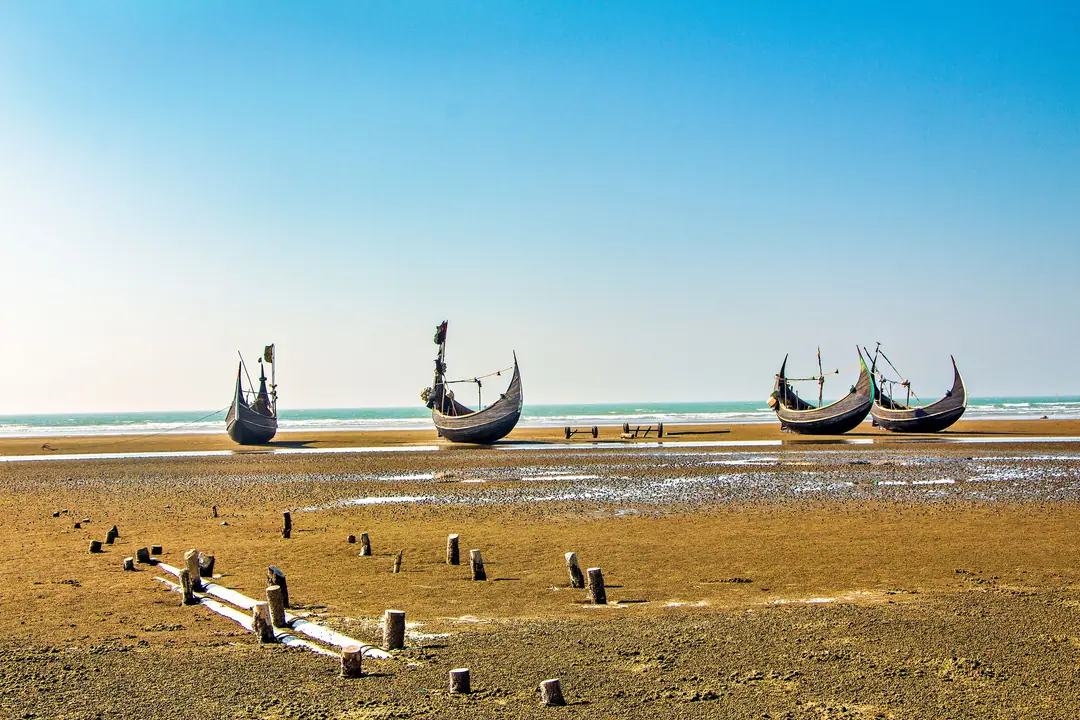
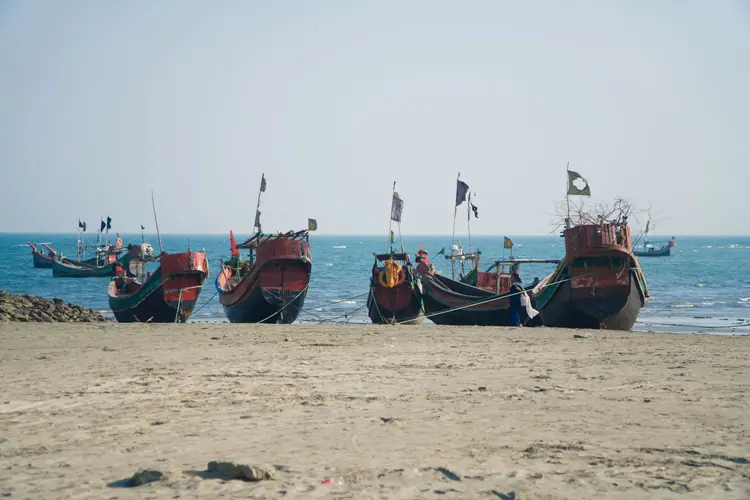
Cox’s Bazar runs south for around 120 kilometres of unbroken sand. Stay on the Marine Drive, ride south to Inani’s rock pools, and be on the beach when the fishing boats come in.


Pick what draws you and the places known for it stay in view. Distances are straight lines from Dhaka’s Shahjalal airport (DAC), computed from coordinates.
All places →Mughal forts and Old Dhaka’s lanes by day; Gulshan and Banani for the big hotels.
Stays in DhakaAround 120 km of unbroken sand, and the Marine Drive south to Inani’s rock pools.
Stays in Cox’s BazarThe country’s only coral island, reached by boat. Visits are restricted to certain months: check the current rules before planning.
Stays in Cox's BazarHill tracts, waterfalls and cloud on the ridgelines. Foreign visitors may need a permit.
Stays in BandarbanBoat days on Kaptai Lake, hanging bridges and hill villages.
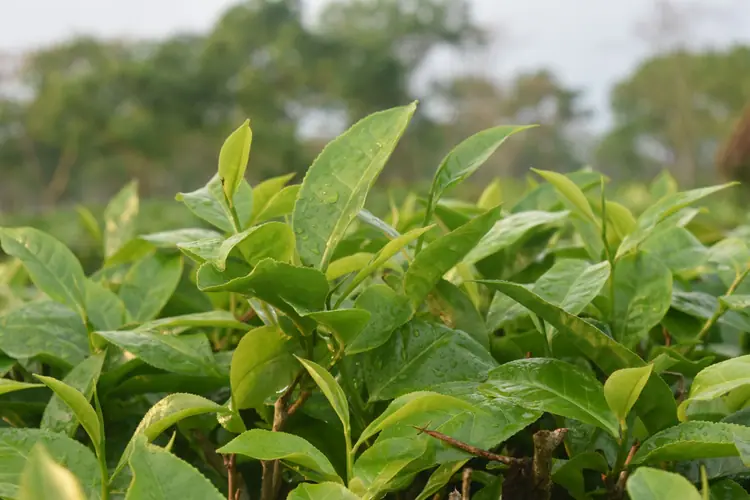
Stays in RangamatiTea estates to the horizon, gibbons in Lawachara forest and the famous seven-layer tea.
Stays in SreemangalPaddle through Ratargul’s swamp forest, then up to clear rivers at Jaflong.
Stays in SylhetTwo or three days by boat into the mangrove forest, from Khulna or Mongla.
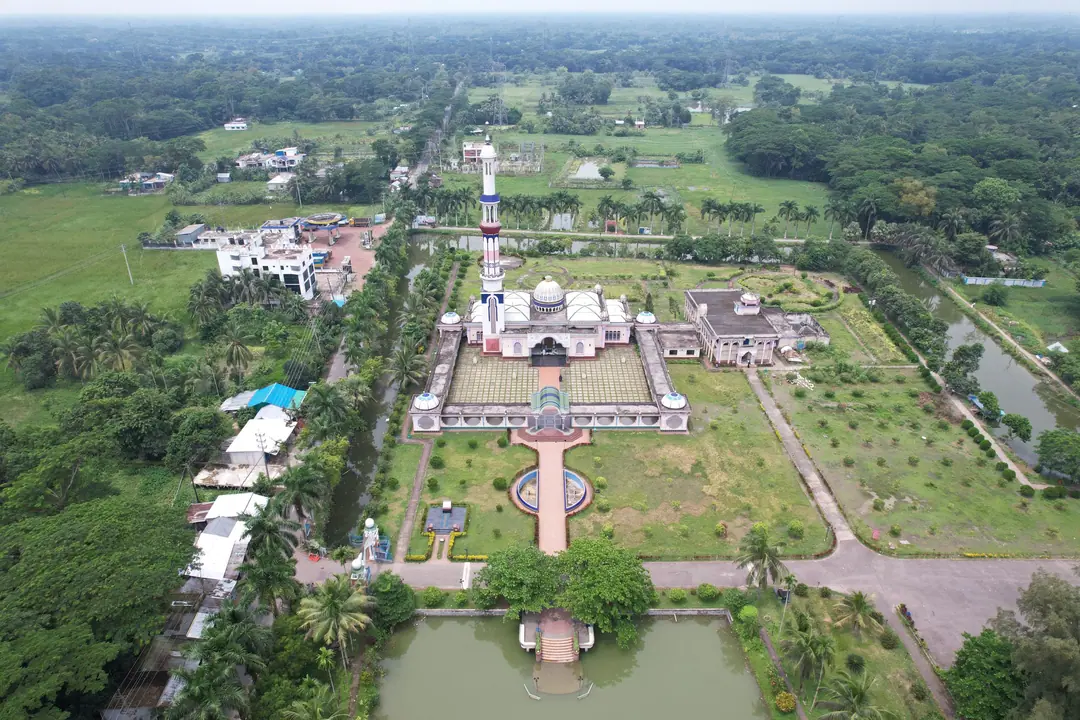
Stays in KhulnaThe Sixty Dome Mosque and a 15th-century mosque city, listed by UNESCO.
Stays in BagerhatA long beach where you can watch the sun both rise and set over the sea.
Stays in KuakataSomapura Mahavihara, an 8th-century Buddhist monastery and UNESCO site.
Stays in NaogaonThe far north. On clear autumn mornings, Kanchenjunga shows on the horizon.
Stays in Panchagarhএকটি বুকিং। এক টন।
Every booking made through IMPT funds one tonne of verified CO₂ offset. Not a checkout extra: it is part of the price.
Most visitors land in Dhaka. Short domestic flights reach Cox’s Bazar, Sylhet, Chattogram, Jashore for the Sundarbans, Saidpur and Rajshahi — the overland alternative is Benapole, on the border with Kolkata.
Most international flights land here. Gulshan and Banani are the closest hotel districts; allow extra time for traffic.
Gulf and regional flights. Cox’s Bazar is a scenic drive south or a short domestic hop.
Gulf flights and quick domestic links from Dhaka. Sreemangal’s tea country is a few hours by road.
Need a visa? The Visa Policy names the passports that can ask for one on arrival; land borders like Benapole need a visa issued in advance. Check yours in seconds.
Open the visa checkerIn-depth guides for independent travellers, reviewed November 2026.
কোথায় থাকবেনFour bases cover almost everything a first trip needs: the capital, the beach, tea country and the mangroves. Here’s who each one suits and how to reach it.
কী করবেনThe three experiences that define a trip here — a mangrove cruise, a morning in Old Dhaka and a walk through the tea gardens — plus what else is worth the detour.
ভ্রমণ নির্দেশিকাItineraries, transport and arrival — the practical planning that turns a complicated country into an easy trip.
ব্লগWhen to go, what to wear, what to eat and how safe it is — the questions every first-time visitor asks, answered plainly.
Bangladesh is easier to plan as a handful of bases than as a list of sights. Dhaka is the usual arrival point, and from there most first trips add the tea hills of the north-east, the mangroves of the south-west or the long beach on the Bay of Bengal. Start with the area pages to pick where to sleep, then use the guides to join them up.
The pages here cover where to stay, what to do, how to move around and which official rules to check. Distances are given as straight lines unless a road time is stated, seasons follow the same calendar on every page, and anything that changes, such as permits, closures and timetables, points to the office that publishes it.
If you have a week, two bases are enough: Dhaka for the capital and the old city, then either the north-east for tea hills and forest, or Cox’s Bazar for the sea. Ten days allows a third base, and a boat trip into the Sundarbans needs its own days because the boats are slow and the permits are arranged through licensed operators.
Bangladesh rewards planning around water. In the monsoon the rivers rise, swamp forests fill and some roads close; in the cooler months from October to March, boats, walks and city days are easier. The seasonal notes on each page say which months suit which place, and the visa checker and the official advice links should be read before any ticket is bought. Everything on the site is written for people planning independently, so each page says what to confirm, who to ask and how far ahead to do it.
Quick answers to what every first-time visitor asks.
Most visitors do. The Visa Policy names the nationalities that can ask for a visa on arrival; others apply in advance. Rules change, so check the official sites before you fly. Our visa checker shows what applies to your passport.
November to February: dry, sunny and cool. March to May is hot; June to September is the monsoon, when the countryside is greenest. More in the best time to visit.
Gulshan and Banani for international hotels, restaurants and calmer streets. Karwan Bazar and Shahbagh put you closer to Old Dhaka. The elevated metro runs north–south and skips the traffic. See where to stay in Dhaka.
Visits are restricted to protect the coral, with limits on months, numbers and overnight stays that have changed recently. Check the Ministry of Environment and the Bangladesh Tourism Board before you plan.
Foreign visitors need permission from the district administration, usually arranged through a licensed operator or the hotel, and some areas close at times. Check the current position and your government's travel advice before you book.
With a licensed operator from Khulna or Mongla, who arranges the forest permit, boat and guide. Two- and three-day trips are the norm, from November to February. Read the Sundarbans boat trip guide.
The currency is the taka (BDT). Big hotels and malls take cards; carry cash for rickshaws, markets, boats and smaller towns.
Two bases in a week and three or four in ten to fourteen days is a comfortable pace. Distances look short, but rivers, traffic and flight connections through Dhaka mean each move takes most of a day. Add Dhaka at both ends, then choose by interest: tea hills, mangroves, beach, or the archaeology of the north-west.
Hazrat Shahjalal International Airport in the north of Dhaka handles most international flights and is the hub for nearly all domestic routes. Chattogram and Sylhet also have international airports. Allow plenty of time between an international arrival and a domestic connection, and check the terminal number on your ticket before you travel.
Bangladesh is six hours ahead of UTC all year, with no daylight saving. That puts it half an hour ahead of India and fifteen minutes ahead of Nepal, a detail that matters if you are crossing a land border or booking connecting flights. Sunrise comes early, so plan outdoor sights for the first hours of the day.
Friday and Saturday. Government offices and many businesses close on both, and Friday midday is the main congregational prayer. City roads are quietest on Friday mornings, while beaches, tea country and day-trip sights are busiest from Thursday night. Museums and monuments each have their own weekly closing day, so check before setting out.
In hotels, airlines, larger restaurants and among students and business people, yes. In villages, small stations and on rickshaws, less so, and signs may be only in Bangla. Keep your hotel name and destinations saved in Bangla script on your phone, learn a few polite phrases, and ask younger people when you need help.
The country has eight divisions: Dhaka, Chattogram, Rajshahi, Khulna, Barishal, Sylhet, Rangpur and Mymensingh, each split into districts. Place pages on this site follow those names, using the modern spellings adopted in 2018, so Chittagong appears as Chattogram and Comilla as Cumilla. Older names still turn up on tickets and maps.
Yes, if you choose bases that connect by one internal flight or one overnight train rather than long road days. Dhaka plus Sylhet and Sreemangal works, as does Dhaka plus Cox’s Bazar. A third region usually costs a full day of travel, so most visitors keep to two and leave the rest for another trip. Check current timetables before you fix dates.
Check the entry rule for your passport on the visa checker, then your passport validity and the current travel advice from your own government. Confirm whether your route needs permission, as the Chittagong Hill Tracts do, and compare your dates with the monsoon and the main festivals. Only then fix flights, because rules and closures can change at short notice.
Live prices in the IMPT app. Every booking funds one tonne of CO₂, never added to your bill.
It means: come again.
Photo credits: Bangladesh Nature on Pexels; Shamim Hossain on Pexels; Toriqul Islam on Pexels; Ferdous Hasan on Pexels; Tanha Tamanna Syed on Pexels; Biplab Sau on Pexels; md Kamrul Hawlader on Pexels; Jubayer Ahmed on Pexels; Sarowar Hussain on Pexels; Md.Omar Faruk Hemal on Pexels; Razib Hasan on Pexels; Mumtahina Tanni on Pexels; Thinho 7 on Pexels; Sharif Ahmed on Pexels; S M Towfiqur Rahaman on Pexels; Shaqeeb Al Hasan on Pexels; Mahmudul Hasan on Pexels; Mahmud Jami on Pexels; Md Naimur Rahman Sazan on Pexels; RatuL CR on Pexels; Bornil Sarker on Pexels; SR Raju on Pexels; Sifat Hamim on Pexels; Sam. C. on Pexels; Jubair Hosen Junet on Pexels; Abdur Rahman Saikat on Pexels; Zahid Tushar on Pexels; Shamsuddin Habib on Pexels; Nafees Faysal on Pexels; Tanvirul Islam on Pexels; Musaddek Sayek on Pexels; Simon Reza on Pexels; Ashraful Islam on Pexels; Shubhra Dhar on Pexels; Muhammad Saidul Islam on Pexels; Nazmul Islam Shuvo on Pexels; Chandi Saha on Pexels; Ramiel Dhanik on Pexels; Miyen babu on Pexels; Al Rashed on Pexels; Md Samiuzzaman Sakib_ on Pexels; Swadhin Das on Pexels; Shadman on Pexels; imrul islam on Pexels; Somogro Bangladesh on Pexels; Md Amanat Ullah on Pexels; Abdul Kayum on Pexels; Sadik Jafrullah Nabil on Pexels; Mehrajul Karim on Pexels; Kabiur Rahman Riyad on Pexels; Mijanur Rahman Niloy on Pexels; Saied Shohag on Pexels; Ayman Nakib Badhan on Pexels.