On this page
Khulna is Bangladesh’s third city and the starting point for almost every Sundarbans trip. Few visitors come for the city itself, but it’s a useful, friendly base with decent hotels, and it puts two World Heritage Sites within easy reach.
The short version
- Khulna is the practical base for Sundarbans cruises: sleep in the city the night before, then the boat becomes your hotel.
- Since the Padma Bridge opened in 2022, the road from Dhaka takes around four to five hours; flying to Jashore is the quicker alternative.
- Bagerhat’s mosque city, an hour away, is the perfect half-day add-on before or after your cruise.
- Book your cruise first, carry cash, and travel between November and February for calm water and the best wildlife viewing.
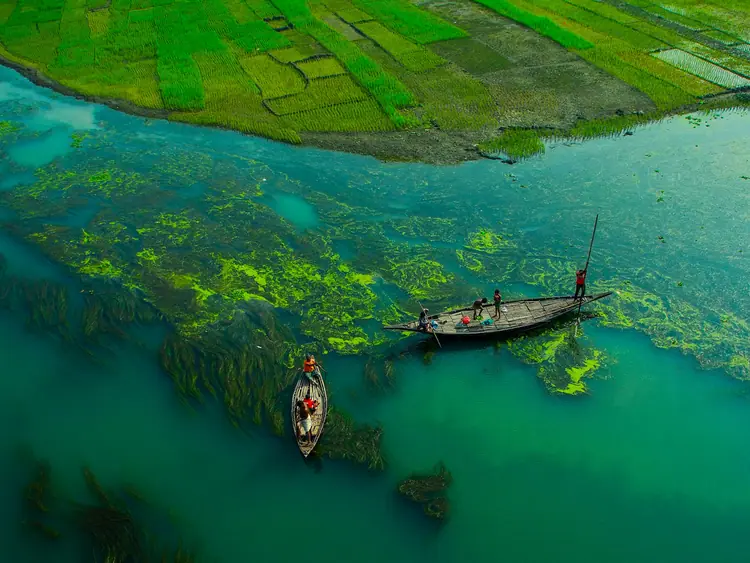
The city sits on the Rupsha and Bhairab rivers in the south-west of the country, in a landscape of shrimp ponds, rice fields and waterways that runs south into the mangroves. Most travellers spend one night here before a cruise and sometimes one after, with an afternoon in Bagerhat. This guide explains how to get here, where to stay, how Sundarbans trips work, what to see nearby and when to come.
Getting here
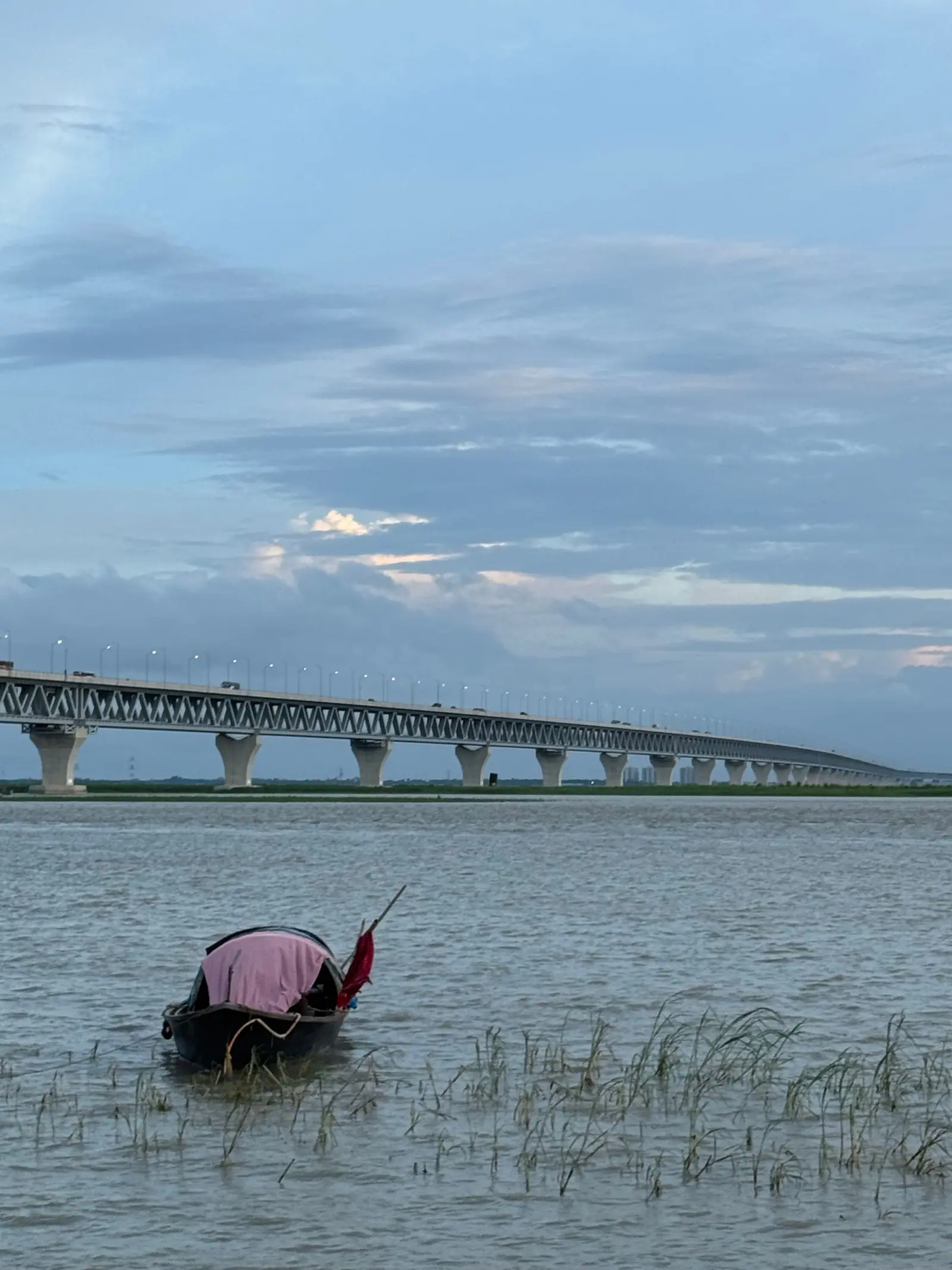
Since the Padma Bridge opened in 2022, the road from Dhaka to Khulna takes around four to five hours instead of most of a day. Alternatively, fly from Dhaka to Jashore in about forty minutes and drive roughly an hour and a half to Khulna. Many cruise operators include airport or station pickup.
| Option | Approx. time | Approx. one-way cost | Good for |
|---|---|---|---|
| Flight to Jashore + road | 40 min flight + about 1.5 h drive | About BDT 4,500–9,000 (USD 38–75) for the flight | Saving time; operator pickups common |
| AC bus via Padma Bridge | Around 4–5 h, longer in traffic | About BDT 800–1,800 (USD 7–15) | Budget travellers, direct to Khulna |
| Private car via Padma Bridge | Around 4–5 h | Varies; ask your hotel or operator | Families and groups, door to door |
| Train | Varies by route and service | About BDT 500–1,500 (USD 4–13) depending on class | Comfort, if timings suit |
Fares are approximate planning ranges and change with season and fuel prices. Trains run between Dhaka and Khulna, and newer services use the rail link across the Padma Bridge; timetables have changed several times recently, so check current options on the official Bangladesh Railway e-ticket site. Our getting around Bangladesh guide compares buses, trains and flights.
Where to stay
Stay in central Khulna the night before your cruise — operators usually board in the morning from the city’s river jetties or from Mongla port, about an hour south. Hotels are mostly mid-range and business-style; the boat itself becomes your hotel for the next two or three nights.
Central Khulna
The city centre, around the main roads near the river and the railway station, has the widest choice of hotels, restaurants and ATMs. Established names include Hotel Castle Salam, Tiger Garden Int Hotel and Hotel City Inn, all near KDA Avenue and Shib Bari. Expect comfortable rather than luxurious standards; there are few international chain hotels in the city. Rooms facing away from the main road are quieter.
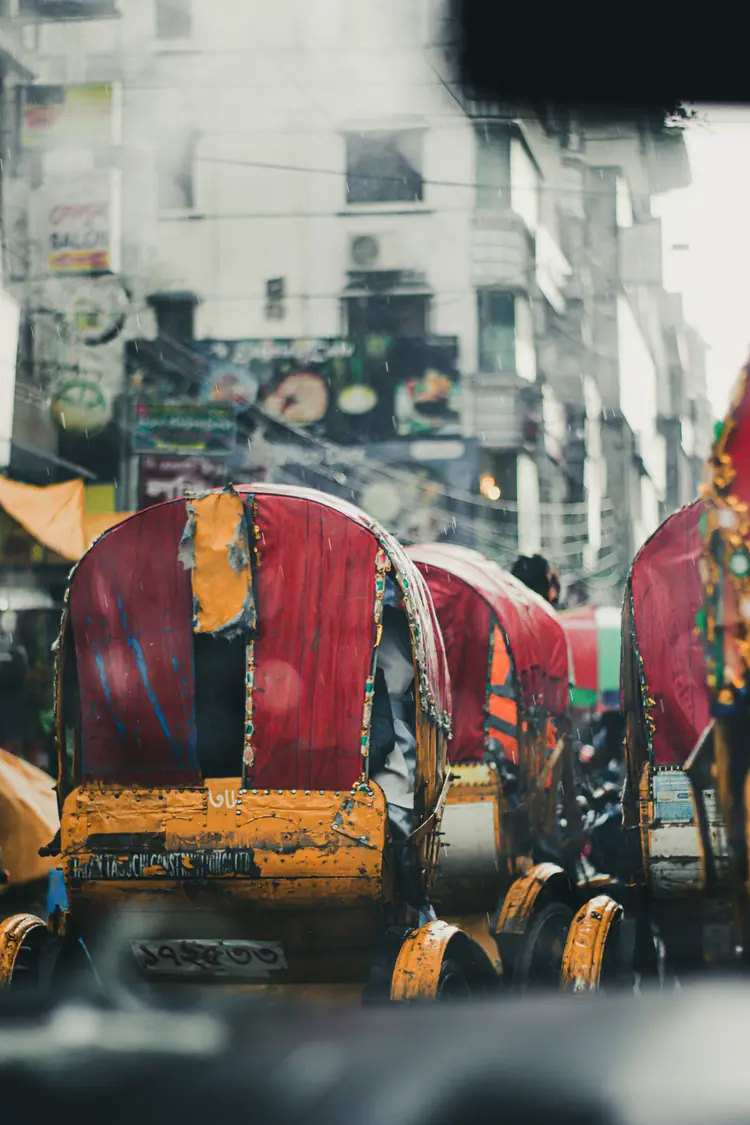
If you have a spare evening, the riverside is the most pleasant part of the city: the Rupsha is busy with ferries, cargo boats and fishing craft, and the Khan Jahan Ali Bridge across it is lit up after dark. Khulna is not a sightseeing city, but it is relaxed compared with Dhaka, and the rickshaw ride between your hotel and dinner is part of the experience.
Mongla
Mongla is a working port town on the Pashur river and the closest point to the forest for many cruises. Accommodation is limited and simple, so most visitors only stay here if their operator recommends it or if they are joining a short day trip into the forest from the port. If your boat leaves from Mongla, your operator will usually arrange the transfer from Khulna in the morning.
Bagerhat
Bagerhat town has a few basic hotels, but most visitors see the mosque city as a day trip from Khulna, an hour away by road.
Visiting the Sundarbans
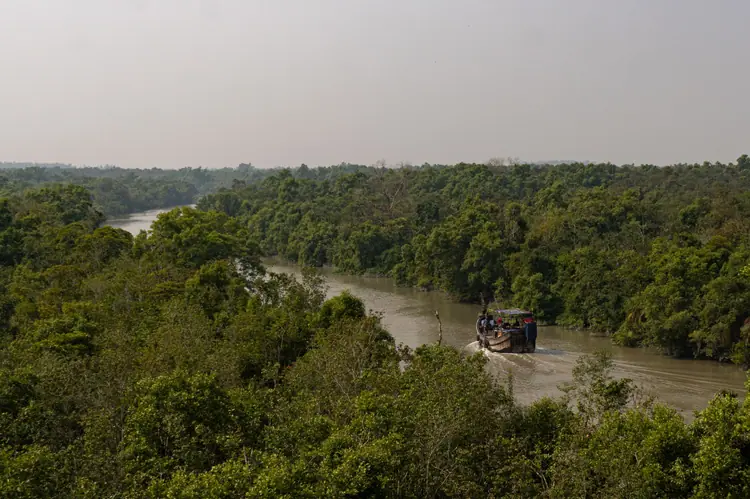
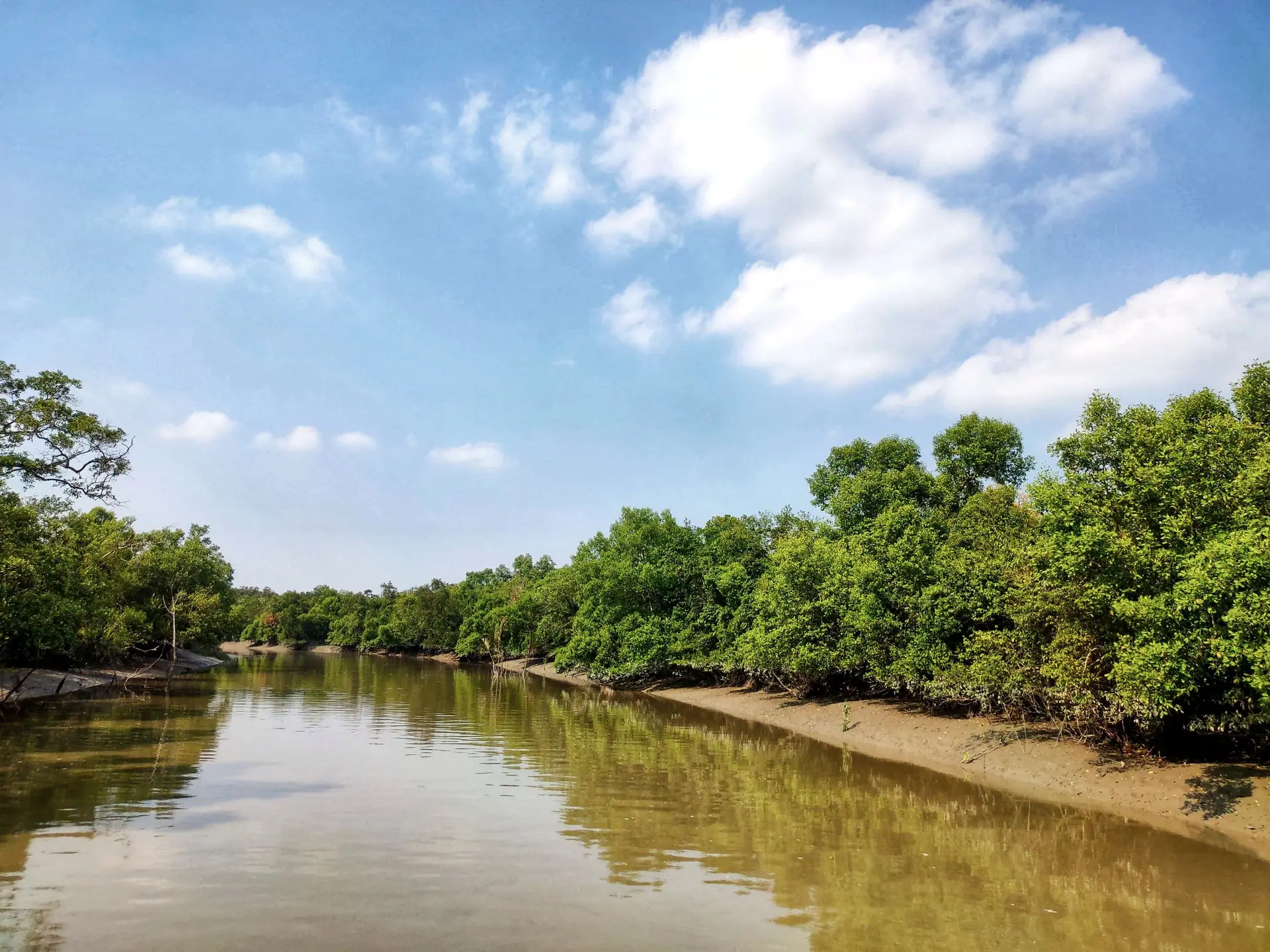
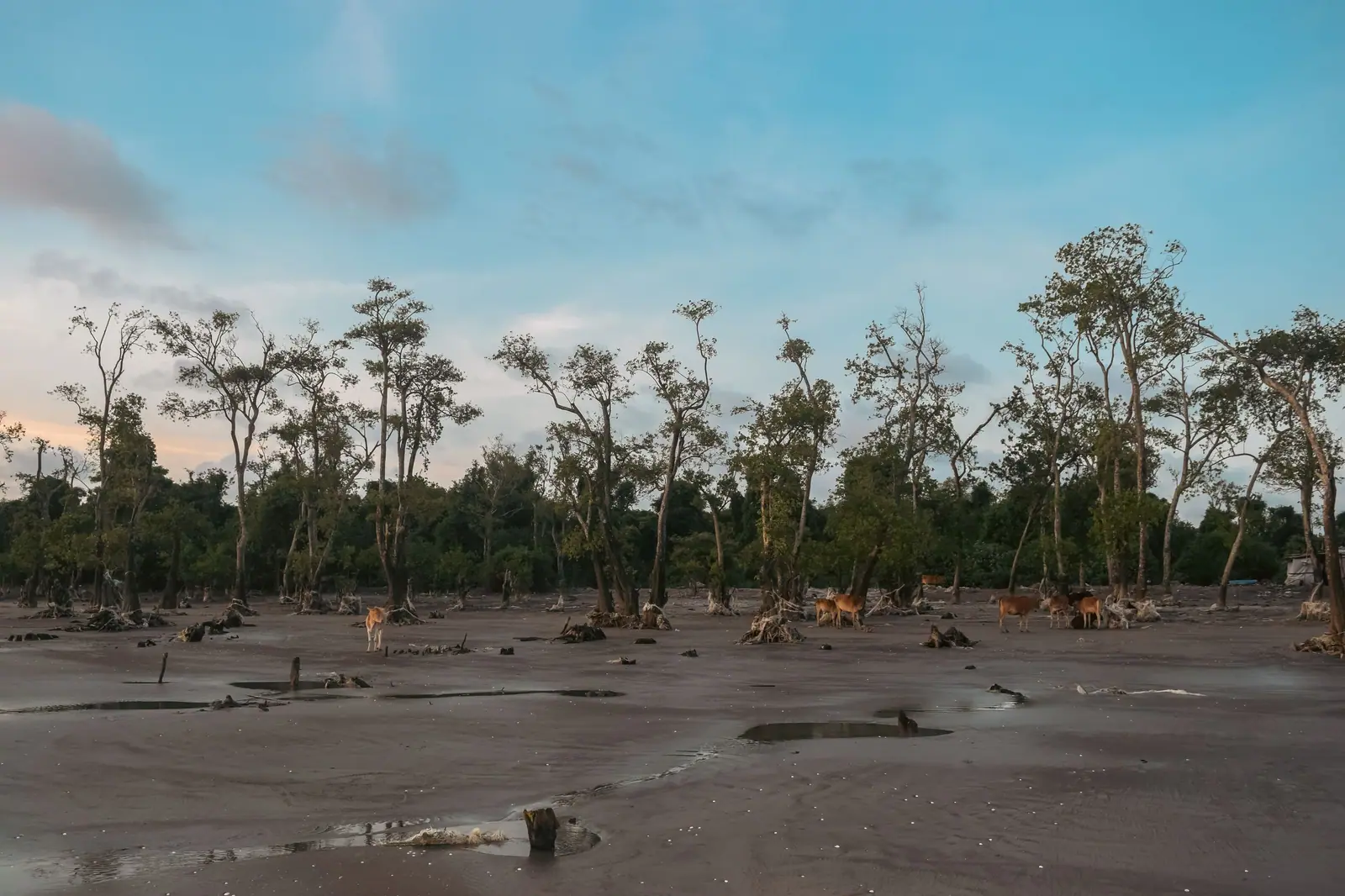
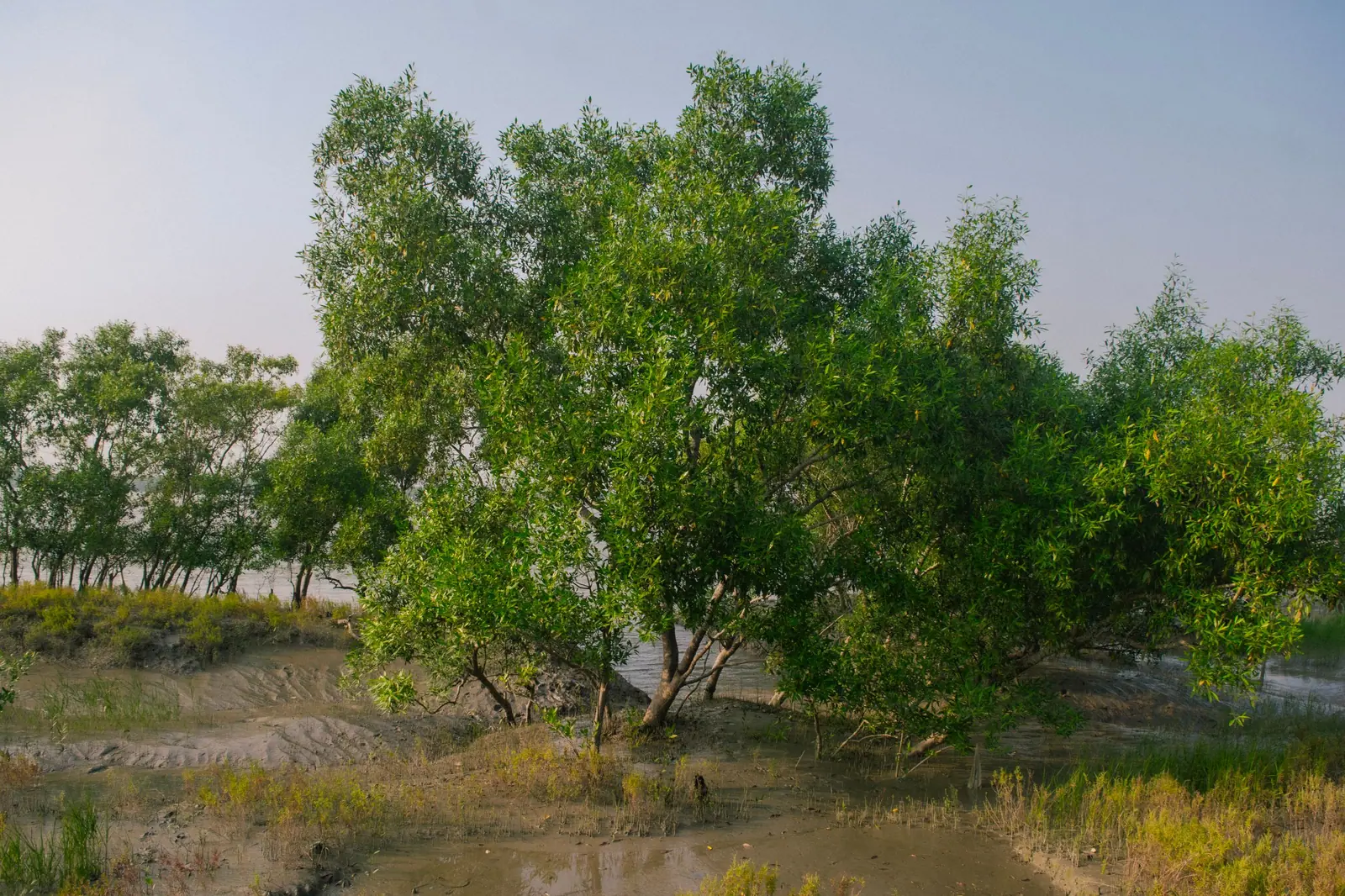
The Sundarbans covers around 10,000 square kilometres across Bangladesh and India, and the larger share lies in Bangladesh. It is a maze of tidal rivers, creeks and mudflats under mangrove forest, home to the Bengal tiger, spotted deer, saltwater crocodiles, river dolphins, monitor lizards and a long list of birds, including several species of kingfisher. The Bangladeshi part is a UNESCO World Heritage Site.
Most visitors join a cruise of two to four days run by a licensed operator, which handles the Forest Department permits, armed forest guards and meals. Boats range from simple wooden vessels with shared cabins to larger launches with private rooms. Typical itineraries include walking trails, watchtowers and small-boat trips into narrow creeks, with stops at places such as Kotka, Kochikhali and Harbaria. Tiger sightings are very rare; deer, monkeys, birds and crocodiles are far more likely. Shorter day trips from Mongla to the Karamjal forest centre are possible if you are short on time.
Our Sundarbans boat trip guide covers choosing an operator, what is included and what to pack.
Bagerhat — the mosque city
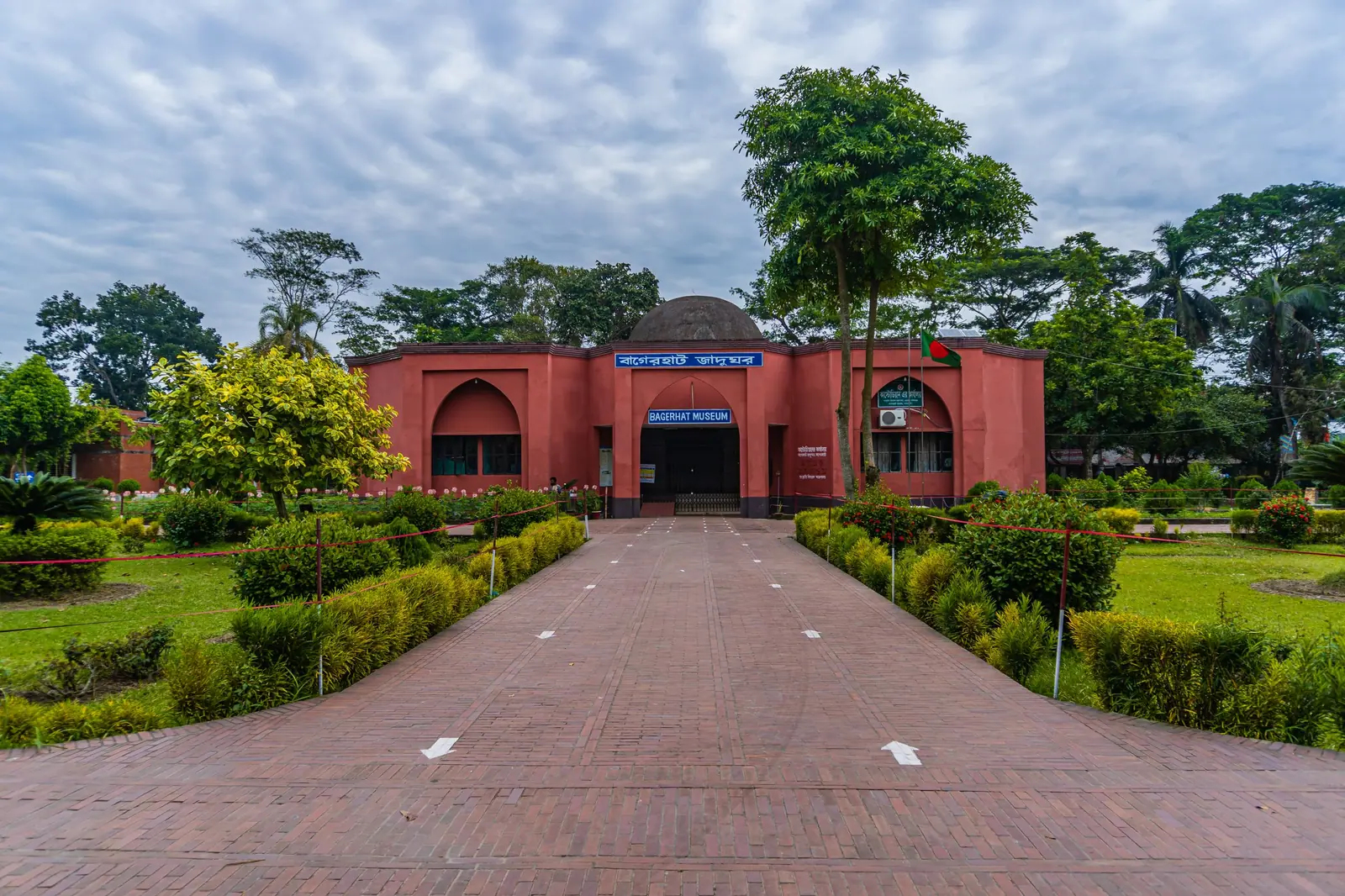
An hour from Khulna, Bagerhat was founded in the 15th century by the saint-general Khan Jahan Ali. Its centrepiece, the Sixty Dome Mosque (Shait Gumbad), is a vast brick prayer hall that actually has more domes than its name suggests — 77 over the hall. Nearby are Khan Jahan Ali’s tomb, smaller mosques and a museum. Plan a half day, ideally before or after your cruise.
The historic mosque city is a UNESCO World Heritage Site, and its monuments are scattered across fields, ponds and villages rather than packed into one compound. Inside the Sixty Dome Mosque, rows of stone pillars carry the roof; the brickwork and terracotta details are best seen in the soft afternoon light. Khan Jahan Ali’s tomb stands beside a large pond, a place of pilgrimage that is busy on Fridays. Smaller monuments such as the Nine Dome Mosque and the Singar Mosque are a short rickshaw or easy-bike ride away. The site museum near the Sixty Dome Mosque gives useful context.
Dress modestly, remove shoes before entering mosques and avoid prayer times, especially Friday midday. There is an entry fee for foreign visitors at the main site; check the current amount and opening days locally.
Further afield
Kushtia, in the north of the division, is home to the shrine of the mystic poet Lalon Shah, where Baul musicians gather — especially for the October festival.
Kushtia is a long day’s drive from Khulna, so it works best as an overnight trip or on the way back towards Dhaka. Also in the district is Shilaidaha, where the poet Rabindranath Tagore managed his family’s estates and wrote some of his best-known work; his house there is preserved as a museum. Closer to Khulna, the town of Jashore is the regional transport hub and has the airport.
Food, money and practicalities
- Book your cruise first, then a hotel close to its departure point.
- Carry cash: card payments are rarer outside Dhaka.
- November to February brings calm water and the best wildlife viewing.
The south-west is shrimp and prawn country, and giant freshwater prawns (golda chingri) appear on many menus. Khulna is also known for chui jhal, meat cooked with the pungent stems of a local pepper vine. Cruise meals are usually generous Bangladeshi set menus with fish, chicken, rice and dal. See our food guide for more.
ATMs are available in central Khulna, but there are none on the boats and few in Mongla or around Bagerhat, so withdraw enough taka in the city for tips, entry fees and snacks. Mobile signal fades deep in the forest. Pack insect repellent, a hat, sunscreen, a light jacket for cool winter mornings on deck, and shoes you do not mind getting muddy.
| Item | Approx. cost | Notes |
|---|---|---|
| Sundarbans cruise, 3 days / 2 nights | About BDT 15,000–40,000 (USD 125–330) per person | Depends on boat, cabin type and group size; permits usually included |
| Car and driver to Bagerhat | Ask your hotel or operator | Half-day hire is usually enough |
The cruise figure is a rough planning range and changes; foreign visitors often pay higher Forest Department fees than residents, and operators quote very differently, so compare what each price includes.
Staying healthy on the water
A cruise can take you far from pharmacies and clinics, so prepare before boarding in Khulna or Mongla. Pack enough of any regular medicine for the whole trip, with a few days spare in case plans change, and keep it in a dry bag within reach. Add oral rehydration salts, plasters, antiseptic and your usual remedy for motion sickness. Ask the operator what first-aid supplies are carried, how drinking water is provided and how a sick passenger would be brought ashore. Tell the crew about serious allergies before the first meal is cooked.
Drink only bottled or filtered water, including when brushing your teeth. Winter is the season for date-palm sap in rural Bangladesh: never drink it raw, because it can carry Nipah virus. Dengue is a risk, particularly during and after the monsoon, so cover your arms and legs when mosquitoes are biting. A travel clinic can advise on vaccinations and whether your wider route calls for malaria precautions. Check that your travel insurance covers boat trips and medical evacuation from remote areas.
When to go and a four-day plan
November to February is the best time, with calm water, cool mornings and good wildlife viewing. March to May is hot and humid. The monsoon brings rough water and heavy rain, and the region lies in the path of cyclones from the Bay of Bengal, mostly in the pre- and post-monsoon months. See our best time to visit guide for details.
- Day 1 · Dhaka to Khulna and Bagerhat
Fly to Jashore or drive across the Padma Bridge. Drop your bags in Khulna, then spend the afternoon at the Sixty Dome Mosque, Khan Jahan Ali’s tomb and the museum.
- Day 2 · Board the boat
Morning departure from a Khulna jetty or Mongla. Cruise south into the forest, with a first creek trip by small boat in the afternoon.
- Day 3 · Deep in the Sundarbans
Dawn boat trip, guided walks and watchtowers at the main forest stations, watching for deer, crocodiles, dolphins and birds.
- Day 4 · Return
Cruise back to Khulna or Mongla by midday, then travel on to Dhaka by road or via Jashore airport.
For a longer trip, our 10-day itinerary combines Khulna and the Sundarbans with Dhaka and the tea country of Sylhet.
Hotels to consider
Questions and answers
Do I need to stay in Khulna before a Sundarbans cruise?
Usually yes. Most cruises board early in the morning from Khulna’s jetties or from Mongla, so arriving the evening before avoids a pre-dawn start from Dhaka. Many operators include transfers from Jashore airport or Khulna’s bus and railway stations; ask yours where and when boarding takes place before you book a hotel.
Can I visit the Sundarbans independently?
Not really. Entering the forest requires Forest Department permits, and visitor groups are accompanied by forest guards. In practice, joining a licensed tour operator’s cruise, or a short organised day trip from Mongla, is the realistic way to go. Operators arrange permits, boats, guards and meals as part of the package.
Are tigers often seen on cruises from Khulna?
Probably not. Tigers live in the Sundarbans but are shy and rarely seen, even by guides who visit often. You are much more likely to see spotted deer, rhesus macaques, monitor lizards, crocodiles, river dolphins and many birds. Fresh tiger tracks on a muddy bank are a more realistic highlight.
How much time should I give Bagerhat?
Half a day is enough for the Sixty Dome Mosque, the museum, Khan Jahan Ali’s tomb and one or two smaller mosques. It is about an hour by road from Khulna, so it fits neatly into the afternoon you arrive or the day you return from your cruise. Hire a car or use local rickshaws between monuments.
Is the Sundarbans open all year?
No. The Forest Department closes the forest to visitors for the summer breeding season (1 June to 31 August in 2026), and the monsoon makes cruising uncomfortable anyway. November to February is the most popular and reliable period. Confirm with your operator that trips are running on your dates before you book flights.
What should I pack for a Sundarbans cruise?
Light, long-sleeved clothing in muted colours, a warm layer for winter mornings on deck, a hat, sunscreen, insect repellent and shoes that can get muddy. Bring binoculars if you have them, a power bank, any medicines you need and enough cash, as there are no ATMs once you leave Khulna.
How do I get from Khulna to Mongla?
Mongla is about 41 kilometres south of Khulna in a straight line, usually an hour or so by road. Buses run between the two, but if you are joining a Sundarbans boat your operator normally arranges the transfer, sometimes with a short river crossing at the end. Agree the pick-up point and time the evening before, because boats leave with the tide.
Is Khulna worth visiting without a Sundarbans trip?
It can be, for a night or two. Bagerhat’s mosque city, one of three World Heritage Sites in the country, is an easy half day away, and the Rupsha riverside is pleasant at dusk. It also works as a break between Dhaka and Kushtia or Jashore. When the forest is closed from June to August, Bagerhat is the main reason to come.