On this page
Dhaka is a city of more than twenty million people, and where you sleep decides how much of it you actually see. Traffic is the single biggest factor: a five-kilometre trip can take an hour at rush hour. Choose a hotel close to what you came for, and plan each day around one part of the city rather than criss-crossing it.
The short version
- Traffic decides everything in Dhaka, so pick a base close to what you came for and plan each day around one part of the city.
- Gulshan and Banani are the easiest first base; Karwan Bazar and Shahbagh are more central; Uttara suits early flights.
- Old Dhaka is for a long day visit, not for sleeping — go early, ideally on a Friday morning when the roads are quietest.
- The MRT Line 6 metro and ride-hailing apps make the city far easier than it was a few years ago.
This guide walks through the neighbourhoods that make sense for visitors, what each one is like to stay in, and the trade-offs. It also covers getting in from the airport, moving around once you are here, money and seasons, and a simple plan for two or three days. If you have just landed, our Dhaka airport to the city guide covers the first hour in detail.
Dhaka’s neighbourhoods at a glance
Think of the city as a long north–south strip. The airport and Uttara are at the top, the diplomatic and business districts of Gulshan, Banani and Baridhara sit in the middle-north, the government and university quarter around Shahbagh is further south, and Old Dhaka lies at the very bottom on the Buriganga river. Most of what a visitor wants is spread along that line, which is why the north–south metro has made such a difference.
| Area | Best for | Trade-off | To Old Dhaka (typical) |
|---|---|---|---|
| Gulshan & Banani | First visits, families, business, restaurants | Long ride to the old city | 60–120 min by car |
| Karwan Bazar & Shahbagh | Museums, university area, central location | Busier, noisier streets | 30–60 min by car |
| Dhanmondi | Lake walks, cafés, mid-range stays | Fewer international hotels | 30–60 min by car |
| Uttara & Airport Road | First or last night, early flights | Far from almost every sight | 90+ min by car, or metro + rickshaw |
| Old Dhaka | Day visits only | Very few visitor hotels | — |
Journey times in the table are rough guides for daytime traffic and vary hugely by hour and day. Friday morning is usually the quickest time to cross the city; weekday evenings from around 5 pm are the slowest.
Gulshan and Banani — the easy choice
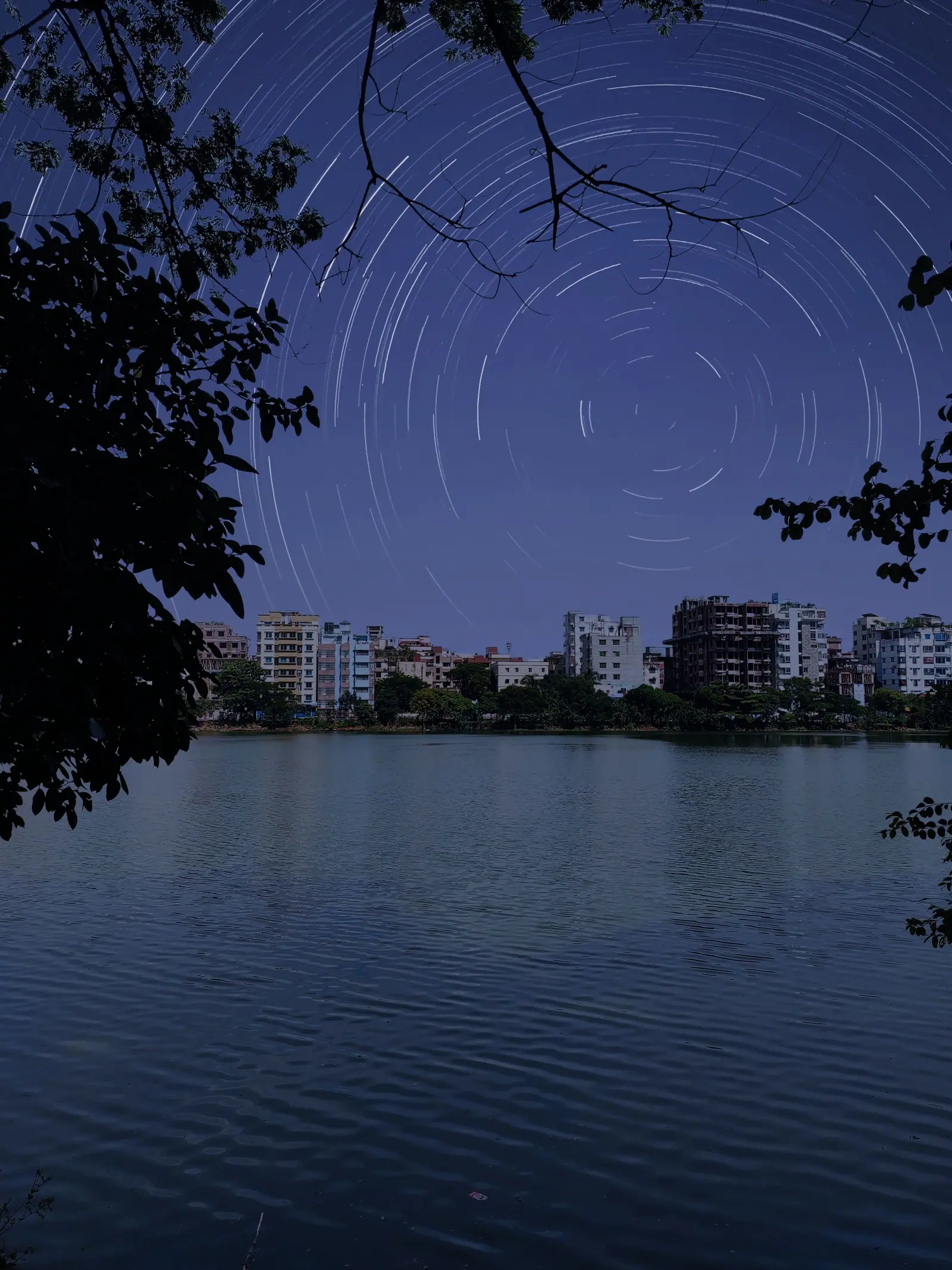
Most international hotels, embassies, cafés and restaurants are in Gulshan and neighbouring Banani, north of the centre. Streets are calmer, pavements are better and there are lakeside paths for a morning walk. The Westin and the Renaissance are here. It’s the best base for a first visit, for business trips and for families — the trade-off is a long ride to Old Dhaka.
Gulshan is split into Gulshan 1 and Gulshan 2, each built around a busy roundabout with shops, banks and supermarkets. Gulshan 2 has more of the larger hotels and restaurants, while the streets towards Baridhara, the embassy district, are among the quietest in the city. Banani, just west across the lake, has a dense grid of restaurants, coffee shops and boutiques around Road 11 and has many mid-range hotels and serviced apartments.
What you gain: international-standard hotels, reliable ATMs and card payments, a wide choice of food from Bangladeshi to Thai and Italian, and easy ride-hailing pick-ups. What you give up: it feels quite separate from the rest of Dhaka, and any trip south to the old city or the museums is a commitment of half a day once you count traffic.
Karwan Bazar, Shahbagh and Dhanmondi — closer to history
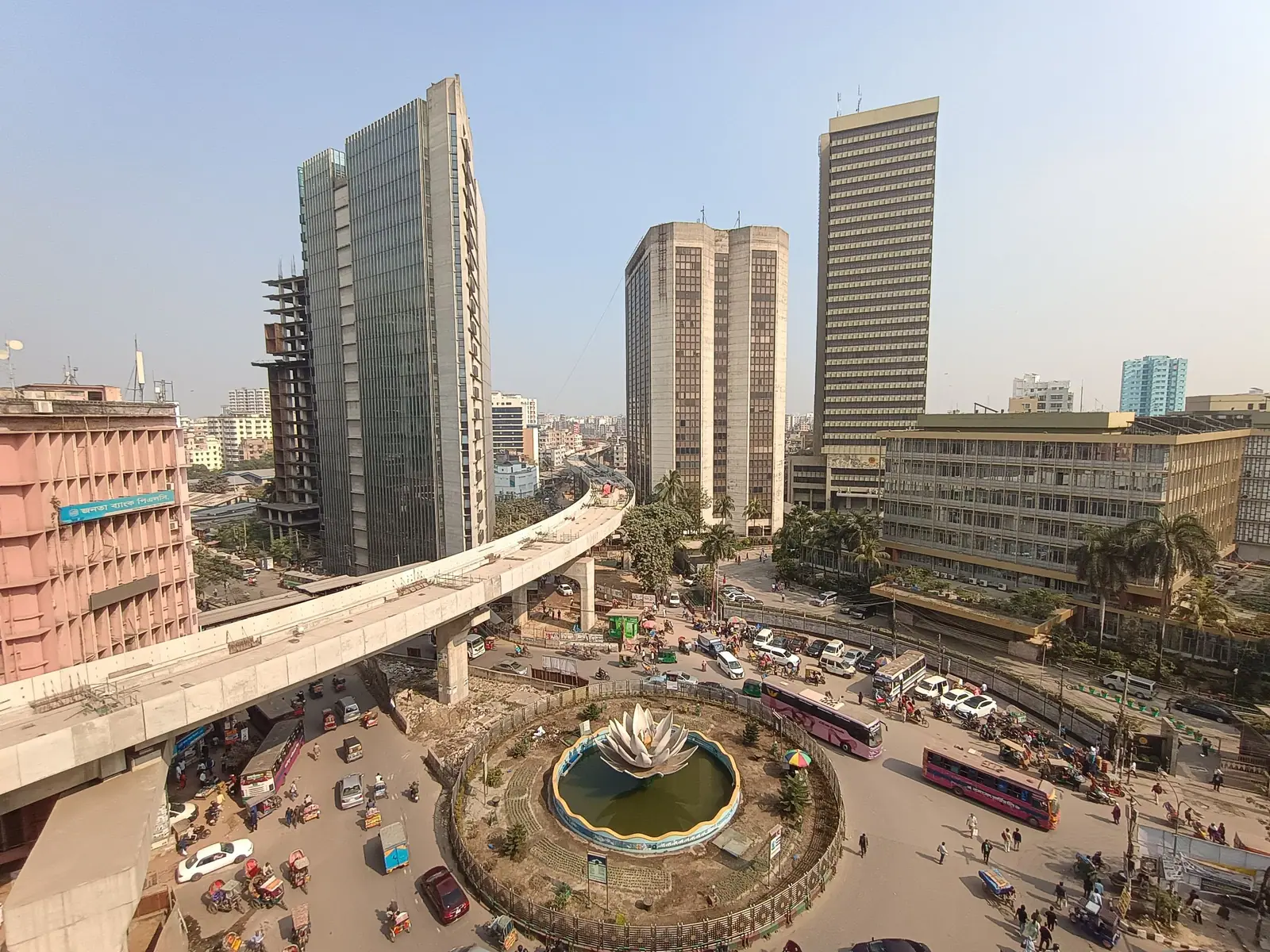
Pan Pacific Sonargaon in Karwan Bazar and the InterContinental on Minto Road near Shahbagh put you in the middle of the city. From here the National Museum, Dhaka University, Ramna Park and the old city are far easier to reach, and the elevated expressway connects quickly to the airport.
Karwan Bazar itself is a commercial hub with media offices and one of the city’s great wholesale markets, at its busiest before dawn. The neighbourhood is not pretty, but it has a metro station on MRT Line 6, which puts Agargaon (for the National Parliament area and the Liberation War Museum) a few stops north and Shahbagh and Dhaka University a few stops south. Shahbagh is the green heart of central Dhaka: Ramna Park, the Suhrawardy Udyan, the National Museum and the university’s red-brick Curzon Hall are all within a short rickshaw ride.
Dhanmondi
West of Karwan Bazar, Dhanmondi is a long-established residential district wrapped around a winding lake with walking paths. It has plenty of cafés, bookshops and restaurants popular with students and young families, and a selection of mid-range hotels and guesthouses rather than big international names. It suits travellers who want a lived-in neighbourhood feel and it is closer to New Market and Old Dhaka than Gulshan is.
Uttara — for early flights
Uttara sits beside Hazrat Shahjalal International Airport and is the northern end of the metro line. Le Méridien and a cluster of mid-range hotels make it a sensible first or last night, especially with an early departure.
Le Méridien Dhaka is on Airport Road between the terminal and Banani, so it works for both. Uttara proper is a planned suburb divided into numbered sectors, with its own restaurants, shopping centres and a quieter pace than the centre. Because the metro starts here, you can ride straight down to Agargaon, Karwan Bazar or Shahbagh without touching the road traffic, which makes Uttara a more practical base than it used to be for a short stay. Note that the metro does not run to the airport terminal itself; you still need a short car or CNG ride to reach the northern stations.
Old Dhaka — visit, don’t sleep
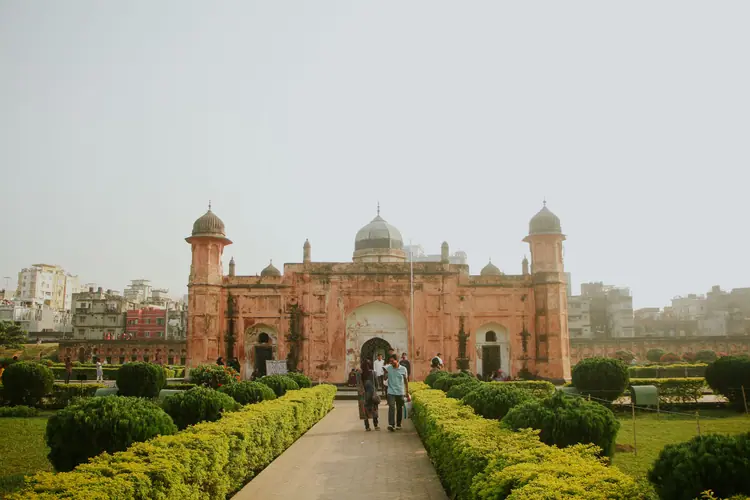
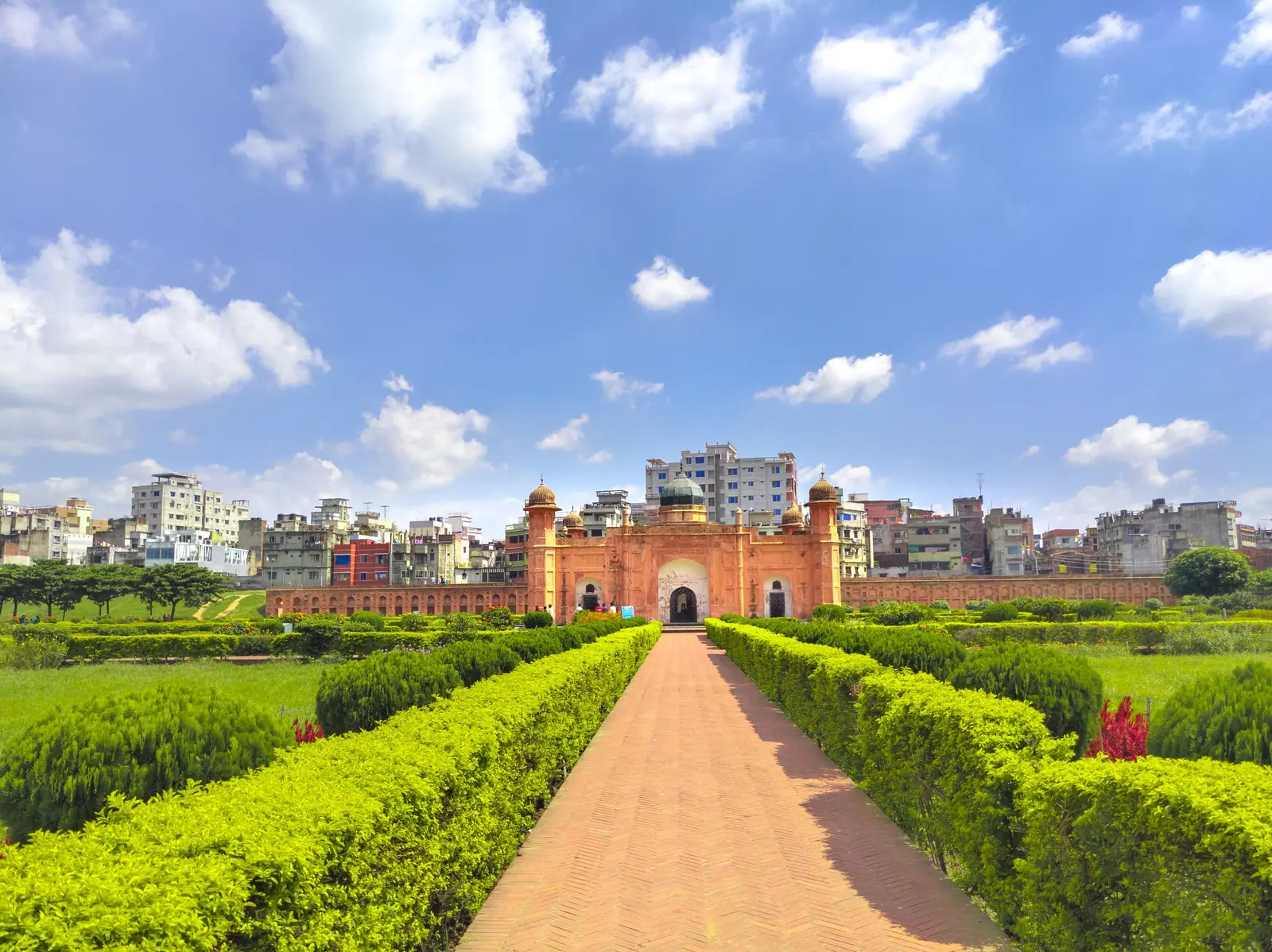
The Mughal and colonial heart of the city along the Buriganga river has few hotels aimed at visitors. Spend a full day there — Lalbagh Fort, Ahsan Manzil, Sadarghat, the Star Mosque and Nazira Bazar’s biryani houses — and return to your base in the evening.
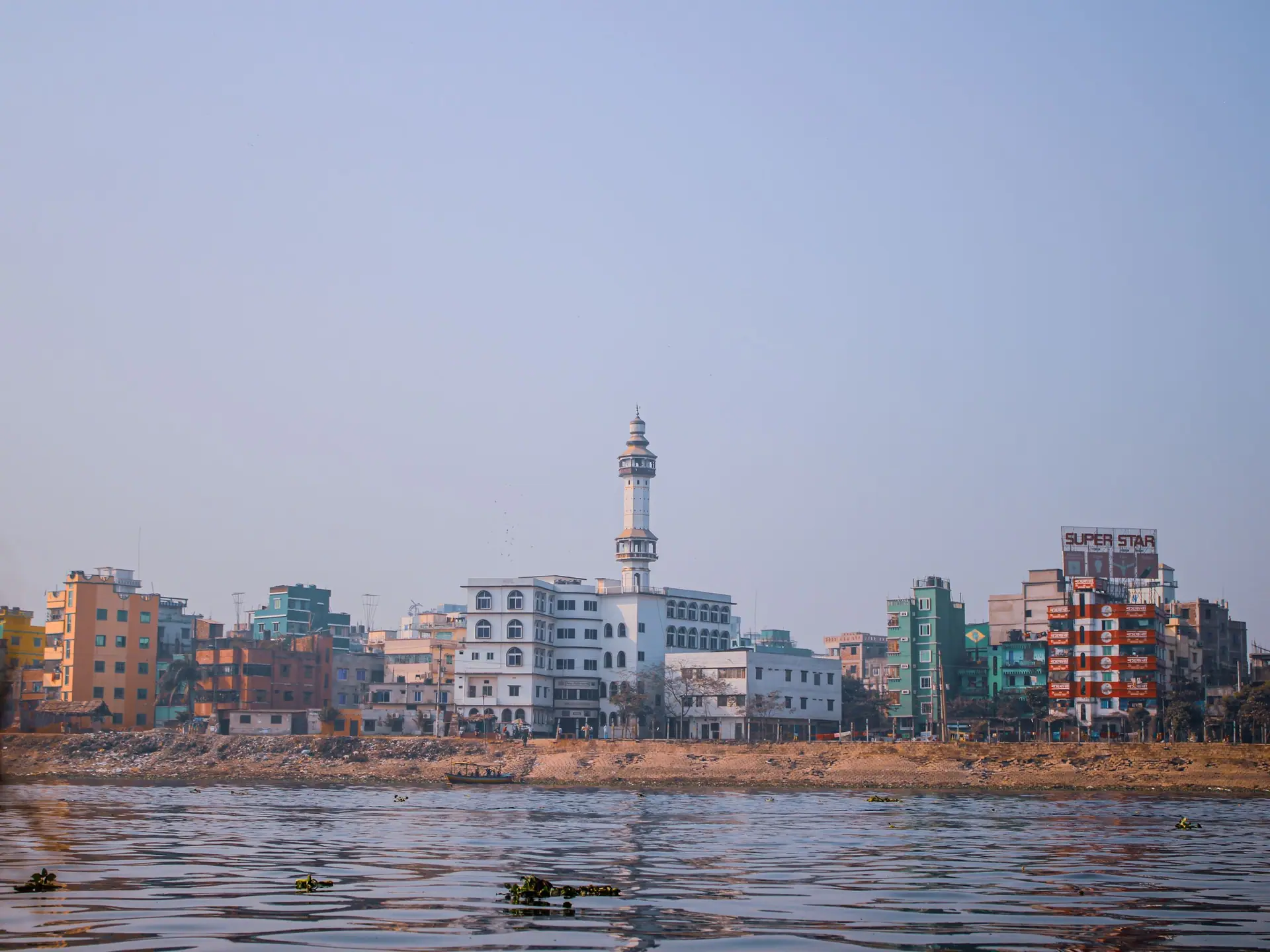
Old Dhaka is dense, loud and fascinating. Lanes are too narrow for cars in places, so the cycle rickshaw is the natural way to move between sights. Lalbagh Fort is an unfinished seventeenth-century Mughal complex with gardens and a tomb; Ahsan Manzil, the pink palace of the Dhaka Nawabs, is now a museum overlooking the river. At Sadarghat you can hire a small wooden boat for a short trip across the Buriganga to watch the ferries and launches come and go. Add the Armenian Church, the Hindu artisans’ street of Shankhari Bazar and the mosaic-covered Star Mosque, and you have more than enough for one day.
Our Old Dhaka heritage walk gives a route that links these sights with lunch stops. Many sites close one day a week and keep shorter hours on Fridays, so check opening days locally before you set out. Dress modestly — shoulders and knees covered — as you will be visiting mosques and walking through conservative neighbourhoods; our guide to what to wear in Bangladesh has more detail.
Getting around Dhaka
- Friday and Saturday are the weekend; Friday morning has the lightest traffic of the week.
- Use ride-hailing apps (Uber, Pathao) to avoid fare negotiations.
- Rickshaws are banned from some main roads but perfect for short hops and the old city.
Metro (MRT Line 6)
The elevated MRT Line 6 is the fastest way to cover the north–south spine of the city. It runs from Uttara through Mirpur, Agargaon, Farmgate, Karwan Bazar, Shahbagh and Dhaka University to Motijheel. Trains are air-conditioned, clean and much quicker than the road at peak times. You can buy single-journey tickets at station machines and counters, or a rechargeable card if you will use it often. Service hours are shorter on Fridays, so check the current timetable at the station.
Cars, CNGs and rickshaws
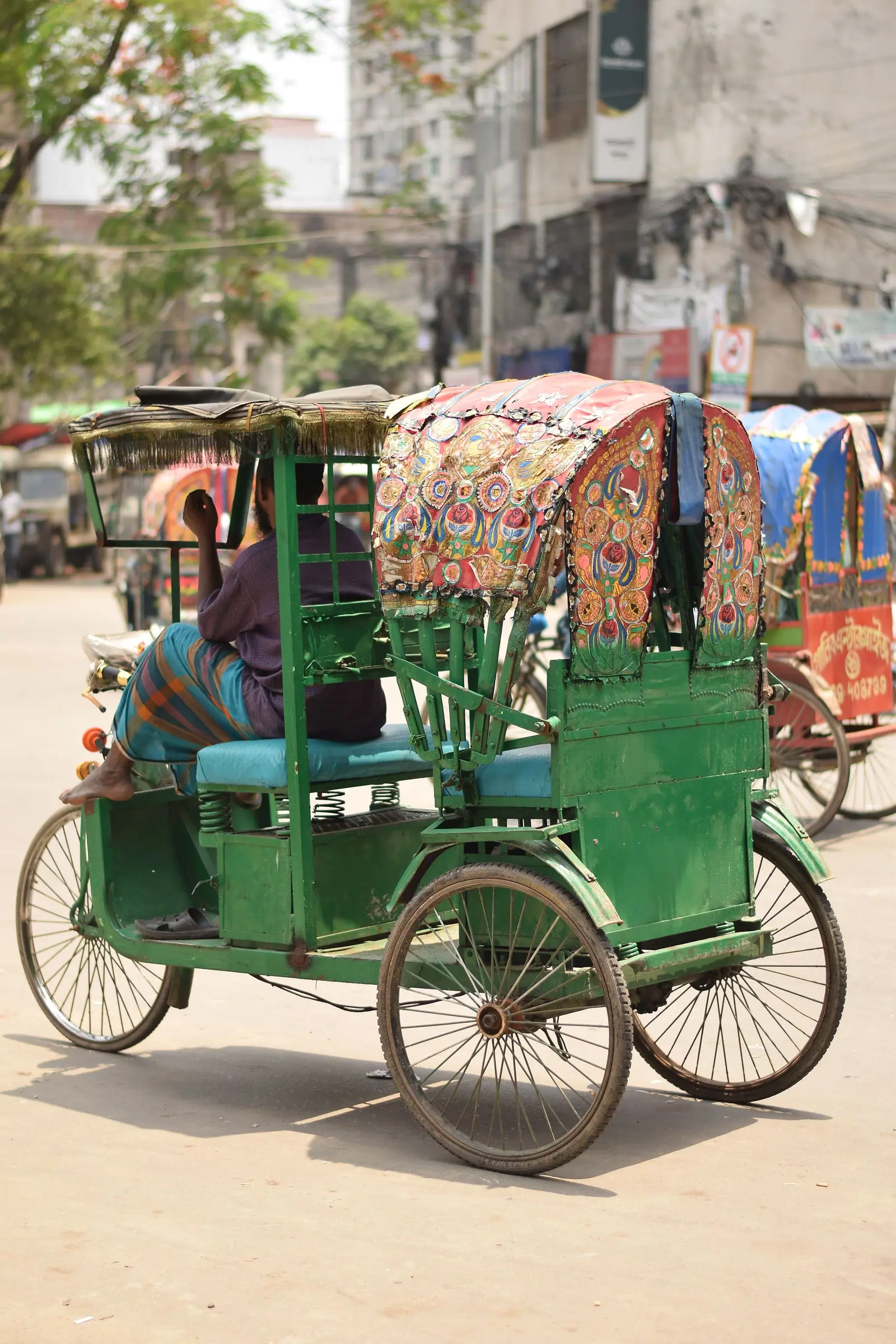
For anything off the metro line, ride-hailing apps are the simplest option: you see the fare in advance and drivers know where to go. Green CNG auto-rickshaws cost less, but you will usually need to agree a price first. Cycle rickshaws are ideal for the last kilometre and for Old Dhaka; agree the fare before you get in. For a full day of sightseeing, many hotels can arrange a car and driver, which saves negotiating every leg. Our getting around Bangladesh guide covers transport between cities.
Eating, money and practicalities
Gulshan and Banani have the widest choice of restaurants, from Bangladeshi set meals to international chains and hotel buffets. Dhanmondi is good for casual cafés. For the classic Dhaka dishes — kacchi biryani, morog polao, bakarkhani flatbread and street snacks such as fuchka — head to Old Dhaka. Our Bangladeshi food guide explains what to order. Alcohol is available mainly in larger international hotels and licensed venues, not in ordinary restaurants.
The currency is the Bangladeshi taka (BDT). ATMs are easy to find in Gulshan, Banani and Uttara, and larger hotels, malls and restaurants take cards; carry cash for rickshaws, CNGs, markets and Old Dhaka. A local SIM card is inexpensive and makes ride-hailing much easier — the airport has operator counters, and you will need your passport to register.
| Hotel type | Typical area | What to expect |
|---|---|---|
| International five-star | Gulshan, Banani, Karwan Bazar, Shahbagh | Pools, several restaurants, generators, card payment |
| Mid-range business hotel | Banani, Gulshan 1, Dhanmondi, Uttara | Air conditioning, breakfast, simpler facilities |
| Guesthouse or budget hotel | Dhanmondi, Uttara, Paltan | Small rooms, fewer facilities, often cash only |
Rates change with season, events and exchange rates, so check the current price for your dates when you book.
When to go and how long to stay
November to February is the most comfortable time, with dry days and cooler evenings, although winter mornings can be hazy and air quality is often poor. March to May is hot and humid, and the monsoon from roughly June to October brings heavy downpours that can flood streets and slow traffic even further. See our best time to visit Bangladesh article for the full picture.
Public holidays change the city. During the two Eid festivals many residents travel home, so Dhaka empties and roads are quiet, but shops and some sights close and intercity transport is packed. Pohela Boishakh, the Bengali New Year on 14 April, brings colourful celebrations, and 21 February (International Mother Language Day) centres on the Shaheed Minar near Dhaka University. Ramadan dates move about eleven days earlier each year (the 2027 fast is expected from about 8–9 February); restaurants may open only after sunset in some areas.
Two full days are enough for the essentials — one in Old Dhaka and one for the museums and central sights. A third day lets you slow down, visit a market or take a day trip to Sonargaon, the old capital of the region, south-east of the city.
A two- to three-day plan
- Day 1 · Arrive and settle in Gulshan
Rest after the flight, walk by Gulshan or Banani lake in the late afternoon, then try a Bangladeshi dinner nearby. Buy a SIM card and some taka at the airport.
- Day 2 · Old Dhaka
Leave early by car or take the metro to its southern end, then switch to rickshaws. Lalbagh Fort, the Star Mosque and Armenian Church in the morning, biryani at Nazira Bazar for lunch, Ahsan Manzil and a boat on the Buriganga from Sadarghat in the afternoon.
- Day 3 · Central Dhaka by metro
Ride MRT Line 6 to Shahbagh for the National Museum and Dhaka University, then north to Agargaon to see the Louis Kahn–designed National Parliament from the outside and visit the Liberation War Museum. End with an evening walk along Hatirjheel lake.
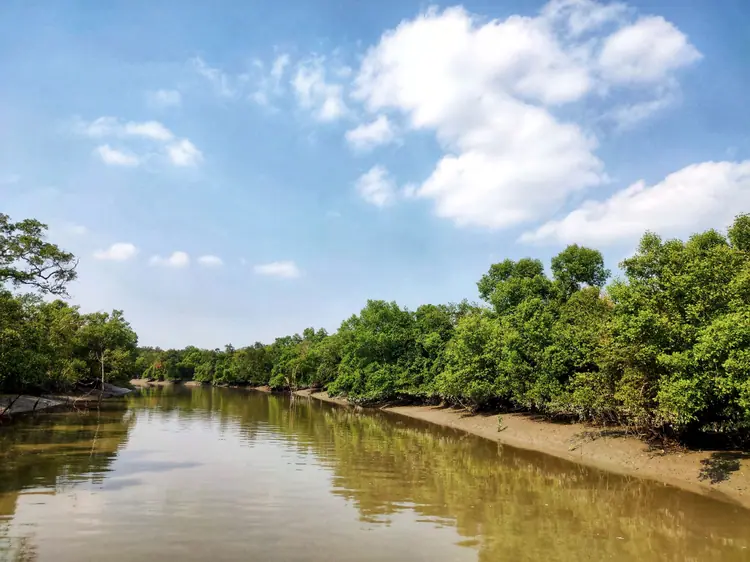
From Dhaka, most travellers head on to one region: the beach at Cox’s Bazar, the tea country of Sylhet and Sreemangal, or the mangroves via Khulna. Our 10-day itinerary shows how they fit together.
Hotels to consider
Questions and answers
What is the best area to stay in Dhaka for first-time visitors?
Gulshan or Banani. They have the largest choice of international hotels, restaurants and ATMs, calmer streets and easy ride-hailing pick-ups. The downside is distance from Old Dhaka, so plan one full day for the old city and leave early. If museums and the university area matter more to you, Karwan Bazar or Shahbagh are more central alternatives.
How long does it take to get from the airport to Gulshan?
Usually 30 to 90 minutes by road, depending on the time of day. Late at night it can be under half an hour; at evening rush hour it can stretch beyond that range. Pre-booked hotel transfers and ride-hailing apps are the easiest options, and buying a local SIM at the airport makes the app route simpler.
Is it worth staying in Old Dhaka?
For most visitors, no. There are very few hotels aimed at travellers and the lanes are congested from early morning. It is better to stay in a more comfortable district and visit Old Dhaka for a long day, travelling down early and returning in the evening. Friday morning is the easiest time to make the trip.
Does the Dhaka metro go to the airport?
Not directly. MRT Line 6 starts in Uttara, north of the centre, and runs south to Motijheel, but there is no station at the terminal. You need a short car or CNG ride from the airport to Uttara to join it. With luggage, most arriving visitors find a car straight to their hotel easier.
How many days do I need in Dhaka?
Two full days cover the highlights: one in Old Dhaka and one for the National Museum, the university area, the Parliament building and Hatirjheel. Add a third day if you want a slower pace, a market visit or a day trip to Sonargaon. Many travellers also spend a final night here before flying home.
Is Dhaka safe for tourists?
Most visits are trouble-free, but crowds, traffic and occasional demonstrations call for care. Keep valuables out of sight in busy markets, use registered transport at night and avoid large gatherings. Check your government’s official travel advice before and during your trip, and read our Bangladesh safety guide for practical tips.
Is Banani or Gulshan the better base in Dhaka?
They sit side by side across a lake, so the difference is small. Gulshan has more of the large international hotels and is closer to the embassies. Banani is denser, with a grid of restaurants and cafés within walking distance and a ramp to the elevated expressway nearby. Pick the hotel you prefer and check its exact street, because a ten-minute walk can matter in traffic.
Can I walk around Dhaka safely as a visitor?
In the quieter streets of Gulshan, Banani and Dhanmondi, and around the lakes and parks, walking is pleasant in the early morning. Elsewhere pavements are broken or blocked, and crossing main roads is the real hazard: use footbridges or cross with a group. After dark, take a car for anything longer than a few minutes, and keep your phone out of sight.