On this page
Old Dhaka is the city the Mughals made their Bengal capital in the 17th century, and its lanes along the Buriganga river are still the most atmospheric part of Bangladesh. It’s crowded, noisy and endlessly fascinating. Hire a rickshaw by the hour, or walk with a local guide, and take it slowly.
The short version
- Start at Sadarghat at dawn, when the river is busiest and the light is best, and finish at Lalbagh Fort in the late afternoon.
- Hire a rickshaw by the hour or walk with a local guide; distances are short but the lanes are crowded and confusing.
- Lalbagh Fort is closed on Sundays and Ahsan Manzil on Thursdays, so plan your day around them.
- Dress modestly, carry small notes and leave room for kacchi biryani in Nazira Bazar.
This walk strings together the river port, a Nawab’s palace, a Hindu artisans’ street, an 18th-century Armenian church, a mosque covered in broken china, a biryani lunch and an unfinished Mughal fort. None of the stops is far from the next, but traffic and crowds mean a full day is the right amount of time. If you only have a few days in the capital, this is the day to prioritise; our Dhaka area guide explains where to base yourself for the rest.
How to arrange the day
You have three realistic options, and many visitors combine them.
- Rickshaw by the hour. Agree a price for a set number of hours with one rickshaw puller, who waits while you visit each sight. It is the most Old Dhaka way to move and spares you from negotiating at every stop. Settle the price, the hours and the rough route before you set off.
- A local guide on foot. A guide gets you into lanes you would never find, explains what you are looking at and handles the crowds and the questions. Ask your hotel to recommend one, or book through an established tour company, and agree the length and fee in advance.
- Car or ride-hailing to the edges. Use a car or ride-hailing app to reach Sadarghat or Lalbagh and to get home afterwards, but not inside the old city, where cars crawl.
The route, stop by stop
This order follows the light and the opening hours: the river at sunrise, the museum when it opens, lunch in the middle of the day and the fort in the softer afternoon light. Swap stops round to suit the closing days below.
- Dawn · Sadarghat
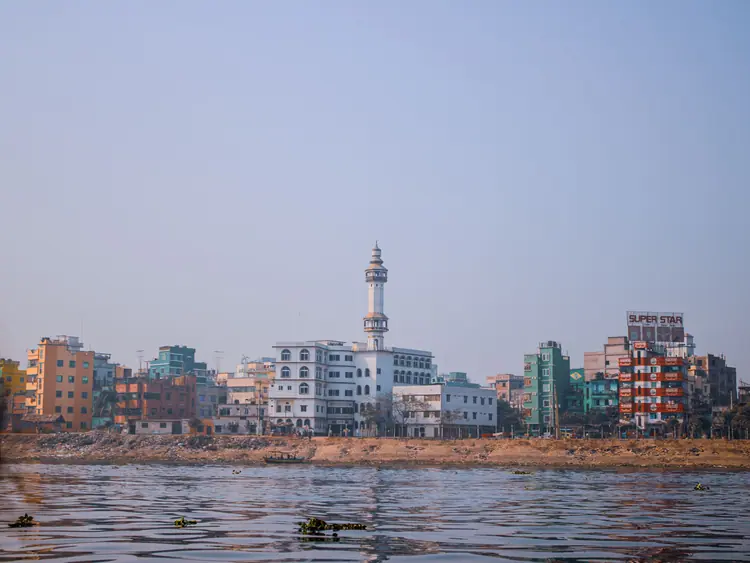
Arrive as the sun comes up to watch the wooden noukas cross the Buriganga and the big passenger launches come in from the south. Take a short crossing for the view back.
- Mid-morning · Ahsan Manzil
Walk or ride along the waterfront to the Pink Palace and visit its museum when it opens. Allow about an hour.
- Late morning · Shankhari Bazar and the Armenian Church
Wander the narrow artisans’ lane, then find the quiet churchyard in Armanitola.
- Before lunch · Star Mosque
Visit Tara Masjid outside prayer times, with shoes off and shoulders, knees and (for women) hair covered.
- Lunch · Nazira Bazar
Kacchi biryani, kebabs and something sweet in the old food streets.
- Afternoon · Lalbagh Fort
End among the gardens, the mosque and the tomb of Pari Bibi as the light turns golden on the brick.
Morning: Sadarghat and Ahsan Manzil
1 · Sadarghat at dawn
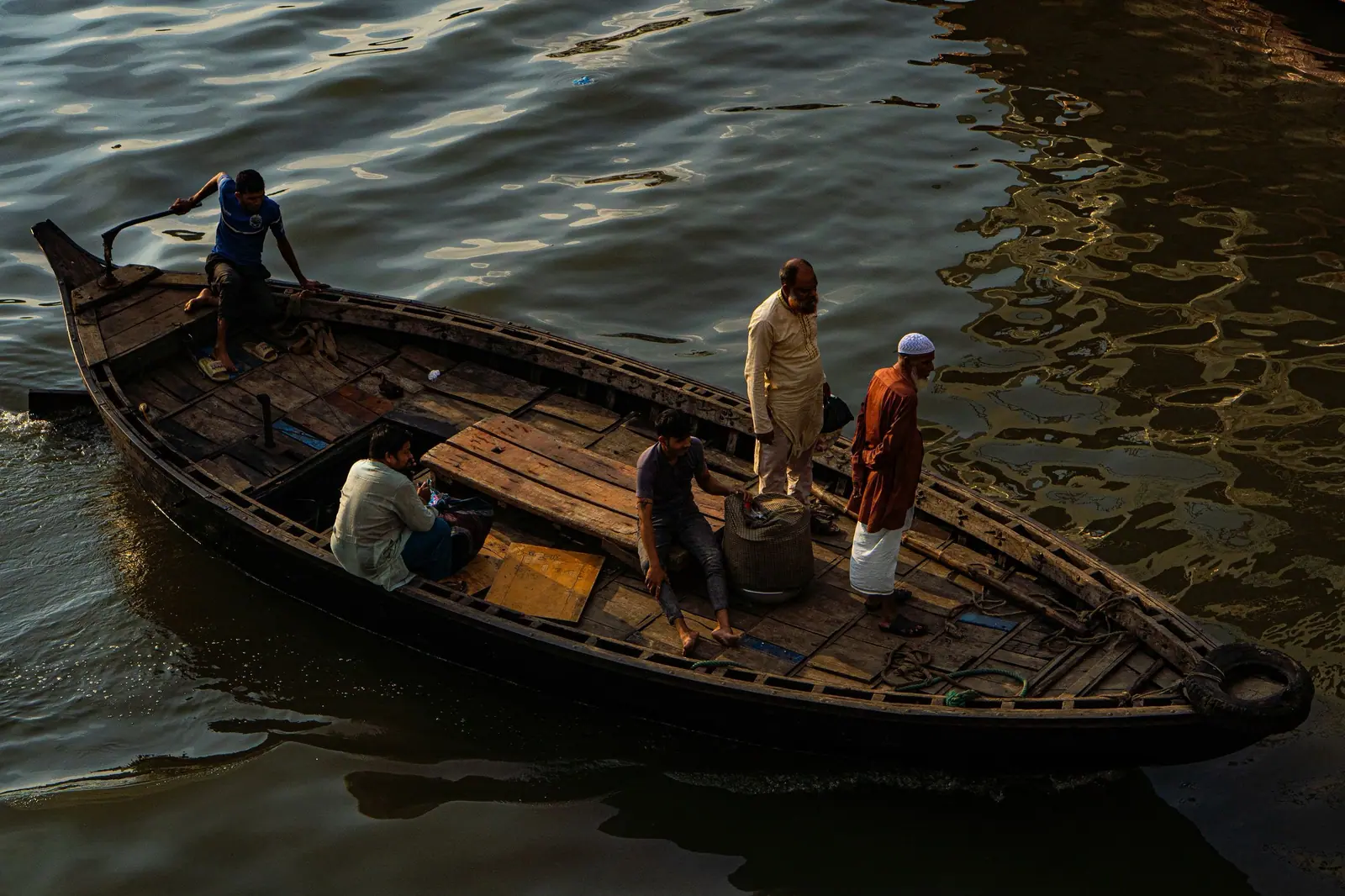
Start at the river port as the sun comes up, when hundreds of wooden noukas ferry people across the Buriganga and the big passenger launches arrive from the south. A short crossing costs very little and gives you the classic view back to the waterfront.
Sadarghat is one of the busiest river terminals in the country, and it is a working place, not a sight. Porters carry enormous loads, launches manoeuvre close to each other and the gangways are steep and crowded. Keep your bag in front of you, watch your footing and step aside for anyone carrying goods. If you want to go onto the terminal itself, there is usually a small entry fee at the gate.
2 · Ahsan Manzil
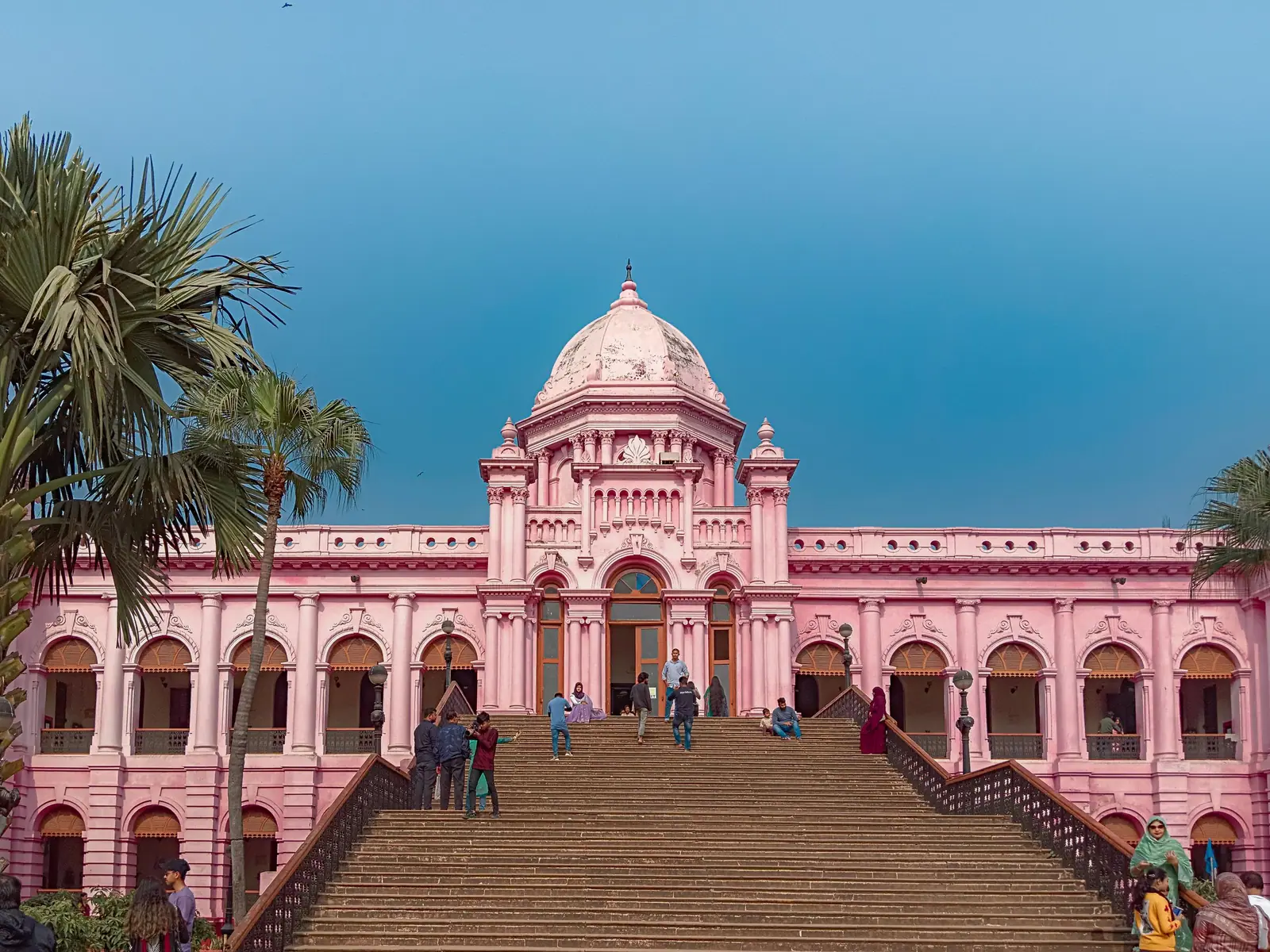
The Pink Palace, former residence of the Nawabs of Dhaka, sits right on the river. Its museum tells the story of the family and the city in the 19th century.
The grand staircase facing the Buriganga and the domed central hall are the classic photographs; inside, rooms are furnished and arranged to show how the Nawab family lived and entertained. Bags may need to go into a cloakroom, and photography rules inside the galleries can change, so follow the signs. Ahsan Manzil is closed on Thursdays.
Late morning: artisans, a church and a mosaic mosque
3 · Shankhari Bazar and the Armenian Church
Walk through Shankhari Bazar, a narrow Hindu quarter where artisans still carve conch-shell bangles, then find the quiet Armenian Church of the Holy Resurrection, built in 1781 by the merchant community that once traded here.
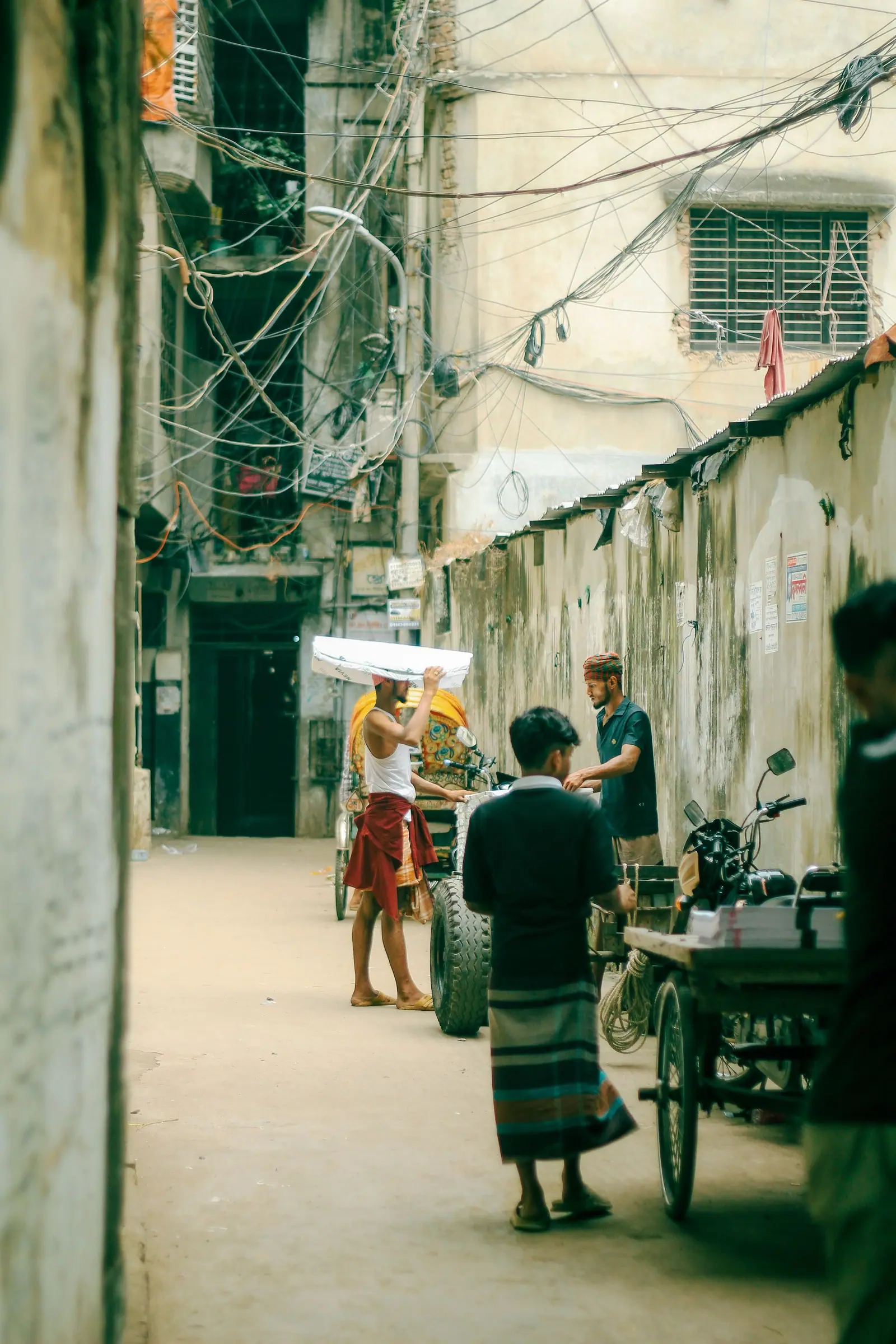
Shankhari Bazar is a lane of tall, narrow houses squeezed together, with workshops at street level. You may see shell-cutters at work, small shrines and shops selling bangles and religious items. It is also a residential street, so walk quietly and ask before photographing people or homes. The Armenian church, set in a walled garden with old gravestones, is a calm contrast. Access depends on the caretaker; if the gate is closed, ask politely nearby, and leave a donation if you are shown round.
4 · The Star Mosque
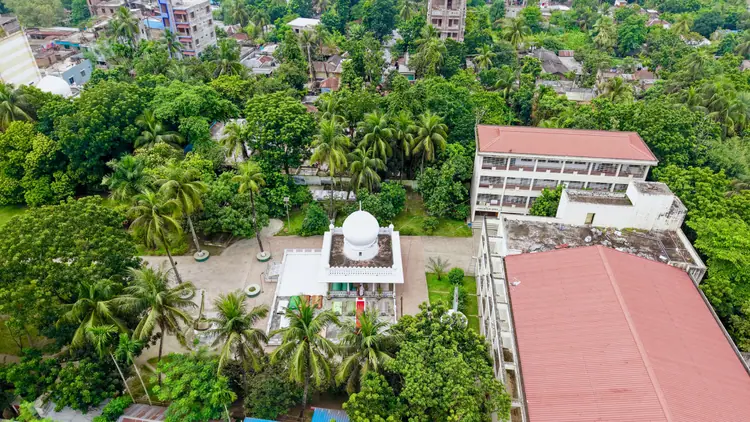
Tara Masjid is covered inside and out with a mosaic of broken china, forming blue stars and floral patterns. Remove your shoes and dress modestly; women should cover their hair.
The mosque dates from the 18th century and was redecorated with its famous mosaic in the 20th century. Visit outside prayer times, keep your voice low and do not walk in front of anyone praying. Non-Muslim visitors are usually welcome when no prayers are taking place, but follow the instructions of the caretakers.
Lunch: biryani in Nazira Bazar
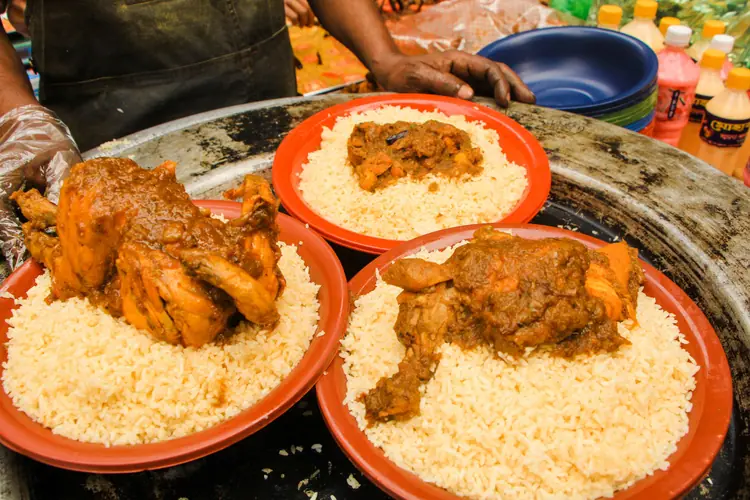
Old Dhaka is the home of kacchi biryani. Haji Biryani has served goat biryani from its shop on Kazi Alauddin Road since 1939, and the surrounding streets are full of kebab, chap and sweet shops.
Lunchtime is when the biryani is freshest, and popular places can sell out by mid-afternoon. Look for busy shops with a fast turnover, eat hot food straight from the pot and stick to bottled or filtered water. Old Dhaka is also known for bakarkhani, a flaky layered flatbread sold from small bakeries, and for borhani, a spiced yoghurt drink often served with biryani. Our Bangladeshi food guide explains more dishes to look for.
Afternoon: Lalbagh Fort
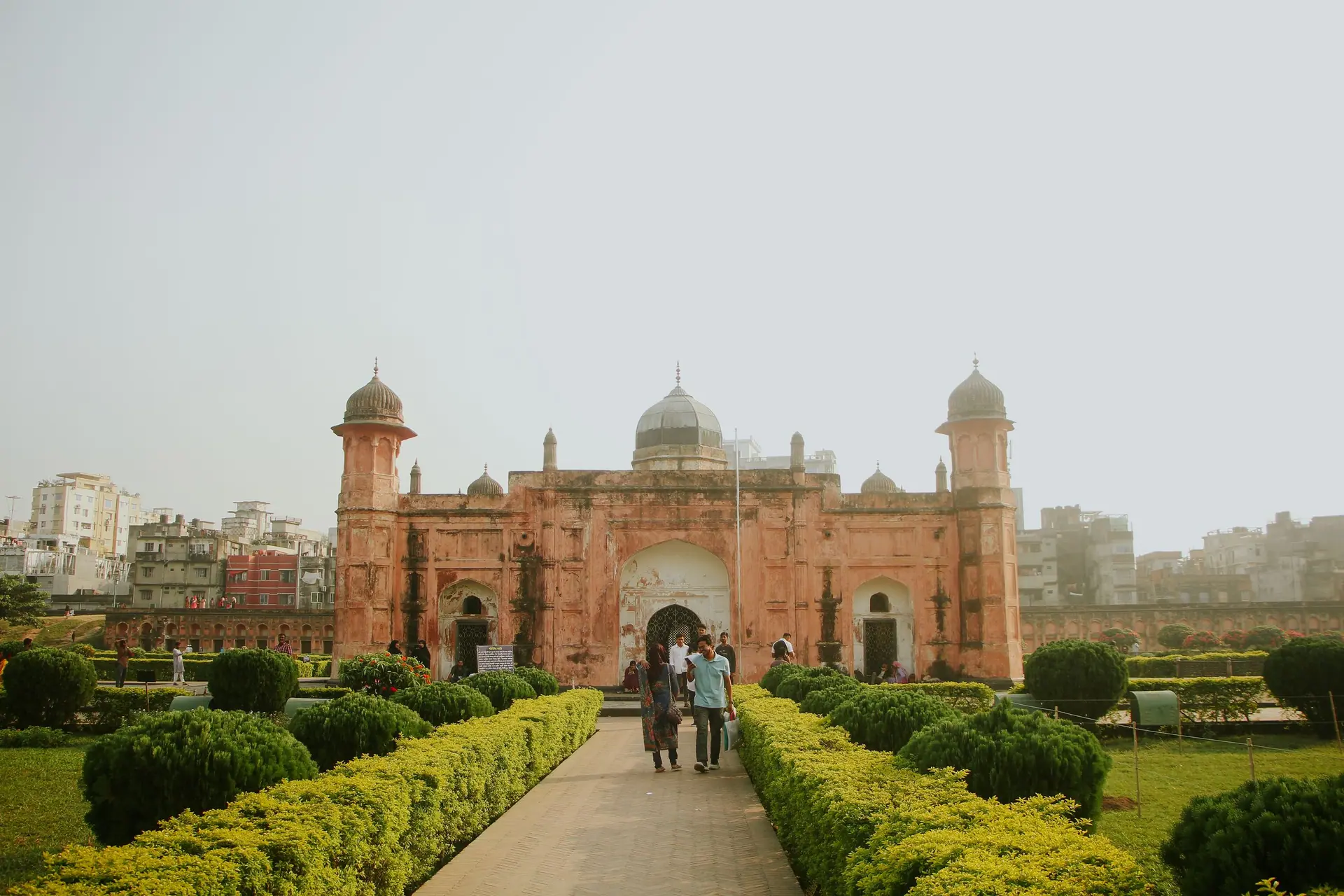
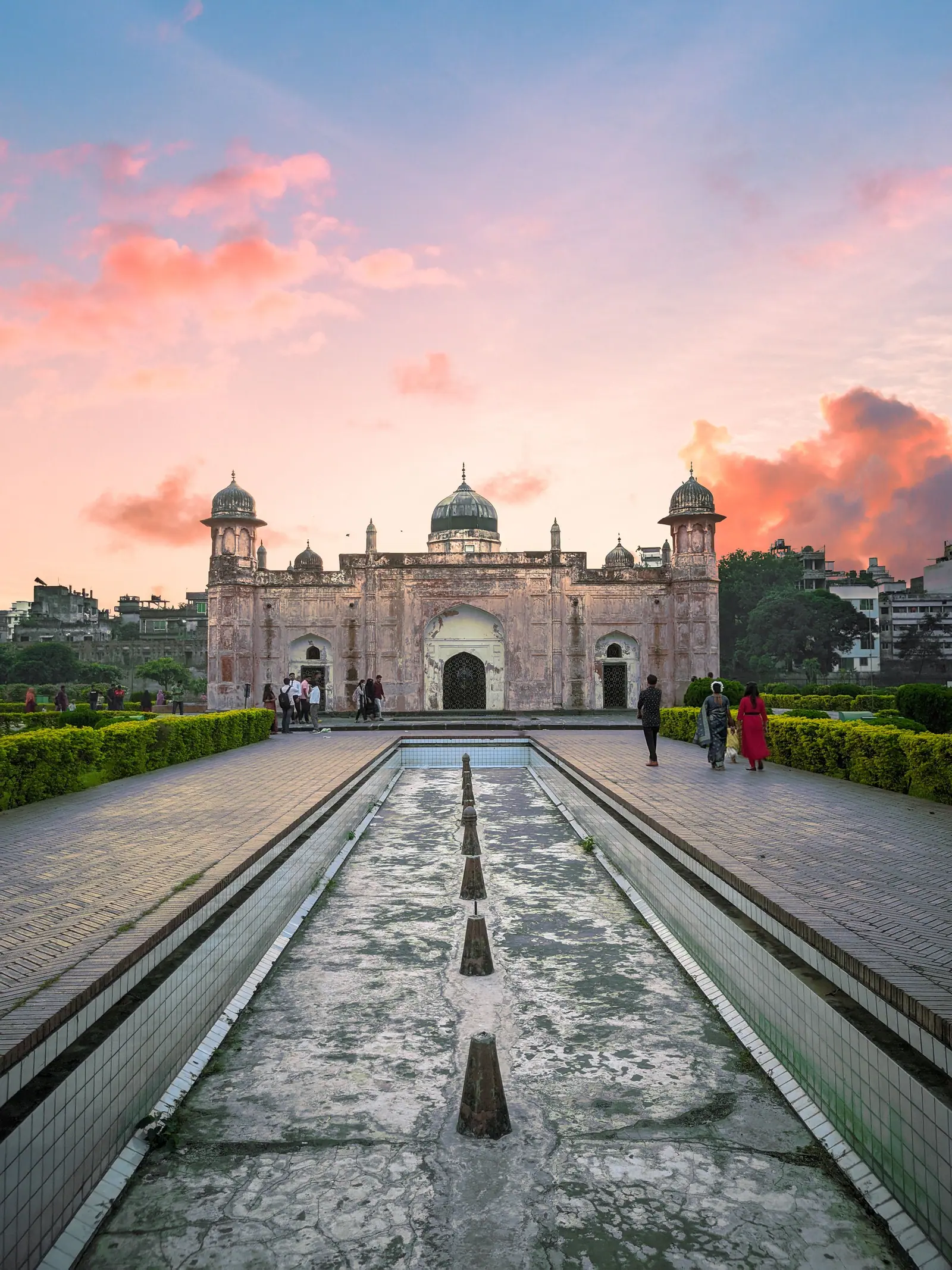
Finish at Lalbagh, a Mughal fort begun in 1678 and never completed, with gardens, a mosque and the tomb of Pari Bibi. Late afternoon light on the red brick is beautiful.
Pari Bibi was the daughter of Shaista Khan, the Mughal governor of Bengal, and her death is traditionally given as the reason the fort was left unfinished. Inside the walls you can walk the lawns and paths, see the tomb, the mosque and the hall used as a small museum, and climb to viewpoints on the ramparts where access is open. Lalbagh is closed on Sundays, and like other heritage sites its hours can change around public holidays, so check locally before you go. Foreign visitors pay a higher ticket price than local visitors.
Timing, costs and closing days
Go in the cool, dry months from November to February if you can; the walk is hard work in the heat of April and May and slippery in monsoon rain. Avoid a Thursday if Ahsan Manzil matters to you, and a Sunday if Lalbagh does.
The figures below are rough ranges for planning. Prices change, so confirm before you set off. Rough conversion: about BDT 120 to USD 1.
| Item | Approximate cost | Notes |
|---|---|---|
| Rickshaw by the hour | around BDT 150–300 per hour (about USD 1.25–2.50) | Agree hours and price first; more for a full day with waiting |
| Nouka crossing of the Buriganga | around BDT 10–50 per person shared; more for a private boat | Agree the fare before stepping in |
| Ahsan Manzil and Lalbagh tickets (foreigners) | a few hundred taka each | Higher than local prices; check at the gate |
| Local guide, half to full day | around BDT 2,500–8,000 (about USD 20–65) | Depends on hours, language and group size |
| Biryani lunch | around BDT 300–700 per person (about USD 2.50–6) | Plus drinks and sweets |
What to bring, etiquette and safety
- Modest, loose clothing that covers shoulders and knees, and a scarf for mosques — see what to wear in Bangladesh.
- Shoes that slip off easily for the mosque, but with grip for wet ghats and broken pavements.
- Small notes for rickshaws, boats, tickets and snacks; change is often scarce.
- Water, hand sanitiser, tissues and a light mask if traffic fumes bother you.
- A small bag worn in front; pickpocketing is a risk in crowds at Sadarghat and in the bazaars.
People in Old Dhaka are usually curious and friendly, and you may be asked for photographs or invited for tea. Ask before photographing people, especially women, and accept a no gracefully. Avoid the day during large religious processions or political gatherings, which can block streets; follow local news and your government’s travel advice, and read is Bangladesh safe? for general guidance. Rickshaw rides through traffic are bumpy — hold on, and keep your bag on your lap rather than on the side.
Where to stay before and after
Few visitors sleep in Old Dhaka itself. Most stay in Gulshan, Banani or other central neighbourhoods, which have the international hotels, quieter streets and easier dining, and travel in for the day. Leave very early for the dawn start at Sadarghat, as traffic builds quickly; a pre-booked car is the simplest way. If you are arriving from overseas, our guide to getting from Dhaka airport to the city covers the first journey.
From Dhaka, the natural next steps are the train to Sreemangal’s tea gardens or a trip south to Khulna for a Sundarbans boat trip.
Questions and answers
Is one day enough for Old Dhaka?
One full day covers the main sights in this route at a comfortable pace. If you love history, markets or photography, a second half-day lets you explore the riverfront lanes, more of the old caravanserais and mosques, or simply return to a favourite area at a different time of day. Avoid cramming everything into an afternoon; traffic makes that frustrating.
Can I do the walk without a guide?
Yes. The main stops are well known and rickshaw pullers can take you between them. A guide is worth it for a first visit, though, because the lanes are confusing and a good guide explains the history, finds the workshops and makes conversations with residents easier. Arrange one through your hotel or an established tour company.
Which days should I avoid?
Lalbagh Fort is closed on Sundays and Ahsan Manzil on Thursdays, so choose another day if you want to see both. Friday mornings bring the lightest traffic, but many shops open late and mosques are busy around midday prayers. Opening hours can change around public holidays and Ramadan, so check locally the day before.
Is Old Dhaka safe for solo travellers?
Most visitors have a busy but trouble-free day. The main risks are pickpocketing in crowds, uneven ground and road traffic. Keep valuables out of sight, dress modestly and avoid large gatherings or protests. Women travelling alone may get a lot of attention; a local guide can make the day more relaxed. Check your government’s current travel advice.
What should I eat in Old Dhaka?
Kacchi biryani is the classic, cooked with goat or mutton, potatoes and rice in large sealed pots. Old Dhaka is also known for kebabs, chap (grilled meat), bakarkhani flatbread, borhani yoghurt drinks and many sweets. Choose busy places, eat food served hot and drink bottled or filtered water.
How much should I pay a rickshaw puller?
The rate depends on the season, the time of day and your bargaining, and a full day with long waits costs more; the table on this page gives a planning range. Agree the hours, price and rough route before setting off, pay at the end, and add a small tip if the ride was good.
Can I do the Old Dhaka walk with children?
Yes, with a shorter plan. Pick three stops, such as a boat crossing at Sadarghat, Ahsan Manzil and Lalbagh Fort, and ride between them by rickshaw rather than walking the lanes. Start early, carry water and snacks, and keep hold of small hands near the ghat edges, where gangways are steep. The fort’s lawns are the easiest place to rest.
Where do I get on the metro to reach Old Dhaka?
MRT Line 6 does not enter the old city. The closest stations for this walk are Dhaka University and Motijheel, its present southern end, and from there you need a cycle rickshaw for the last stretch to Lalbagh or Sadarghat. The metro is useful for the return journey in the evening rush, but check the Friday timetable, which is shorter.