On this page
Sreemangal sits in the low hills of Moulvibazar district, surrounded by tea estates that have produced tea since the British era. It’s one of the most relaxing places in Bangladesh: cooler air, quiet roads and green in every direction.
The short version
- Sreemangal is about five hours from Dhaka by train and is best enjoyed slowly over one or two days.
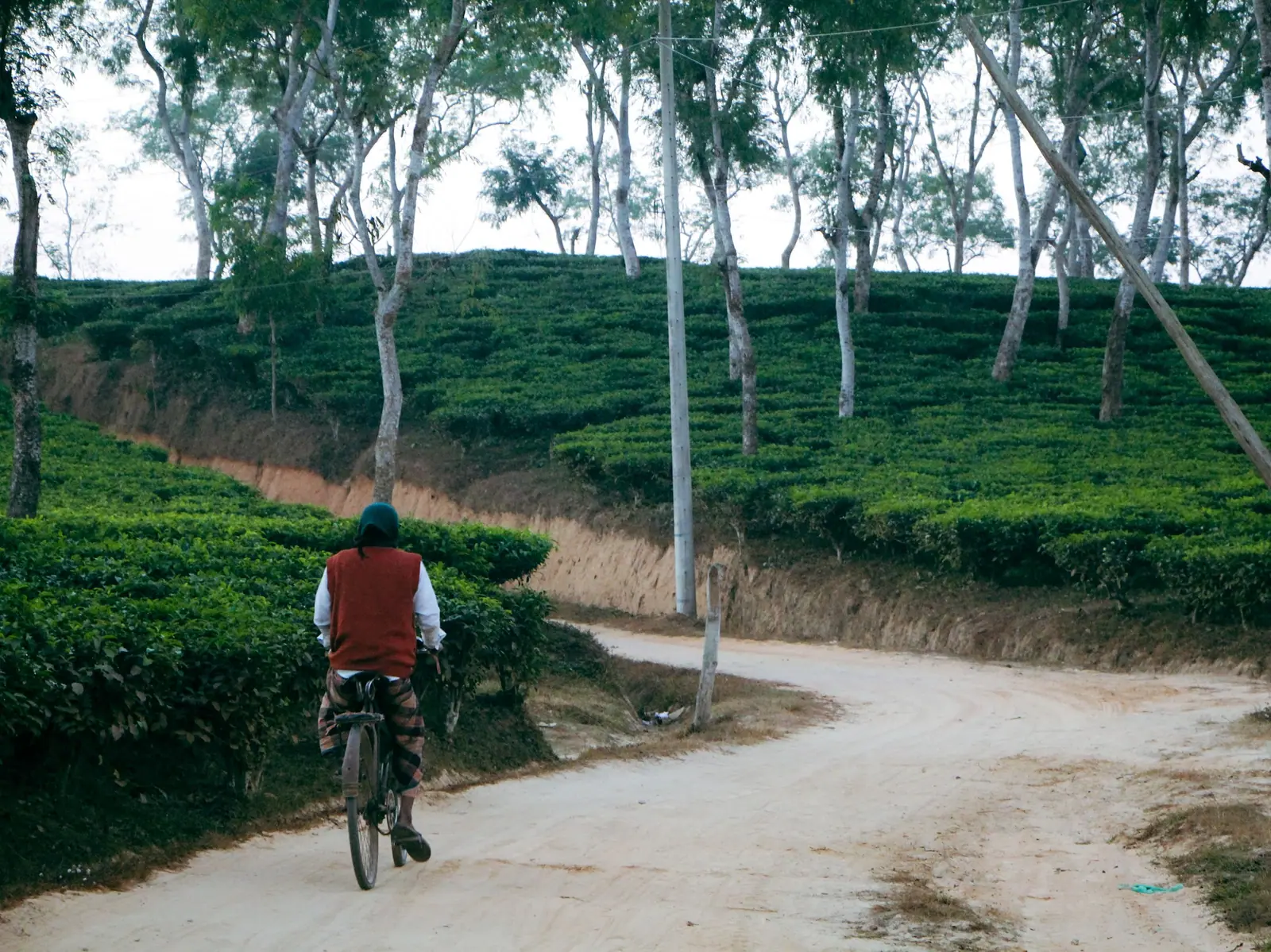
- Walk or cycle the estate roads early in the morning, when the light is soft and plucking begins.
- Lawachara National Park has marked trails and hoolock gibbons; a local guide greatly improves your chances.
- Respect the estates as workplaces and homes: ask before photographing workers and stay on paths.
The town itself is small and practical, a market centre with a railway station, guesthouses and tea shops. The appeal is all around it: neatly clipped tea bushes rolling over low hills, shade trees planted in rows above them, patches of evergreen forest, rubber and pineapple plantations, and wetlands that fill with birds in winter. Most visitors come for one or two nights, often as a stop between Dhaka and Sylhet. Two days lets you see the estates, Lawachara and a lake without hurrying.
Getting to Sreemangal
The train is the classic way to arrive. Several daily intercity trains on the Dhaka–Sylhet line stop at Sreemangal, and the journey takes about five hours. Book seats in advance, especially at weekends and around holidays, through the official Bangladesh Railway e-ticket site or at the station. Air-conditioned chair or cabin classes are the most comfortable.
Buses and private cars also make the trip by road, and journey times vary a lot with traffic leaving Dhaka. Our getting around Bangladesh guide compares the options. Once in town, CNG auto-rickshaws, cycle rickshaws and hired cars or jeeps cover the short distances to the estates, Lawachara and the lakes.
A two-day tea trail, step by step
This plan assumes you arrive on a morning train and leave on the second evening or the next morning. If you only have one day, combine the early estate walk, Lawachara and seven-layer tea, and skip the lake.
- Day 1 · Midday
Arrive by morning train, check in and have lunch. Arrange a guide and transport for the next day through your hotel.
- Day 1 · Afternoon
Take a CNG or car toward Lawachara National Park and walk the shorter forest trail with a local guide, listening for gibbons.
- Day 1 · Late afternoon
Stop for seven-layer tea on the way back, then watch the light go golden over the tea bushes from a quiet estate road.
- Day 2 · Early morning
Walk or cycle the estate roads at sunrise, when the pluckers are starting work and the hills are misty.
- Day 2 · Late morning
Visit an estate shop or tea sales point, or return to Lawachara for the longer trail if you want more forest.
- Day 2 · Afternoon
Drive to Madhabpur Lake in Kamalganj for the late-afternoon light, then return for an evening train or a final night.
Walking and cycling the estates
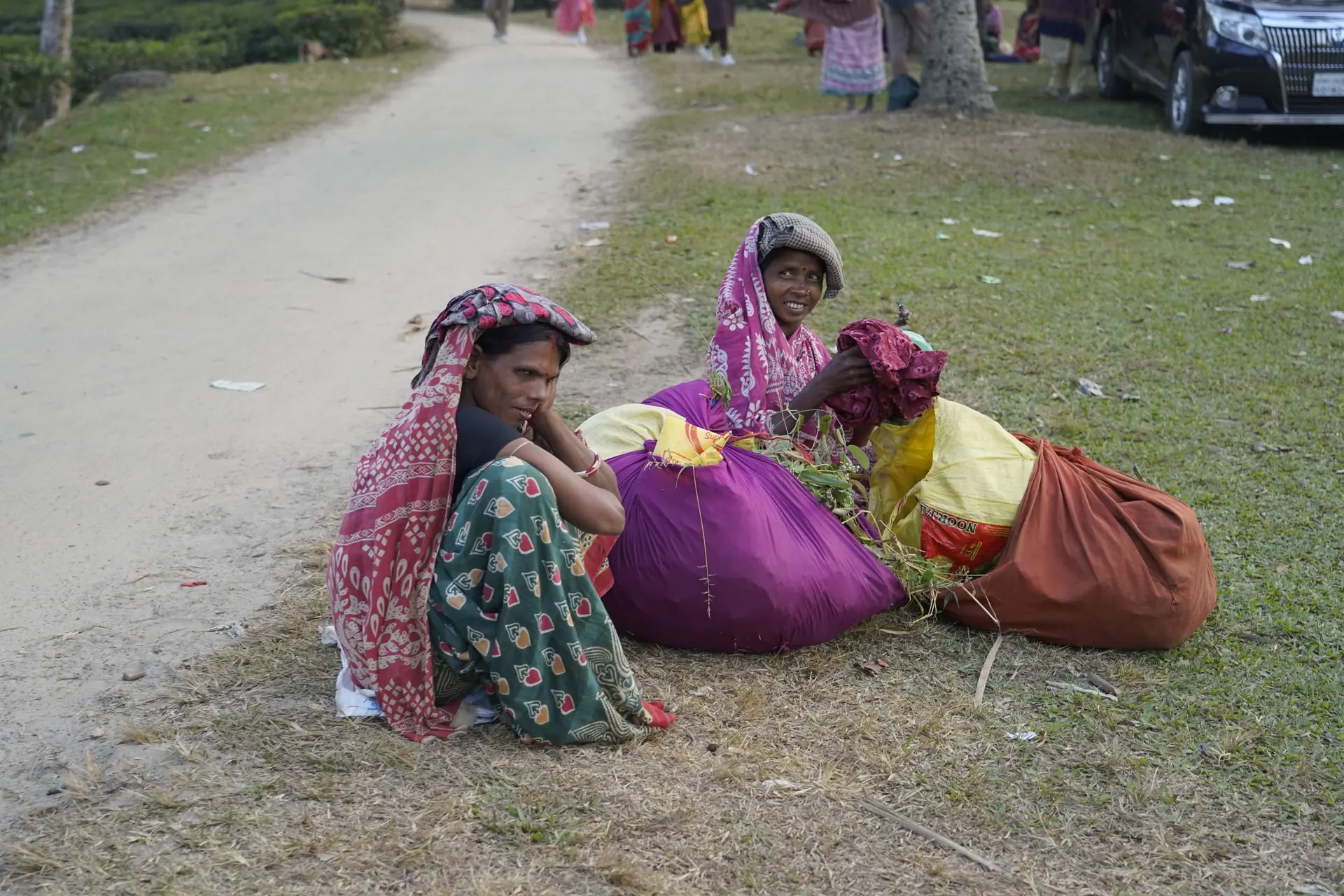
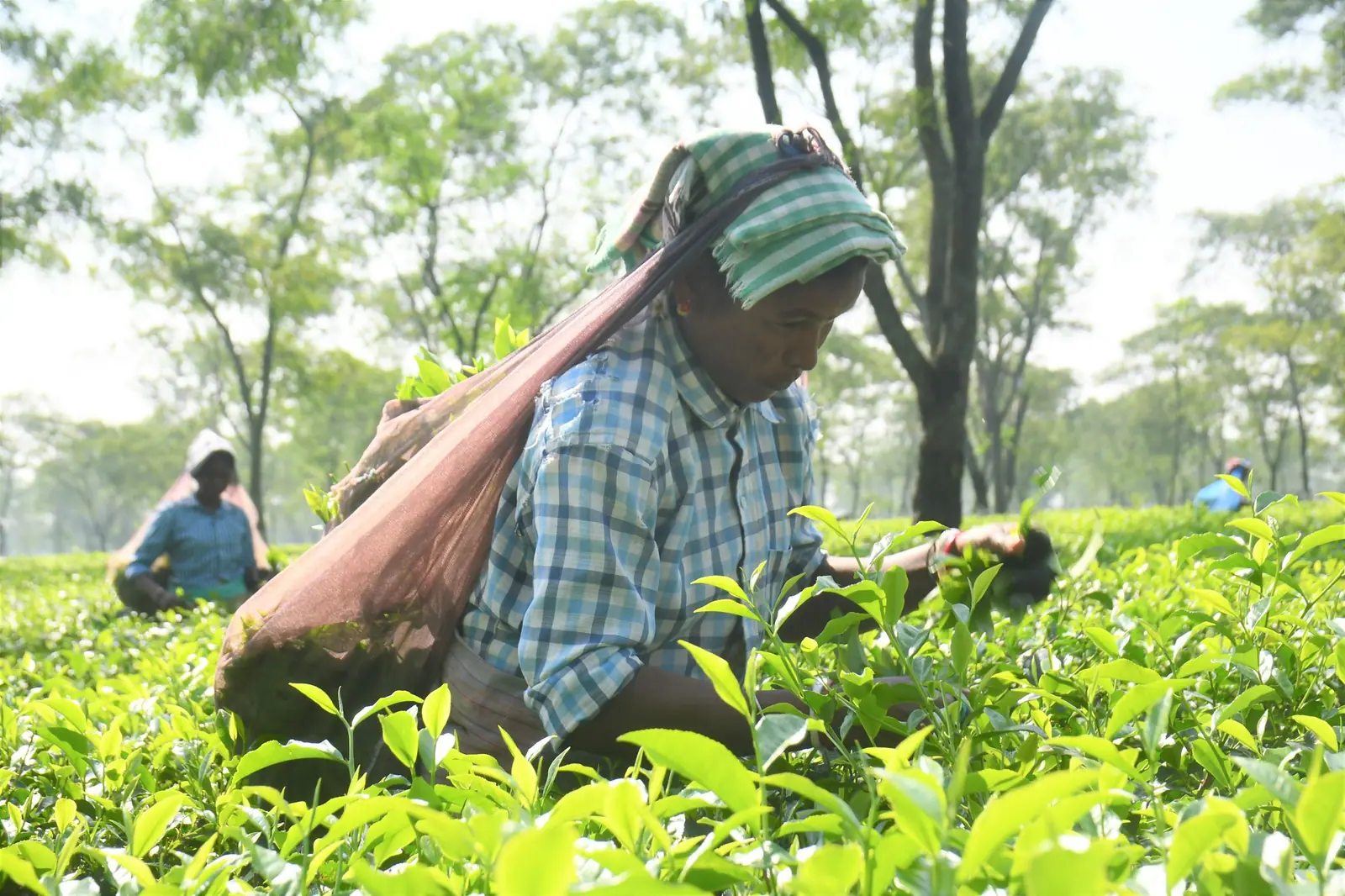
Many estates allow visitors to walk along their roads and paths. Go early, when the light is soft and the pluckers — mostly women — are starting work. Bicycles and electric bikes can be hired in town; a guide helps you find the prettiest routes and explains how the estates work.
The estates are working farms. Each has its own management, factory, workers’ lines (housing) and rules, and access is a courtesy rather than a right. Stick to the estate roads and the paths between sections, give way to tractors and trucks, and if a manager or guard asks you to turn back, do so politely. Factory visits are not generally open to walk-in visitors; a guide may know whether any can be arranged.
Many tea workers are descended from labourers brought to the region from other parts of British India in the colonial era, and their communities have their own languages, festivals and places of worship. Tea work is hard and wages are low. A guide from the area can explain this history respectfully, and buying tea from estate shops puts a little money into the local economy.
How the estates work
Tea in the Sylhet region dates back to the mid-19th century, when Malnicherra near Sylhet town became the first commercial tea estate in what is now Bangladesh, and the plantations spread south through the hills around Sreemangal. Today the Bangladesh Tea Research Institute is based just outside town. On an estate walk you will notice the tall shade trees planted between the bushes, the drainage channels on the slopes and the bushes kept pruned to waist height so pluckers can reach the new shoots. Fresh leaf goes to the estate factory the same day to be withered, processed, dried and sorted into grades.
Plucking runs mainly from spring to late autumn; in the coolest winter weeks the bushes are pruned and growth slows, so you may see fewer pluckers in December and January. Early morning and late afternoon are still the most beautiful times to walk in any month, and also the coolest.
Lawachara National Park
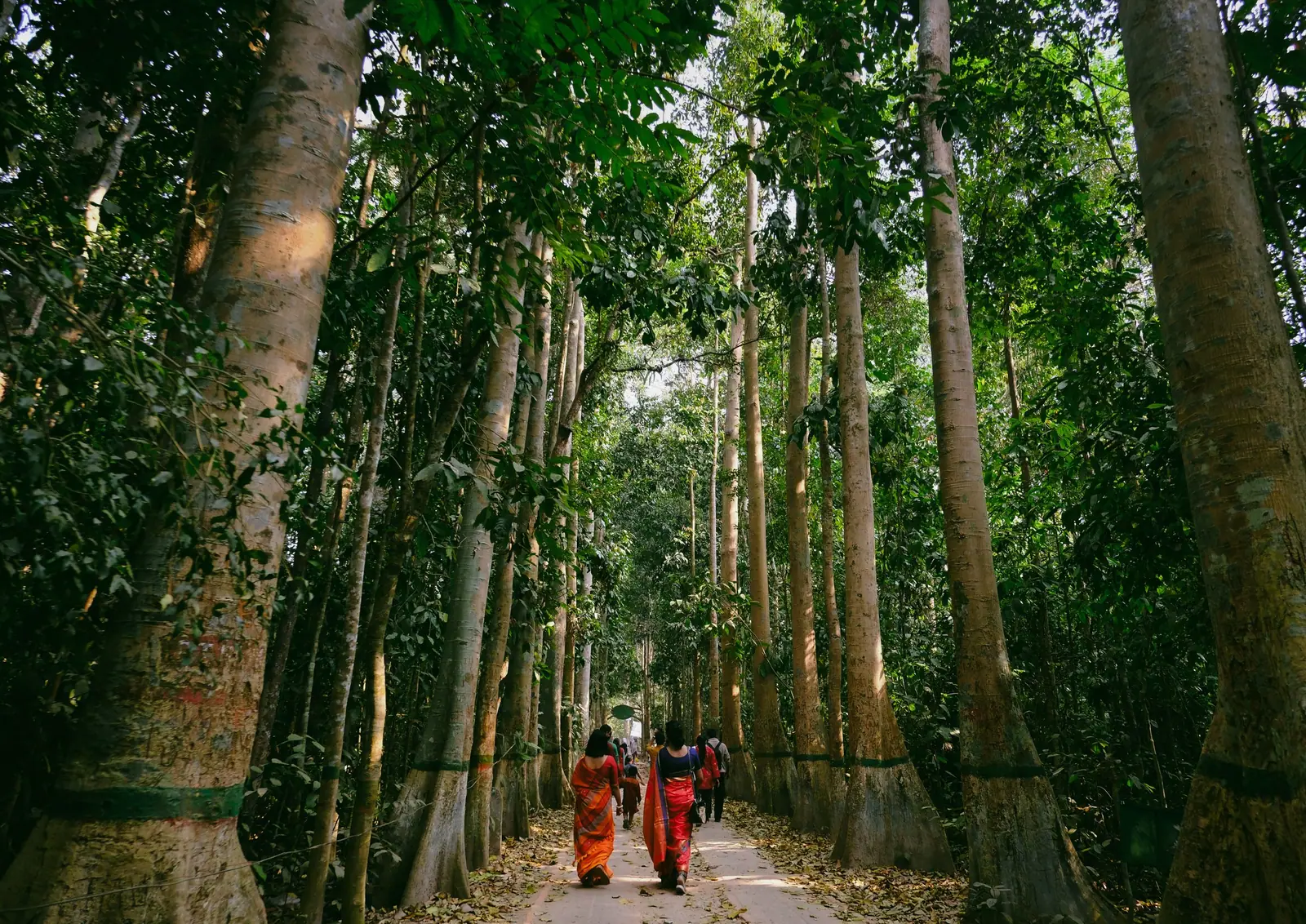
A short drive from town, this patch of tropical forest has marked trails of thirty minutes, one hour and three hours. Listen for the whooping calls of hoolock gibbons, the only ape in Bangladesh, and look for capped langurs and hornbills. A local guide greatly improves your chances. Wear closed shoes — leeches appear after rain.
Gibbons are most active and vocal in the early morning, so the first hours after the park opens are best. Move quietly, stop often and scan the canopy rather than the ground. The Dhaka–Sylhet railway line runs through the forest, and the stretch of track among the tall trees is a well-known photo spot; never walk on the line when a train could be due, and keep well clear of the rails. There is an entry fee, higher for foreigners, and guides are usually available near the entrance; check locally for current hours.
Seven-layer tea and Madhabpur Lake
Seven-layer tea
The Nilkantha Tea Cabin made Sreemangal famous for its layered tea: several differently coloured teas poured into one glass so the bands stay separate. It’s a little touristy and completely worth it.
The layers rely on teas of different density and sweetness, poured carefully so they do not mix. Drink it slowly from the top, or stir it and accept the loss. Other tea stalls in town now serve their own versions, and ordinary milky cha from a roadside stall is excellent too.
Madhabpur Lake
In Kamalganj, about an hour away, a lake surrounded by tea-covered hills is lovely in the late afternoon, with water lilies in season. The lake lies within a tea estate, so the same courtesy applies: keep to the paths, keep noise down and take your rubbish with you.
In winter, birders also visit the wetlands of the Hail Haor area near Sreemangal for migratory waterbirds; ask your guide whether conditions are good during your stay.
When to go and what it costs
The tea gardens are green all year, but the experience changes with the season. For more on the country’s climate, see the best time to visit Bangladesh.
| Season | What it’s like | Good for |
|---|---|---|
| November–February | Dry, clear and cool, especially at dawn; peak visitor season | Walking, cycling, forest trails, winter birds |
| March–May | Warming up; tea bushes flush with new leaves, occasional storms | Plucking season, fewer visitors |
| June–September | Monsoon; very green, humid, muddy trails and leeches | Lush landscapes if you don’t mind rain |
| October | Rains easing, still humid | Quiet shoulder season |
Costs are modest. These are rough ranges for planning. They change, so confirm locally. Rough conversion: about BDT 120 to USD 1.
| Item | Approximate cost | Notes |
|---|---|---|
| Train Dhaka–Sreemangal, AC seat | around BDT 500–1,000 (about USD 4–8) | Book ahead; prices vary by class |
| Bicycle hire, per day | around BDT 300–800 (about USD 2.50–7) | Electric bikes cost more |
| CNG auto-rickshaw, half day | around BDT 1,000–2,500 (about USD 8–20) | Agree route and waiting time first |
| Local guide, half to full day | around BDT 1,500–4,000 (about USD 12–35) | Worth it for Lawachara |
| Seven-layer tea | a modest price per glass | Simple tea costs less |
What to bring and how to visit respectfully
- Closed walking shoes and light socks, plus leech socks after rain if you have them
- A light fleece or jacket for early mornings between December and February
- Insect repellent, sunscreen, a hat and a refillable water bottle
- Binoculars for gibbons and birds, and a rain jacket in the monsoon
- Cash in small notes; card payment is rarely possible outside hotels
- Ask before photographing workers, and consider buying tea from estate shops.
- Don’t enter the workers’ living quarters uninvited.
- Stay on paths; tea bushes are someone’s livelihood.
Dress modestly, as you would anywhere in rural Bangladesh — our what to wear guide has tips. Avoid drones over estates and the forest unless you have clear permission, and keep music and voices down on trails. For general safety, read is Bangladesh safe?; Sreemangal is generally calm, but roads at night are dark and narrow, so plan to be back before dusk.

Manipuri and Khasi village visits
Manipuri villages in Kamalganj add a different side to a stay around Sreemangal. Many households are known for handloom weaving, and you may see shawls, saris and other cloth being made on looms at home. Manipuri dance and music are also important parts of community life. Arrange a visit through a local guide who knows the families, so that you arrive at a suitable time. If you want to buy textiles, ask who wove them and buy directly from the maker where possible. Allow time for conversation, and accept that work or worship may come first.
The Manipuri Ras festival, linked to a full moon in the late autumn, brings night-long dance performances and large crowds to Kamalganj. The date follows the lunar calendar, so check it with the district administration or a local guide before planning around it. Khasi villages, known as punji, are usually set on wooded hills where residents grow betel leaf on tree trunks. These are private working settlements. Seek permission from the village head through your guide, and avoid touching the vines, which can carry plant disease between gardens.
Where to stay
You can stay in town, which is convenient for the station and the tea cabins, or in one of the resorts and eco-cottages scattered among the estates and forest edges, which are quieter and greener but need transport. Weekends and Bangladeshi holidays are busy with domestic visitors, so book ahead for Thursday and Friday nights. If you are heading on to Sylhet, see our Sylhet area guide; Sreemangal also fits into our ten-day itinerary.
Hotels to consider
Questions and answers
Is one day enough in Sreemangal?
One full day covers an early estate walk, Lawachara and seven-layer tea, but you will spend much of it in transit if you come and go from Dhaka on the same day. Two days, or one night with two half-days, is far more relaxing and lets you be in the tea gardens and forest at dawn, the best time of day.
Can I walk into any tea estate?
Many estates allow visitors on their roads and paths, but each is private land run by its own management. Keep to roads and paths, avoid factories and housing areas unless invited, and turn back politely if asked. A local guide knows which estates welcome visitors and the most attractive routes.
Will I see hoolock gibbons in Lawachara?
There is a good chance of hearing them and a reasonable chance of seeing them, especially early in the morning with a local guide who knows where family groups have been calling. Sightings are never guaranteed. Walk quietly, look up into the canopy and be patient; capped langurs and birds often appear while you wait.
Do I need to book train tickets in advance?
It is wise, particularly for air-conditioned classes, weekends and holiday periods, when Dhaka–Sylhet line trains fill up. Tickets can be bought through the official Bangladesh Railway e-ticket system or at stations. If trains are full, buses and private cars run on the same route, though road times are less predictable.
What is the weather like in winter?
From December to February, days are usually mild and sunny, while early mornings and evenings can feel cool, sometimes with mist over the tea gardens. Bring a light fleece or jacket. It is the most comfortable time for walking and cycling, and the busiest season for visitors.
Can I buy tea to take home?
Yes. Estate shops, sales counters and shops in town sell packaged Sreemangal tea in many grades, from strong CTC tea for milky cha to leaf teas. Buying from estate outlets or local shops supports the area. Check your home country’s customs rules for food items, though packaged tea is generally allowed.
Do I need a guide for the tea gardens of Sreemangal?
Not for the public estate roads, which are easy to follow on foot or by bicycle. A local guide helps if you want to know which managers allow visitors, hear how plucking and pruning work, or meet people respectfully. For Lawachara’s longer forest trail a guide is the sensible choice. Arrange one through your hotel the evening before.
What else is there to see beyond the Sreemangal tea trail?
Baikka Beel, in the Hail Haor wetland, is the winter bird site, with a watchtower over the reeds. Kamalganj has Manipuri villages known for weaving. Further out, Madhabkunda is a waterfall near Barlekha, and Ham Ham is a long, rough jungle walk that needs a guide and dry weather. Allow a full extra day for either waterfall.