On this page
Bangladesh receives relatively few foreign tourists, which is part of its charm: visitors are often treated as honoured guests, and offers of help, tea and conversation are constant. Most trips pass without any problems. Like anywhere, a few sensible habits keep it that way.
The short version
- Most trips to Bangladesh pass without problems, and visitors are usually met with curiosity and generous hospitality.
- Road traffic is the biggest everyday risk, followed by health issues such as stomach bugs and, in the monsoon, dengue.
- Demonstrations and strikes can happen at short notice, so check your government’s travel advice before and during your trip.
- Save 999, the national emergency number, and buy travel insurance that covers medical evacuation.
Safety questions about Bangladesh tend to focus on politics and headlines, but the things most likely to affect your trip are much more ordinary: a chaotic road journey, an upset stomach, a mosquito bite in the monsoon, or being overcharged by a driver. This guide is neutral and practical. It covers how to stay informed, the real everyday risks, health, scams, and specific advice for women and LGBTQ+ travellers. It is not a substitute for official advice, which can change quickly.
Check official advice first
Read your own government’s travel advice before you go and keep an eye on local news during your trip. Political demonstrations and general strikes, known as hartals, can happen at short notice and sometimes turn tense; avoid large gatherings and follow your hotel’s guidance.
Bangladesh has seen major political change since 2024, and the situation has been fluid. Government advisories — for example from the UK Foreign, Commonwealth & Development Office, the US State Department, Canada, Australia and the EU member states — are updated as conditions change, and they also explain what your insurer is likely to expect. Some insurers will not cover travel to areas your government advises against, so read both before you book.
In practice, staying informed means a few simple habits:
- Register with your embassy’s travel registration service if your country offers one.
- Follow an English-language Bangladeshi news outlet while you travel, and ask your hotel each morning whether any strikes or rallies are planned.
- Avoid demonstrations, political rallies and large crowds outside places of worship after prayers when tensions are high. Even peaceful gatherings can turn quickly.
- During a hartal, shops close and road traffic thins, and vehicles that run can be targeted. Stay in your hotel or nearby, and postpone long road journeys.
- Keep a printed copy of your passport, visa and hotel details, separate from the originals.
Parts of the country carry specific advice. The Chittagong Hill Tracts have permit requirements and occasional security incidents, and areas close to the Myanmar border, including around the Rohingya refugee camps south of Cox’s Bazar, have restricted access. Check the latest guidance before travelling to the far south-east.
Traffic is the real risk
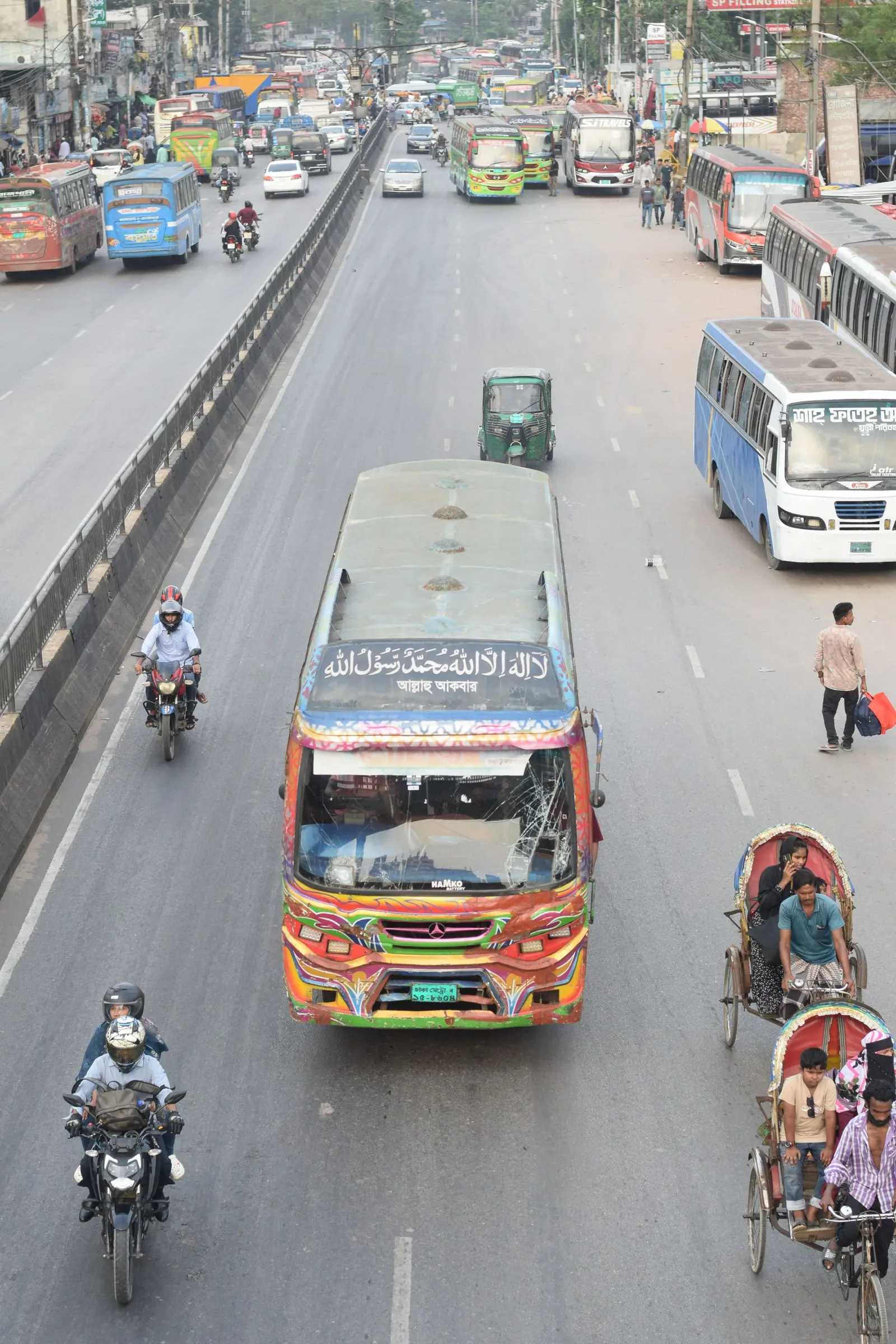
Roads are chaotic and accident rates are high. Use reputable drivers, wear a seatbelt where there is one, avoid long overnight drives where you can, and be very careful crossing busy roads — use footbridges in Dhaka.
Highways are shared by overloaded trucks, buses overtaking at speed, CNG auto-rickshaws, motorbikes, cycle rickshaws and pedestrians, often with little separation. Night driving is especially risky because of poor lighting, fatigue and unlit vehicles. For long distances, domestic flights and intercity trains are generally safer and less stressful than road travel, and the getting around guide compares the options.
A few rules make a real difference:
- Book cars with drivers through your hotel or a well-reviewed operator, and ask the driver to slow down if you feel unsafe — saying so politely is normal.
- In Dhaka, app-based ride-hailing such as Uber and the local app Pathao is widely used and gives you a fixed fare and a record of the trip.
- Avoid motorbike taxis unless you are given a helmet and are comfortable with the traffic.
- Cross roads with locals, at footbridges or at signals with traffic police. Traffic often does not stop for pedestrians.
- On rivers, choose larger, reputable launches and ferries, avoid boats that look overcrowded, and do not travel by small boat in storms.
Crowds, petty theft and scams
Pickpocketing happens in crowded markets, stations and launch terminals. Keep phones and wallets in front pockets or a zipped bag, and carry only the cash you need for the day.
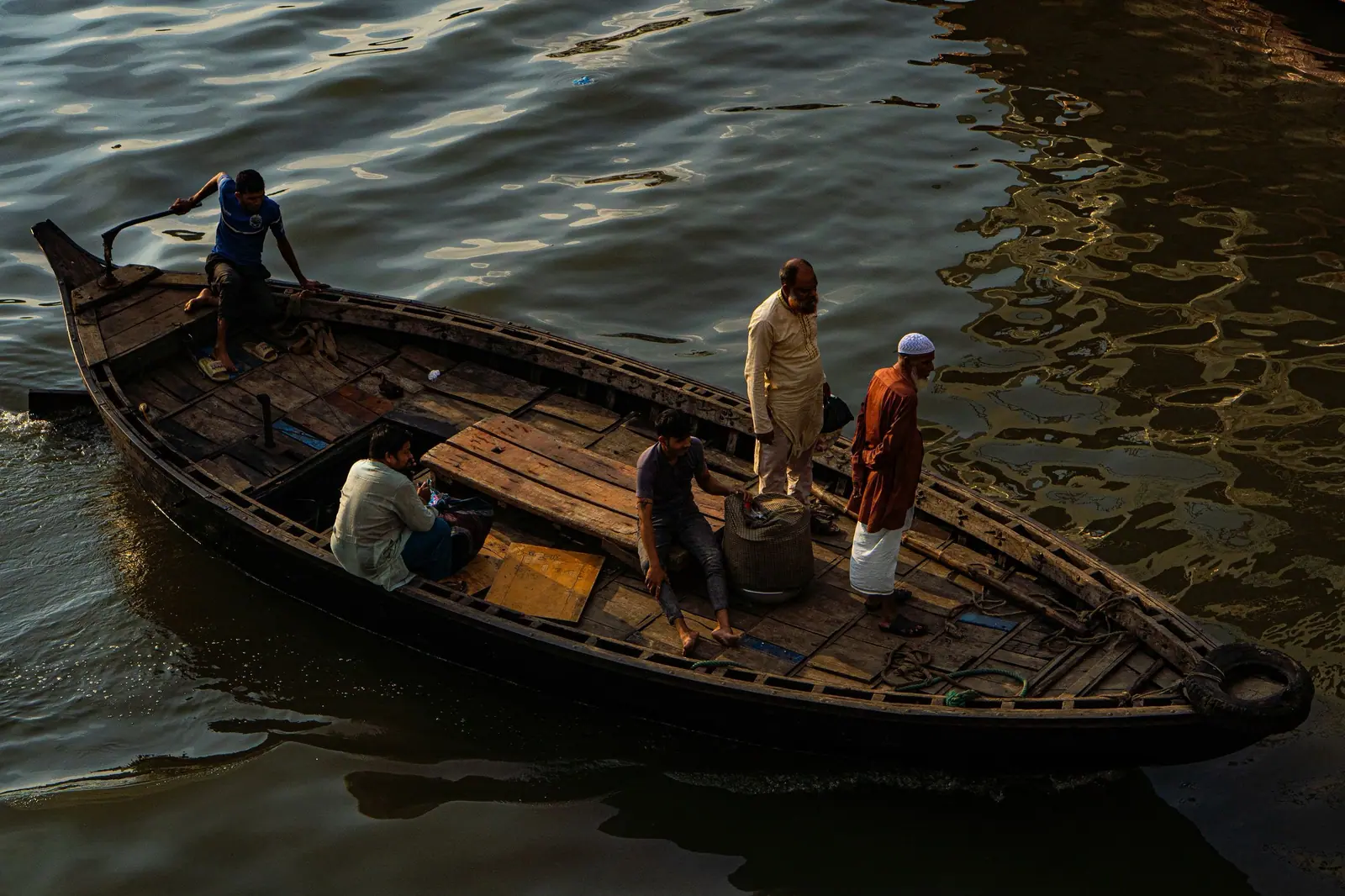
Violent crime against foreign visitors is uncommon, but snatch thefts of phones and bags do occur, sometimes from passengers in rickshaws or CNGs with open sides. Keep your phone out of sight when you are on the street, and hold bags on the side away from traffic. Late at night, use a car rather than a rickshaw.
Scams in Bangladesh are mostly small-scale and annoying rather than dangerous. The common ones:
- Overcharging on transport. CNG and rickshaw drivers may quote foreigners several times the normal fare. Agree the price before you set off, ask your hotel what a fair fare is, or use a ride-hailing app.
- Unofficial guides and helpers. Friendly strangers at stations or tourist sites may offer help and then ask for payment, or steer you to a particular shop. A clear, polite “no, thank you” is usually enough.
- Money changing. Change money at banks, airport counters or licensed money changers and count it in front of the cashier. Use ATMs attached to bank branches.
- Airport taxis and touts. At Dhaka airport, use the official taxi counters, a pre-booked hotel pick-up or a ride-hailing app. Our airport-to-city guide explains the options.
Health: water, food and mosquitoes
- Drink bottled or filtered water and choose busy food stalls where dishes are cooked fresh.
- Dengue is common in the monsoon — use repellent and cover up at dawn and dusk.
- Get travel insurance that covers medical evacuation; the best hospitals are in Dhaka.
Stomach upsets are the most common health problem for visitors. Use bottled or filtered water for drinking and brushing your teeth, check that bottle seals are intact, and be cautious with ice and raw salads outside good hotels and restaurants. Peeled fruit and freshly cooked, piping-hot food are the safest options. Our food guide has more on eating street food sensibly.
Mosquito-borne diseases deserve attention. Dengue is a risk across the country, including Dhaka, and outbreaks are typically worst during and just after the monsoon. Malaria is present in some rural and forested areas, particularly the Chittagong Hill Tracts and border districts. There is no simple rule for everyone, so see a travel health clinic around six to eight weeks before departure to discuss vaccinations — routine ones, plus commonly recommended options such as hepatitis A and typhoid — and whether you need antimalarials for your route.
Heat is a real issue in April and May. Drink plenty of water, add oral rehydration salts if you are sweating heavily, and slow down in the middle of the day. Air quality in Dhaka is often poor in the dry winter months; if you have asthma or a heart or lung condition, bring your medication and consider a well-fitting mask.
For anything serious, the best private hospitals are in Dhaka, with good options also in Chattogram. Medical facilities in rural areas are limited, which is why insurance with medical evacuation matters. Pharmacies are widespread, but bring an adequate supply of any prescription medicines in their original packaging.
Risks and precautions at a glance
| Risk | How likely | Precautions |
|---|---|---|
| Road accidents | The most significant everyday risk | Reputable drivers, seatbelts, no night drives, fly or take the train for long distances |
| Stomach upsets | Common | Bottled or filtered water, freshly cooked food, busy stalls, hand sanitiser |
| Dengue | Higher during and after the monsoon | Repellent, long sleeves at dawn and dusk, see a doctor for high fever |
| Heat exhaustion | Likely in April–May if unprepared | Hydrate, rest at midday, wear loose cotton and a hat |
| Pickpocketing and snatch theft | Occasional in crowds | Zipped bags, phone out of sight, carry only daily cash |
| Overcharging | Common | Agree fares first, use ride-hailing apps, ask your hotel for prices |
| Demonstrations and hartals | Unpredictable | Follow official advice and local news, avoid gatherings, stay put during strikes |
| Cyclones and floods | Seasonal: Apr–May, Oct–Nov; monsoon flooding | Check forecasts, follow local authorities, avoid small boats in bad weather |
| Unwanted attention (women) | Fairly common in crowds | Modest dress, women’s sections, reputable guides, firm responses |
Women travellers
Women generally travel safely, but staring is common and unwanted attention can occur in crowds. Dressing modestly, sitting in women’s sections where available and travelling with reputable guides all help. Hotels and many women-run businesses are happy to advise.
Staring is usually curiosity rather than hostility — foreign visitors are still unusual outside Dhaka — but it can be tiring. Groping and harassment are most likely in dense crowds, such as at festivals, on packed buses and in busy markets. Buses often have a few seats reserved for women near the front, trains have ladies’ compartments or reserved seating on some services, and there are often separate queues for women at stations and security checks.
- Loose clothing that covers your shoulders and legs, with a scarf, draws less attention. Our guide to what to wear in Bangladesh has detailed advice.
- If someone bothers you, a loud, firm response usually works and tends to attract help from bystanders.
- Book hotels with recent guest reviews and, for longer road journeys, cars arranged by your hotel or an established operator.
- Avoid walking alone late at night in unfamiliar areas, and share your plans with someone at your hotel.
- Many Bangladeshi women are keen to talk to foreign women; it is often easier to ask them for directions or advice.
LGBTQ+ travellers
Same-sex sexual activity is illegal in Bangladesh under Section 377 of the Penal Code, a law dating from the colonial era that carries heavy penalties. Prosecutions are reported to be rare, but there is no legal recognition of same-sex relationships, no anti-discrimination protection based on sexual orientation, and social attitudes are generally conservative. LGBTQ+ activists in Bangladesh have faced serious threats and violence in the past.
In 2013 the government officially recognised hijras — a long-established transgender and intersex community in South Asia — as a separate gender, although discrimination remains widespread. Gender identity outside that category is not legally recognised.
In practice, most LGBTQ+ visitors travel without problems by being discreet. Public displays of affection are uncommon for anyone in Bangladesh, regardless of orientation, and two people of the same gender sharing a hotel room rarely attracts comment. Be cautious with dating apps, which have been used to target people, and avoid discussing your sexuality with people you do not know well. Check your government’s travel advice, which usually includes a section for LGBTQ+ travellers.
Permits, documents and restricted areas
Parts of the Chittagong Hill Tracts require permits for foreign visitors and may have movement restrictions. Book through an experienced operator who handles the paperwork.
Permit rules for the Hill Tracts districts — Rangamati, Bandarban and Khagrachari — have changed several times, the UK government advises against all but essential travel there (checked in November 2026), and some areas are closed to foreigners altogether from time to time. Allow at least a couple of weeks for an operator to arrange permission, carry several photocopies of your passport and visa, and expect checkpoints. The Sundarbans also require Forest Department permits, which cruise operators arrange as part of the trip. Make sure your visa is valid for your whole stay; overstaying leads to fines and delays at departure.
Emergency numbers and practical habits
Bangladesh has a single national emergency number, 999, which connects you to police, fire service and ambulance. It is free to call from any phone. Operators may not always speak fluent English, so if possible ask a Bangladeshi companion or your hotel to help. Bangladesh also has a Tourist Police unit, with officers posted in popular areas such as Cox’s Bazar.
- Buy a local SIM card on arrival (you will need your passport) so you can call, use maps and book rides.
- Save your hotel’s number, your embassy’s emergency number and your insurer’s helpline in your phone and on paper.
- Carry a photocopy of your passport and visa; leave the original in the hotel safe when you can.
- Keep a little cash in a separate place in case your main wallet is lost.
- Tell your hotel where you are going on day trips and roughly when you expect to return.
Approach Bangladesh with the same common sense you would use anywhere busy and unfamiliar, and you are likely to remember the kindness rather than the risks. Pick the right season too: our guide to the best time to visit explains when cyclones, floods and heat are most likely.
Questions and answers
Is Bangladesh safe to visit right now?
Most visits are trouble-free, but conditions can change, particularly around elections, strikes or demonstrations. The only reliable answer for your dates comes from your own government’s travel advice, which is updated as events happen. Read it before booking and again before you fly, and make sure your travel insurance is valid for your itinerary.
Is Bangladesh safe for solo female travellers?
Many women travel alone in Bangladesh without serious problems, but staring and unwanted attention are common, particularly in crowds. Dressing modestly, using women’s seating on transport, choosing well-reviewed accommodation and arranging drivers through your hotel all help. Responding firmly and loudly to harassment usually ends it and draws support from people nearby.
Can I drink tap water in Bangladesh?
No. Tap water is not safe to drink. Use sealed bottled water or water from a reliable filter, and use it for brushing your teeth too. Large bottles are widely available. Be cautious with ice and raw salads outside good hotels and restaurants, and choose food that is freshly cooked and served hot.
What is the emergency number in Bangladesh?
Dial 999 for police, fire and ambulance anywhere in the country. The call is free. English may be limited, so it helps to have a local contact or your hotel assist. Also save your embassy’s emergency number and your travel insurer’s 24-hour helpline, which can direct you to a suitable hospital.
Do I need vaccinations for Bangladesh?
There are no vaccinations that every traveller must have, except yellow fever proof if you arrive from a country with yellow fever risk. Travel clinics commonly recommend routine vaccines plus hepatitis A and typhoid, and sometimes others depending on your plans. Visit a clinic six to eight weeks before departure to get advice tailored to you.
Are hartals dangerous for tourists?
Hartals are general strikes, usually called by political groups. Shops close, traffic thins and vehicles on the road can occasionally be attacked, while related rallies can become tense. Tourists are not targets, but you could be caught up in trouble. Stay in your hotel or nearby, avoid gatherings and postpone road journeys until the strike ends.
Is it safe to travel to the Chittagong Hill Tracts?
Official advice is more cautious there than elsewhere. In November 2026 the UK government advised against all but essential travel to Rangamati, Bandarban and Khagrachari, and foreign visitors need permission from the district authorities. Areas open and close at short notice. Read your own government’s page, check that your insurance covers the trip, and only go with permission arranged in advance.
What should I do in an emergency in Bangladesh?
Call 999 for police, fire or ambulance; it is free from any phone. If language is a problem, hand the phone to hotel staff or someone nearby. Then contact your insurer’s helpline, which can direct you to a suitable hospital, and your embassy if you have lost documents or been involved in a serious incident. Keep those numbers on paper too.