On this page
The far north-west of Bangladesh is a country of wide skies, rice fields, mango and lychee orchards and very few tourists. Dinajpur, the main town, lies on the Punarbhaba river and serves a district whose chief monument is the Kantajew Temple, a brick building covered in terracotta plaques that was completed in 1752. For a traveller who has already seen Dhaka and the coast, this is a calmer and quite different side of the country.
The short version
- Dinajpur is the closest base for the Kantajew Temple, with Saidpur by the airport as a handy alternative and Rangpur as a larger city further east.
- Plan two nights: the temple and the town fill a day, and a second day adds the lake, the old palace or the ruins at Sitakot.
- Fly to Saidpur or take a long train; the road from Dhaka takes most of a day.
- Winter is the clear season, but fog and cold snaps in December and January can delay flights, trains and early starts.
This guide is about where to sleep and how to organise a stay. The temple itself gets only a short description here, because the point is the base: which town to choose, how to reach it, what else to see within a short drive, and how the weather shapes the plan.
Why Dinajpur is the base
The Kantajew Temple lies about 18 km north of Dinajpur town in a straight line, a short drive on a quiet road. No other town is as close, and Dinajpur has the practical things a base needs: a railway station, restaurants, banks, ATMs and a range of hotels from simple to comfortable. It is a district headquarters rather than a tourist town, so prices and rhythms are those of local life. Expect to be noticed as a visitor, to be asked where you come from, and to be offered tea; a polite answer and a smile are all that is needed, and a firm no thank you works when you want to be left alone.
The district also holds other places that reward a day of slow travel: a large man-made lake with a national park around it, the remains of a Buddhist monastery in the south, a former royal palace in the town itself, and a countryside that is famous for fine rice, lychees and mangoes. None of them is spectacular on its own, but together they make a relaxed three-day stay that fits well between the capital and the northern tea country.
Dinajpur, Saidpur or Rangpur
Three towns work as bases for this corner of the country, and the right choice depends on how you arrive and what else you plan to see. Dinajpur is closest to the temple. Saidpur has the airport and is the practical choice for a late flight. Rangpur is the largest city of the division, with more hotels and a museum, about 61 km from the temple in a straight line.
| Town | What it offers | Suits |
|---|---|---|
| Dinajpur | Closest to Kantajew, palace and lake nearby, smaller hotel choice | Two nights with the temple as the focus |
| Saidpur | Airport and rail workshop town, quick access from Dhaka | Late flights, one night before moving on |
| Rangpur | Division headquarters, more hotels, a palace museum | Longer northern routes, trips to Panchagarh |
Many travellers fly to Saidpur, sleep one night there or head straight on to Dinajpur, and then continue to Rangpur or the far north. If you are driving from Bogura, Dinajpur makes a natural stop on the way north without a large detour.
Where to sleep and what is in town
In Dinajpur, the centre around the main roads and the bus and railway stations has most of the hotels, along with restaurants and shops. Rooms range from basic to comfortable business-style, and the choice is smaller than in Bogura or Rangpur. Ask for a quiet room, because the main roads carry trucks and rickshaws until late. Rooms are easier to find on weekdays than at weekends and holidays, so check availability before a long drive.
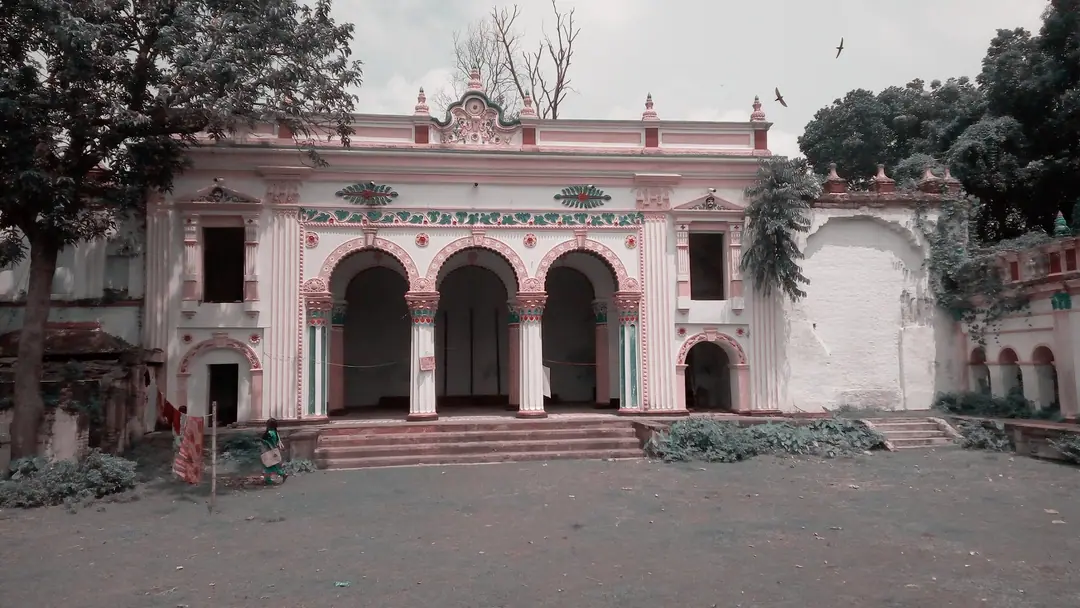
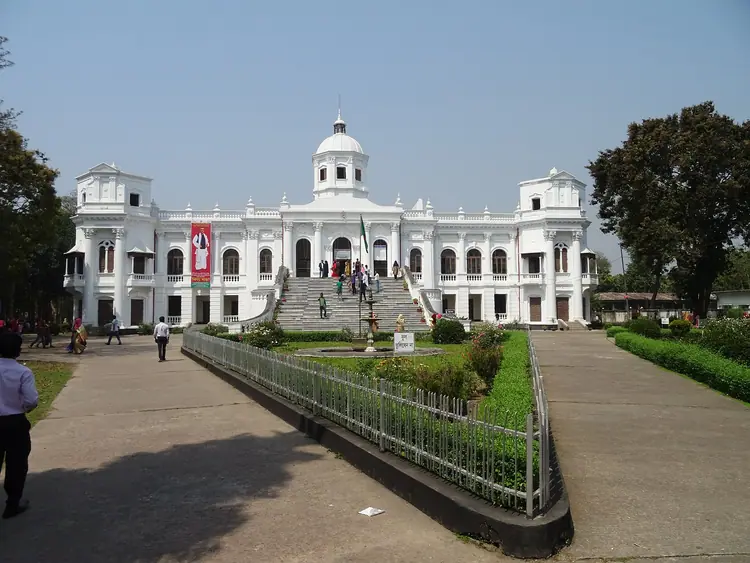
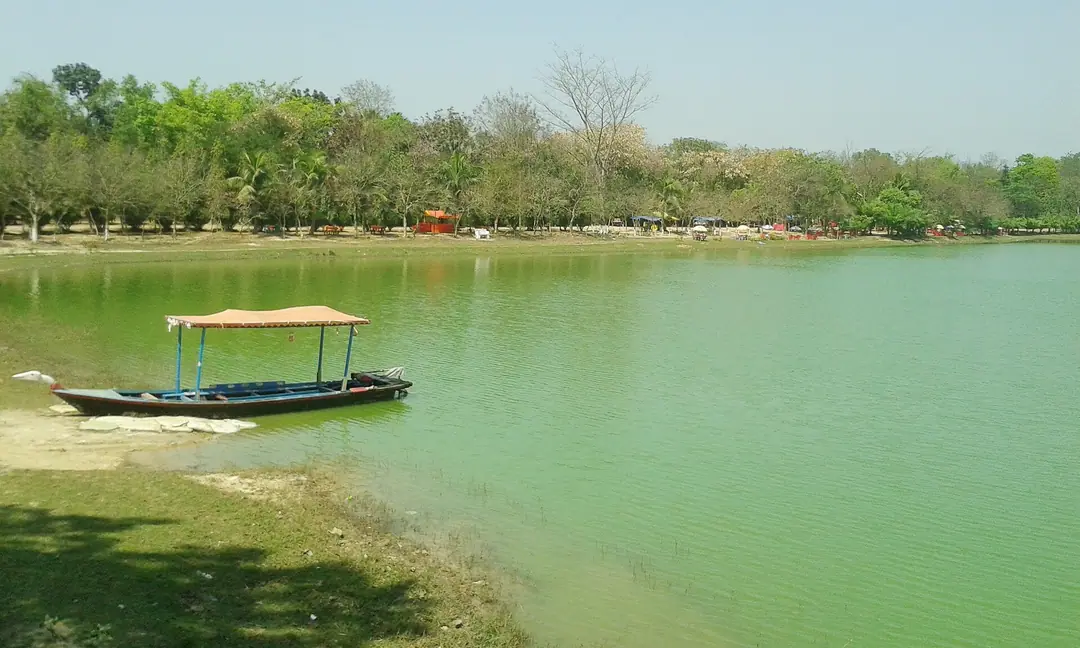
In the town itself, the old Rajbari, the palace of the Dinajpur landowning family, is worth an hour, with its gardens and old buildings. A short ride south brings you to Ramsagar, a large rectangular lake dug in the eighteenth century and now ringed by trees, with a national park and walking paths on its banks. It is popular with local families on Fridays and is quieter on weekday mornings.
Kantajew from your base
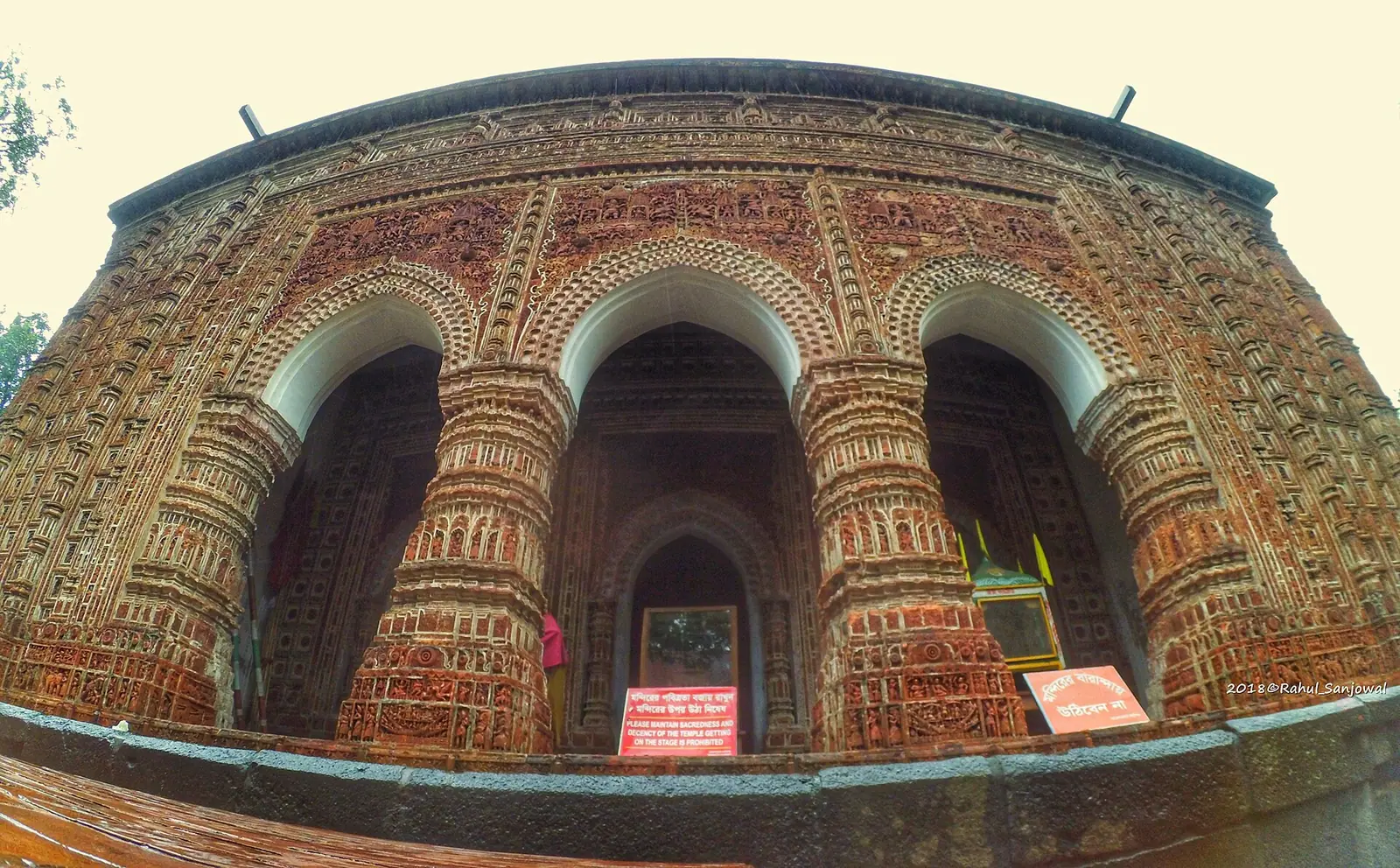
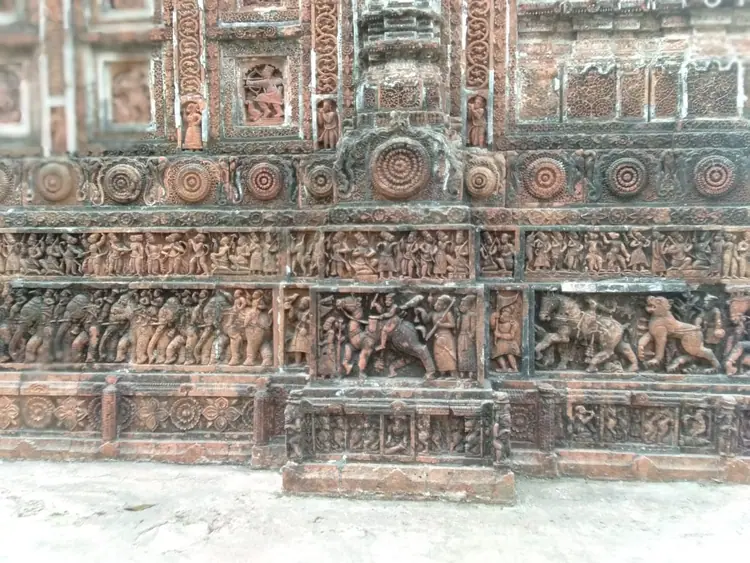
The Kantajew, or Kantajir, Temple is a Hindu temple dedicated to Krishna and was completed in 1752. It is square, built of brick, and covered with terracotta plaques showing scenes from the Hindu epics and from daily life, such as hunting parties, musicians and domestic scenes. The upper tiers fell in an earthquake in the late nineteenth century, so what you see now is lower than the original design, and conservation work continues.
Allow about two hours, and go in the morning when the light is good and the grounds are quiet. The temple is a living place of worship for some visitors, so dress modestly, remove shoes where asked and ask before photographing people. The site keeps its own opening times, and an entry fee applies for foreign visitors, so ask your hotel to check ahead.
Look closely at the plaques rather than the whole facade. The panels run in rows around the walls and show battle scenes, dancers and processions, animals, boats and small domestic details, so each stretch has its own story. Terracotta of this kind was a Bengal tradition, made from local river clay and fired in kilns, and the plaques here are among the finest surviving examples. Some panels have been lost or weathered, and modern repairs are visible beside the older work.
Other short trips from Dinajpur
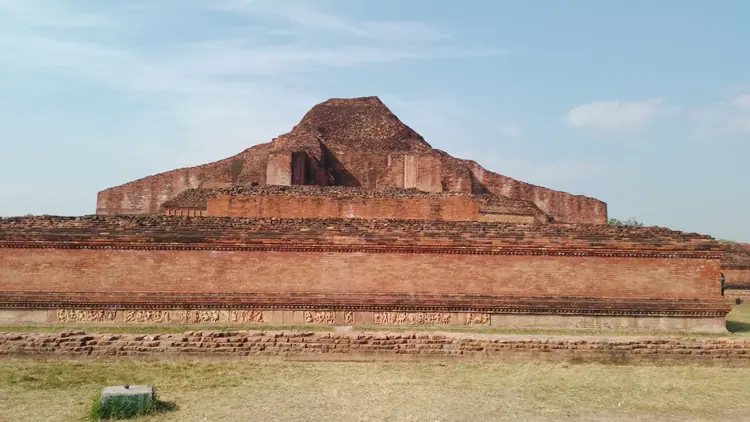
To the south, in Nawabganj upazila, lie the ruins of Sitakot Vihara, an early Buddhist monastery with a brick plan and a quiet setting. It rarely draws crowds, so the visit is about the walk and the landscape as much as the stones. Ask the hotel for a driver who knows the route, since signs are few and the last stretch can be on a narrow road.
To the north, the road leads towards Panchagarh and Tetulia, the far corner of the country, which are usually done as an overnight rather than a day trip. If you do not have time for the full journey, the Dinajpur countryside offers lychee orchards in early summer, rice fields in autumn and a very slow pace year-round. Where the land flattens towards the Indian border, ask locals before leaving the main roads.
Getting there
The simplest way is to fly from Dhaka to Saidpur and drive on to Dinajpur, a short transfer by car or hired CNG. Flights take under an hour but the schedule is limited, so check current timetables and book early in winter. Fog in December and January can delay or cancel flights, so avoid tight connections on those dates.
By train, intercity services connect Dhaka and the north-west, and Dinajpur has its own station; the journey is long. Book on the official Bangladesh Railway e-ticket site and check the current timetable. By road the journey from Dhaka takes most of a day, and Rangpur alone takes seven to nine hours by road, with Dinajpur a further stretch. The getting around Bangladesh guide compares the options.
Getting around and money
Inside Dinajpur, cycle rickshaws and battery easy-bikes handle short trips, and CNG auto-rickshaws cover longer ones. For the temple, Ramsagar and Sitakot, a car with a driver for the day is easier, because the places lie in different directions and the roads between them are quiet. Agree the fare and the waiting time before you set off, and carry small notes.
ATMs are available in Dinajpur and Saidpur, but they are scarcer in the countryside, so draw cash in town. Cards are accepted mainly at larger hotels. Mobile signal is usually adequate in towns and weaker on the back roads, so download directions in advance if you plan to drive yourself. Keep your passport and visa copies with you, since checkpoints appear on the roads near the border.
Seasons and clothing
The far north is the coldest part of Bangladesh. Winter nights in December and January can drop to around 10 degrees, and fog blankets the fields in the early morning, delaying trains and flights and making the roads slow. A light jacket, scarf and socks are worth packing, and the what to wear in Bangladesh page lists the rest. Days are usually clear and sunny.
Summer is hot, with nor’wester storms in April and May. June is lychee season, which suits anyone who wants to eat fruit from a roadside basket, and the monsoon from June to September brings heavy rain and swollen rivers. The best time to visit Bangladesh page compares the months across the country, and for this region November to February is the clearest.
Food and a short plan
Dinajpur is known for Kataribhog, a fine aromatic rice, and for kachagolla, a soft, milky sweet that is a local favourite. Meals follow the usual pattern of rice with dal and a fish or meat curry, and street food is simple. Eat freshly cooked dishes and drink bottled or filtered water, and in winter look for steamed rice cakes and sweets made from date-palm jaggery at roadside stalls. The Bangladeshi food guide lists more dishes worth trying.
- Day 1 · Arrive
Fly to Saidpur or take the train, transfer to Dinajpur, rest, and walk the old palace and the town in the late afternoon.
- Day 2 · Kantajew
Go early to the temple with a waiting driver, then see Ramsagar lake in the afternoon and try kachagolla in the evening.
- Day 3 · Sitakot or onward
Visit the monastery ruins to the south, or continue north to Panchagarh, or return to Saidpur for the flight to Dhaka.
Visitors from abroad should confirm entry rules with the visa checker before planning a long trip.
Questions and answers
Where should I stay for the Kantajew Temple?
Dinajpur town is the closest base, about 18 km from the temple in a straight line, with hotels, restaurants and a railway station. Saidpur suits a late flight, and Rangpur is a larger city about 61 km away in a straight line. Most visitors choose Dinajpur for two nights.
How many days do I need in Dinajpur?
Two nights is comfortable. One morning goes to the Kantajew Temple, an afternoon to the old palace and Ramsagar lake, and the following morning to the ruins at Sitakot or the road north. With only a day, you can see the temple and the town if you start early.
How do I get from Dhaka to Dinajpur?
The quickest way is a domestic flight from Dhaka to Saidpur, then a short drive. Intercity trains also serve the north-west and Dinajpur has its own station, but the journey is long. By road it takes most of a day, so many travellers choose the plane.
Is Dinajpur cold in winter?
Yes, it is among the coldest places in Bangladesh. December and January nights can fall to about 10 degrees, and early fog is common. Bring a light jacket, scarf and socks. Days are usually clear. Fog can delay flights and trains, so leave a spare day around any connection.
What is Dinajpur known for eating?
Dinajpur is known for Kataribhog, a fine aromatic rice, for lychees in early summer, and for kachagolla, a soft milky sweet. Meals are usually rice with dal, vegetables and a fish or meat curry. Choose freshly cooked dishes and drink bottled or filtered water.
Can I visit the Kantajew Temple in a day from Dinajpur?
Yes, easily. The temple is a short drive from Dinajpur town and a visit takes about two hours. Go in the morning for softer light and quieter grounds, take a driver who will wait, and dress modestly. Opening times and the foreign visitor fee change, so ask your hotel to check.
Is Dinajpur a good stop on a northern loop with Bogura and Rangpur?
It can be. Dinajpur sits north of Bogura in the same part of the country, so it fits as a stop on a northern loop that takes in Bogura and Rangpur rather than as a separate trip. Allow a spare day for slow roads, and check train and flight schedules first.
Is there an airport near Dinajpur?
The nearest is Saidpur, which has domestic flights from Dhaka and lies a short drive from Dinajpur. There is no airport in Dinajpur itself. Flights run on a limited schedule and fog in December and January can disrupt them, so book early and avoid tight connections.