On this page
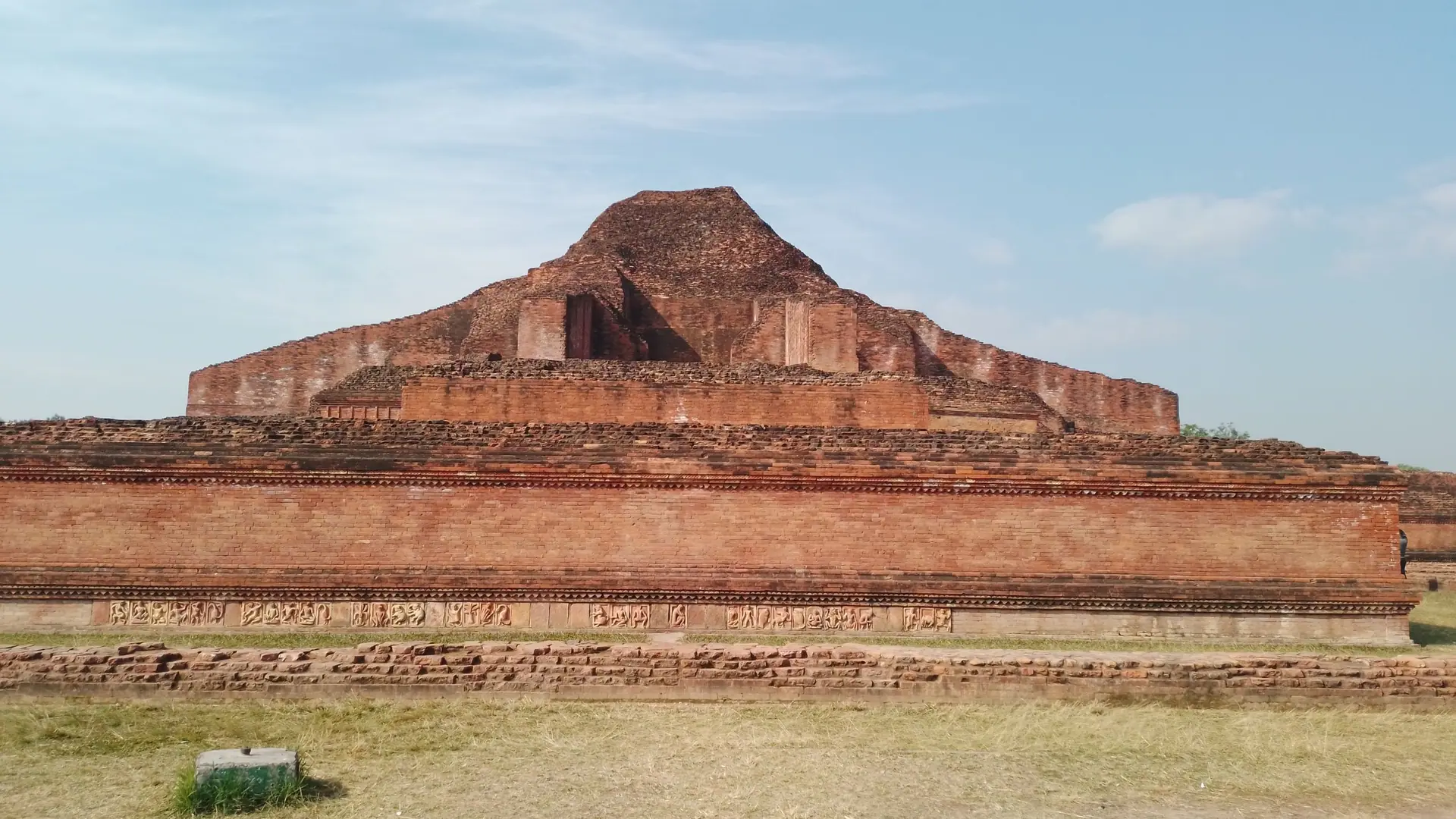
Paharpur does not look like a monastery at first. From the road you see a long, low mound of old brick and a few mature trees, and only when you step inside the gate does the plan become clear: a vast square courtyard with a single temple, built to a cross-shaped plan, at its centre. It sits in Badalgachhi upazila of Naogaon district, in the north-west, near the Indian border.
The short version
- Somapura Mahavihara at Paharpur is a square monastery of 177 cells around a cross-shaped central temple, founded by the Pala king Dharmapala.
- Walk the outer cells first, then the central temple terraces, then see the finds in the site museum.
- Reach it from Bogura, Joypurhat or Rajshahi; there is almost no shade, so go early in the hot months.
- Pair it with Mahasthangarh near Bogura for a full day of early history, or stay a night for a slower two-day plan.
This guide covers the visit: what the monastery was, how to walk it so the layout makes sense, what to look for in the brickwork, how to reach it from the nearest bases and how to plan around heat and fog. For the towns and regions around it, read the Rajshahi area guide and the guide to Rangpur and the north.
What Paharpur was
Somapura Mahavihara, the Great Monastery of Somapura, was founded by the Pala king Dharmapala in the late eighth century. The Palas ruled much of Bengal and Bihar and supported Buddhism, and this is often described as one of the largest monastic centres of its age. Monks studied, taught and lived here for several centuries, and it drew students from far beyond the region.
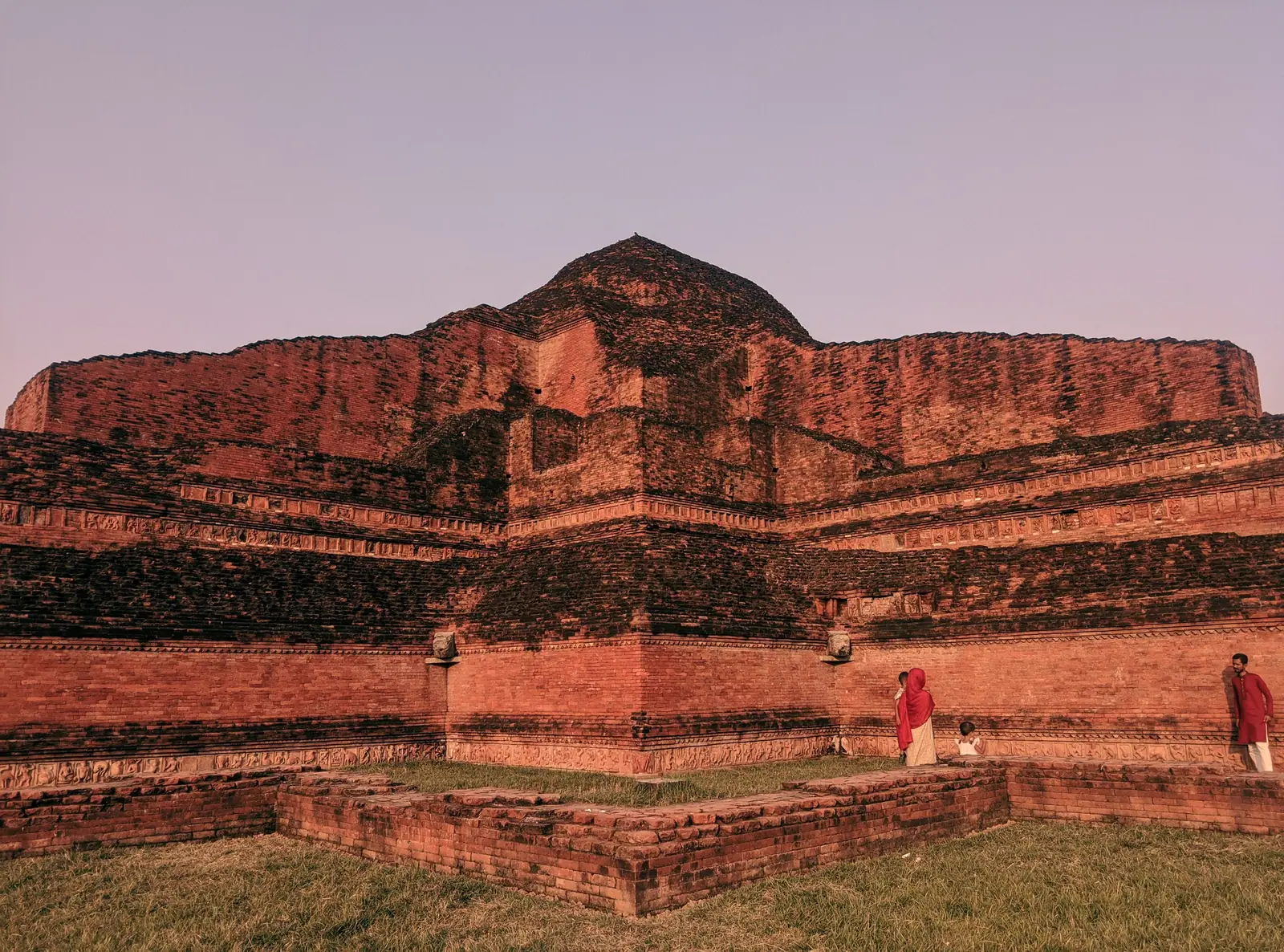
The monastery was later abandoned, and over time the brick fell and the site grew over into a long earth mound. The name Paharpur means roughly hill town, from the mound that hid the buildings. Archaeologists excavated it in the early twentieth century, and it was recognised on the UNESCO World Heritage list in 1985.
For visitors, the point is not any single object but the scale and the plan. Walking the square of cells and then climbing towards the central temple gives you an idea of how a large Buddhist community was organised, and of how brick was used for monumental architecture long before stone and concrete.
How the monastery is laid out
The monastery is a huge square courtyard, with a continuous row of 177 small cells around the inside of the walls. Each cell was a monk's room, with a doorway opening onto a verandah. Entrance to the courtyard is on the north side, and from the gate you can walk the whole perimeter, looking into cells where you can still see the thickness of the walls.
At the centre stands the cruciform temple, rising in stepped terraces from a cross-shaped base. Its four arms project outward and are lined with processional paths. You walk around it clockwise, as Buddhist custom would have done, and the terraces give you a view across the whole courtyard and the fields beyond.
Small shrines, wells, drains and other structures lie inside the courtyard, and a few of them have information boards. Use the boards to orient yourself, but do not worry about naming every foundation. The clearest approach is to see the cells, climb the temple, then walk the outer path and look back at the mound as the pilgrims once did.
Terracotta plaques and brickwork
Look at the base wall of the central temple. Rows of terracotta plaques, small fired clay panels set into the brick, run along it, and they show a range of subjects: animals, gods, human figures and scenes from daily life. Many were made in moulds, so similar designs repeat, but each was fixed by hand and shows slightly different wear.
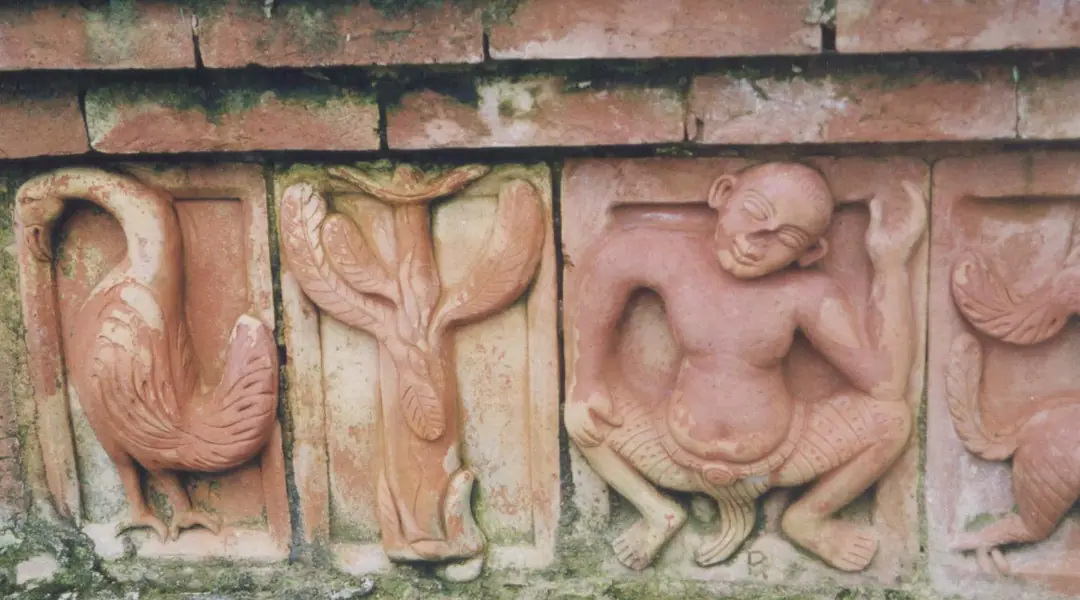
The plaques are an important surviving record of the artists of early Bengal, and they are the reason many visitors come. Take your time at the base, look for expressions and details such as hairstyles and headgear, and notice how the clay still holds its colour in places. Photography is usually fine, but flash and touching are not.
The brick itself is worth a close look. The walls were laid in patterns that have weathered unevenly, and tree roots and monsoon rain have done as much damage as time. Keep to the marked paths, do not climb on fragile walls and do not pick up loose bricks as souvenirs, since the conservation of the site depends on visitors respecting it.
The site museum
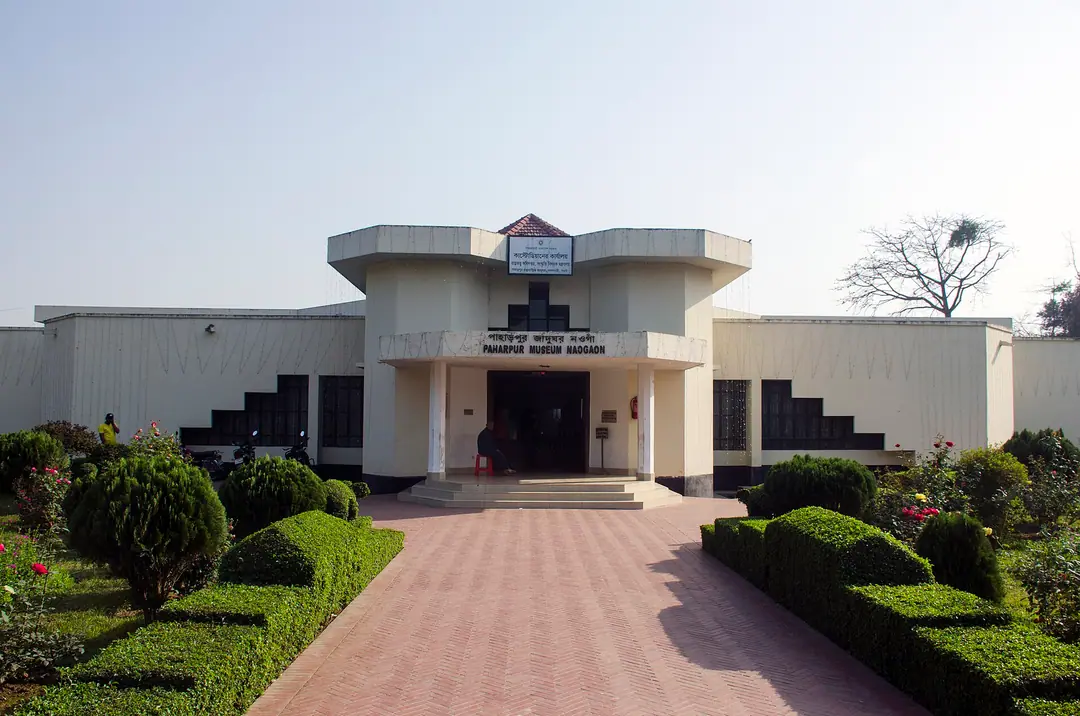
A museum on the grounds holds finds from the excavations: sculptures, terracotta plaques taken from the walls for safety, coins, pottery and other objects. Seeing them behind glass and up close is a good complement to the weathered plaques outdoors, and it makes the story of the site easier to follow. Visit it before or after the walk, whichever suits the heat.
Opening days and hours vary, and museums in Bangladesh often close one day a week. Check locally before you travel, and do not assume that the grounds and the museum keep the same hours. Allow about half an hour for the museum, and a little longer if you like reading labels. Photography rules inside are set by the staff, so ask before using a camera.
The museum is also a rest from the sun. In April and May, when the ruins feel like an oven by late morning, make the museum your midday stop and return to the courtyard late in the afternoon, when the brick glows and the light is gentler.
Getting there
Paharpur is about 203 km from central Dhaka in a straight line, and by road or rail it is a long journey. Most visitors approach from one of three bases and then hire a vehicle for the last stretch. The table compares them. Journey times vary with traffic and with the state of the roads, which can be slow in the monsoon.
| Base | Straight line to Paharpur | How it works |
|---|---|---|
| Bogura | About 45 km | The most practical base, with hotels, restaurants and Mahasthangarh; hire a car, CNG or a local driver for the day |
| Joypurhat | Nearest larger town | A quieter base with fewer options; useful if you arrive by train and want the shortest transfer |
| Rajshahi | About 82 km | A longer day trip with a hired car; makes sense if you are also seeing Puthia and the Varendra museum |
| Naogaon | District town | A local base with simple stays; transport is mainly by CNG and local bus |
Trains on the northern and western lines serve Bogura, Joypurhat and Rajshahi, and the Jamuna Railway Bridge opened in March 2025. Timetables and ticket windows change, so check the official Bangladesh Railway site. For general options on road and rail, see train travel in Bangladesh. The Jamalganj station area is the nearest railway point to the site.
Heat, shade and timing
There is very little shade at Paharpur. The courtyard is open, the brick is pale and reflects the sun, and the temple terraces catch every breath of wind. In April and May, temperatures climb sharply and nor'wester storms can break the afternoon. In winter, the dry months from November to February are comfortable, but fog can delay the road, particularly in the early morning.
Aim to arrive soon after opening. Early light is also better for photographs of the plaques, because it falls across the brick at a low angle and shows the relief. If you come in the monsoon, expect wet ground and puddles in the courtyard, but also green fields around the mound and fewer visitors.
Bring a hat, a water bottle and sunscreen, and wear shoes that can handle uneven brick. Some visitors carry a light umbrella as a sunshade. Toilets and snack stalls are usually available near the entrance, but the choice is limited, so carry what you need and take your rubbish with you.
One day or two
- Morning, Paharpur
Arrive early from Bogura or Joypurhat. Walk the outer cells, climb the central temple, study the plaques and finish with the museum.
- Lunch
Eat in Jamalganj, Joypurhat or back in Bogura. Choose a place with a busy kitchen and drink filtered or bottled water.
- Afternoon, Mahasthangarh
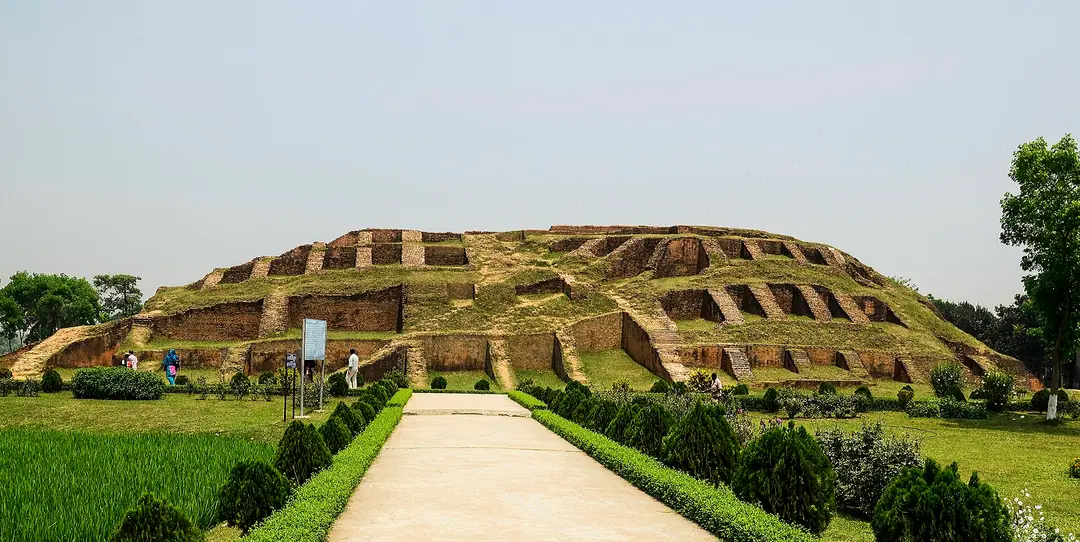
Visit the ancient city of Pundranagara near Bogura, about 13 km in a straight line from the town. It is the oldest known urban site in the country, at least 3rd century BC.
- Day two, if you stay
Spend a slow morning in Bogura, then add Puthia's temples and the Varendra museum on the way to Rajshahi, or Kantajew Temple near Dinajpur if you are heading north.
A one-day trip from Bogura is realistic if you start early and use a hired car. A two-day plan is kinder to your schedule and lets you add Mahasthangarh without hurrying. A single day from Dhaka is not sensible: the journey is long and you would spend most of it in transit.
Manners and what to bring
Paharpur is a Buddhist site and a heritage monument, and many visitors treat it with quiet respect. Dress modestly, covering shoulders and knees, keep voices low and do not climb on walls or sit on carved surfaces. If you see local Buddhist visitors or monks, ask before photographing them, and do not step over offerings.
Entry is ticketed, and rules and fees are set by the authorities and can change. Carry taka in small notes, a copy of your passport and a charged phone. Drones need permission and should be assumed to be forbidden. Mobile signal is generally fine near the road, though it can be patchy in the fields.
Where to stay before and after
Bogura is the practical base for Paharpur and Mahasthangarh, with hotels in the town, restaurants and its famous sweet curd. Rajshahi, on the Padma, is a pleasant alternative if you want a bigger city and the riverside, with a longer drive on the day. Joypurhat and Naogaon have simpler stays that suit travellers who want the shortest transfer.
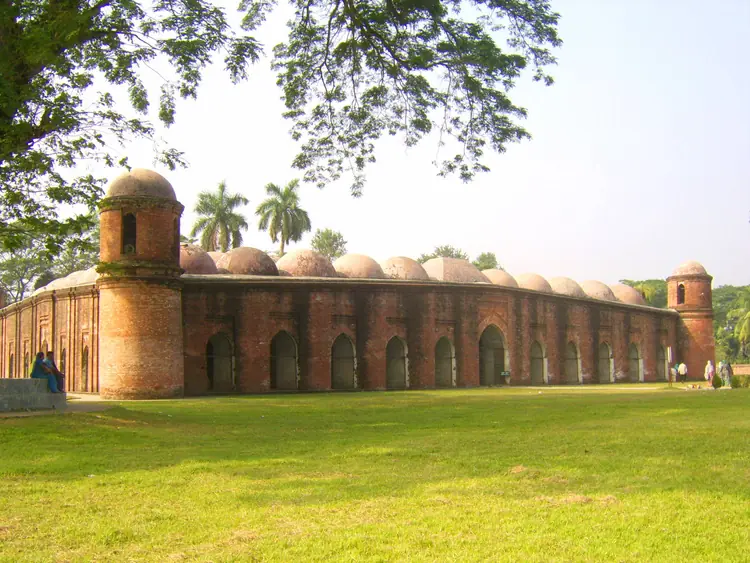
After Paharpur, travellers often head south by road or rail, or on to the mosque city of Bagerhat on the other side of the country, described in the guide to the Sixty Dome Mosque. Both are UNESCO sites, and together they make a strong pair for anyone interested in the early and medieval history of Bengal.
Questions and answers
How long should you spend at Paharpur monastery?
Allow two to three hours for the ruins and the museum: an hour for the courtyard and cells, an hour on the central temple and plaques, and half an hour for the museum. Add time for the journey, and more if you plan to see Mahasthangarh on the same day.
Is Paharpur a UNESCO World Heritage Site?
Yes. The Ruins of the Buddhist Vihara at Paharpur were inscribed in 1985, together with the mosque city of Bagerhat. They are among only three World Heritage Sites in Bangladesh, the third being the Sundarbans, listed in 1997. Other sites such as Mahasthangarh are on the tentative list.
Can you visit Paharpur as a day trip from Dhaka?
It is not practical. Paharpur is about 203 km from Dhaka in a straight line, and the road or rail journey takes many hours each way. Fly or travel to Bogura, Rajshahi or Joypurhat the day before, and give the monastery a full morning.
What are the terracotta plaques at Paharpur?
They are fired clay panels set into the base wall of the central temple, showing animals, deities, human figures and scenes of daily life. They are among the most important surviving examples of early Bengali art. Look but do not touch, and ask staff before using flash in the museum.
When should you visit Paharpur?
November to February is the most comfortable, with dry weather and cool mornings, though fog can delay the road. April and May are very hot and shade is scarce. The monsoon is green and quiet, but ground can be wet. Go early whichever month you choose.
Is there a museum at Paharpur?
Yes, a museum on the grounds displays sculptures, terracotta plaques, coins and pottery from the excavations. Opening days and hours can change, and museums in Bangladesh often close one day a week, so check locally before you travel. It is also a place to rest out of the sun.
Which town works as a base for visiting Paharpur?
Bogura is the most practical choice, with hotels, restaurants, Mahasthangarh nearby and about 45 km in a straight line to the monastery. Rajshahi is a bigger city and a longer drive, while Joypurhat and Naogaon are quieter but have fewer choices for travellers with limited time.
Do you need a guide at Paharpur?
A guide is not required, and information boards help. A local guide adds history and helps you read the plaques, if one is available. Ask your hotel in Bogura or Rajshahi. A driver who waits for you matters more, since the site is rural and public transport is limited.