On this page
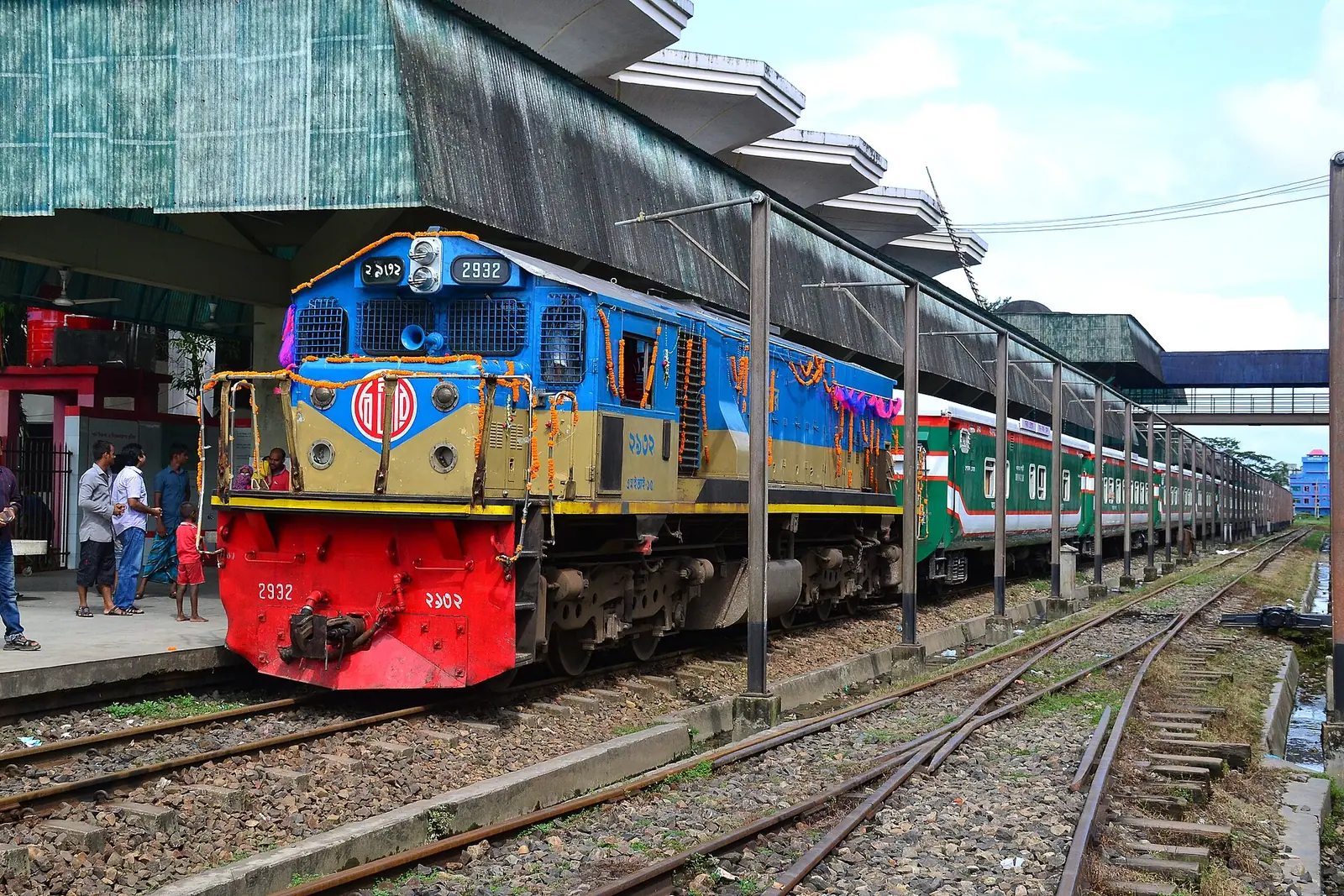
A train ride in Bangladesh is a good way to see the country without managing a driver. The carriages are slower than a flight and calmer than a bus on a congested highway. Windows slide open, vendors walk the aisle, and the landscape outside changes from brick towns to flat green fields to tea slopes. For many first-time visitors the Dhaka to Sreemangal run is the moment the trip clicks into place.
The short version
- Bangladesh Railway sells tickets through its official e-ticket site and at station counters, and the sale window and timetable change, so check both before you plan around a train.
- Choose AC berth for night journeys, AC seat or Snigdha for day trips, and treat Shovon Chair as a short-hop option.
- Visitors mostly use four corridors: Sreemangal and Sylhet, Chattogram and Cox’s Bazar, Khulna over the Padma, and the north and west over the Jamuna.
- Fog, Eid and sold-out cars are the three things that upset rail plans, and a bus or flight is the usual back-up.
This page is about trains only. For a comparison with flights, buses and launches, read the general transport guide. Here the aim is to explain how the railway is organised, how to read a ticket, which lines are useful, what a day on board is like, and what to do when the car you wanted has sold out.
How the network is laid out
Bangladesh Railway is a state body, and almost every line fans out from Dhaka. The system uses two track widths: broad gauge mostly on the western side of the Jamuna and metre gauge in the east, with some dual-gauge sections where the two meet. You do not need to remember this, but it explains why Dhaka does not have one grand central station and why a few cross-country trips need a change.
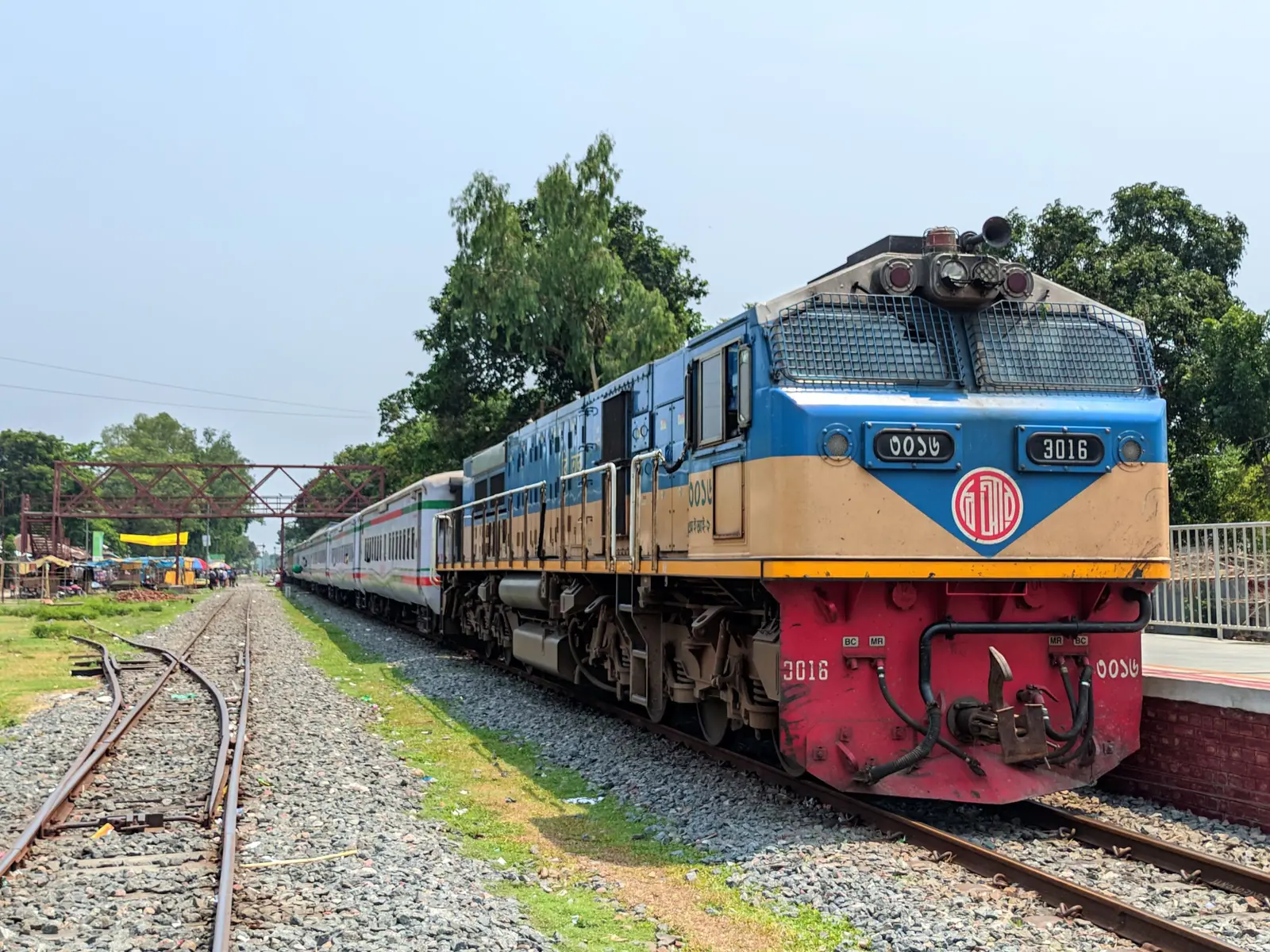
Two big bridges reshaped the map. The Padma Bridge, open to road traffic since 25 June 2022, was followed by a rail link, and Dhaka to Khulna trains began in December 2024. The Jamuna Railway Bridge, which opened in March 2025, opened a more direct run to the north and west. Both changes cut hours from journeys that once depended on ferries.
There are still gaps. No railway reaches Barishal, Kuakata, Bandarban, Rangamati or Saint Martin’s. For those you need a road, a launch or a combination, which is covered in the river travel guide. Treat any trip on a map with a rail line as possible, and any trip without one as a road or boat job.
Classes, explained
Bangladesh Railway sells four classes on most intercity trains, and the names are the same on the official e-ticket site. Not every train carries every class, and a few services have only chair cars. The names come from older systems, so they are worth learning once: the difference between AC_S and Snigdha, for example, trips up almost everyone at the booking screen.
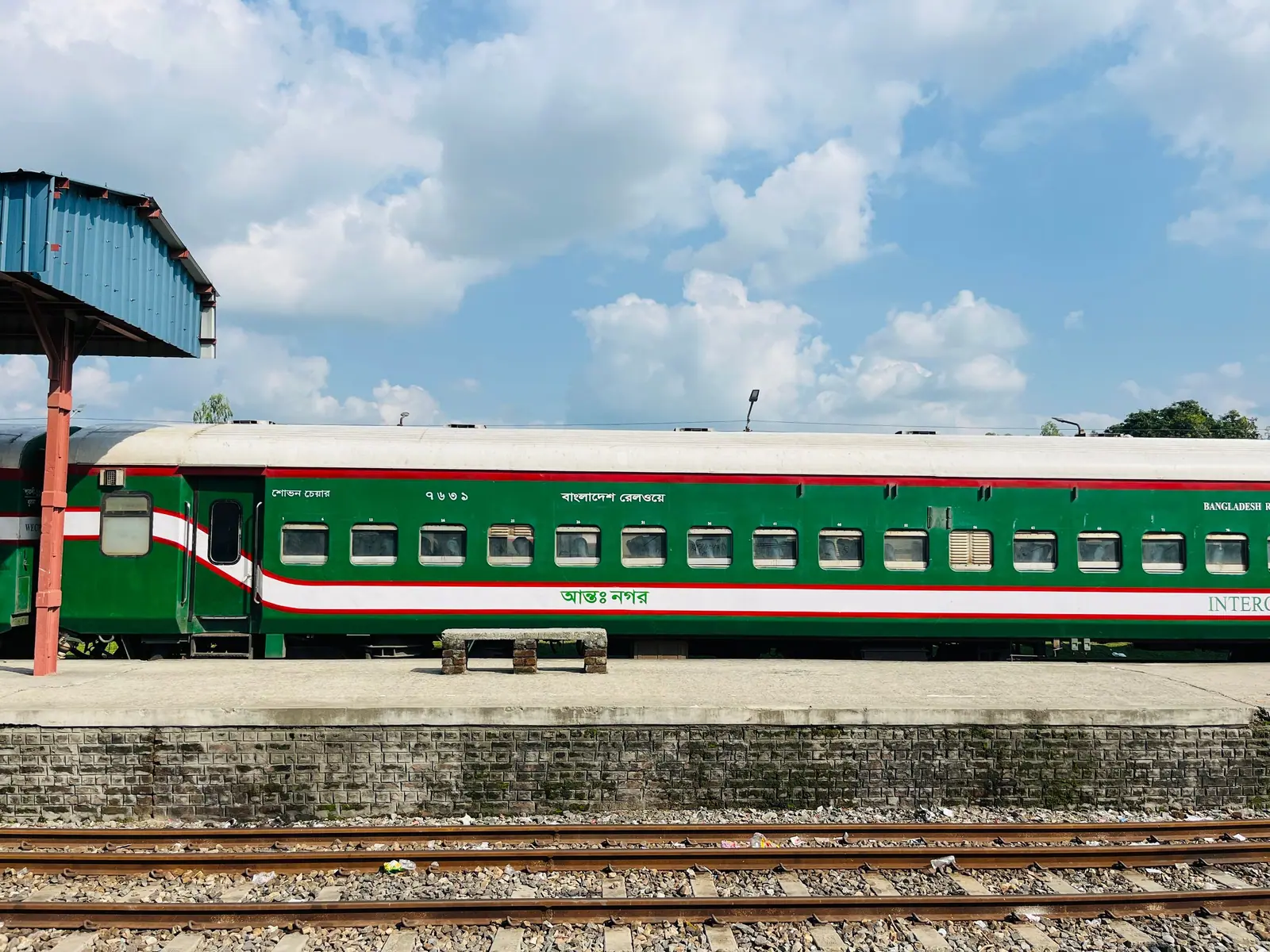
| Class | What it is | Good for |
|---|---|---|
| AC berth | Air-conditioned sleeping bunks in a compartment | Overnight journeys |
| AC seat (AC_S) | Air-conditioned reclining seat | Long day trips in hot months |
| Snigdha | Air-conditioned chair car, a step below AC seat | Day trips where AC seat is sold out |
| Shovon Chair | Non-air-conditioned chair car, fans and open windows | Short hops, winter mornings, local colour |
Which class suits you depends on the season more than the distance. In the dry winter months a Shovon Chair car with the windows open is pleasant and gives the widest views. From April to September the heat and humidity make air-conditioning worth the effort of booking early. Compartment doors and windows in the AC cars stay closed, so photography from the window is harder there.
Getting a ticket as a visitor
The official booking site is eticket.railway.gov.bd. Registration has usually asked for a local phone number and an ID number, which can be a hurdle for a foreigner. Check whether the current version accepts a passport and a foreign number. If it does not, the reliable routes are a station counter, your hotel, or a local travel agent who books on your behalf.
- 1 · Pick the train
Look up the route, the train name and which Dhaka station it leaves from. Timetables move, so confirm on the official site or with the station.
- 2 · Find the sale date
Tickets go on sale a set number of days before the journey, and the window differs by route and season. Note the day for your date.
- 3 · Choose how to buy
Try the website first. If registration fails, ask your hotel to help or go to a counter with your passport and the date written down.
- 4 · Pick class and seats
Take AC berth for a night run and AC seat or Snigdha by day. Window seats go first, so book on the first day of sale.
- 5 · Keep the ticket and passport
Staff check both, sometimes at the platform gate. Keep a printed copy or a screenshot, plus the passport you booked with.
- 6 · Arrive early
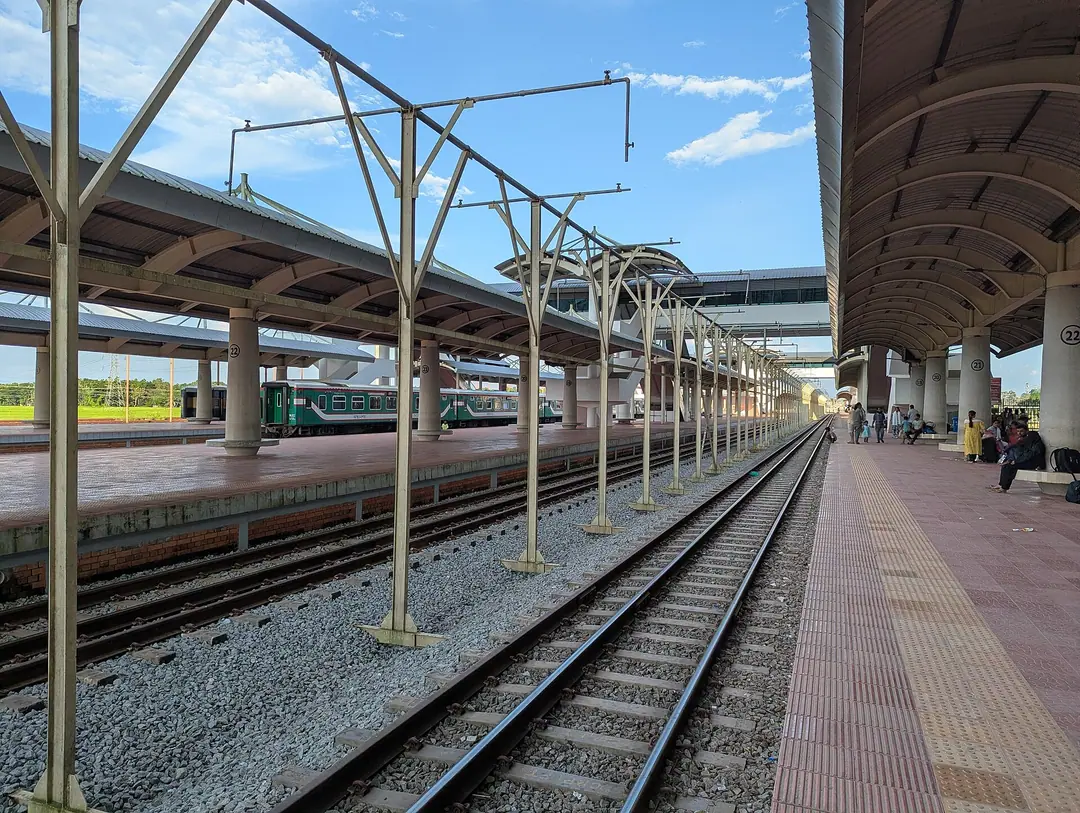
Reach the station 45 minutes ahead. Platform changes are announced in Bangla, so show your ticket to staff and ask.
If the car you want is gone, check the official site again close to departure, because cancelled tickets are often released again. Otherwise the practical fallback is a bus or a domestic flight on routes that have one. Do not buy from touts on the platform. Their tickets can be for a different date or a different class from the one you were told.
Dhaka’s two stations
Kamalapur is the main terminus and the one most visitors use. It sits on the eastern side of the central city, and it handles the long-distance trains to Chattogram, Sylhet, Sreemangal and Cox’s Bazar. Allow time on arrival: the approach roads clog easily, and the station is large, with several platforms that are not obvious to a first-timer.
Biman Bandar, also called Airport station, is north of the city near Hazrat Shahjalal International Airport. Some trains stop there either instead of or as well as Kamalapur, and for a traveller who flies in and wants to head straight to Sreemangal, it can save a long crawl through traffic. Check the ticket for the station name, because the two are often mixed up.
Neither station is on the metro line. Dhaka Metro Line 6 runs from Uttara North to Motijheel, and the extension toward Kamalapur was not open in November 2026. So you reach either station by road, using a car, a CNG auto-rickshaw with an agreed fare, or a ride-hailing app. Leave extra time in the evening peak, which can double a short ride.
The lines visitors use
Four corridors cover most visitor trips. Dhaka to Sreemangal takes about five hours, with Sylhet further along the same line. It crosses flat farmland, then the first tea slopes before the town. This is the easiest first rail journey in the country, and it pairs naturally with the tea trail.
Dhaka to Chattogram takes about five to six hours and is a classic day or night run through the eastern plain. Since December 2023 there has been a direct service from Dhaka to Cox’s Bazar, roughly eight to ten hours, which is worth considering if you would rather not fly. Compare it in the Cox’s Bazar guide.
Khulna has been reachable by rail from Dhaka since December 2024, over the Padma Bridge rail link. The fastest service takes about four hours, though there are only a few trains a day, so book early. In the north and west, the Jamuna Railway Bridge now carries lines towards Rajshahi and Rangpur, which opens up archaeology at Paharpur and Bogura without a ferry crossing.
On board
Expect a lively carriage. Vendors sell tea, nuts, boiled eggs and fruit through the aisle. In AC cars and on longer trains, there is often a meal service or a pantry car, but quality varies, so carry water and a snack. Toilets are a mix of squat and seated types and are better treated as a last resort: bring tissue, hand gel and keep valuables in a small bag on your lap.
Luggage goes on racks above the seats or at the end of the carriage. A small cable lock for a backpack is useful on night trains. Do not leave bags unattended during the stop at larger stations, when crowds move through the aisle. Charging points exist in AC cars but are unreliable, so bring a power bank for the phone you use to navigate.
Some services reserve seats or a compartment for women. Ask when you buy, or ask the carriage attendant on arrival. On a busy day, the reserved area can be the calmest place on the train for a woman travelling alone, and it is worth knowing about before you board. More on this in the solo women’s guide.
Day train or night train
Day trains win on views, and they let you step off in daylight in a town you have never seen. They suit the Sreemangal run, the Chattogram line and the Padma Bridge line to Khulna. A morning departure also lets you work around the late-afternoon traffic when you arrive in a city, which can add an hour or more to the last stretch by road.
Night trains save a hotel night and suit long hauls like Dhaka to Cox’s Bazar, or the routes to the north. The trade-off is sleep: even in AC berth, noise, lights and station stops are part of the deal. Pack earplugs and an eye mask. Arrive at a destination at dawn and your hotel may not release the room until the usual check-in hour.
Whichever you choose, give yourself margin at both ends. Delays of an hour or more are common on long routes, especially in winter fog and after heavy rain, so do not schedule a flight on the same day as a train that leaves anything less than a half-day cushion. A flight home after a rail trip is safer the following morning.
Eid, fog and full trains
The three things that most often disrupt a rail plan are festivals, fog and sold-out cars. Before the two Eids, millions leave Dhaka and tickets for the days around the holiday sell out as soon as they are released, often on special sale dates. If your trip overlaps with Eid, read the Ramadan and Eid guide and book as early as the system allows.
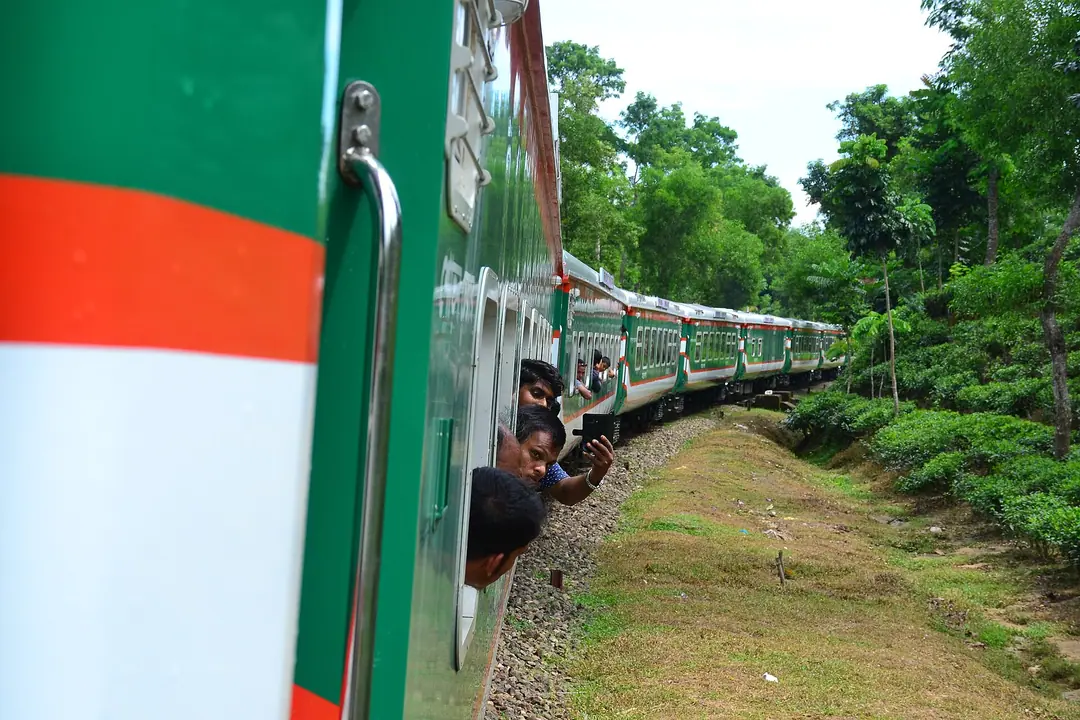
Winter fog, most often in late December and January and above all in the north, can slow or cancel services. The Bangladesh Meteorological Department posts forecasts on bmd.gov.bd. Keep a plan B, such as a road transfer or a later departure. If you hold a printed ticket, keep it, because refund and rebooking rules are set by Bangladesh Railway and change from season to season.
A last point on etiquette: be patient with questions. Strangers on a train may ask where you are from, what you do and whether you like the country. It is a polite way of passing the journey. Answer as much as you wish, accept a snack if you want, and use a polite no if you do not. Your seatmate may also help you find the right stop.
Questions and answers
Which Bangladesh train should a first-time visitor try first?
The Dhaka to Sreemangal line is the easiest. It takes about five hours, runs through farmland and tea slopes, and arrives in a town with a good reason to visit. Take a day train in the dry season, sit by a window in an air-conditioned chair car, and check the timetable on the official site.
Does the train ticket site in Bangladesh accept a foreign passport?
It depends on the current version of the official site, which has asked for local details in the past. If registration does not accept your passport or number, buy at a station counter with your passport, or ask your hotel or a local agent to book. Check the official page close to your travel date.
What is the difference between Snigdha and AC seat on a Bangladesh train?
Both are air-conditioned chair cars. AC seat is the higher class, with more comfortable reclining seats, while Snigdha is a step below and usually easier to find on a busy day. Either is fine for a day journey, and both are better than non-air-conditioned cars in the hot months.
Is there a direct train from Dhaka to Cox’s Bazar?
Yes. A direct service has run since December 2023 and takes roughly eight to ten hours. It ends in Cox’s Bazar itself. Timetables and the number of services change, so check the official ticket site before you plan around it, and compare with a short domestic flight.
Do trains in Bangladesh run on time?
Delays of an hour or more happen, especially on long routes, in winter fog and after heavy rain. Do not schedule a flight or an important appointment on the same day as a rail journey. A cushion of half a day on either side is sensible.
Which Dhaka station should a visitor use for a train?
Check the station on your ticket. Kamalapur is the main terminus for long-distance trains, while Biman Bandar, also called Airport station, serves some services near the airport. Mixing them up can cost an hour in traffic, so confirm with the ticket or your hotel the day before.
Is it safe to take a night train in Bangladesh as a visitor?
Night trains are widely used by Bangladeshis. Book an air-conditioned berth, keep valuables in a bag on your lap, use a small cable lock on luggage, and carry your ticket and passport. Women can ask about reserved seating. For official safety information, read the UK government’s travel advice for Bangladesh.
Is there a train to Barishal, Kuakata or Bandarban?
No. There is no railway to Barishal, Kuakata, Bandarban, Rangamati or Saint Martin’s. You reach them by road, launch, or a mix. For Barishal and the south, read the river travel guide on this site, and for the hills, check current permission rules before you plan.