On this page
In the fifteenth century a commander and governor named Khan Jahan Ali settled on the edge of the Sundarbans, cleared land and built a town he called Khalifatabad. Little of the town survives, but its religious buildings do: a scatter of brick mosques, a tomb and a great reservoir, spread over a low delta landscape of ponds, palms and rice fields. Today the place is called Bagerhat, and it is one of three UNESCO World Heritage Sites in Bangladesh.
The short version
- Bagerhat was founded as Khalifatabad by Khan Jahan Ali in the fifteenth century, and its mosques and tomb are a UNESCO site.
- Start with the Sixty Dome Mosque and the museum, then the smaller mosques, then the tomb and pond at the end of the day.
- Reach it from Khulna in about an hour by road; a half day covers the core and a full day adds the outer mosques.
- Dress modestly, remove shoes where asked and keep clear of the mosques during prayers, above all on Friday around midday.
The pleasure of the visit is as much in the walking as in the buildings. You move from lawn to lane to pond, with rickshaws and easy-bikes passing, and you find the mosques at the end of short paths. This guide explains the order, the distances, the etiquette and the timing. For the city you will likely sleep in, read the Khulna area guide.
A city founded in the delta
Khan Jahan Ali is remembered in local tradition as a pious builder who dug ponds, built roads and bridges and founded mosques, and who was buried at the site he had planned. The exact details of his life are debated, so treat the dates and stories on information boards as local history rather than settled fact. What is not debated is the scale of the remaining buildings and the skill of their brickwork.
The buildings follow a style that is specific to Bengal in this period: thick brick walls, many small domes, arched doorways with terracotta ornament and very little carved stone. The warm, dark brick colours the whole landscape, and the domes rise from the trees in a way that is easy to recognise once you have seen a few.
Bagerhat sits in the south-west, between the rivers and the Sundarbans, in a region where land and water have long shaped each other. That also explains some of its fragility, which later sections describe. Come with an interest in architecture and daily life, not only in ticking off the main monument.
The Sixty Dome Mosque
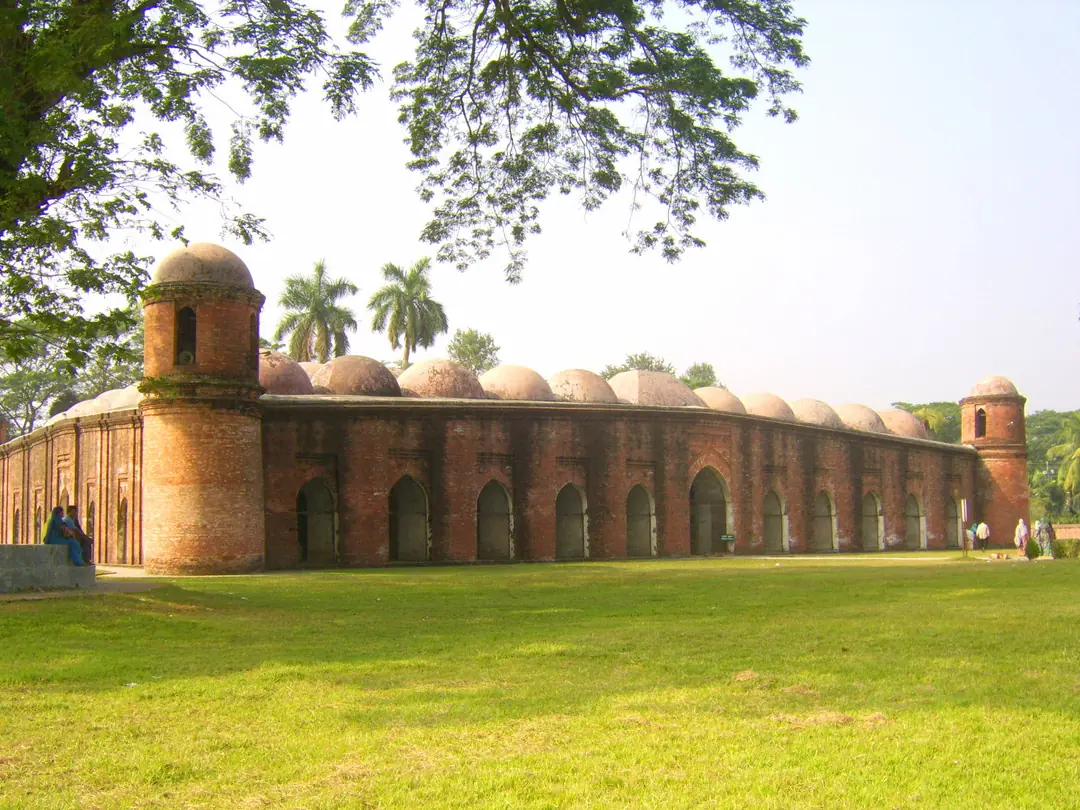
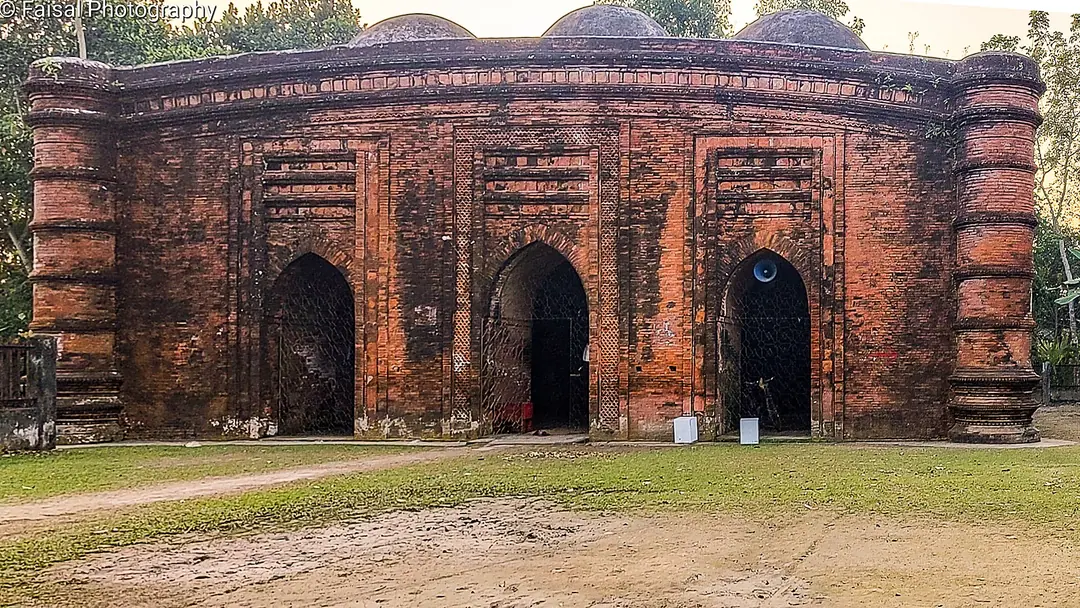
The Sixty Dome Mosque, known locally as Shait Gumbad, is the largest of the monuments and the first stop for most visitors. A rectangular prayer hall is covered by 77 low domes, with four taller corner towers, and inside, 60 slender stone pillars carry the arches that give the mosque its name. Eleven arched doorways open on the east side.
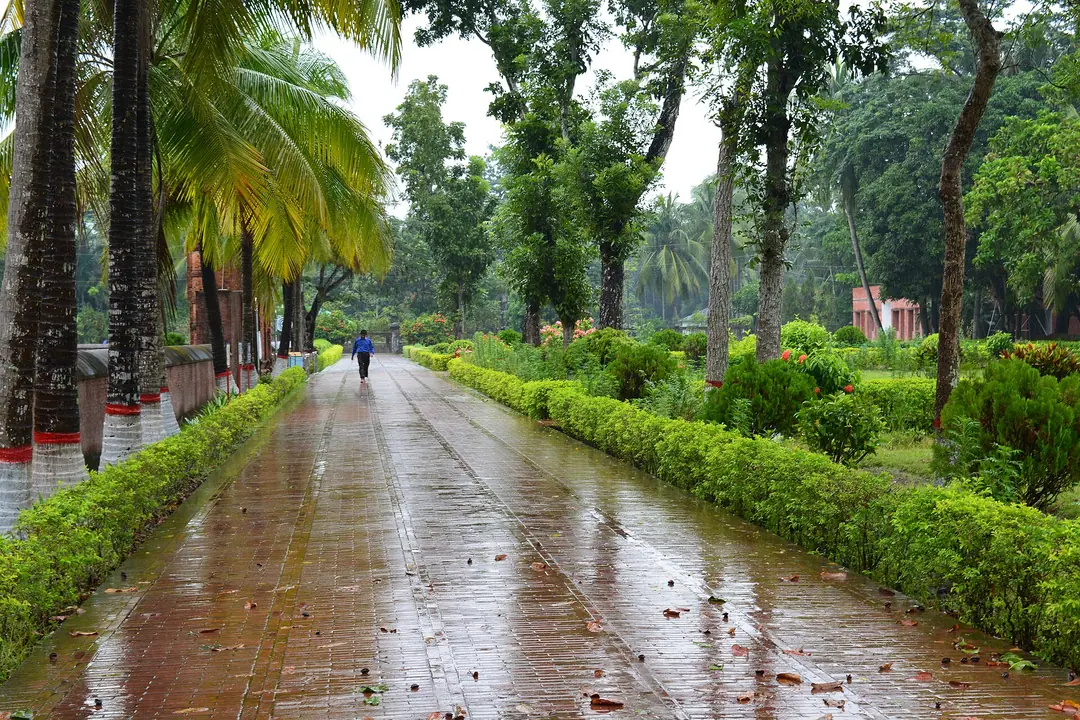
Walk around the outside first. The brick walls are thick, the corner towers have small windows and the domes are arranged in rows like a field of upturned bowls. Then step in through an east door, remove your shoes where asked and stand still for a minute: the pillars make a forest, the light is soft and the sound drops away.
The mosque is still used for prayer, and other visitors may be praying while you look. Keep your voice down, do not walk in front of anyone who is praying and avoid flash. If a caretaker or imam asks you to wait or leave, do so. Photographs from the lawn at a distance are always fine.
The smaller mosques
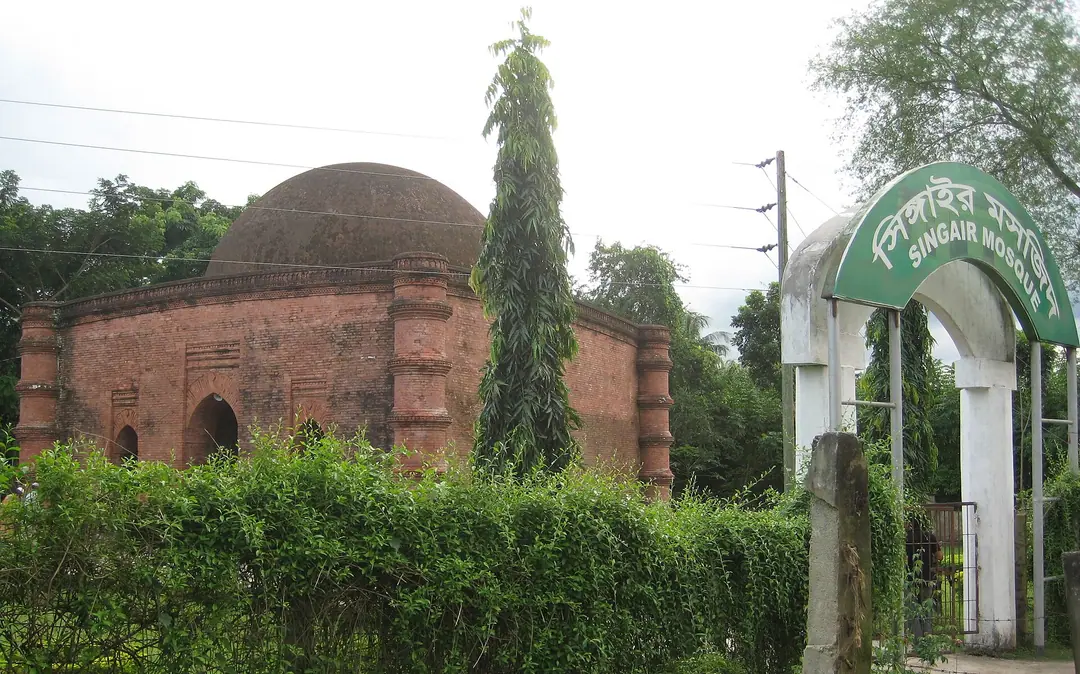
Several smaller mosques lie within easy reach and are worth the detour, since they show different solutions to the same brick problem. The Nine Dome Mosque, with three rows of three domes, is the neatest and the easiest to understand. The Singar Mosque, with a single dome, is compact and quiet, and the Bibi Begni and Chunakhola mosques add further variations.
Do not expect crowds at these smaller sites. Some are fenced and locked outside prayer times, and you may find a caretaker with a key, or none at all. Look from outside if they are closed, and do not try to climb in. A short wait or a polite request often gets you inside.
The Ronvijoypur Mosque stands farther out and takes extra time to reach. Whether you include it depends on your day, your transport and how much you like walking in the heat. Ask your driver or rickshaw puller where the road is passable, especially after heavy rain when lanes become muddy.
The tomb and the pond
The tomb of Khan Jahan Ali is a domed square building beside a large pond, with a shrine hall and a mosque nearby. Visitors come from across the country to pray and to leave offerings. It is a place of living devotion, not only a monument, and people may sit, pray or rest in the compound. Behave as you would at any shrine.
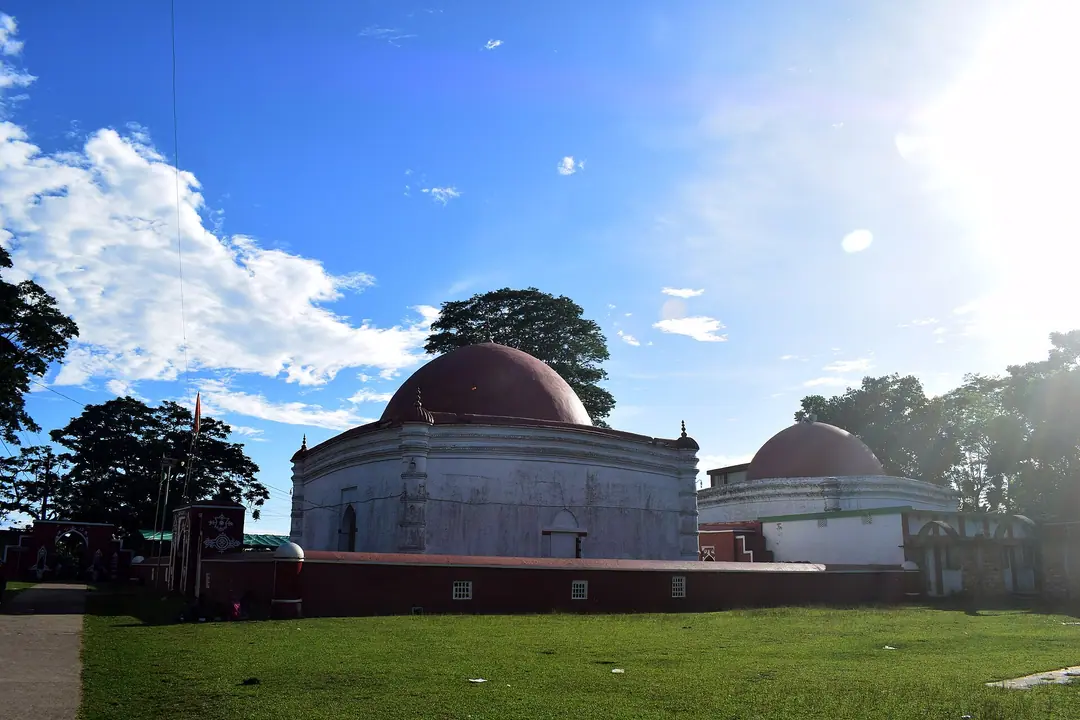
The pond beside the tomb is part of the site's character, and local people attach stories to it. Watch from the bank, keep children close to the edge and do not feed or tease anything in the water. The ground is often damp, and steps and paths can be slippery after rain.
Dress modestly here: cover shoulders and knees, and women may wish to carry a scarf for the head, which is welcomed even where it is not required. Ask before photographing people at the shrine, and do not photograph anyone praying. Leave a donation in the box if you wish, but only if you want to.
The museum, salt and conservation
A site museum near the Sixty Dome Mosque shows tools, coins, pottery, inscriptions and photographs from the area. It is small and quick to see, and it helps you picture the city as a living place. Opening days and hours vary, and government museums often close one day a week, so check locally rather than relying on a printed time.
Conservation is a constant challenge here. The delta soil and water carry salt, which rises through the brick, forms white crystals and flakes the surface, while humidity, monsoon rain and plant roots add damage. You may see scaffolding or patched brickwork at some monuments. It is part of keeping the buildings standing, and it should not put you off.
The most useful contribution you can make is a light touch: stay on paths, do not lean on or carve into walls, do not pick off fragments and take your rubbish with you. If you notice a problem that worries you, mention it to a caretaker. The site depends on thousands of careful visitors every year.
Getting there and moving between stops
Bagerhat is about 136 km from central Dhaka in a straight line, and about 28 km from Khulna. From Khulna the journey by road usually takes around an hour, using a hired car, a CNG auto-rickshaw or a local bus. Khulna is reached from Dhaka by road over the Padma Bridge in about four to five hours, or by train, which has run since December 2024 over the new rail link.
| Stop | What to expect | Time to allow |
|---|---|---|
| Sixty Dome Mosque and museum | The main monument, a lawn, shade trees and the small museum | About 1.5 hours |
| Nine Dome and Singar mosques | Smaller mosques near the main road, quiet and quick to see | About 1 hour together |
| Bibi Begni and Chunakhola mosques | Farther out; reached by rickshaw or easy-bike | About 1 hour |
| Tomb of Khan Jahan Ali and pond | A shrine with pilgrims, a large pond and a mosque | About 1 hour |
| Ronvijoypur Mosque | The most remote stop; optional on a full day | Allow extra for the road |
Some stops are within walking distance of each other; others are better reached by rickshaw or easy-bike. Agree a price for the circuit with a rickshaw puller before you start, or hire a vehicle in Khulna for the whole day. See getting around Bangladesh for the rail and road options in more detail.
Half a day or a full day
- Early start in Khulna
Leave by eight if you can, and have breakfast in Khulna or on the road. Mornings are cooler and the light on the brick is warmer.
- Sixty Dome Mosque
Walk the lawn, enter by an east door, stand among the pillars and visit the museum next door. Avoid prayer times.
- Nine Dome and Singar
Walk or ride to the smaller mosques and compare their domes and brickwork. Look for caretakers with keys.
- Lunch and rest
Eat in Bagerhat town and rest out of the sun. Choose busy places and drink bottled or filtered water.
- Tomb and pond
Finish at the tomb of Khan Jahan Ali in the late afternoon, when the light is soft and the crowd is thin. Head back to Khulna before dark.
A half day covers the Sixty Dome Mosque, the museum and the nearest mosques. A full day adds Bibi Begni, Chunakhola and the tomb with time to sit. If you are also planning a boat trip to the Sundarbans from Mongla, which is about 41 km from Khulna in a straight line, read the Sundarbans boat trip guide and keep Bagerhat for a separate morning.
Dress, prayer times and manners
Bangladesh is a majority Muslim country and Bagerhat is a working religious site. Cover your shoulders and knees, remove your shoes at mosque doors and carry socks if the stone is hot. Friday midday is the main congregational prayer, and the compounds can be full and closed to visitors for a time. Plan to arrive earlier or later on Fridays.
Winter, from November to February, is the most comfortable season, with dry weather and cool mornings. April and May are hot and the brick holds the heat, while the monsoon is green and quiet but wet underfoot. Bring a hat, water and an umbrella that works for both sun and rain.
Where to stay before and after
Khulna is the base for Bagerhat, with city hotels, restaurants and the river. It is also the gateway to the Sundarbans, which makes a useful pairing: a day at the mosques, a day on the water. Jashore, about 49 km from Khulna in a straight line, has an airport with flights from Dhaka and is a practical stop if you prefer to fly in.
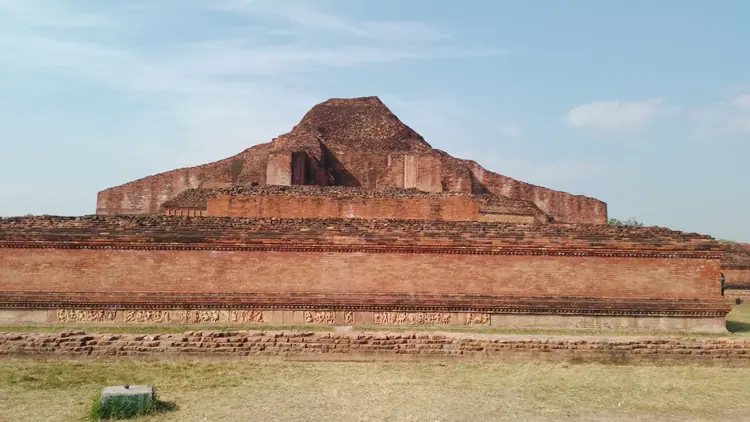
If you are travelling across the country, Bagerhat pairs well with the Buddhist ruins at the other end of Bangladesh, described in the guide to Paharpur monastery. Both are UNESCO sites, and the two together give a good sense of how varied the country's history is.
Questions and answers
How long do you need at the Sixty Dome Mosque in Bagerhat?
Allow about an hour and a half for the Sixty Dome Mosque and the museum next to it. You can see the hall in twenty minutes, but the pillars, the domes from outside and the lawn deserve slower attention. Add time if you want to wait for a quiet moment between prayers.
How many domes does the Sixty Dome Mosque have?
The prayer hall is covered by 77 low domes, with four taller corner towers. The name refers to the 60 stone pillars inside that carry the arches. Eleven arched doors open on the east side, and visitors usually enter through them after removing their shoes.
Can you visit Bagerhat as a day trip from Khulna?
Yes, and it is the usual way. Khulna to Bagerhat takes about an hour by road. A half day covers the Sixty Dome Mosque, museum and nearby mosques, and a full day adds the outer mosques and the tomb. Leave early and return before dark.
What should you wear at Bagerhat's mosques?
Cover your shoulders and knees, and bring socks or be ready to walk barefoot at mosque doors. Women may wish to carry a scarf for the head. Light, loose clothes suit the heat. Avoid the mosques during prayers, particularly Friday around midday, when the compounds can be crowded.
Is Bagerhat a UNESCO World Heritage Site?
Yes. The Historic Mosque City of Bagerhat was inscribed in 1985, the same year as the Buddhist ruins at Paharpur. The Sundarbans followed in 1997. Those are the only three World Heritage Sites in Bangladesh, so Bagerhat is often paired with a visit to the mangrove forest.
Who was Khan Jahan Ali, the founder of Bagerhat?
Khan Jahan Ali was a fifteenth-century commander and governor who settled the Bagerhat area, which he called Khalifatabad. Local tradition remembers him as a builder of mosques, roads and ponds, and his tomb is a place of pilgrimage. Details of his life are debated, so read information boards as local history.
How do you get around Bagerhat's mosques?
The stops are spread out, and a mix of walking and rickshaw or easy-bike rides works well. Agree a price for the circuit before you start, or hire a car and driver for the day in Khulna. After heavy rain, some lanes are muddy, so ask your driver which are passable.
Why is salt a problem for Bagerhat's buildings?
The delta soil and groundwater carry salt, which rises through the brick, forms white crystals and flakes the surface. Combined with monsoon humidity and plant roots, it makes conservation a constant task. You may see scaffolding or patching at some mosques, and visitors help by staying on paths and not touching the walls.