On this page
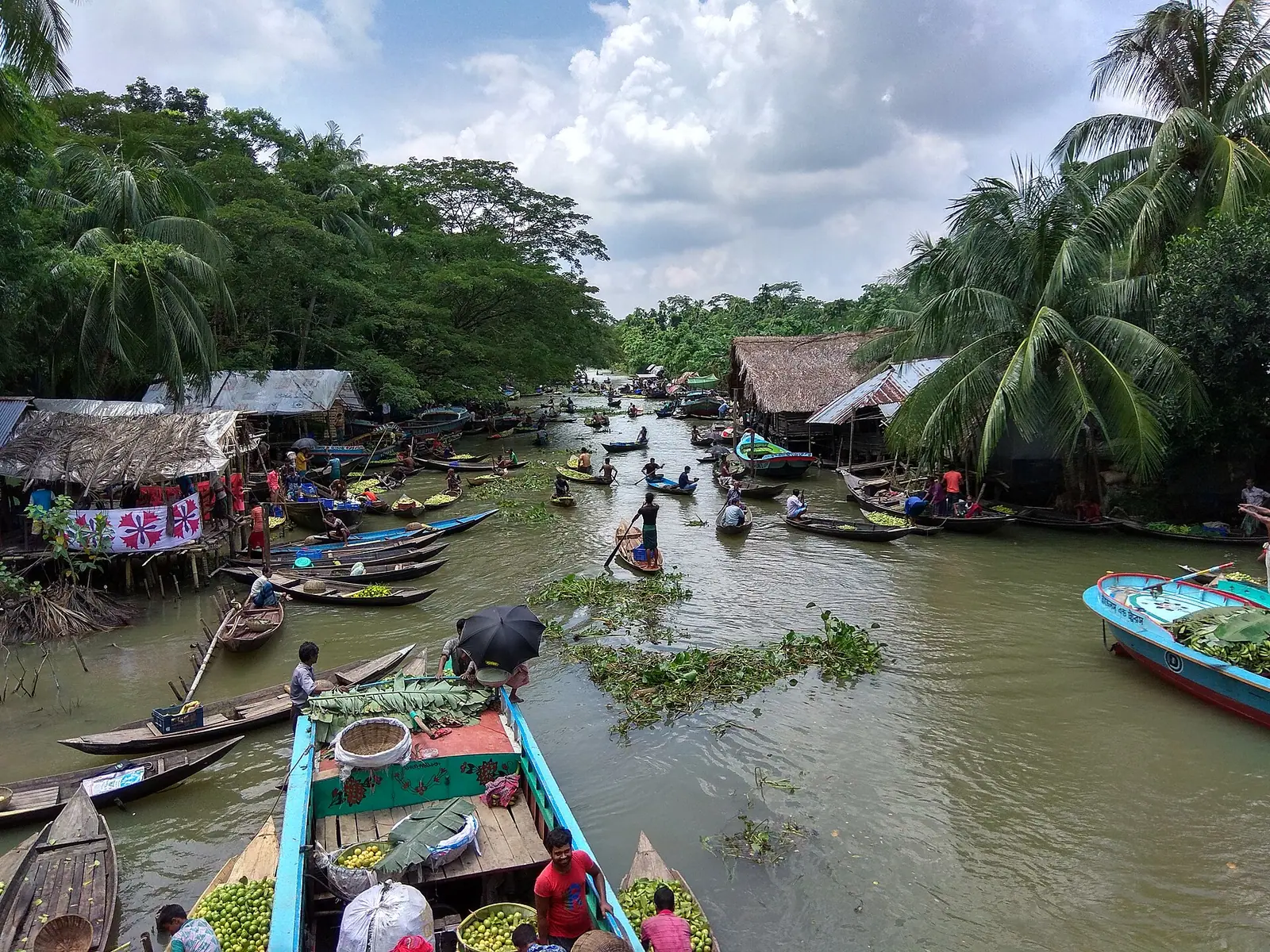
South of Barishal, the land is cut into islands by rivers and canals, and for part of the year guavas are sold off boats rather than from stalls. Growers paddle or row their harvest to a meeting place on the water, traders come alongside, weigh, count and pay, and the fruit is loaded onto larger boats for the trip to the cities. It is a working market, not a performance, and watching it is one of the most distinctive morning outings in the country.
The short version
- The floating markets near Barishal are canal junctions where growers bring guavas by boat to traders, mostly in the early morning.
- Bhimruli is about 20 km from Barishal in a straight line, and Atghar Kuriana is the other well-known market; the season is roughly July to September.
- At other times of year, rice and wood markets float at Swarupkathi, so the canals are never entirely quiet.
- Go early, hire a small boat locally, wear a life jacket and ask before photographing people at work.
This page is about the markets themselves. For where to stay in Barishal and how to get there from Dhaka, read the Barishal and Kuakata guide. Here the questions are what happens, when to go, how to reach the canals and how to behave while you are there.
What a floating market is
A floating market is a place where trade takes place between boats. In the Barishal region the main ones sit at canal junctions, where small channels meet a wider one and boats can gather without blocking anyone. The boats are narrow wooden craft of the kind that carry people, grain and firewood through the delta. Some are rowed, some are pushed with long poles and some carry small engines.
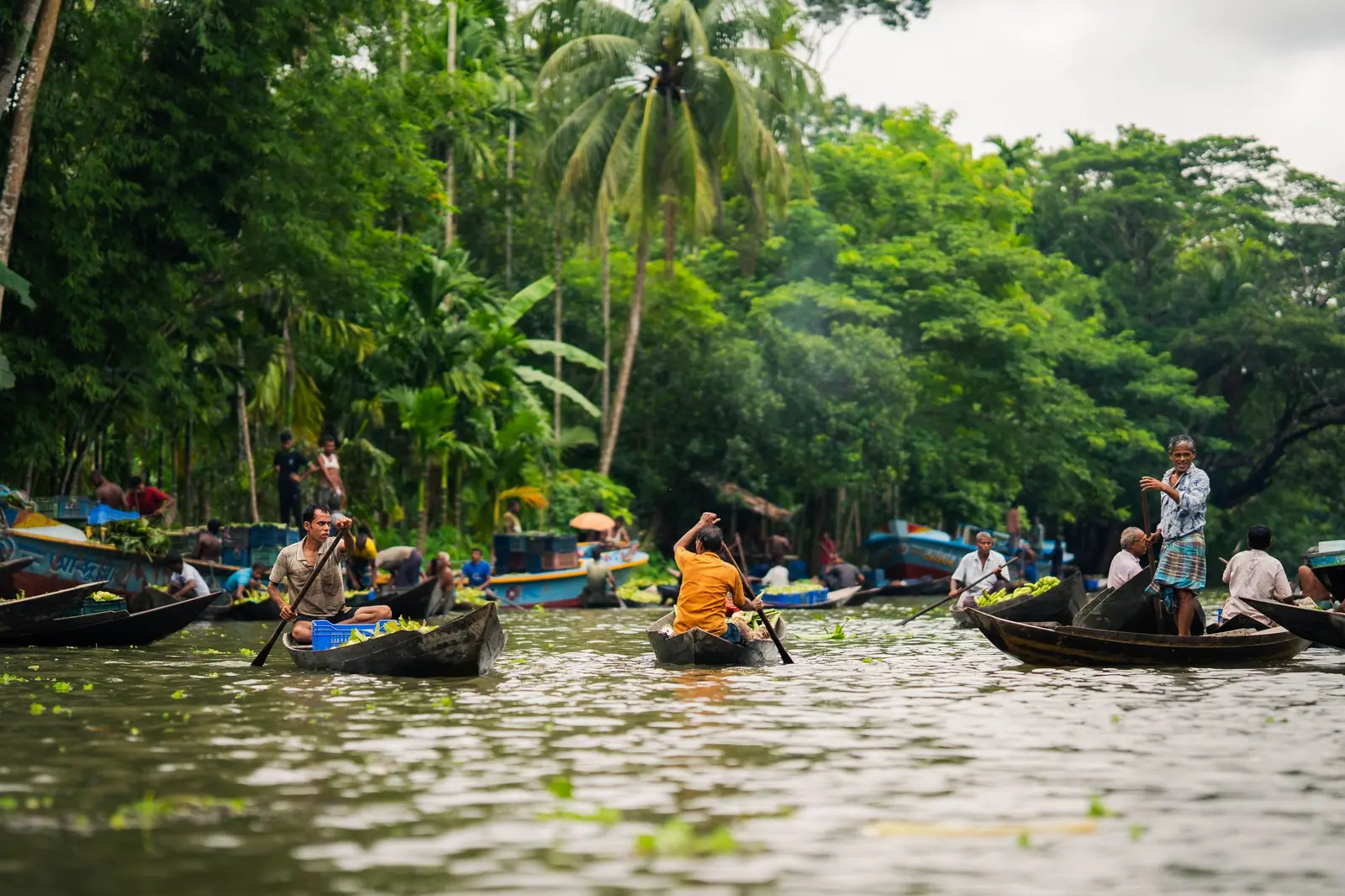
At a guava market, the boats are the stalls. Each boat holds heaps of fruit in baskets or piled on the floor, and the owner sits among them. Buyers move in and out, calling out and haggling in quick bursts. When a deal is made, the fruit is weighed on hand scales and transferred to a trader’s larger boat or to a waiting truck at the nearest bank.
The markets are old, and they exist because the water network is the road network in much of the delta. Canals linked orchards, villages and landings long before trucks reached the area, and the boats kept the habit. Visiting is a way of seeing how that system still works.
Bhimruli, Atghar and Kuriana
Three names come up most often. Bhimruli is in Jhalokathi district, about 20 km from Barishal in a straight line, and it is the market most visitors reach first. Atghar Kuriana is across the district line in Pirojpur, where canals thread through guava orchards and the market forms at a junction. Each has a slightly different feel, depending on the water and the day.
Do not expect a single square or a sign. Floating markets form at the right place and hour, and the boats scatter once the trading is over. Ask your boatman where the main crowd is that morning, and be flexible. Some days the activity centres at one bridge, and on other days it spreads along a canal.
The size varies with the harvest. In the peak weeks, boats can crowd a canal bend so closely that passage becomes slow; late in the season there are fewer boats and the pace is quieter. Both versions are worth seeing, and the less busy days make it easier to talk to growers and take photographs.
The guava season
Guavas ripen mainly between July and September, which is the monsoon. Canals are full, orchards are green, and the rain can be heavy. This is a strong reason to dress for wet weather and not to expect clear skies. The fruit is firm, fragrant and usually eaten with salt and chilli, a taste that is simple and refreshing in the heat.
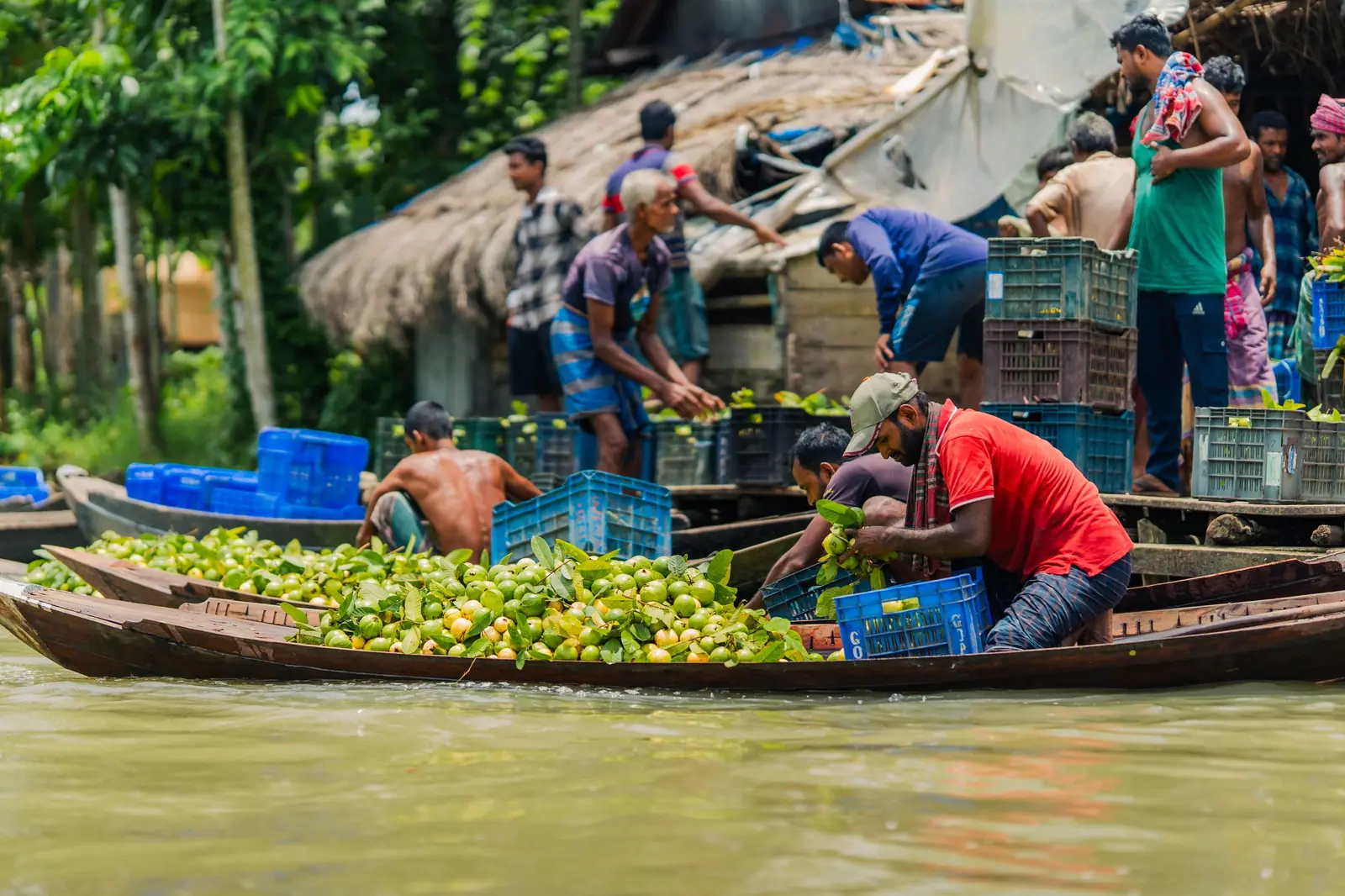
The guava is not the only crop. Other fruit from the orchards can appear, and coconuts and betel nuts grow widely in this region, so you may see them on boats or at the landing. Ask the growers what is in season; they are usually glad to explain. Buying a few guavas straight from the boat is polite and part of the experience.
Outside the season the canals do not go empty. Rice and wood are traded on floating markets at Swarupkathi, in Nesarabad, and boats carry timber and grain through the dry months. Those markets are less often visited and are worth asking about locally if you are in the area outside the guava weeks. The guide on the time to visit Bangladesh explains how the seasons change travel more broadly.
| Months | What floats | Notes |
|---|---|---|
| July to September | Guavas at Bhimruli, Atghar Kuriana | Heavy rain, full canals |
| Other months | Rice and wood at Swarupkathi | Dry weather, quieter |
| April to May, October to November | Storm and cyclone risk | Check warnings, boats may stop |
How the canals and orchards work
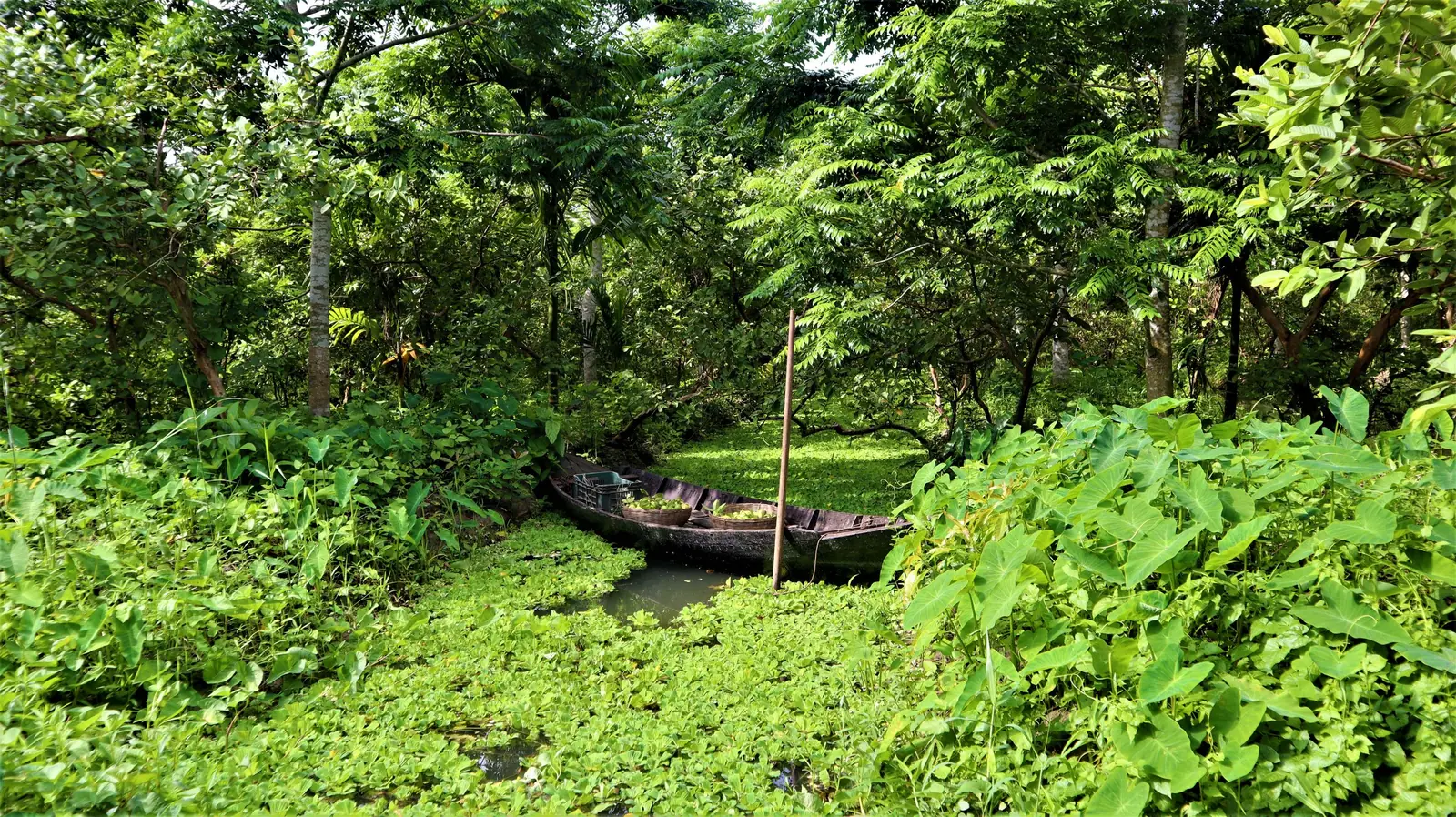
The setting is as interesting as the market. Orchards stand on low land cut by narrow canals, called khals, that carry water in and out with the tide. Many of the plots are owned by families and reached by small footbridges made of bamboo or planks. In some places the guava trees grow close to the water’s edge, with roots in the mud and branches above the boats.
The tidal rhythm matters. In the southern delta, rivers and canals rise and fall with the sea, even a long way inland, and the boats move with the water. At low tide some channels are too shallow for a loaded boat, and at high tide the markets take on their fullest shape. Your boatman will know the timing, which is one reason to hire a local.
Villages along the canals sit on raised ground, with houses, mosques, schools and small shops on the banks. People wash, fish and cross by boat, and children paddle to school. Greet people with a nod, keep your voice low, and remember that you are passing through everyday homes and not a theme park.
Reaching the markets from Barishal
Most visitors stay in Barishal and make the trip as a half day. The road goes from the city to a landing near the market area, where small boats wait. Distances are short on the map, but roads are narrow, and the time depends on traffic and bridges, so allow extra. Your hotel can arrange a driver and a boat, or help you pick a reliable boatman at the landing.
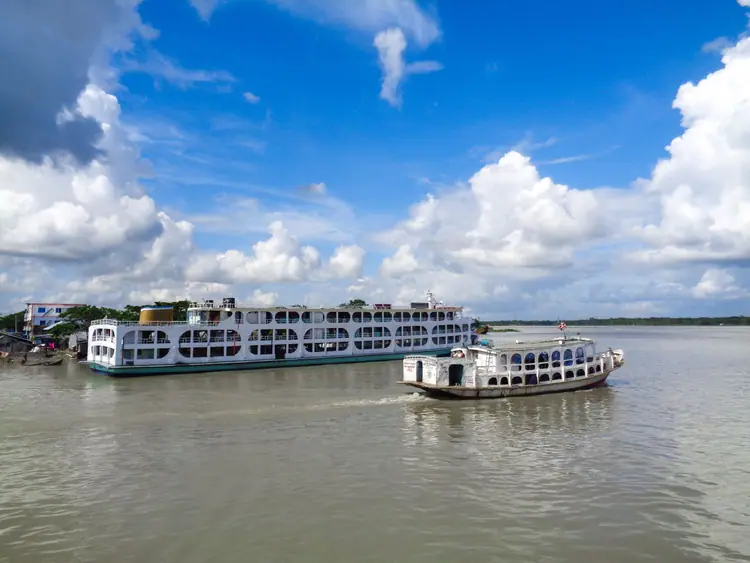
A hired car with a driver is the simplest, and a CNG auto-rickshaw is possible for two people. Buses go along the main roads, but they do not take you to the canal. At the landing, agree the boat, the length of the trip, the stops and the total fare before you board, and confirm that life jackets are available. For more on river transport in the south, see the guide to launches and ferries.
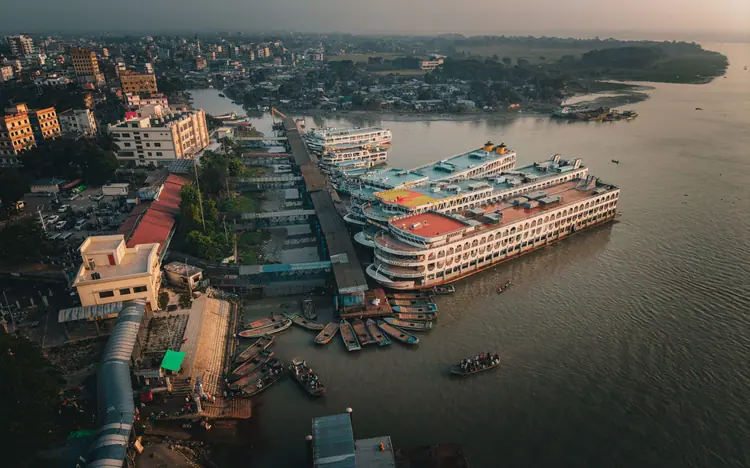
Coming from Dhaka, you can arrive in Barishal by road over the Padma Bridge or by river, and sleep in the city the night before. The markets start early, so staying in Barishal is much easier than a day trip from the capital. Check the details of that journey in the Barishal guide, which covers the road, the launch and the paddle steamer.
Timing the morning
Markets are busiest at dawn and fade as the sun rises. The main window is often from first light to about nine, when growers arrive, traders bargain, and the water is still. By mid-morning the boats thin out, the heat builds, and the fruit has moved on. If you arrive late, you may find only a few boats and a lot of rubbish bobbing on the water.
Leave Barishal in the dark, with a torch or phone light for the landing. Take breakfast as a packet, because there is little at the canal. Bring water, sun protection, a hat and a rain jacket, and wear shoes that can get wet. A dry bag for your phone and camera is a sensible extra, since sudden showers are common in the season.
The weather has a strong effect on the morning. In rain, markets may be smaller and boats harder to read; in a storm they may not run at all. Look at the forecast at bmd.gov.bd the evening before and ask your boatman if the trip is advisable. If he says no, listen.
Boats, weather and safety
The boats are small and low, and the water is deep. Wear a life jacket throughout, even if the local people do not, and make sure children and non-swimmers are in one. Do not stand up in the boat, lean over the edge or change seats suddenly. When another boat comes alongside, sit still and keep your hands inside.
Weather can change quickly. Monsoon squalls arrive with a wall of wind and rain, and the canals become rough. If the sky darkens, ask the boatman to head for the bank and wait. Lightning on open water is dangerous, and no photograph is worth it. In April and May, and again in October and November, cyclone warnings can close the rivers entirely.
Hygiene matters too. Canal water is not clean enough for drinking or washing, and the fruit you buy should be washed in bottled water. Carry hand sanitiser, avoid touching your face, and be careful with open cuts. Dengue is a risk in the monsoon, so use insect repellent and cover arms and legs at dawn and dusk.
Photography and respect
The scenes are beautiful, and visitors take a lot of pictures. Remember that the people are working. Ask before photographing a grower or a trader, and give them time to say no. Do not poke a camera into a boat, do not block the lanes between boats, and do not ask people to pose in the way of a sale. A friendly greeting and a small purchase make a difference.
Women may be reluctant to be photographed, and you should respect that. Drones are not a good idea: they disturb the market and the birds, and permission is required. A zoom lens lets you capture the market from a distance without intruding, and a polarising filter helps with glare on the water.
If you take photographs of children, ask a parent or a teacher nearby, and do not post pictures with identifying details of a village or a house. Share your pictures with the people you photograph if they ask; many are curious and glad to see them.
A half-day plan
This plan assumes you sleep in Barishal the night before and travel with a driver. Move the times to suit the light.
- Before dawn
Leave the hotel with water, a hat and a rain jacket. Drive to the canal landing with your driver.
- First light
Agree the boat and life jackets, then slip into the canal and head for the market junction.
- Early morning
Watch the trading, buy guavas from a boat and ask growers about the season.
- Mid-morning
Take a slow ride through the orchard canals, past bridges and villages, as the market fades.
- Late morning
Return to the landing, settle the fare and have tea at a stall.
- Midday
Drive back to Barishal, rest, and then visit the city’s sights or go on towards Kuakata.
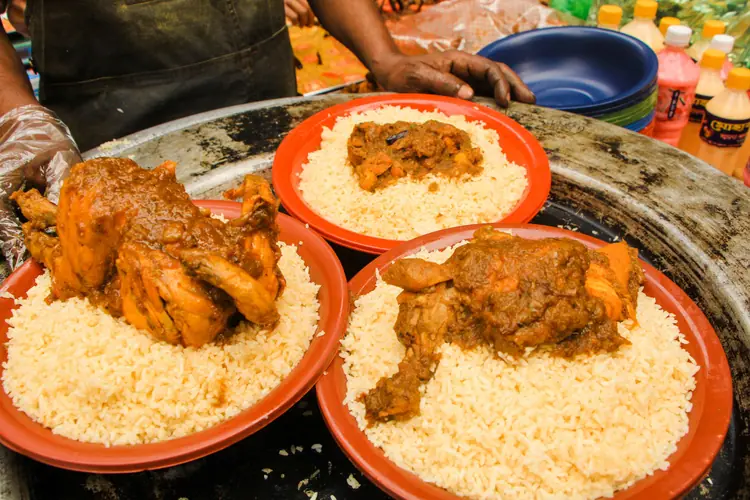
If you want to continue to the coast, the Kuakata beach guide covers what to do there, and the guava morning pairs well with it on a long weekend. For more about the food of the region, including guava and fish, see Bangladeshi food.
Questions and answers
When is the floating guava market season near Barishal?
The guava season runs roughly from July to September, during the monsoon, when orchards are green and canals are full. Rain can be heavy, so bring waterproofs and a dry bag. Outside those months the canals are quieter, though rice and wood are traded at the Swarupkathi markets. Check locally before you travel, since the harvest depends on the weather.
Where are the floating guava markets of Bhimruli and Atghar Kuriana?
Bhimruli is in Jhalokathi district, about 20 km from Barishal in a straight line, and Atghar Kuriana is in Pirojpur, where the canals pass through guava orchards. Both are reached by road to a landing and then by small boat. Ask your hotel or boatman where the main crowd is on the morning you go.
What time do the floating guava markets start?
Markets are busiest at dawn and fade by about nine or ten, when growers have sold their fruit and the boats move on. Plan to leave Barishal in the dark so you reach the landing at first light. If you arrive in the late morning, you may see only a few boats, so staying in Barishal the night before is wise.
Do I need a guide for the floating guava markets?
A local boatman is enough for most visitors, and a hotel in Barishal can help with the arrangement and a driver. The boatman knows where the market forms, how the tide affects the canals and when the weather is unsafe. Agree the route, the time, the stops, the fare and life jackets before you board.
Is it safe to take a boat in the floating markets?
It is reasonably safe in good weather if you wear a life jacket, sit still and follow the boatman’s advice. Monsoon squalls can arrive quickly and make the canals rough, so do not go out in a storm or when a cyclone warning is announced. Keep children seated, and avoid standing or leaning over the edge of the boat.
What else is sold at the floating markets near Barishal?
Guavas are the main product in season, and local growers may also bring other orchard fruit, coconuts and betel nuts. In other months rice and wood are traded at the floating markets of Swarupkathi in Nesarabad. Ask growers what is in season, and buy a few pieces of fruit from a boat as part of the visit.
Can you photograph people at the floating guava markets?
Yes, with permission. The people are working, so ask before photographing a grower or trader and accept a refusal gracefully. Do not block boats or poke a camera into a stall, avoid drones, and be extra careful with women and children. A zoom lens lets you take pictures from a polite distance, and a small purchase builds goodwill.
Can you visit the floating guava markets as a day trip from Dhaka?
It is not practical. The markets start at dawn and the journey from Dhaka to Barishal is long, even over the Padma Bridge, so a day trip would be mostly on the road. Sleep in Barishal the night before, leave in the dark for the canal landing, and return to the city by late morning for the rest of the day.