On this page
Most beaches in Bangladesh face one direction and offer one kind of light. Kuakata faces south over the Bay of Bengal, on a coastline that curves enough for the sun to rise out of the sea at one end of the day and sink into it at the other. That alone brings many visitors, but the beach is only the beginning. Around it are mangroves, Buddhist temples, fishing landings and sandy islands that turn a weekend into a varied stay.
The short version
- Kuakata is a beach of about 18 km facing south, so visitors can watch the sun rise and set over the sea in one stay.
- The strongest activities go beyond the sand: mangrove boats to Fatrar Char, Rakhine villages and Buddhist temples, dried-fish sheds and the Lebur Char.
- Two days is enough; spend the first on the beach and nearby sights and the second on boats and villages.
- The sea needs respect: tides, currents, and cyclone seasons from April to May and October to November.
This page is about what to do. Where to sleep and how to arrive is covered once, briefly, below, and more fully in the guide to Barishal and Kuakata. Here you will find sunrise and sunset spots, boat trips, villages and temples, safety on the sand, and a two-day plan.
The beach and its two horizons
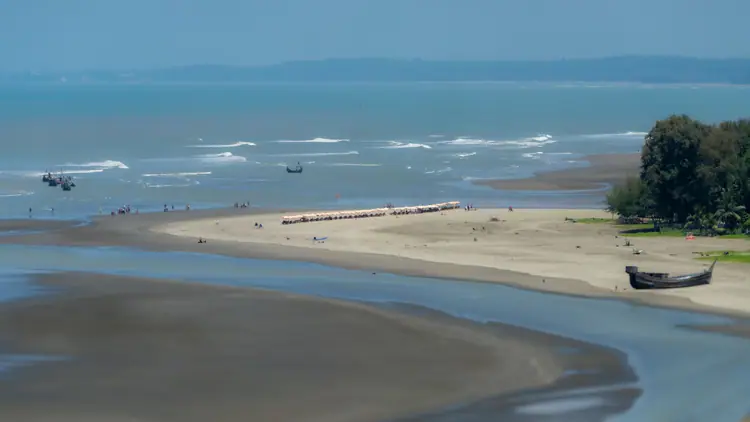
Kuakata sits in Patuakhali district at the southern edge of the delta, with a beach of about 18 km. Unlike Cox’s Bazar, where hills rise behind the sand, Kuakata is flat: low sand, coconut palms and other trees, and a wide shore that opens out at low tide. The sand is darker than at the south-east coast and the sea is brown-green, because rivers pour sediment into the bay close by.
The beach is a place to walk rather than lie. At low tide the sand firms up and you can stroll for kilometres, watching crabs, shells and fishing boats. The shoreline is lined with hotels and food stalls at its busier part, and quiet stretches begin a short walk away. Early in the morning, the beach belongs mostly to walkers and fishing families.
The main lesson of the first hour is to pick a stretch and stay with it. The beach is long, the tide changes quickly, and landmarks are few. Note a building or a tree near your starting point, because it is easy to walk further than you intend in the flat light.
Sunrise and sunset
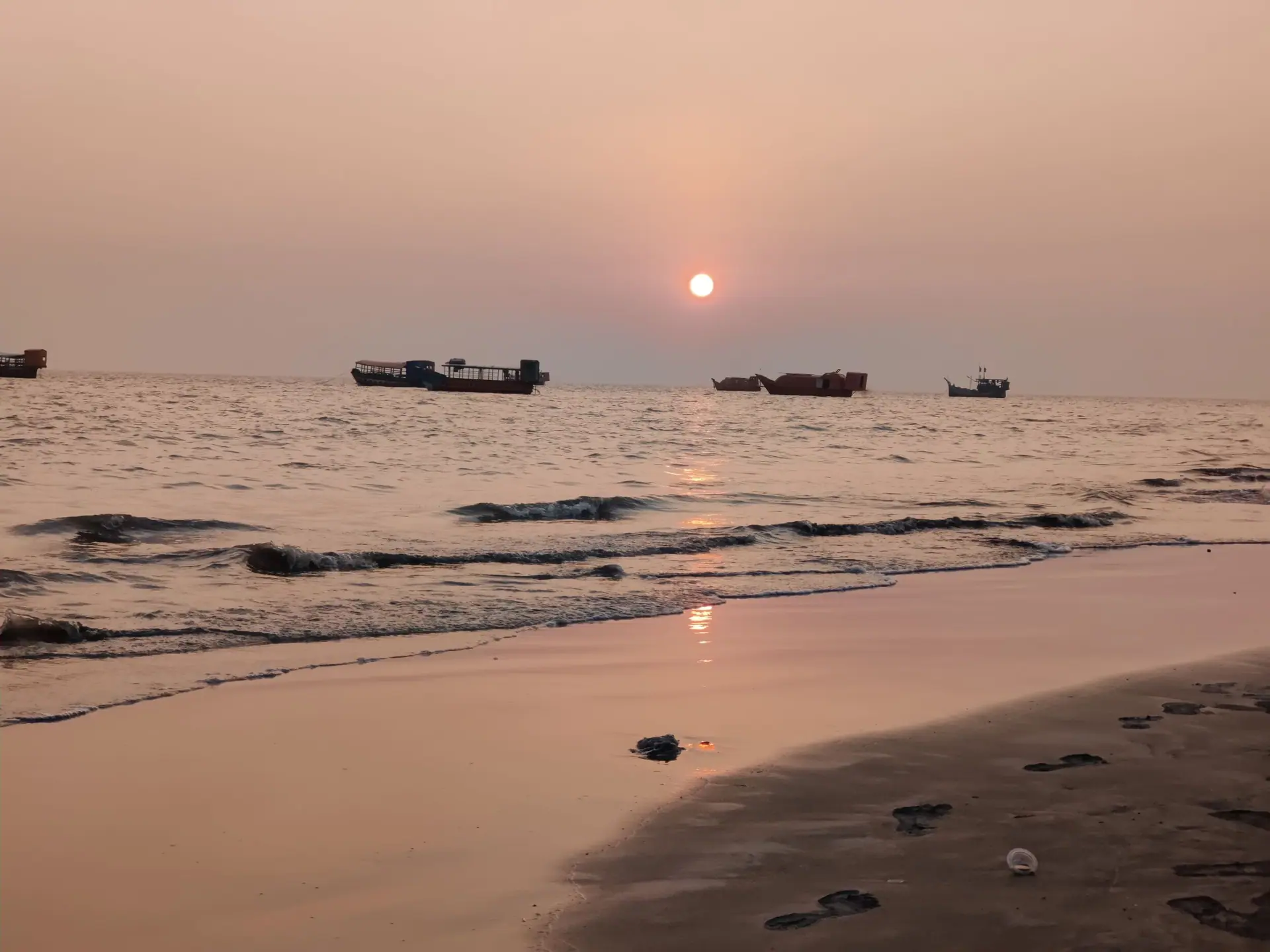
Sunrise is the first event of the day. Visitors gather on the main beach before dawn and watch the sun lift out of the water, with fishing boats dark against the glow. The air is cooler at this hour, the sand is empty, and tea sellers set up as the light comes. The east end of the beach and the stretch near the main landing are the usual choices.
Sunset is usually watched from the western end, towards the Gangamati forest area and the sandy shores beyond it, where the sun sinks over water and trees. The exact angle shifts through the year, and the places where you can get a clear view depend on the tide, so ask your host or a boatman where to stand that week.
Both events draw crowds at weekends and on holidays, and the sand around the landing gets noisy. If you prefer quiet, walk ten or fifteen minutes away from the stalls and sit on the dry sand. Bring a light layer for the wind and a torch or phone light for the walk back.
Red crabs and the shore
At certain stretches and times of year, small red crabs come out onto the sand and scatter at the sound of footsteps. They are one of Kuakata’s better-known small attractions, and children like them. Keep your distance and do not pick them up or chase them into holes; the crabs are part of the ecology of the beach, and disturbance by many visitors harms them.
Shells, driftwood and odd objects wash up along the tide line, and local children often sell small items. Think about what you buy: shells and corals that were taken alive are best left alone, and carrying them across borders may be illegal. A photograph is a better souvenir. Be careful with broken glass and plastic, which collect on the beach near stalls.
For a quieter morning, walk the beach barefoot or in sandals at low tide and look at the patterns the water has left. You may see fishermen mending nets and boys pulling small boats. Ask before photographing them, and offer to show them the picture if they are curious.
Fatrar Char and the mangroves by boat
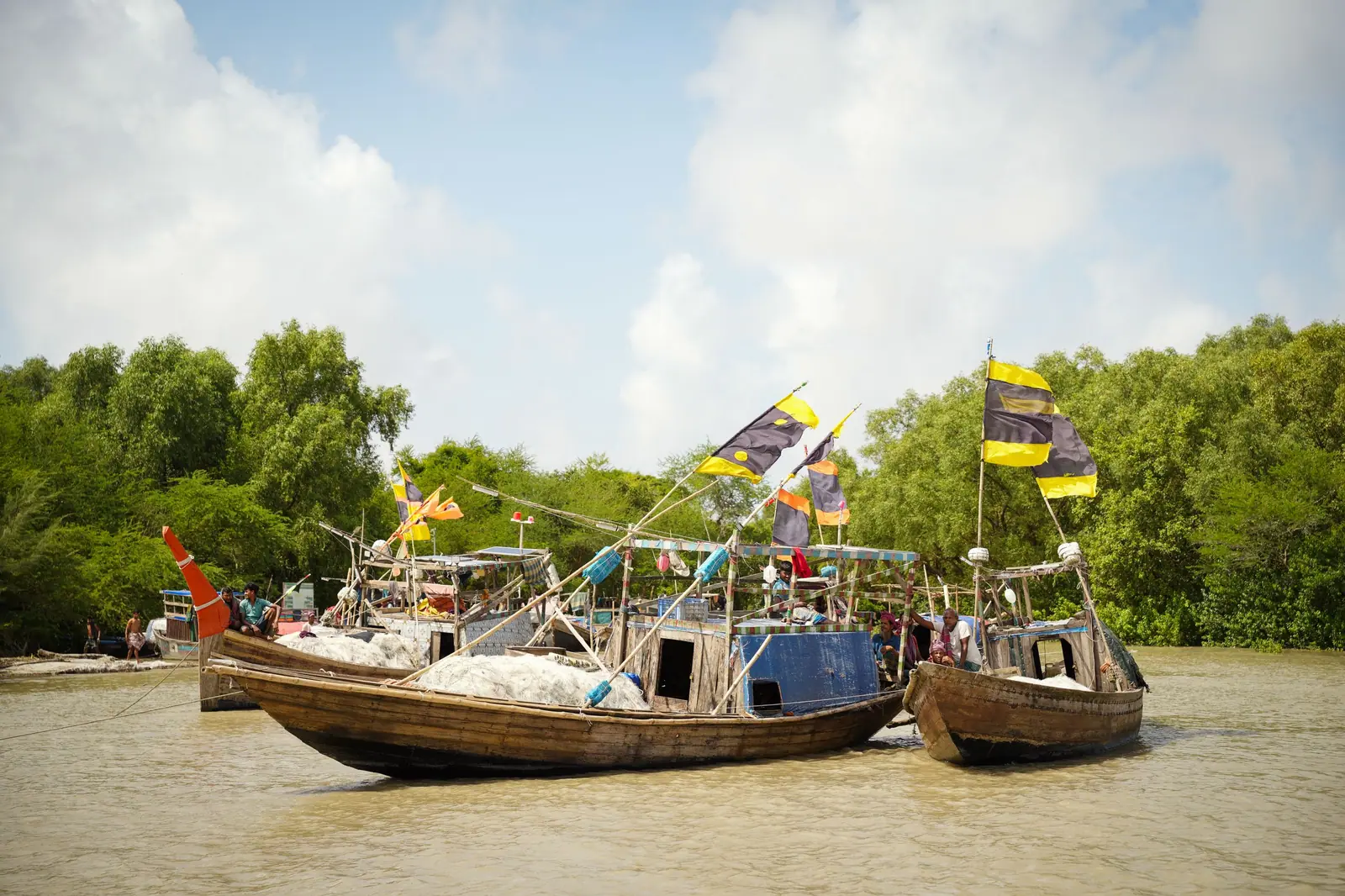
A boat trip to the mangroves shows a different Kuakata. Fatrar Char is a low island and mangrove area reached by boat from the river landings near the beach, and a trip lets you glide through channels with the trees close on both sides. Birds, mudskippers and crabs are the usual wildlife, and the quiet is a change from the beach.
Boats are hired locally, and the fare depends on the number of people and the length of the trip. Agree it before you board, and ask about life jackets. Tides control the timing: at low tide the channels are shallow and some are closed, so plan the trip with the boatman. Morning light is soft, and the water is calmer than in the afternoon wind.
The Gangamati reserved forest is another mangrove area near the western end of the beach, with a walk or a short boat ride. Do not break branches or leave rubbish. If you want to see wildlife, go with a local guide and keep the group small and quiet.
Rakhine village and Buddhist temples
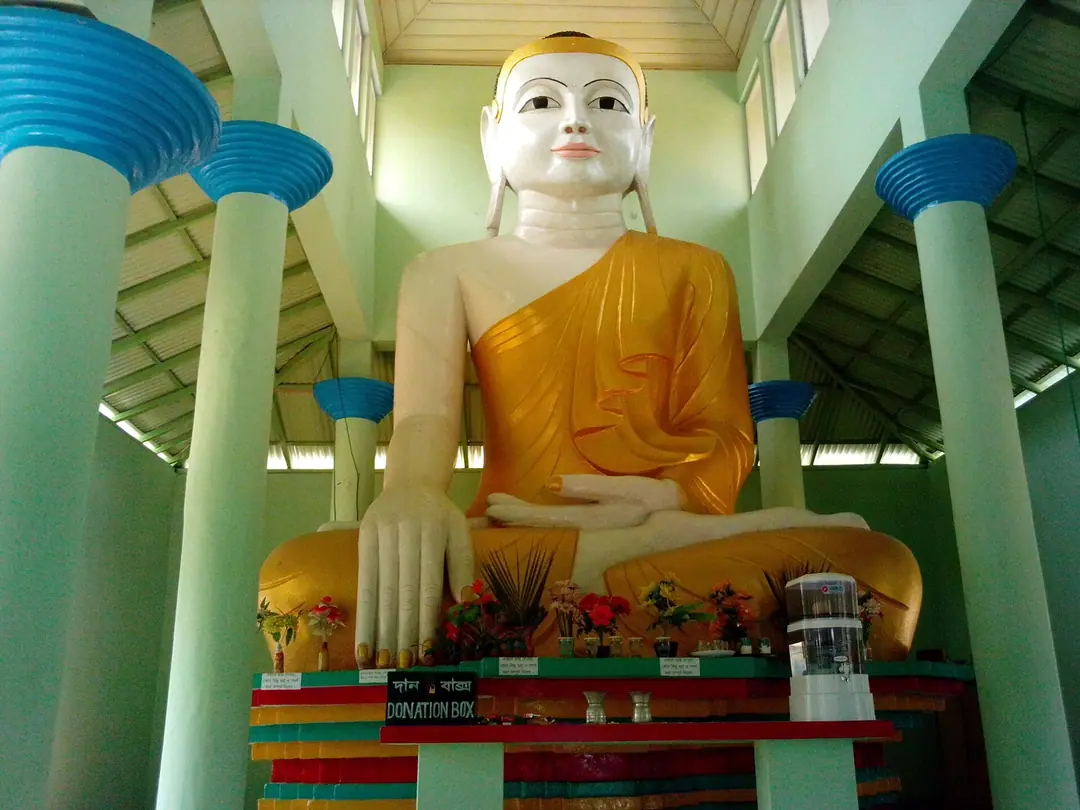
Kuakata has one of the country’s Rakhine communities, whose families have lived on this coast for generations. The Rakhine village and the Buddhist temples are a short ride from the beach. Kuakata’s temple has a large statue and a calm courtyard, and the temple at Misripara is another stop.
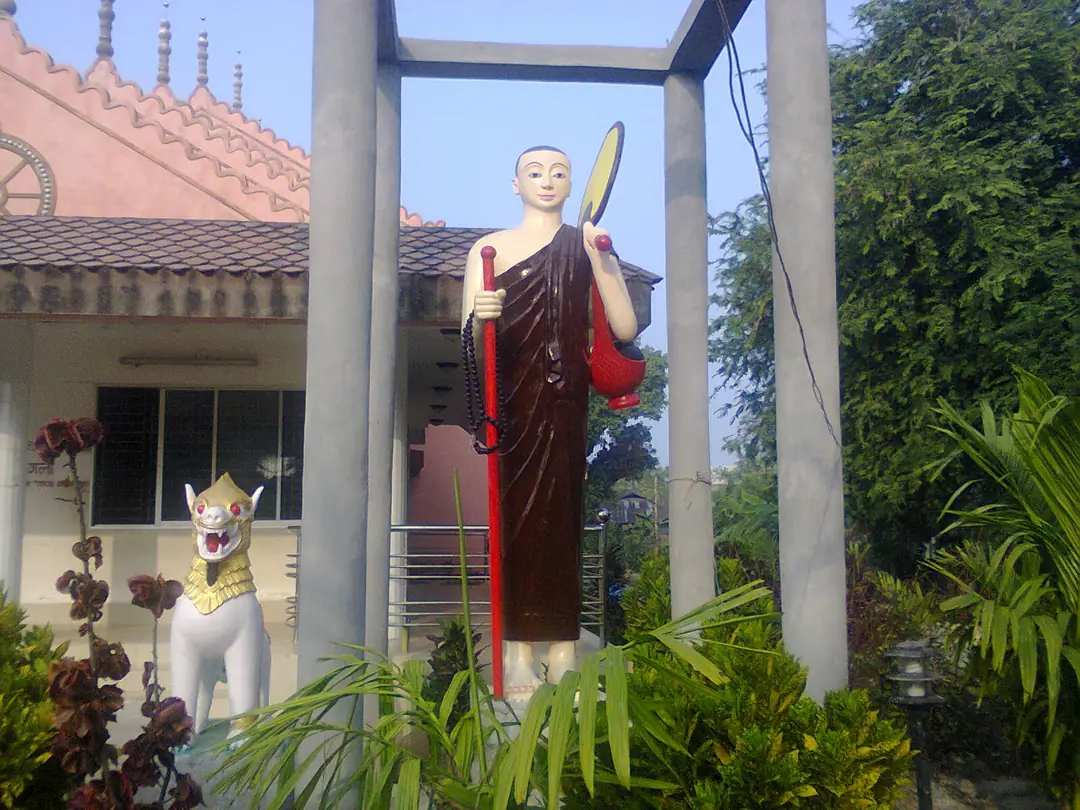
Dress with respect: cover shoulders and knees, and remove shoes before entering any shrine. Photography may be allowed outside but not inside, so look for signs or ask before lifting a camera. The monks and local families may speak little English, but a smile and a gesture of greeting go a long way.
The Rakhine are known for weaving and for their stilt houses, which stand on wooden posts with open space below. You may see looms at work and shawls and fabrics on sale. Buying directly from the weaver is a good way to support the craft, and you can learn about the patterns by asking. For the broader picture of crafts to look for in the country, see Bangladesh crafts to look for.
Fishing landings, dried fish and Lebur Char
Kuakata is a working fishing coast, and the landings are lively early in the day. Boats come in with the catch, buyers bargain on the sand, and the fish is sorted and carried to sheds. Dried-fish sheds are close to the landings, and the smell is strong in warm weather. Visitors are welcome to watch, but keep out of the way of the workers.
Lebur Char is a sandy island or bar near the western end of the beach, usually reached by boat; ask locally whether it can also be walked at low tide. It gives a wide, quiet view of the sea and the mouth of the river. Ask locally about the tide and current before going, and do not stay when the water begins to rise.
Dried fish, or shutki, is part of the coastal food. The sheds show how fish is cleaned, salted and laid out on racks. Whether you buy any depends on your taste and your luggage; the smell can stay with a bag. The food guide on Bangladeshi food says more about what to eat on the coast.
Getting around on the sand
Distances in Kuakata are small but the sun is strong, so choose a way of moving that fits the day. Cycling is a popular option; bicycles can be rented in the town and ridden along the firm sand at low tide and on the paths behind the beach. Check the brakes and the tyres, and take water.
Motorbike taxis ride on the beach and along the roads to the temples and the landings. They are quick, though the drivers vary in care, and a helmet is a good idea. Auto-rickshaws and electric easy-bikes serve the town. Walking at low tide is the simplest and most pleasant way for short stretches.
To reach Kuakata, the key facts are short. It is about 101 km in a straight line from Barishal and roughly three hours by road, and Dhaka to Kuakata is around six to eight hours by road. There is no airport and no railway at Kuakata, and since the Padma and Payra bridges opened, the ferries have gone. The guide to launches and ferries covers the river alternative.
Seasons and sea safety
The seasons follow the national pattern, with an added coastal edge: storms and cyclones matter more here than inland. Cyclone risk covers April to May and October to November.
| Months | Sea and weather | Kuakata feels |
|---|---|---|
| November to February | Dry air, calmer sea | Main season, boats run well |
| March | Warming | Comfortable early, hot later |
| April to May | Hot, storms, cyclone risk | Check warnings daily |
| June to September | Monsoon, rough water | Green, wet, fewer boats |
| October | Easing, cyclone risk late | Fresh light, watch the sky |
Check the Bangladesh Meteorological Department at bmd.gov.bd and follow local warnings.
The sea is shallow far out, but tides move quickly and currents can be strong near the river mouths. Swim only in places where local people swim and where a lifeguard is on duty, stay in shallow water, and do not swim alone or after dark. Keep children within reach. If a storm signal flies at the landing, stay out of the water and do not take boats.
On the beach, sun and heat are the main discomforts. Use a hat, sunscreen and plenty of water. Women travellers may attract attention on a crowded beach; swimming in loose clothes that cover the shoulders and knees is the usual choice and is more comfortable for everyone.
A two-day plan
This plan uses one night and assumes you arrive the evening before or early on the first day. Adjust it to the tide, which sets the timing of the boat and the beach walks.
- Day 1, before dawn
Walk to the main beach for sunrise, with tea from a stall and a light layer for the wind.
- Day 1, morning
Breakfast, then bicycles or a motorbike taxi to the Rakhine village and the Buddhist temples.
- Day 1, afternoon
Rest in the shade, visit the fishing landing and dried-fish sheds, then walk west for sunset.
- Day 2, early morning
Take a boat to Fatrar Char and the mangrove channels while the water is calm.
- Day 2, late morning
Visit Gangamati or Lebur Char with a local guide or boatman, depending on the tide.
- Day 2, afternoon
Eat lunch, collect your bags and leave early for the long road back.
Plan more nights if you want to read, rest or slow down; the pace of the place invites it. For hotels in the town, use the booking link below. If you are comparing coasts, the Cox’s Bazar guide covers the hilly south-east shore and its longer beach.
Questions and answers
How many days do you need at Kuakata beach?
Two days is a comfortable length, with one night in between. The first day covers sunrise, the Rakhine village, the temples and a sunset walk, and the second covers a boat trip to Fatrar Char and the mangroves. Add a third day if you want to rest, cycle or visit Lebur Char, since the long journey makes a very short stay feel rushed.
Can you see both sunrise and sunset at Kuakata?
Yes, in the sense that the beach faces south, so the sun rises over the sea at one end of the day and sets over water at the other, at different spots along the shore. The east end and the main landing suit sunrise, and the western stretch towards Gangamati suits sunset. Ask locally where to stand that week.
What are the red crabs at Kuakata?
Small red crabs live in burrows on stretches of the Kuakata sand and run out when the beach is quiet, scattering at footsteps. They are a small attraction, especially for children. Keep your distance, do not pick them up or block their holes, and avoid visiting in large noisy groups, which disturbs the animals and the sand they live in.
How do you visit Fatrar Char from Kuakata?
Boats are hired near the river landings close to the beach, and a trip takes a few hours depending on the tide. You glide through mangrove channels where birds, crabs and mudskippers live. Agree the route, the length and the number of life jackets before you board, and go in the morning when the water is calmer and the light is soft.
Is it safe to swim at Kuakata?
Swim only where local people swim and a lifeguard is on duty, in shallow water, and never alone or after dark. The sea is flat but the tide moves quickly, and currents near river mouths can be strong. Do not enter the water when storm signals are raised, and keep children within arm’s reach at all times.
What can you see in the Rakhine village near Kuakata?
The Rakhine village has wooden stilt houses, weaving looms and a Buddhist community with its own customs. The temples nearby include the one in Kuakata with a large standing statue and the one at Misripara. Dress with respect, remove shoes at shrines, ask before taking pictures and buy directly from weavers if you wish.
Which months suit Kuakata beach?
The main season is November to February, when the air is dry, the sea is calmer and boat trips run smoothly. March is warm, April and May are hot with storms, and the monsoon from June to September brings rough water. Cyclone risk covers April to May and October to November, so check the official weather warnings.
Is Kuakata a day trip from Barishal?
It is possible but long, since the beach is about 101 km from Barishal in a straight line and around three hours by road each way, so the day would be mostly on the road. One night at Kuakata makes the trip worthwhile, with sunrise, the temples and the mangrove boat. Check road conditions and holiday traffic first.