On this page
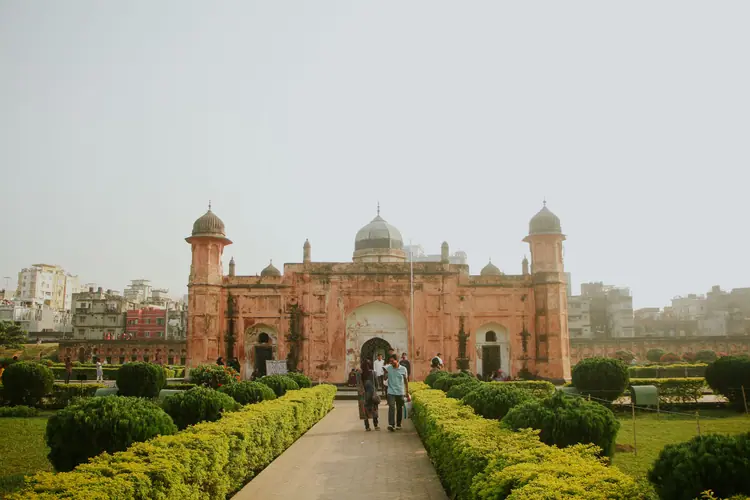
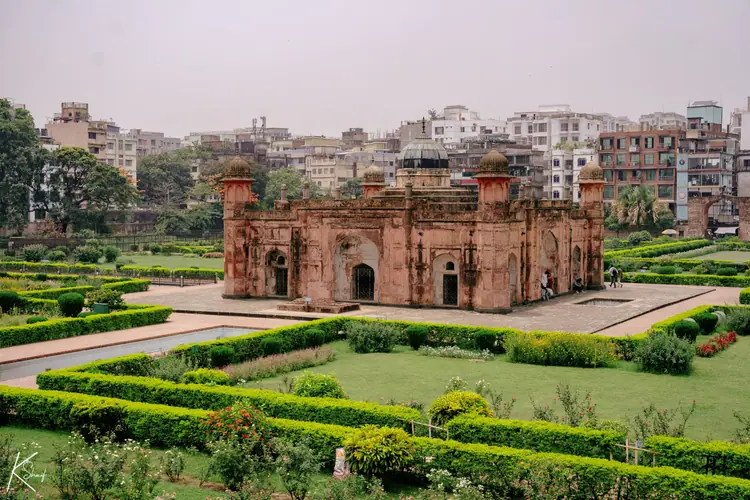
Old Dhaka, called Puran Dhaka in Bangla, is the part of the capital that grew along the north bank of the Buriganga before the modern suburbs existed. Its lanes are narrow, its houses are tall and thin, and its trades are still sorted by street. Most of it falls inside Kotwali and Sutrapur thanas, with Lalbagh and Chawkbazar close to the north and west.
The short version
- Almost nobody sleeps in the old city: base yourself at Motijheel, Paltan or Shahbagh and go in by rickshaw for the day.
- The old city is a set of trade and faith quarters, each with its own hours, so pick one or two for a morning rather than trying to see everything.
- The metro stops at Motijheel, and the last stretch to the lanes is by rickshaw or on foot.
- Festivals and Ramadan change the quarter completely, so check the calendar before you fix your dates.
The question for a visitor is practical: where do you sleep so that you can see it properly? This page answers that question and describes the quarters themselves. The single-day route through the main sights is covered in the Old Dhaka heritage walk; the two big monuments get their own page in Lalbagh Fort and Ahsan Manzil. What follows is about everything between and around them.
The old city in outline
It helps to think of the old city as a collection of villages that merged. Each quarter has a trade, a community and a pace, and those differences matter more than the monuments when you plan a morning. A shop selling brass or shell bangles does not open at the same hour as a wholesale cloth market, and a mosque quarter slows around prayer time.
| Quarter | Known for | Best time to go | Notes |
|---|---|---|---|
| Sadarghat and the riverbank | Launch terminal, boats and the Buriganga waterfront | Early morning | A working port, busy and wet underfoot |
| Chawkbazar | Old market square, a Mughal-era mosque, Ramadan food stalls | Evening in Ramadan, otherwise morning | Very crowded at festival times |
| Islampur | Wholesale cloth and sari trade | Mid-morning | Mainly men trading in bulk |
| Tanti Bazar | Weavers' quarter with tall old houses | Morning | Residential lanes, so keep voices low |
| Wari and Gendaria | Planned late-colonial streets with older villas | Any time | Calmer, easier to walk |
The table is a guide, not a rulebook. Opening hours drift, markets keep different weekly holidays and a street that was full yesterday may be empty today. Ask at your hotel which day is quiet and plan a flexible morning.
Should you sleep in the old city?
Most visitors do not, and the reason is simple. Hotels built for travellers are few and scattered at the edge of the quarter, rooms are small, and the lanes outside are loud from early morning until late at night. Power cuts and generator noise are part of the setting. Those who do stay in the old city are usually travelling on a very tight budget or visiting family.
The alternative is to stay on the edge and go in. A hotel at Motijheel, Paltan or Shahbagh gives you a quiet room, a working lift, air conditioning and a restaurant, and puts you within a short ride of Sadarghat or Lalbagh. You lose the sense of waking up in the lanes, but you gain energy for the day. After four or five hours in the crowd, a calm room is not a luxury.
There is one exception worth considering. If you are going to Sadarghat to catch a launch to the south, or an early morning river trip, a bed nearby saves you a pre-dawn drive. Even then, most travellers book a room a few kilometres away and arrive with a driver. The decision depends on how much weight you give to a good night's sleep.
Motijheel and Paltan as bases
Motijheel is the old commercial centre of the capital, with bank head offices, Shapla Square and the metro terminus. Kamalapur railway station sits on its eastern side, and the bus counters at Fakirapool and Arambagh are close. It is busy during the working day and noticeably quiet after office hours, which suits visitors who want to be out early and in bed early. A few mid-range and small hotels cluster at Dilkusha, Fakirapool and the roads around.
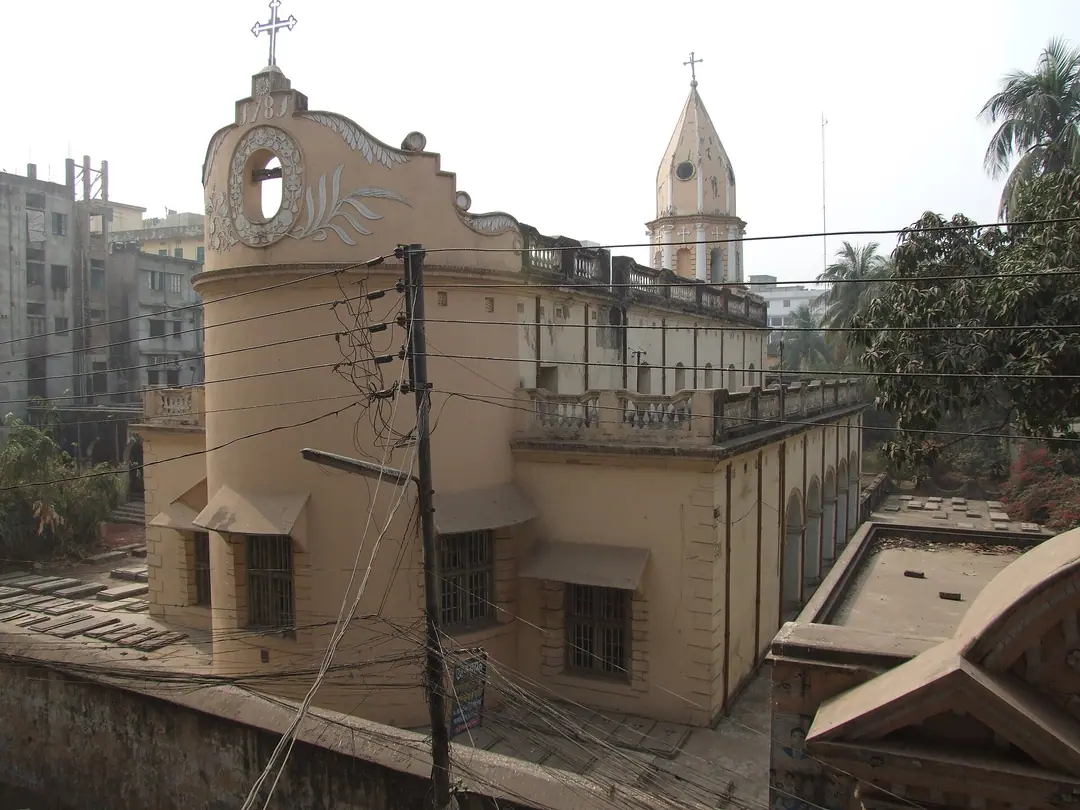
Paltan lies to the north-west of Motijheel and takes in Naya Paltan, Purana Paltan, Bijoynagar and Shantinagar. Baitul Mukarram, the national mosque, stands here, and the National Press Club is nearby. Political parties keep offices in the area, so rallies and road closures happen from time to time. Hotels here are more varied than in Motijheel, from small guesthouses to mid-range towers, and it is a better choice if you want shops and restaurants close by.
Both areas share a weakness: they are crowded during the day and slow in the evening, so build slack into every transfer. Both also share a strength. From either, you can reach Lalbagh, Sadarghat and the markets in a rickshaw ride that does not require a long road journey across the city. The general guide to where to stay in Dhaka shows how this compares with Gulshan, Banani and Uttara.
Shahbagh and the university side
Shahbagh is the third useful base. It sits between the old city and the modern north, around Dhaka University, the Bangladesh National Museum and Curzon Hall. Ramna Park and Suhrawardy Udyan are close, and the Central Shaheed Minar stands here. The streets are greener than those in the old city, and the area has cafes and bookshops used by students.
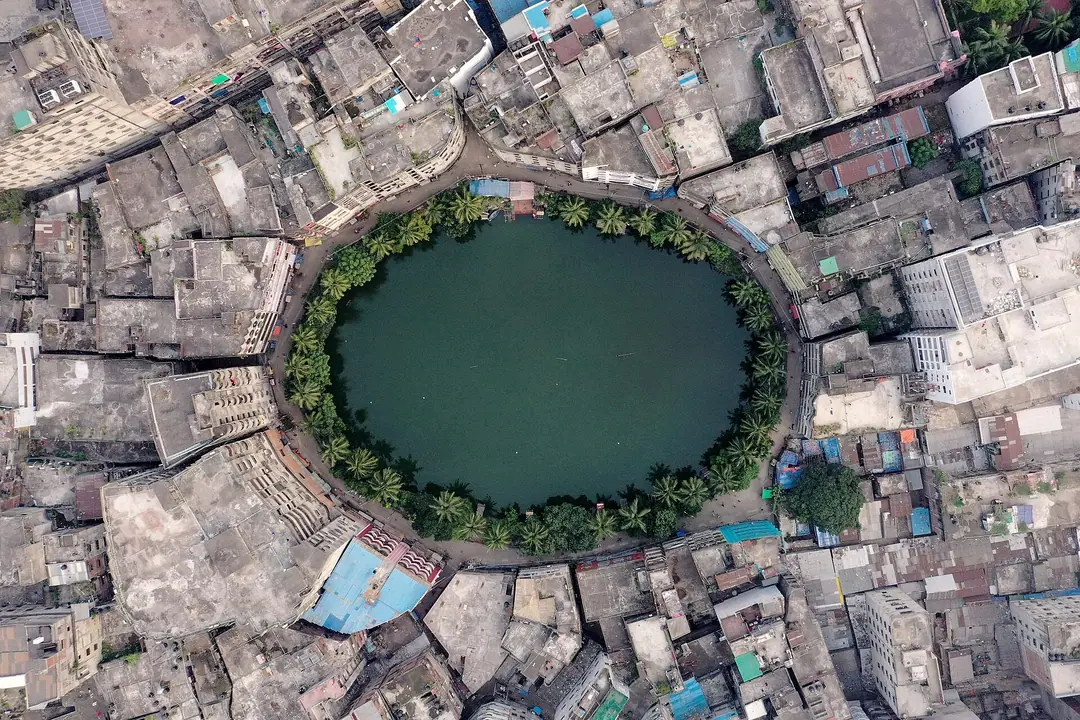
Shahbagh has a metro station, which makes the old city quick to reach by train and a short ride on from Motijheel. The area also hosts large events. The Ekushey book fair in February and Pohela Boishakh on 14 April fill the roads and parks, so rooms get scarce and traffic slows. Check your dates against those and book early if you plan to visit then.
For travellers who want a base in the middle and day trips to both extremes of the city, Shahbagh is the compromise. It is about as far from the airport as Motijheel, but nearer to the northern restaurants and galleries than the old city itself.
Moving through the lanes
The metro helps with the approach and no more. MRT Line 6 ends at Motijheel; the extension to Kamalapur was not open in November 2026 and is targeted for 2027, so check the current position before relying on it. From the terminus, hire a rickshaw or a CNG auto-rickshaw for the last stretch into the lanes, or walk if the day is cool.
Rickshaws are the working transport of the quarter. They are banned from some main roads, so the puller may leave the avenue and cut through side streets, which is often faster than a car. Rickshaws and their painted art were added to UNESCO's list of intangible heritage in 2023. Look at the hoods and back panels: the paintings of birds, film stars, mosques and rural scenes are the work of specialist painters, and are worth a pause.
Walking takes concentration. Lanes are shared with handcarts, motorbikes, porters and open drains, and overhead cables sag at head height in places. Wear shoes with grip, carry as little as you can and keep your phone in a front pocket. Signal is patchy between tall buildings, so download an offline map before you go.
Faith, cloth and craft quarters
Beyond the main monuments, the old city holds communities that have lived here for centuries. Dhakeshwari Temple, regarded as the national temple of Bangladesh's Hindus, stands near the university side of the old city, and the large procession on Janmashtami starts from here. The date follows the lunar calendar and falls in August or September. Husaini Dalan, a Shia congregation hall dating from the Mughal period, is the centre of the Ashura procession during Muharram.
Tanti Bazar is the traditional weavers' quarter, and Shankhari Bazar is known for shell work. Kumartuli and other potters' lanes make clay figures, above all before Durga Puja, which usually falls in late September or October. Islampur is the wholesale cloth centre: stacked bolts, saris and dress material, sold by the bundle to buyers from across the country. Retail visitors are tolerated but not the point.
Respect is the rule in all of these places. People live and work inside the buildings you pass, so ask before you photograph faces, shrines or workshops, and accept a refusal quietly. The notes on photography etiquette in Bangladesh go into detail about children, women and religious sites. Cover shoulders and knees and carry a scarf for a mosque or temple visit.
The river and the south
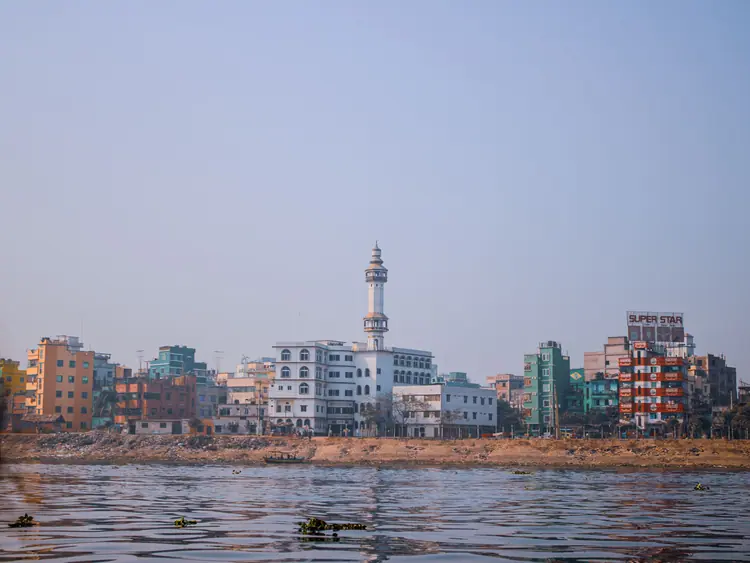
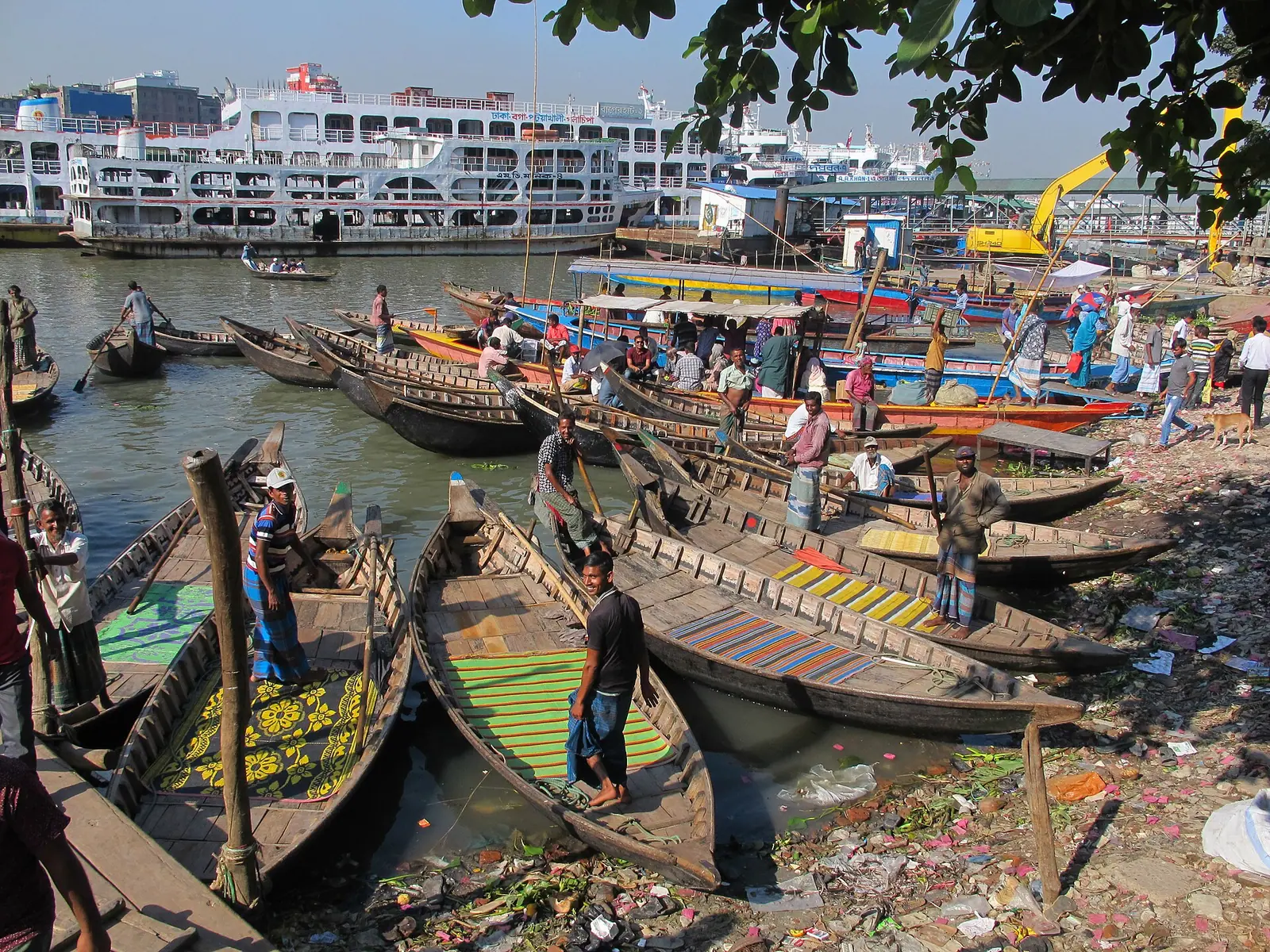
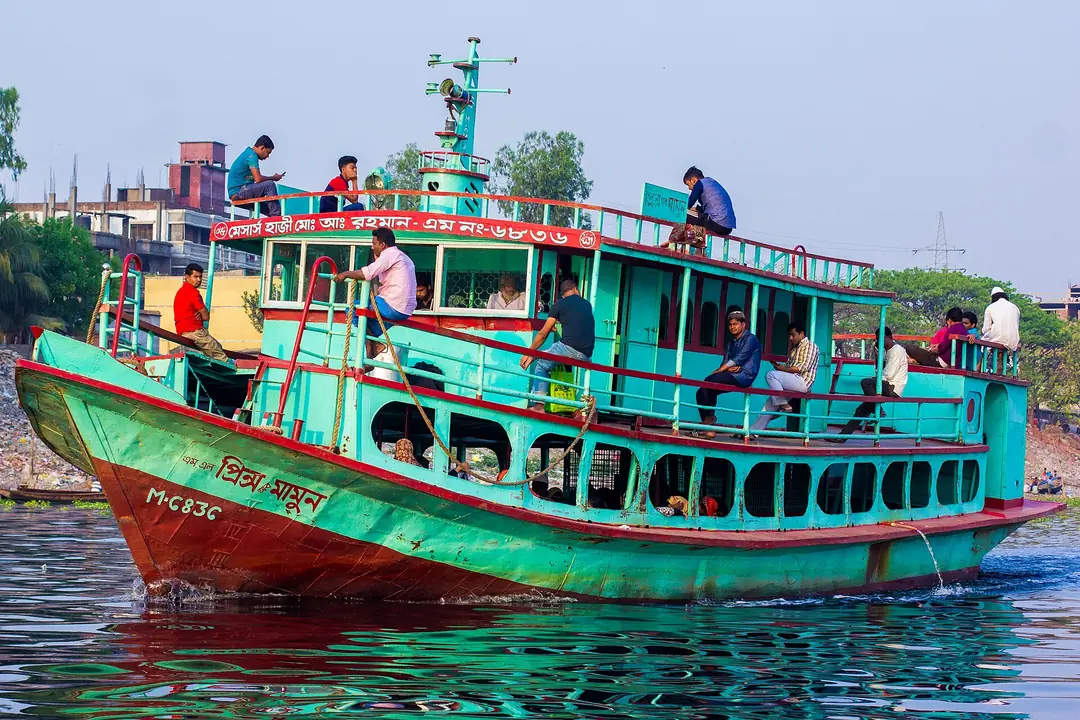
The southern edge of the old city is the waterfront. Sadarghat is the main passenger terminal of Dhaka, where overnight launches leave for Barishal and other southern river ports, though sailings have thinned since the Padma Bridge opened. The restored paddle steamer on the Dhaka to Barishal run began weekly tourist trips in November 2025; check that it is running before you plan around it. The guide to launches and river ferries explains how tickets and cabins work.
Next to the terminal lies Bahadur Shah Park, a long open green with a memorial to the 1857 uprising, and one of the few places in the old city where you can sit down without paying. Families come here in the evening, and vendors sell tea and snacks. It makes a good rest stop between the waterfront and the markets, and a safe place to regroup if the crowd tires you.
River boats cross the Buriganga all day, and a short return trip gives a view of the shoreline you cannot get from land: shipyards, workshops, steamers and rows of old riverfront houses. Agree the price and the route before you board and do not overload the boat. If the weather turns, go ashore and wait.
The calendar changes everything
Few parts of the capital change as much with the date as the old city. In Ramadan, the evening food stalls at Chawkbazar are famous across the country, selling fried snacks, chickpea dishes, haleem and sweets in the hour before the fast ends. Crowds are heavy, so go with a local friend or a guide and keep your valuables close. The guide to travelling in Ramadan and at Eid explains the dates and the hours.
Around the two Eids, many shops shut for several days and the lanes empty as residents travel home. Muharram brings processions to Husaini Dalan, and several roads are closed for a day. Janmashtami and Durga Puja fill the Hindu quarters with music and processions. Pohela Boishakh on 14 April is celebrated mostly in the university area, but crowds spill into the old city. Always check the date against the lunar calendar.
Ordinary Fridays are different again. Many wholesale markets close for the weekend, so the lanes are calmer, though some food and tea stalls still operate. This makes it a good day for a first look at the architecture, but a poor one for shopping. Saturday is the other weekend day and varies by market.
How long, and a second-day plan
One day is enough for the highlights. Two days are better if you want the quarters themselves. Split them: a first day on the major sights from your base, and a second day in the trade lanes and the riverside with no fixed target. Do not try to cover everything, because crowds, heat and noise wear you down sooner than distance does.
- Early
Ride the metro to Motijheel, then take a rickshaw to Islampur and watch the cloth market open.
- Mid-morning
Walk into Tanti Bazar and look at the old houses and weavers' lanes, speaking quietly in the residential streets.
- Midday
Visit Dhakeshwari Temple or a mosque outside prayer time, then rest in a cafe or return to your hotel.
- Afternoon
Go to Bahadur Shah Park and the Buriganga for a short boat crossing as the light softens.
- Evening
Return by car or rickshaw before the roads fill, or stay for the evening stalls during Ramadan with a guide.
Hotels to consider
Questions and answers
Are there hotels inside Old Dhaka itself?
A handful of small hotels and guesthouses stand at the edges of Old Dhaka, mainly near Sutrapur and Kotwali, but the quarter is not set up for visitors. Most travellers stay in Motijheel, Paltan or Shahbagh, where rooms are quieter and facilities better, and go into the old city by rickshaw.
Which base is closest to Old Dhaka by metro?
Motijheel, where MRT Line 6 ends. From there a rickshaw or CNG auto-rickshaw reaches the markets, Sadarghat and Lalbagh. The extension to Kamalapur was not open in November 2026, so check the current service before planning around it, and allow time for the last stretch by road.
Is Old Dhaka worth two days rather than one?
Yes, if you want more than the main monuments. A second day lets you see the trade quarters such as Tanti Bazar and Islampur, the riverside and a temple or mosque at a relaxed pace. One day is enough for a quick look at the headline sights.
When is Old Dhaka at its busiest?
Evenings in Ramadan, the days before Eid and festival processions are the heaviest. Weekday mornings in the cloth and hardware markets are also crowded. Fridays are calmer because many wholesale markets close, though some stalls stay open. Always check the lunar calendar before fixing your dates.
Can I take photographs freely in Old Dhaka?
Buildings and street scenes are generally fine, but ask before photographing people, women, children, workshops, shrines and prayer. Do not photograph homes through doors or windows. If someone asks you to stop, stop politely. A guide from your hotel can help you read the situation.
What should I wear for a day in Old Dhaka?
Wear light, loose clothing that covers shoulders and knees, and shoes that are easy to slip off at a mosque. Carry a scarf, a bottle of water and a small bag worn in front. Old Dhaka is hot and dusty in summer and damp in the monsoon.
Is a guide necessary in Old Dhaka?
It is not required, and many visitors manage with a rickshaw and an offline map. A local guide helps with the lanes, the history and the etiquette, and is useful in the trade quarters and during festivals. Ask your hotel for a recommendation and agree the length and fee first.
How far is Old Dhaka from the airport?
The airport lies in the north and Old Dhaka in the south, so the journey crosses the whole city. In a straight line the distance is roughly a dozen kilometres or more, but by road it can take well over an hour. Leave a generous margin whether you arrive or depart.