On this page
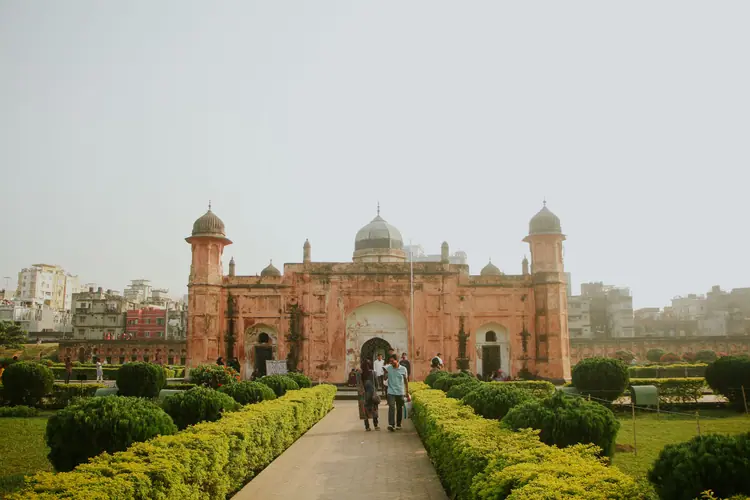
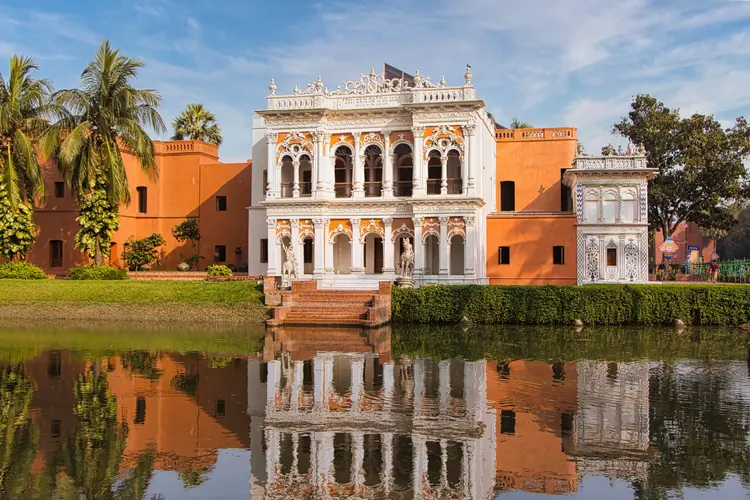
Old Dhaka is dense, loud and slow, and two of its calmest places sit within a rickshaw ride of each other. Lalbagh Fort is a walled garden with a Mughal governor's hall, a mosque and a tomb, begun in 1678 and left unfinished. Ahsan Manzil, completed in 1872, is the pink palace of the Nawabs of Dhaka on the Buriganga river, now a museum.
The short version
- Lalbagh Fort is a walled Mughal garden with three buildings: an audience hall with a bath house, a mosque and the tomb of Pari Bibi.
- Ahsan Manzil is the pink river palace of the Dhaka Nawabs, now a museum of furnished rooms.
- Both have weekly closing days that have changed over time, so check before you go.
- With half a day, see Lalbagh first while it is cool, then take a rickshaw to Ahsan Manzil and the river.
This guide looks at the two monuments in detail. The wider quarter, with its lanes, markets and food, is covered in the Old Dhaka heritage walk, so here the focus is on what is inside each gate, what to look for, how long to give each one and how to move between them.
Two buildings, two eras
Lalbagh belongs to the Mughal governors who ran Bengal from Dhaka in the late seventeenth century, when the city was a provincial capital. It is a fort in name, with a surrounding wall and gates, but it was planned more as a residence and garden than as a defensive structure. Its rooms and corridors are quiet, and its lawns are used by families and students.
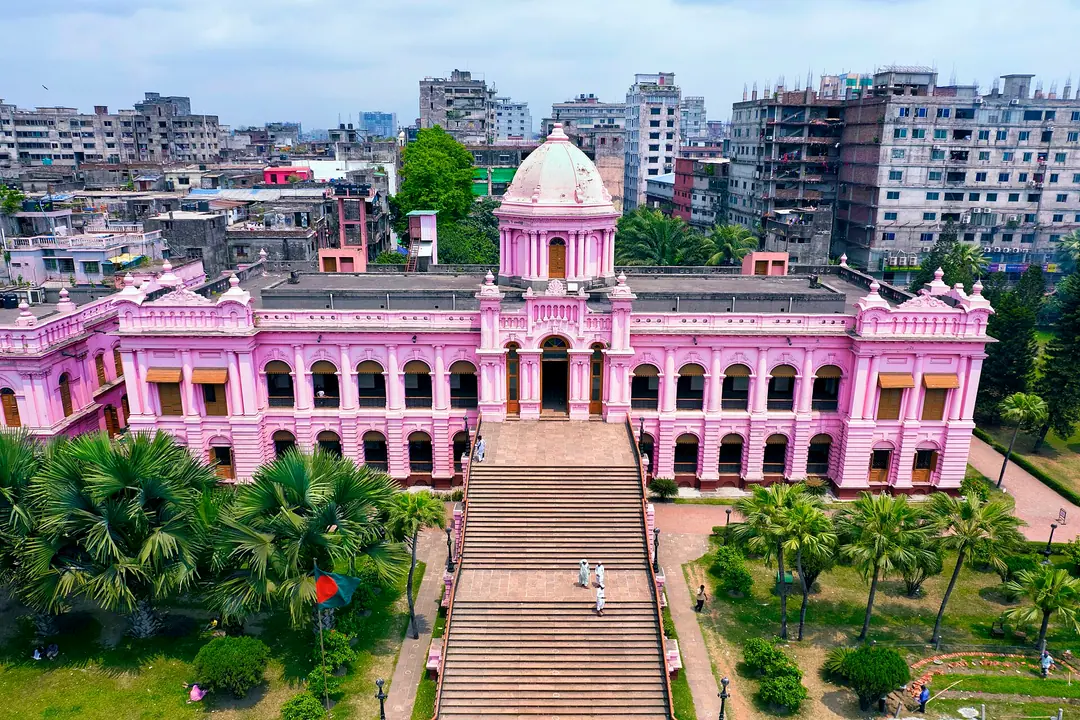
Ahsan Manzil comes from a very different time. It was built by the Dhaka Nawab family, wealthy landowners and merchants who became the city's most prominent household in the nineteenth century, and it stood on the riverbank where their boats and guests arrived. It is a palace in the colonial-era sense: grand staircases, domes and reception rooms facing the water.
Neither monument is on the UNESCO World Heritage list. Lalbagh Fort is on Bangladesh's tentative list, which means it has been proposed but not inscribed. That does not make it less worth seeing, and the buildings are cared for by the government's archaeology department, with the usual limits on funding and crowds.
Lalbagh and its three buildings
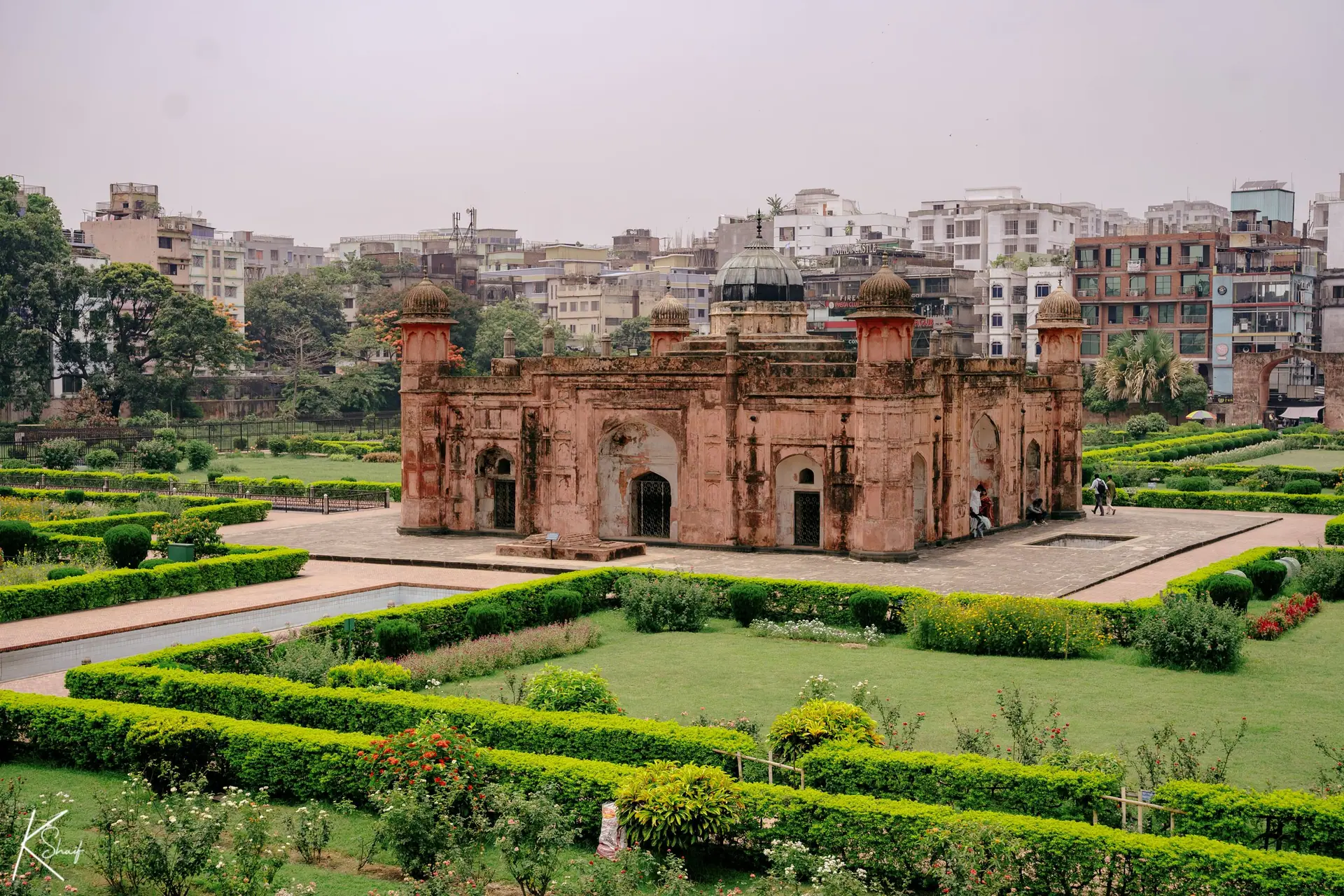
Inside the gate, a wide path leads through lawns and trees. Three buildings stand along it. The first and largest is the Diwan-i-Aam, a two-storey hall that once served the governor, with a bath house and a small museum. Beside it stands a three-domed mosque, used for prayer, and between them lies the tomb of Pari Bibi.
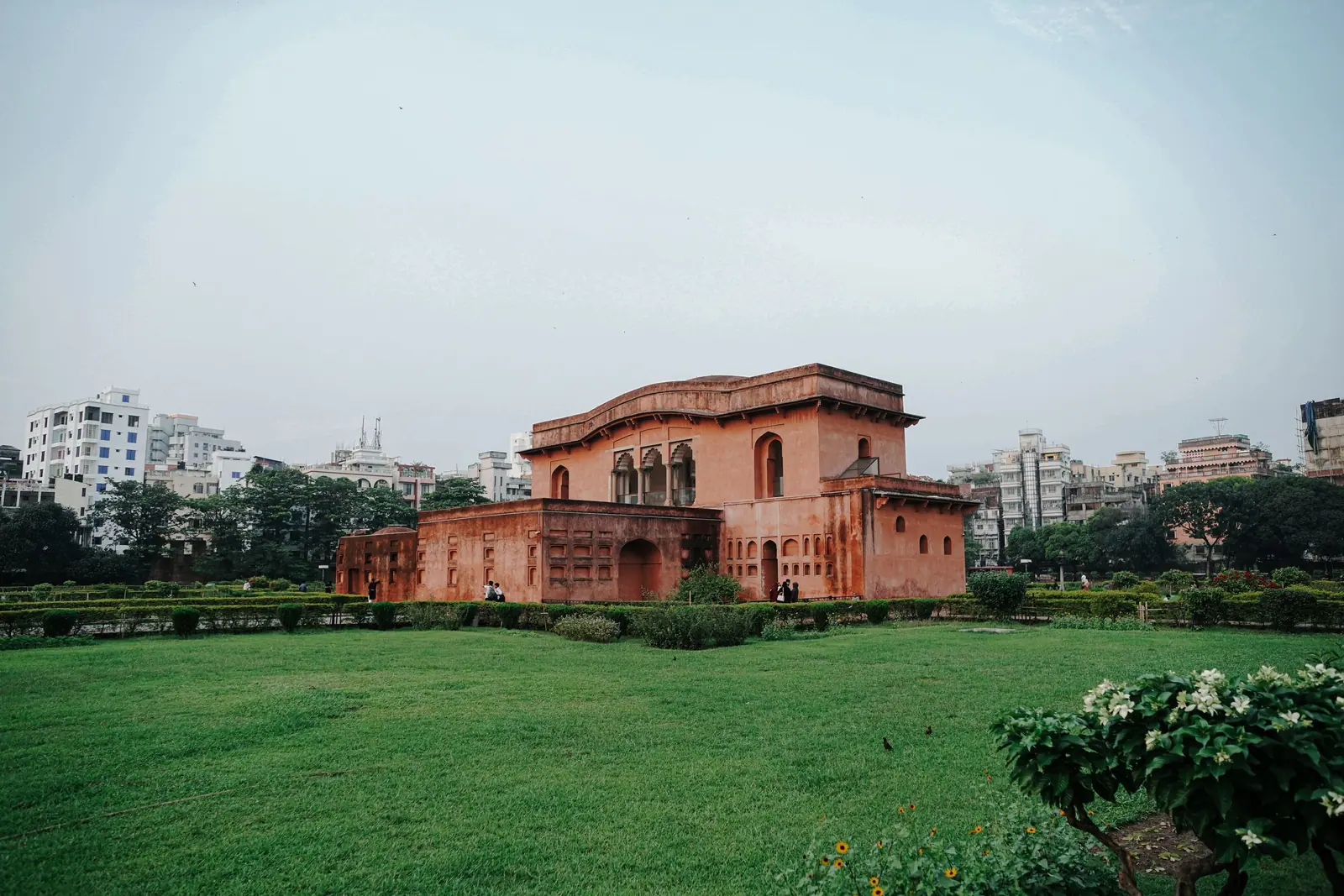
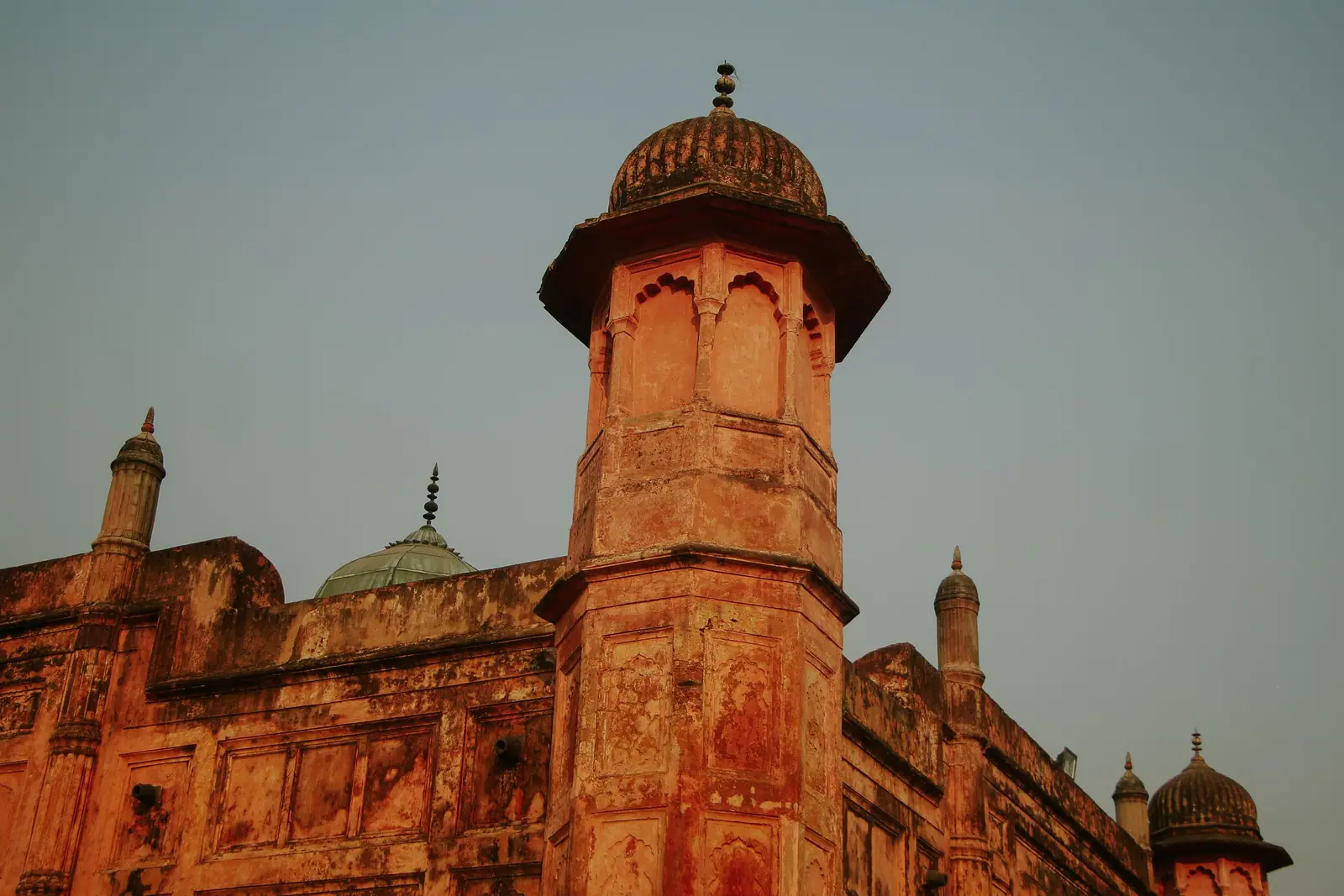
The tomb chamber is a square room with a central grave, set within a modest courtyard. The mosque has simple brick arches and domes, and it is not open to casual visitors during prayer. The hall is the most spacious, with arched openings, upper rooms and walkways that give a sense of how the governor's household lived.
The fort is unfinished, and that shows: parts of the plan were never completed. Walk the path rather than racing through, look up at the domes and out at the gardens, and use the museum to see the objects and photographs that explain the buildings.
Prince Azam, Shaista Khan and Pari Bibi
The fort was begun in 1678 by Prince Muhammad Azam, a son of the Mughal emperor Aurangzeb, during his short time as governor of Bengal. He was recalled to the imperial court before it was done, and the work stopped. His successor as governor, Shaista Khan, continued some of it, and the story of the fort is bound up with his family.
Pari Bibi was Shaista Khan's daughter. Local tradition says she was promised in marriage to Prince Azam, and that she died in 1684, after which her father is said to have stopped the building. Her tomb is the centre of the site. Historians doubt parts of the story, so treat the romance as a local telling and the date and tomb as the lasting facts.
The name Lalbagh means red garden. Over the centuries the fort fell into disrepair and was used for various purposes, and conservation work followed in the twentieth century. Today the gardens are tidy and the buildings are well kept, though you will see patches of repair.
Ahsan Manzil and the Nawab family
Ahsan Manzil stands on the north bank of the Buriganga near Sadarghat, where the river meets the old city. It was built by Nawab Abdul Ghani and completed in 1872, and the name honours his son Ahsanullah. The palace has two wings on either side of a central domed hall, with a broad stair that leads up to the principal rooms.
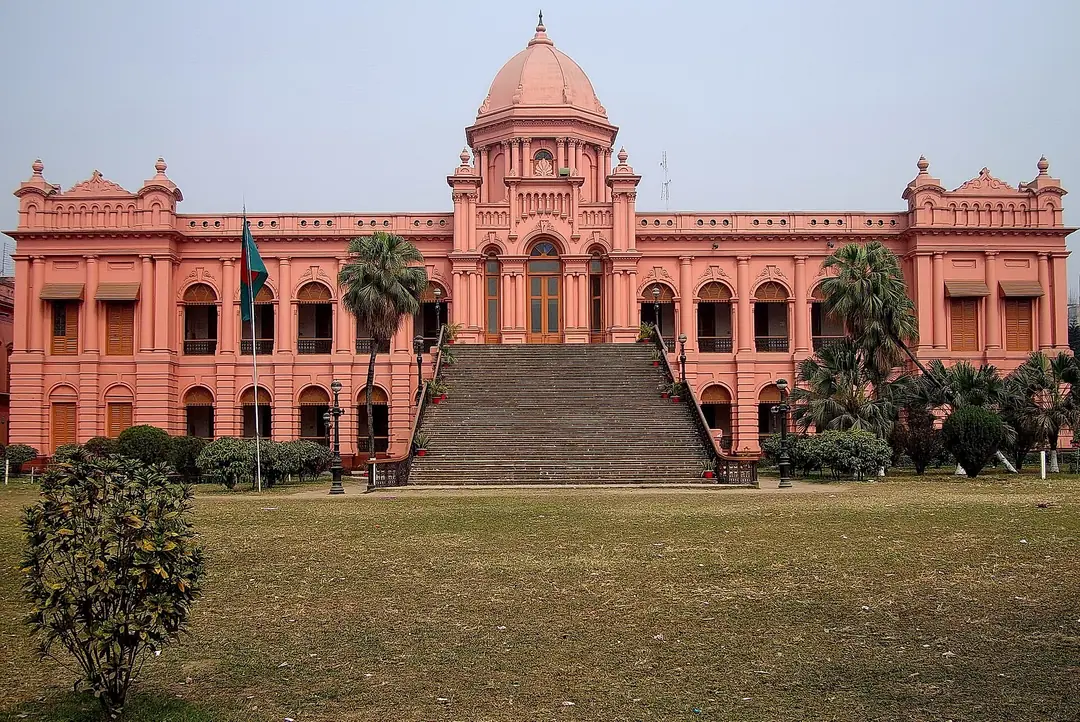
Inside, the rooms are furnished and arranged to show how the family lived and received guests. You can see a dining room, a drawing room, bedrooms and a grand staircase, along with portraits, photographs and period furniture. The labels explain who used each space. Take your time in the domed hall and look at the plasterwork and the floors.
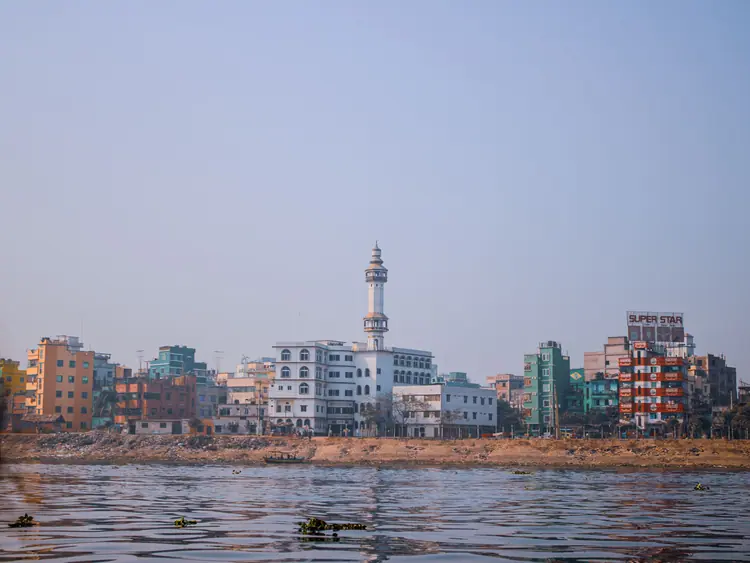
The river side of the palace is the place to stand outside. The front steps face the water, and in the past the family and their guests arrived here by boat. Today you look across the Buriganga at working boats and ferries, and the contrast with the cool, quiet rooms behind you is part of the visit.
The 1888 tornado and the rebuilding
In 1888 a tornado struck Dhaka and badly damaged Ahsan Manzil. Its upper part and dome were affected, and the Nawab family rebuilt and repaired it. The palace you see today therefore reflects both the original building and the work done afterwards, which is one reason the dome and upper floors look as they do.
Look for the signs of that history. Details such as the shape of the dome, the proportions of the upper floor and the finish of some rooms differ from the earlier building. A guide or the museum boards explain the main changes. You do not need to be an architectural historian to notice that the palace has been repaired and reworked.
The palace later passed out of family use and into government care, and it has been restored and opened as a museum. Conservation continues, and some rooms or floors may be closed at any time. If a staircase is roped off, accept it and use the time to look at the finish and the view instead.
Which to see if you only have half a day
| Lalbagh Fort | Ahsan Manzil | |
|---|---|---|
| Feel | Walled gardens, open air, quiet paths | Palace rooms, river steps, indoor galleries |
| Suits | Walking, Mughal history, photographs, families | Interiors, the Nawab story, river views |
| Time to allow | About 1.5 to 2 hours | About 1 to 1.5 hours |
| Weather | Hot in the open on summer days | Interior rooms give shade |
| Closing day | Has been closed on Sundays; check | Has been closed on Thursdays; check |
If you can only see one, choose Lalbagh for space, trees and an easy stroll, and Ahsan Manzil if you prefer interiors and a sense of the Nawab household. With half a day you can see both. Moving between them takes a rickshaw or CNG through busy lanes, so expect it to be slower than the map suggests.
A half-day plan
- Early morning, Lalbagh
Arrive when the gates open, while the air is cool. Walk to the hall, the tomb and the mosque, and visit the small museum.
- Mid morning, the move
Leave by rickshaw or CNG and agree the ride before you set off. Lanes are crowded, so allow more time than the distance suggests.
- Late morning, Ahsan Manzil
Tour the rooms, take the staircase to the upper floor if it is open, then step out onto the front terrace to see the river.
- Lunch, Old Dhaka
Eat in a busy local place nearby. Drink bottled or filtered water, and wash your hands before you eat.
- Afternoon, the river
Walk down to Sadarghat to see the boats, if you are comfortable in a crowd, or return to your hotel for a rest.
The airport to city guide explains the transfer into Dhaka, and getting around Bangladesh covers rickshaws, CNGs and ride-hailing in more detail. Plan the move between the two sites around traffic and avoid the midday and early evening peaks.
Photographs, closing days and children
Photography is usually allowed outdoors and in many rooms, but rules differ by gallery, and the rules and fees for professional equipment are set locally. Ask a staff member before you use a tripod, a drone or flash. Do not photograph people at close range without asking, and be discreet in the mosque and at the tomb, where visitors may be praying.
Both places suit children. Lalbagh has lawns, paths and space to run, and Ahsan Manzil has rooms, a dome and a river view to hold attention. Keep younger children close on staircases and near the river edge, bring water, and plan a break in the shade. A quiet weekday is easier than a Friday or Saturday, the weekend in Bangladesh.
Dress modestly, with covered shoulders and knees, and wear shoes you can slip off at the mosque. In summer, bring a hat and water, and in winter a light layer for the mornings. Carry small taka notes for entry and snacks. See the Dhaka area guide for where to base yourself.
Where to stay before and after
Dhaka's main hotel districts are in the north, in Gulshan, Banani and around the airport, a long and slow drive from Old Dhaka in traffic. Staying nearer the old city or in the centre cuts the transfer, though choice is more limited. Whatever you choose, leave early for Old Dhaka and expect the return to be slow.
After Old Dhaka, a day trip to the medieval capital of Sonargaon makes a good contrast, with its ruined merchants' houses and museum, as described in the Sonargaon and Panam Nagar guide. Sonargaon is about 23 km from central Dhaka in a straight line, though the road takes much longer.
Questions and answers
How long do you need at Lalbagh Fort?
Allow about an hour and a half to two hours. The three buildings and the gardens are easy to see in an hour, but you will want time for the museum and for sitting under the trees. Come early, since the open gardens get hot by late morning in summer.
Which days are Lalbagh Fort and Ahsan Manzil closed?
Lalbagh Fort has been closed on Sundays and Ahsan Manzil on Thursdays, but days and hours can change and public holidays add closures. Ask your hotel or check locally the day before you go, and do not assume an old guidebook or website is still right.
Who was Pari Bibi, buried at Lalbagh Fort?
Pari Bibi was the daughter of Shaista Khan, a Mughal governor of Bengal, and her tomb stands at the centre of Lalbagh Fort. She died in 1684. Local tradition links her to Prince Azam, who began the fort, but historians question parts of the story, so treat the romance as a local telling.
Why is Ahsan Manzil pink?
The palace is painted a soft pink, and it is often called the pink palace of Dhaka. Its colour, its dome and its riverside position make it one of the most recognisable buildings in the old city. It was completed in 1872 for the Nawab family and later turned into a museum.
Can you see Lalbagh Fort and Ahsan Manzil on the same day?
Yes, in about half a day. Start at Lalbagh in the cool of the morning, take a rickshaw or CNG to Ahsan Manzil and finish with the river. Lanes are crowded, so allow extra time for the move and avoid the midday and early evening peaks.
Is Lalbagh Fort listed by UNESCO?
No. Lalbagh Fort is on Bangladesh's tentative list for World Heritage, which means it has been proposed but not inscribed. The only World Heritage Sites in the country are the mosque city of Bagerhat, the Buddhist ruins at Paharpur and the Sundarbans.
Is Ahsan Manzil good for children?
Yes, with some care. Children usually enjoy the dome, the staircase, the furnished rooms and the view of the river boats. Keep them close on the stairs and near the water, bring a bottle of water and plan a short rest. A weekday is calmer than the weekend.
What damaged Ahsan Manzil in 1888?
A tornado struck Dhaka in 1888 and badly damaged the palace, including its upper part and dome. The Nawab family rebuilt and repaired it afterwards, so the building you see reflects both the original work and the later repairs. Museum boards at the site explain the main changes.