On this page
Mymensingh sits on the old Brahmaputra, about 112 kilometres in a straight line north of Dhaka, and it has long been the capital of a large agricultural region. The division of the same name was created in 2015, the newest in the country, and takes in four districts: Mymensingh, Netrokona, Jamalpur and Sherpur. For visitors, the town is the practical centre, with a river bank, a campus, a market quarter and some handsome buildings from the days of the landlords.
The short version
- Mymensingh is an easy overnight from Dhaka, with a river, a museum, old mansions and a famous sweet within an hour of each other.
- A second night lets you reach Birishiri and the Garo hills in Netrokona, which is a long trip but a very different landscape.
- Stay in the town for services, or by the university for green quiet, and treat Muktagachha as a half-day trip from either.
- Several of the buildings are in public use, so check access locally and keep expectations modest.
Few foreign travellers stop here, so the pace is gentle and attention is friendly. That makes it a good first step outside the capital, and a good counterweight to the heavy traffic and noise of Dhaka. This page covers where to base yourself, how to arrive, what to see in the town and beyond, and how long to give the trip.
A river town and its hinterland
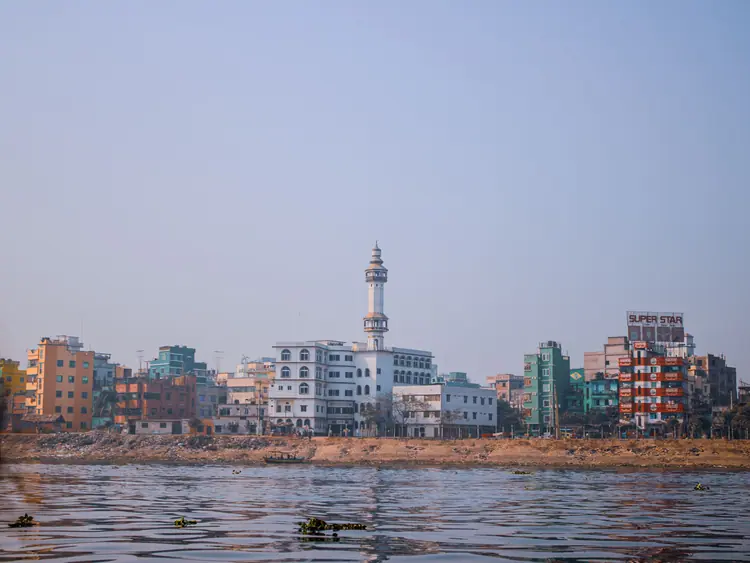
The old Brahmaputra is no longer the great river its name suggests. The main flow shifted west long ago and now runs as the Jamuna, leaving a slower channel that flows through the town. Its banks hold promenades, ghats, boats and a few of the better-known buildings, and in the evening families walk beside the water. It is the natural place to begin any visit.
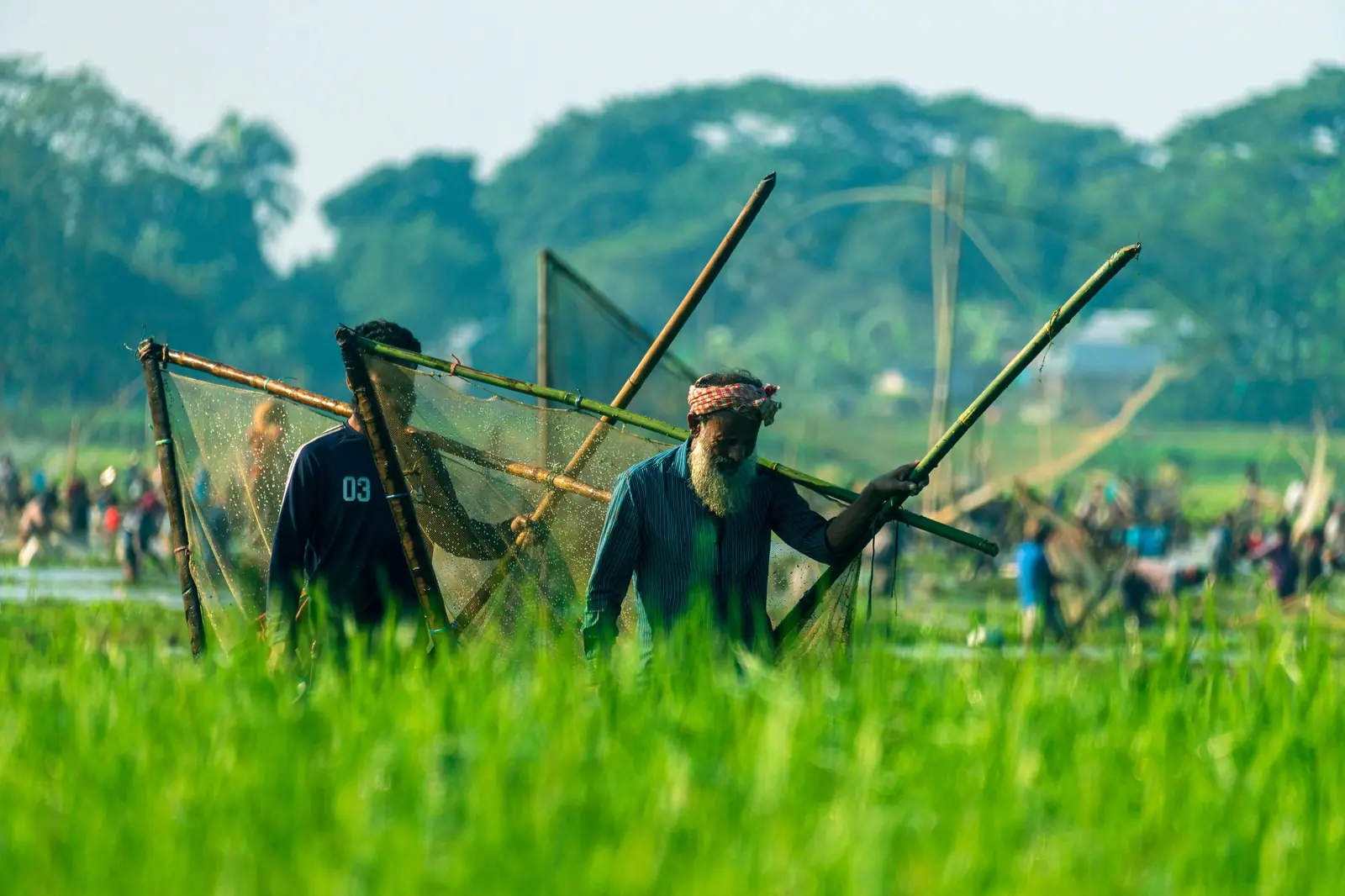
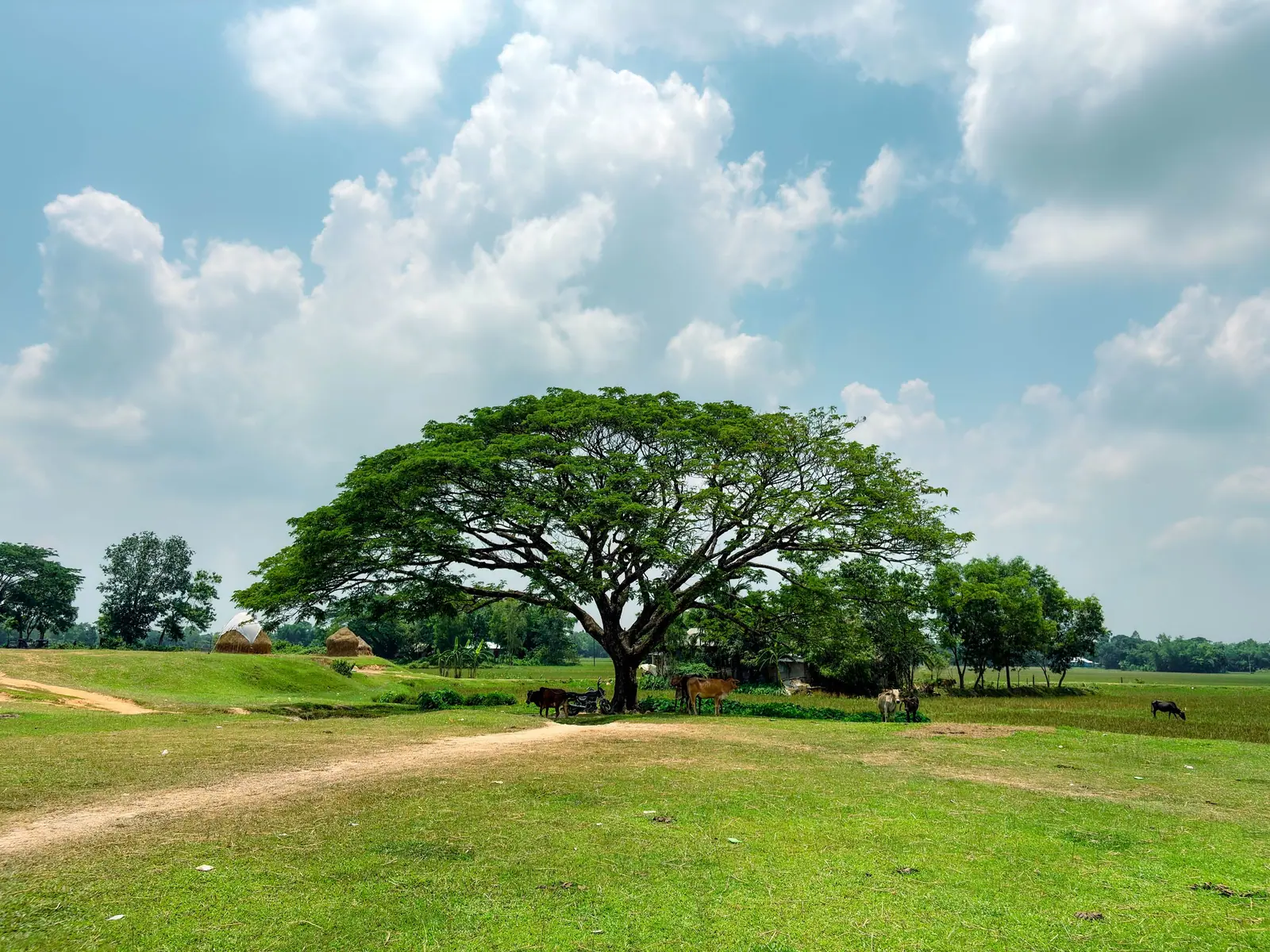
Beyond the town lie the fields and villages of the plain, then low hills towards the north. Netrokona district, north of Mymensingh, runs up to the Garo hills and the Indian border. Haluaghat, in Mymensingh district itself, lies in the same belt. Together these give you three areas to consider: the town, the road to Muktagachha and the hill edge around Durgapur.
| Base | Feel | Good for | Limit |
|---|---|---|---|
| Mymensingh town | Market streets, river bank, mansions | First night, museum and sweets | Traffic and noise in the centre |
| University side | Campus, lakes, a botanical garden, green lanes | Quiet stays, walking, students | Fewer shops and restaurants |
| Muktagachha | Small town with a rajbari | A half-day from the town | Almost no lodging |
| Birishiri and Durgapur | Hill edge with clay hills and Garo villages | A day trip or a rural overnight | Long road, very simple rooms |
Most visitors use only the town as a base and take the other places as day trips. If you want the hills in comfort, plan a full day and start early.
Getting there from Dhaka
The usual route is by road. Mymensingh is about three hours from Dhaka in light traffic, using the Dhaka to Mymensingh highway north through Gazipur. The first section is often jammed with factory buses and trucks, so leave early or accept a much longer trip. The page on Gazipur describes what you pass on the way.
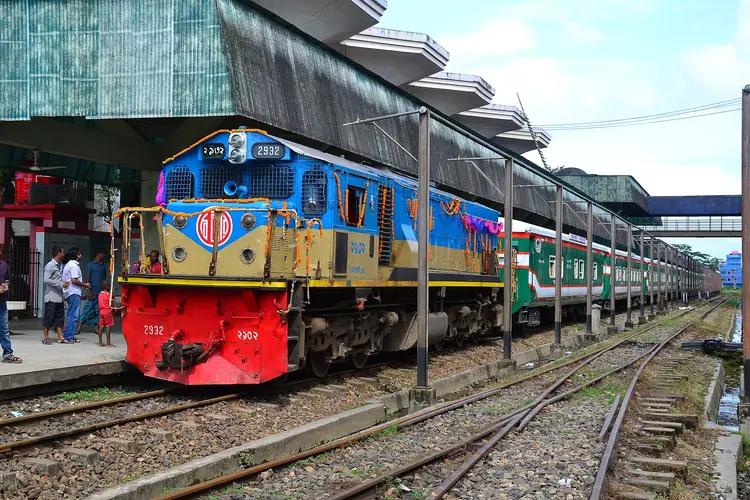
Trains also run on the line through Tongi and Joydebpur to Mymensingh. They are slower than a clear road but avoid the worst of the highway congestion, and the carriages give a view of the paddy fields. Timetables, classes and sale windows change, so check the official site and the train travel guide before you plan around a particular service. There is no airport in the town.
Within the district, buses, microbuses and auto-rickshaws link the towns. For Birishiri and the hills, a car with a driver is far simpler than public transport, because buses are infrequent and the last stretch is rural. Agree the route, the hours and the price before you leave, and ask about stops for food and rest.
The town: river, museum and mansions
The Zainul Abedin Museum is the main cultural reason to visit. It honours the painter Zainul Abedin, whose drawings of the 1943 Bengal famine are among the best-known works in Bangladeshi art, and it holds paintings, sketches and folk objects. The collection is modest and the building is simple, but a slow visit gives you a sense of how art and history link in this region. Opening days vary, so ask locally.
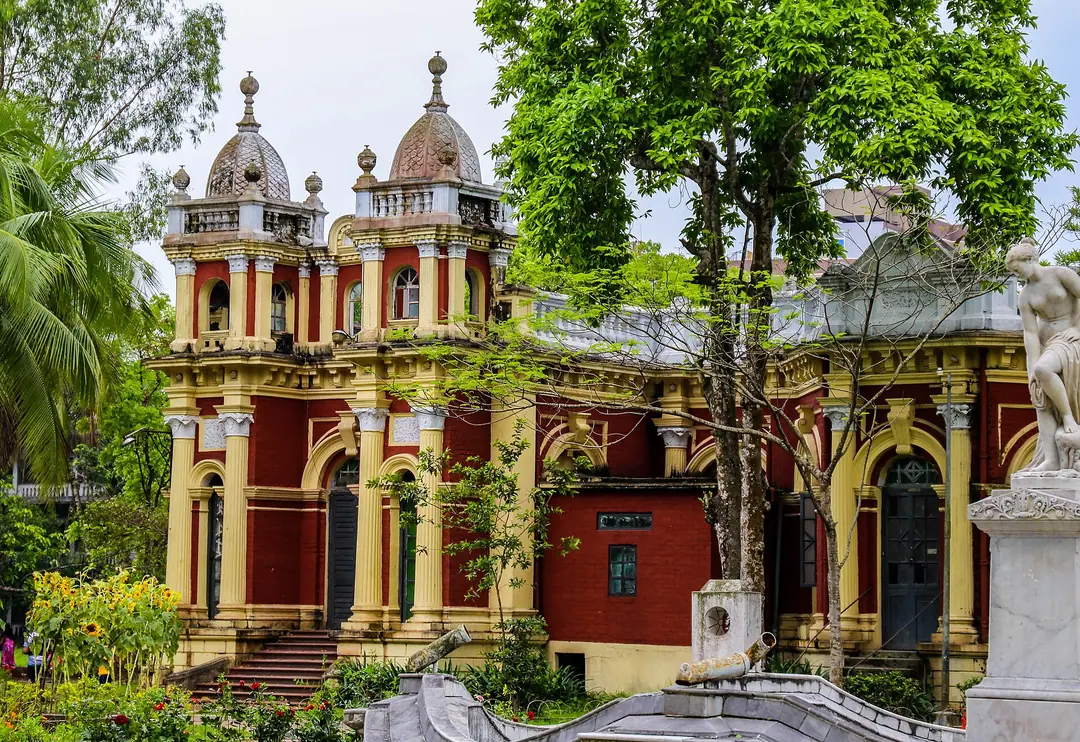
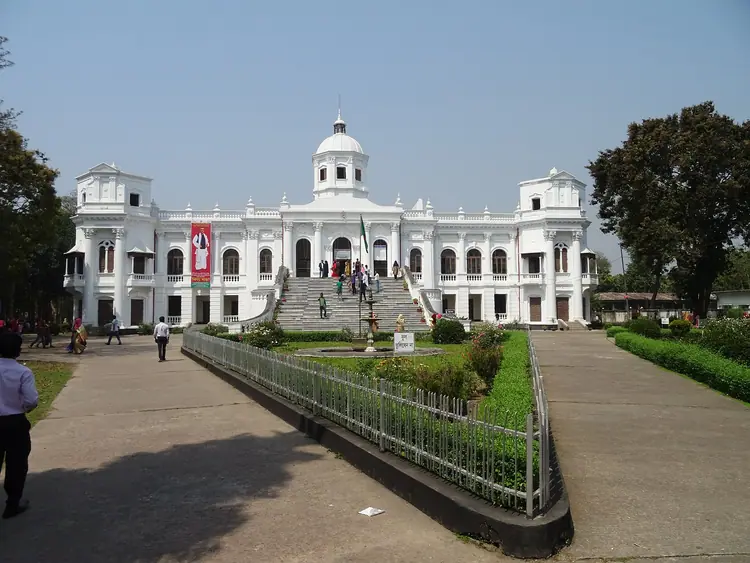
Two mansions from the landlord era stand in the town. Shashi Lodge is a red and yellow house on the river side, with classical statues in its grounds. Alexander Castle, a larger riverside building from the early twentieth century, stands nearby. Both are in institutional or public use at times, and visitors may see only the exterior and the gardens. Ask at your hotel which buildings can be entered on the day, and do not push through gates.
Walking the river bank is the best free pleasure. Boats ferry people across the water, fishermen work from the banks, and groups of students gather on the steps in the evening. A short boat ride gives a wider view of the town and its bridges. Agree the price and the duration before you step aboard, and keep to boats that look sound and have enough room.
The university side
On the edge of the town, the Bangladesh Agricultural University campus spreads across a large green area. Long tree-lined avenues, ponds, research farms and a botanical garden give the area a different feel from the town centre. Students walk and cycle between buildings, and it is one of the best places in the district to stretch your legs. Entrance rules for visitors vary, so check at the gate.
A hotel or guesthouse on this side offers a quieter night than the market streets, and mornings are cool and full of birdsong. The drawbacks are fewer restaurants, shorter hours and a longer ride to the river. If you value sleep and green air over shops, this is the side to choose.
The campus also gives you a view of local life. Farm stalls sell milk, eggs and seasonal produce, and tea shops at the gates serve students and staff. Polite curiosity is welcome: ask before photographing people, and stay on public paths.
Muktagachha and its sweet
Muktagachha, a small town west of Mymensingh, is known for two things: a landlord's mansion and a sweet called monda. The rajbari, or zamindar house, is a large old residence with courtyards and ornate rooms, in varying states of repair. Access depends on the day, and parts may be closed, so keep the visit short and flexible.
Monda is the reason many people make the trip. It is a dense, caramelised sweet made from milk, set in clay pots and sold across the town in small shops. Buy one pot to eat on the spot and another for the road. The clay pots are sturdy, and you should eat it within a day or two, and quickly in hot weather. The Bangladeshi food guide covers other regional sweets.
Netrokona, Birishiri and the Garo hills
North of Mymensingh the plain begins to rise into low hills near the Indian border. Birishiri, in Durgapur upazila of Netrokona district, lies about 47 kilometres from Mymensingh in a straight line, and the road takes most of a morning each way. The Someshwari river runs close by, with white sandbanks that change shape through the year.
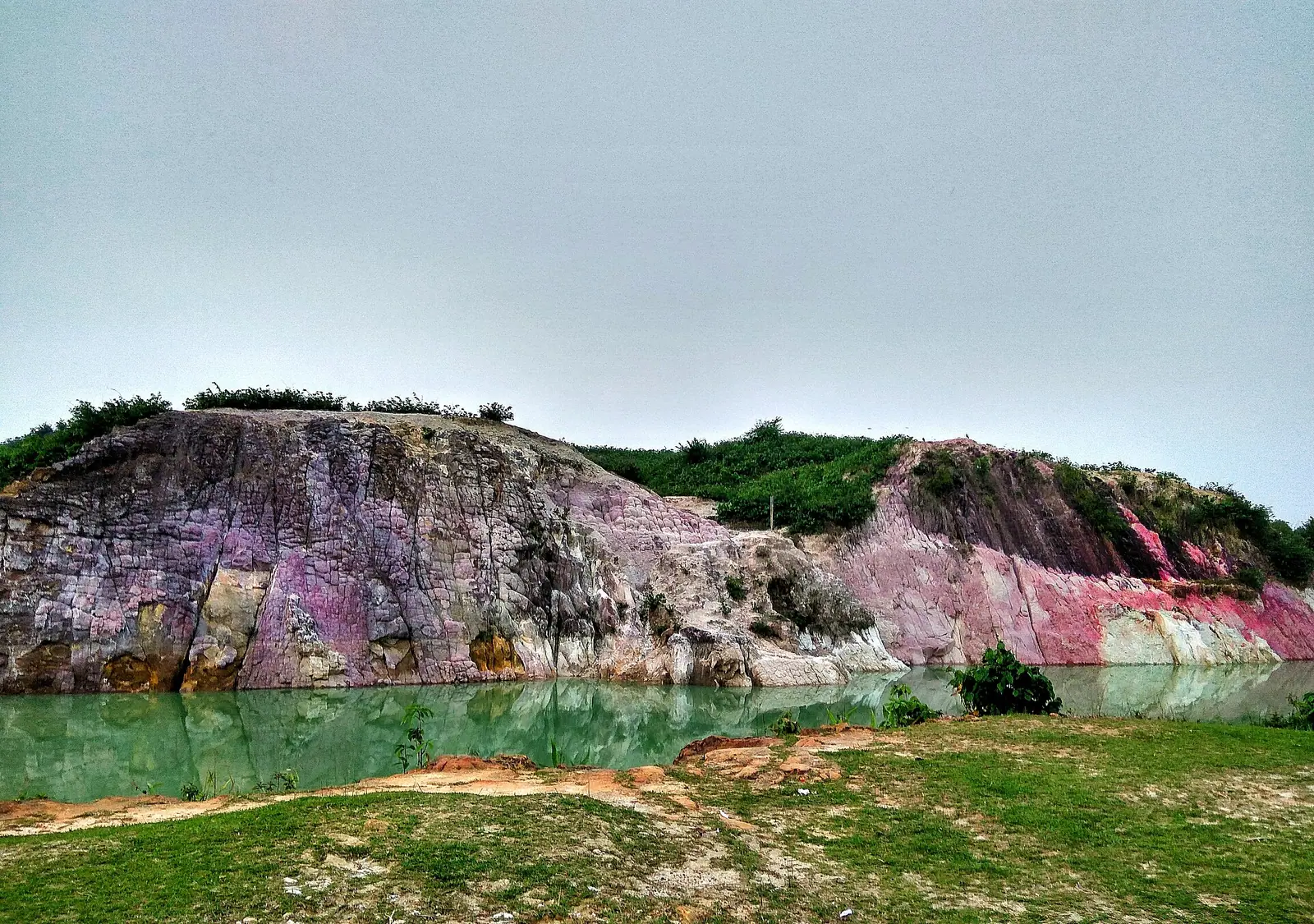
The best-known sight is the china-clay hill at Bijoypur, where quarrying has left bands of white, grey and rust-coloured earth around pools of green water. The colours are striking, especially after rain. The pools are old quarry water; do not swim in them and stay clear of the steep, soft edges. The district is also home to Garo, or Mandi, communities, whose society passes family names and land through the mother's line.
Garo villages and cultural centres lie among the fields and hills. Visit with a guide who has local contacts, ask before entering a compound and take photographs only with permission. These are homes, not exhibits. The notes on photography etiquette in Bangladesh apply here as everywhere.
Ballads, food and the river's rhythm
The region has a strong literary tradition. The Mymensingh Gitika, a collection of folk ballads gathered in the early twentieth century, tells stories of love, courage and betrayal in the language of the river villages, and the songs and tales remain part of local culture. You will not find the ballads performed on a fixed schedule, but local music and drama groups sometimes perform at cultural events and festivals.
Food is simple and generous. Expect rice with river fish, lentils, vegetables and the dishes of the plain, with milk sweets as the pride of the region. In winter, pitha, made from rice flour and sweetened with date-palm jaggery, appears at street stalls. Never drink raw date-palm sap, because of the Nipah virus risk; cooked jaggery and sweets are safe.
The river sets the rhythm. In the wet season, fields flood and the banks swell, and the town is busy with boats. In the dry season, the water drops, sandbanks appear and the air is clear. See the notes on the rivers of Bangladesh for how the channels change names and moods.
Seasons, how long to stay and a two-day plan
November to February is the most comfortable time, with dry days and cool nights, though winter mornings can be foggy. March to May is hot, with sudden storms. The monsoon from June to September brings heavy rain and flooded roads; the clay hills are slippery and some tracks are impassable. Dengue is a risk in and after the rains, so use repellent.
One night is enough for the town, the museum and the sweets. Two nights give you the hills as well. If you are short of time, take the early train or the first road leg out of Dhaka, visit the town and Muktagachha in the afternoon, then return the next day. The longer plan below adds the hills.
- Day 1 morning
Leave Dhaka early and reach Mymensingh by late morning, then visit the Zainul Abedin Museum and the river bank.
- Day 1 afternoon
Look at Shashi Lodge from the outside, drive to Muktagachha for the rajbari and eat monda.
- Day 1 evening
Walk beside the river at dusk and have dinner in town.
- Day 2
Drive early to Birishiri, see the clay hills and the Someshwari river with a local guide, then return to Dhaka by evening or stay a second night.
Travellers planning a longer journey can carry on towards the far north; the guide to Rangpur and the north explains the bases and the routes there.
Questions and answers
How far is Mymensingh from Dhaka?
Mymensingh lies about 112 kilometres north of central Dhaka in a straight line. By road the trip usually takes around three hours, traffic allowing, though the highway through Gazipur can be very slow. Trains also run on the line through Tongi and Joydebpur; check the official site for timetables.
Is Mymensingh worth a night, or is it a day trip?
A day trip is possible, but a night lets you walk the river bank at dusk and avoid a long return in traffic. One night covers the town, the Zainul Abedin Museum and the sweets; a second night allows a trip to Birishiri and the clay hills in Netrokona.
What is Zainul Abedin Museum in Mymensingh?
It is a museum honouring the painter Zainul Abedin, known for his drawings of the 1943 Bengal famine. It holds paintings, sketches and folk objects, and it is the main cultural attraction in the town. Opening days and hours vary, so check locally before you go.
Can I visit Shashi Lodge and Alexander Castle in Mymensingh?
Both are landlord-era buildings near the river, and both are in institutional or public use at times. Visitors may be able to see only the exterior and gardens, so ask at your hotel which parts are open on the day, and do not enter gates marked as private.
What is monda, and where can I buy it near Mymensingh?
Monda is a dense, caramelised sweet made from milk and set in clay pots. It is closely associated with Muktagachha, a small town west of Mymensingh, where shops sell it fresh. Buy in the morning and eat it within a day or two, as it keeps best in cool conditions.
How do I get to Birishiri from Mymensingh?
Birishiri is in Durgapur, Netrokona district, about 47 kilometres from Mymensingh in a straight line, but the road takes most of a morning each way. Hire a car with a driver, set off early and ask a local guide to arrange access to the clay hills and Garo villages.
When is the best time to visit Mymensingh?
November to February is the most comfortable time, with dry days and cool nights, though mornings can be foggy. The monsoon from June to September floods roads and makes the clay hills slippery, and April and May are hot with sudden storms. Choose the dry months for the hills.
Is Mymensingh suitable for a solo traveller?
Yes. The town is calm by Bangladeshi standards and people are curious and friendly. Use ordinary precautions: dress modestly, avoid empty roads after dark, use a trusted car for long trips and read the official travel advice. Women travelling alone may find a guide useful for the hills.