On this page
Few travellers plan a trip around Gazipur, yet many pass through it. The district begins where the capital ends, around Tongi, and stretches north along the highway to Mymensingh, through towns, factories, rice fields and patches of forest. It holds the largest cluster of garment factories in the country, a long list of weekend resorts and one of the last remnants of the old sal forests that once covered this part of Bangladesh.
The short version
- Gazipur is a working district first: garment factories line the highway, and most visitors come for business, a weekend resort or the forest.
- Tongi lies closest to the airport, Joydebpur is the district town and Rajendrapur sits beside the Bhawal sal forest.
- Resorts in the countryside are quiet in the week and crowded on Fridays, Saturdays and holidays, so book early for weekends.
- Bishwa Ijtema, usually held in January or February on the Turag river at Tongi, fills the roads for days.
That mix explains who stays here. Buyers and auditors visiting factories need a bed near the plant. Families from Dhaka escape to a resort for the weekend. Walkers and birdwatchers want a morning in the trees. Others use a hotel at Tongi to be near the airport without paying for a central room. This page explains each pocket and helps you decide whether Gazipur makes sense for your trip.
What Gazipur is, and what it is not
Gazipur is not a sightseeing destination in the way that Sylhet or Cox's Bazar is. It has no famous monument and no single attraction that dominates a trip. What it offers is space: green land close to the capital, a calmer pace, simple lodging and a way into the farmland and small towns that surround Dhaka. Treat it as a base for a purpose, not as a place to tick off.
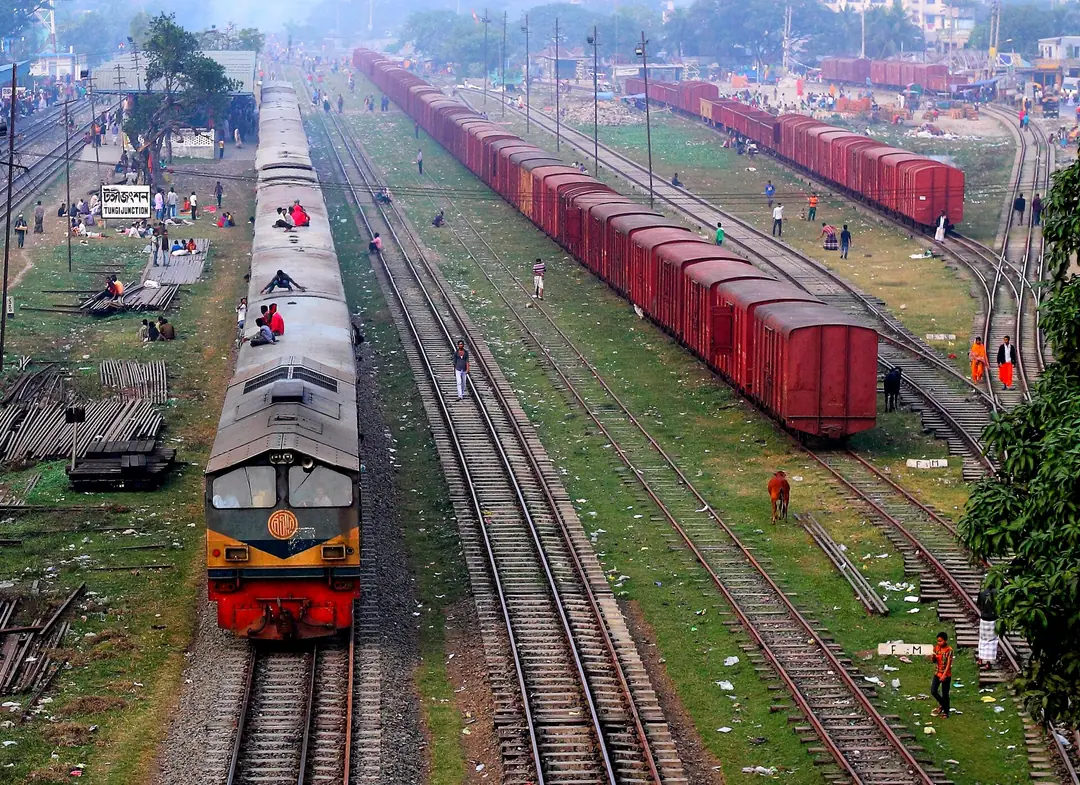
The district has four useful pockets. Tongi sits on the northern edge of Dhaka, where the city turns into the industrial belt. Joydebpur and the town of Gazipur form the district centre. Rajendrapur lies further north beside the forest, and the rural upazilas of Sreepur, Kapasia and Kaliganj hold the countryside resorts.
| Character | Reach from the airport | Suits | |
|---|---|---|---|
| Tongi | Industrial town on the Turag, junction for road and rail | Close, a short ride north | Business stops, early flights |
| Joydebpur and Gazipur town | District centre with markets, offices and hotels | A longer road trip | Factory visits, errands |
| Rajendrapur | Quiet roads beside the sal forest and parks | Further north on the highway | Walks, nature, retreats |
| Sreepur, Kapasia and Kaliganj | Rural countryside with large resorts | A longer drive | Weekend breaks, events |
Distances here are straight-line estimates and the road adds a lot. Traffic on the highway is among the heaviest in the country in the early morning and the early evening, so a trip that looks short on the map can take hours.
Tongi and the airport side
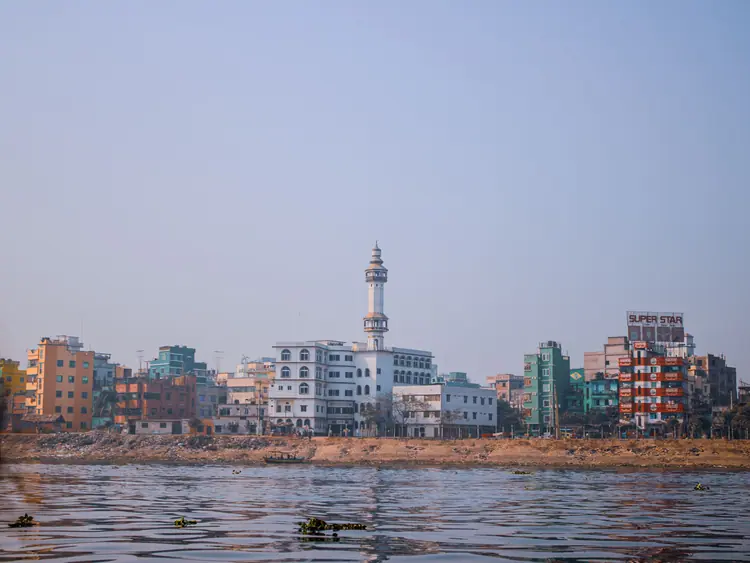
Tongi is the closest part of the district to the capital and to the airport. The Turag river runs along its western edge, a railway junction serves lines north towards Mymensingh and east, and the main road to Gazipur passes through the centre. A few mid-range hotels line the highway, and several lie only a short ride from the airport's northern side.
For a visitor, Tongi has two uses. It is a practical stop for an early flight when central hotels are too far away, and it is a base for visits to factories and offices in the surrounding belt. It is not a pleasant place to wander; traffic is heavy, pavements are narrow and the air is dusty. Keep the stay short and go out only with a purpose.
The area comes into its own once a year. In January or February, the Bishwa Ijtema gathers a very large crowd of worshippers on the banks of the Turag, and roads, trains and hotels in and around Tongi are full for several days. If your trip falls on those dates, expect very slow traffic. Ask your hotel for the confirmed dates and plan transfers with a wide margin.
Joydebpur and Gazipur town
Joydebpur, also written Joydevpur, is the old centre of the district and the place where roads and rail meet. Its junction is one of the busiest on the northern highway, with buses, trucks and rickshaws fighting for space. Banks, markets, clinics and government offices cluster around it, and several hotels stand within a short ride. It is the best choice in the district if you want a town with services rather than a resort in a field.
Factories and training centres surround the town. Many garment makers, auditors and consultants stay here, and the hotels are built for them: a business desk, a generator, a restaurant that serves breakfast early. Rooms are plain but practical. Do not expect nightlife or sightseeing, and plan your evenings around the hotel dining room or a short ride to a local restaurant.
Photography around factories needs care. Gates, guards and workers are sensitive subjects, and some sites forbid cameras entirely. Ask permission, accept a refusal and avoid photographing people at shift change. The guide to photography etiquette in Bangladesh covers workplaces in more detail.
Rajendrapur and the sal forest
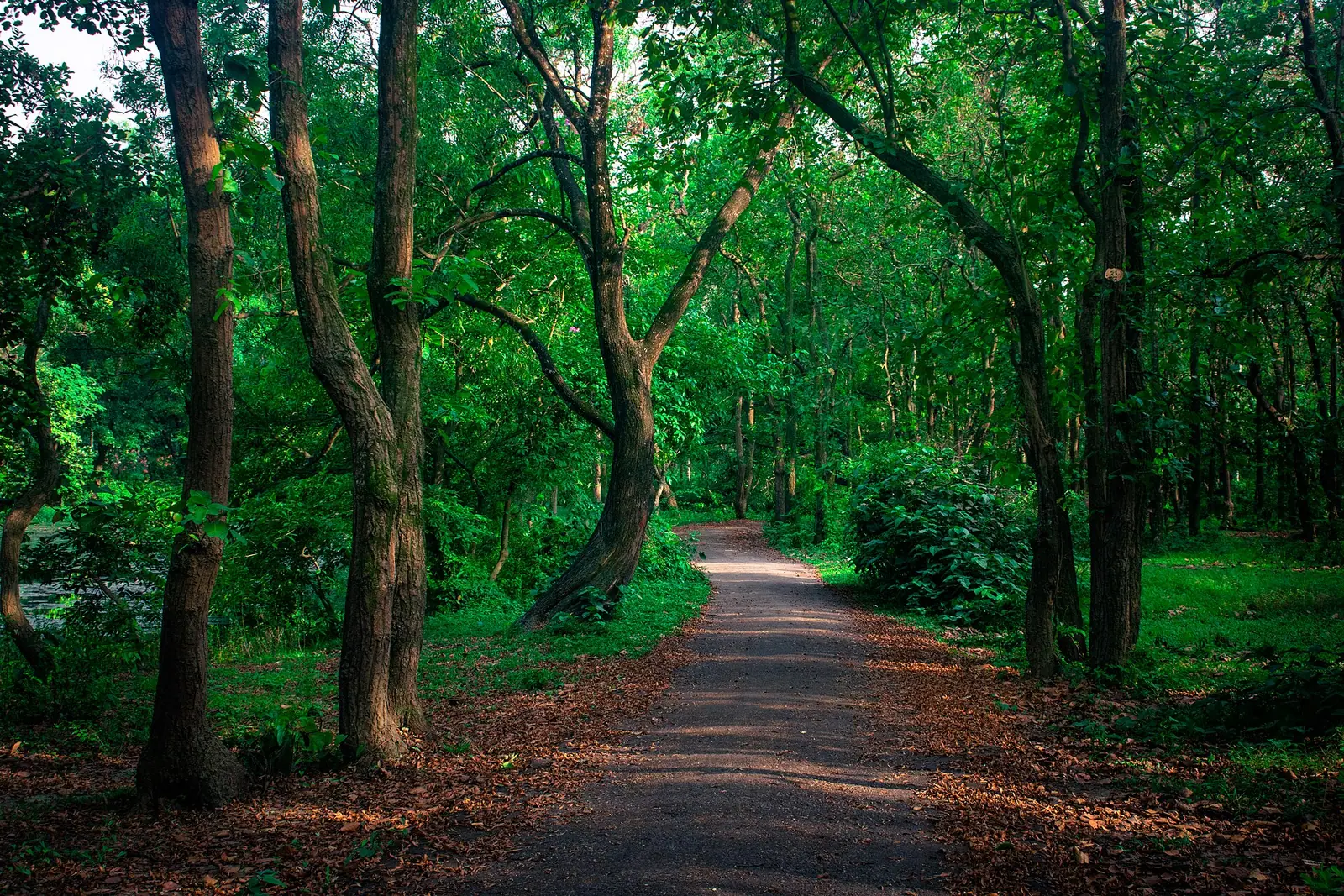
North of Joydebpur, Rajendrapur is where the road runs beside Bhawal National Park. The forest is a remnant of the sal that once spread across the red-soil uplands north of Dhaka, and tall, straight trees with pale trunks still shade much of it. Paths run through the trees, picnickers come at weekends and the early morning is the best time to hear birds before the crowds arrive.
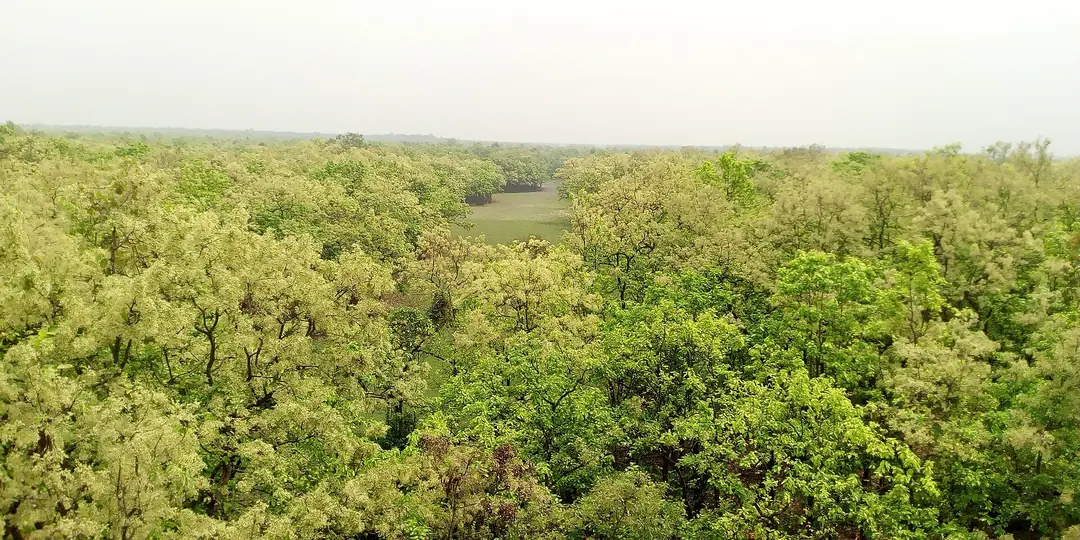
Do not expect large wildlife. The park is small and busy, and what you see is mostly trees, birds, monkeys and insects. A visit takes a few hours at most, and it works as a green break from the capital, not as a wildlife trip. An entry fee applies and opening hours vary, so ask locally before you go. A safari park elsewhere in the district gives a different, more managed experience.
A small number of hotels and training-centre guesthouses stand near the forest, and they are the quietest choice in the district. Rooms often face gardens or the trees and mornings are cool. The price of that calm is distance: Rajendrapur lies well north of the airport, and the road in and out is long. It suits a retreat of a day or two, not a stopover.
Countryside resorts
Beyond the highway, in Sreepur, Kapasia and Kaliganj, large resorts spread over many acres of farmland. They are built for Dhaka families and groups: lawns, ponds, pools, event halls, playgrounds, boating on a lake and plenty of seating for weddings and retreats. Some are simple, others more polished, and quality varies a great deal, so read recent guest reviews before you book.
Weekday visits are calm and the grounds can feel empty. Fridays, Saturdays and public holidays are the opposite: tour buses arrive, music plays, families fill the lawns and the dining room has a queue. If you want peace, choose Sunday to Thursday. If you want atmosphere, a weekend works, but book early and ask about noise.
Check what is included. Some resorts sell day passes with meals, some charge entry and food separately, and some run alcohol-free policies. Ask about the transfer, because many are 30 kilometres or more from the airport in a straight line and the road is not always fast. Mobile coverage is generally fine, though a few remote sites have weak signals.
Getting there and around
The Dhaka to Mymensingh highway is the main axis. Buses, microbuses and cars use it all day, and ride-hailing works in the nearer parts of the district. Road traffic is heavy at the start and end of the working day, when factory shifts change and workers pour onto the roads. Allow generous time for any transfer, and avoid peak hours if you can.
A railway line serves Tongi and Joydebpur on the way towards Mymensingh, and local and intercity trains stop at the larger stations. It is a useful alternative when the road is jammed, though timetables and ticket windows change; check the official site and the train travel guide before you plan around a train.
Distances from the capital are modest in a straight line but long on the road. The closer pockets are a short ride from the northern end of Dhaka, and the upazilas further north can take well over an hour in traffic. Travellers combining Gazipur with Uttara and the airport in a single stay can use Tongi as the bridge between the two.
Traces of the Bhawal estate
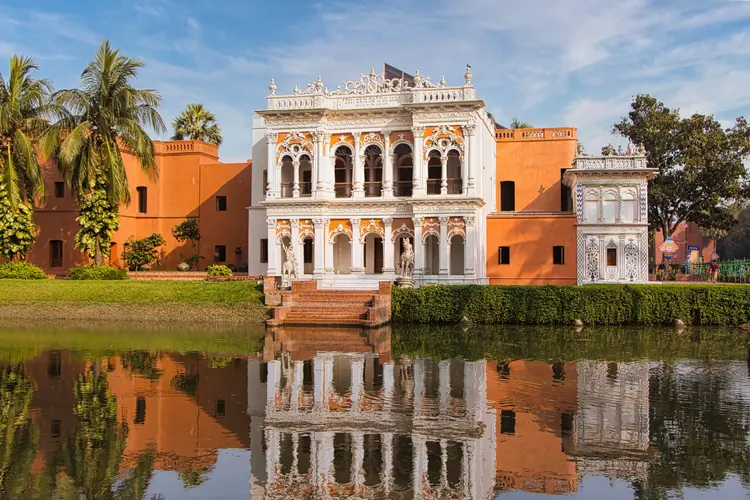
The name Bhawal, carried by the national park, also belongs to a landed estate whose family once controlled large tracts of this countryside. Their former palace, the Bhawal Rajbari, stands in Joydebpur and has been used for district government offices. Its long frontage and columned entrance reward a short look if you are already in town. The estate is also remembered for a celebrated court case, in which a man living as a wandering ascetic claimed to be a prince of the family who had been reported dead.
Treat the building as a workplace first. Access to rooms and courtyards may be restricted, so ask at the entrance before going in or taking photographs, and check current opening days with the district administration. In Kaliganj, the Nagari area has a long-established Catholic community and the Church of St Nicholas, associated with the Portuguese missionary period in Bengal. Dress modestly, keep quiet during services and ask a caretaker before entering. Either stop adds local history to a trip otherwise spent among resorts, factories or trees.
When to go, and a simple day
The dry months from November to February are the most comfortable, with cool mornings and clear skies, though air quality is often poor in winter. April and May are hot, with nor'wester storms. During the monsoon from June to September, the fields turn green, the forest is lush and some rural roads become muddy. Check the forecast and avoid the roads after heavy rain.
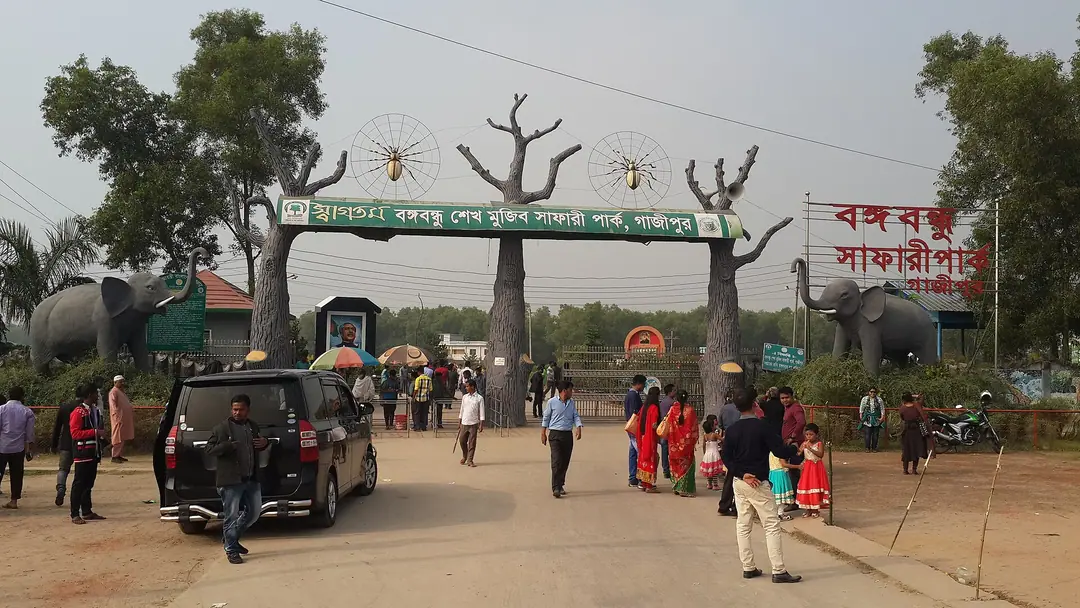
Many people use Gazipur as a day out from the capital. The route is simple: go north early, spend the morning in the forest or at a resort, eat lunch and return before the evening peak. Combine it with a stop at the road to Mymensingh if you plan to continue; the guide to Mymensingh covers the town on the old Brahmaputra.
- Early start
Leave Dhaka before the morning peak, aiming to be on the northern highway before factory shifts change.
- Mid-morning
Walk in Bhawal National Park near Rajendrapur while the air is cool and the paths are quiet.
- Midday
Eat lunch at a resort or a roadside restaurant, then rest in the shade.
- Afternoon
Visit a leisure park or a safari park, or drive on towards Mymensingh if you are continuing north.
- Late afternoon
Return to Dhaka before the evening peak, or stay overnight and travel on the next morning.
Hotels to consider
Questions and answers
Is Gazipur worth visiting as a tourist?
Gazipur is better as a short break or a business base than as a major destination. The sal forest at Rajendrapur, the safari park and the countryside resorts offer a green day out from Dhaka, but there is no headline sight. Most visitors come for a weekend, an event or a factory visit.
How far is Gazipur from Dhaka airport?
Tongi is the closest pocket, roughly six to eight kilometres from the airport in a straight line. Joydebpur, Rajendrapur and the countryside resorts lie much further north, often 20 to 50 kilometres in a straight line. Road traffic can add a great deal of time, so leave a margin.
What is Bhawal National Park in Gazipur like?
Bhawal National Park is a small sal forest near Rajendrapur in Gazipur, with shaded paths, birds and monkeys rather than large wildlife. It is popular for picnics and school visits at weekends. An entry fee applies and hours vary, so check locally. Weekday mornings are the quietest time to visit.
When is Bishwa Ijtema held in Tongi, Gazipur?
Bishwa Ijtema is usually held in January or February on the banks of the Turag river at Tongi, and the dates follow the lunar calendar and the organisers' announcement. Roads and trains in Gazipur are very full for several days, so confirm the dates with your hotel before you book.
Can I get to Gazipur by train from Dhaka?
Yes. A railway line runs from Dhaka north through Tongi and Joydebpur towards Mymensingh, and local and intercity trains stop at larger stations. Timetables, classes and ticket windows change, so check the official Bangladesh Railway ticketing site and confirm the station before you travel.
Are the resorts in Gazipur suitable for families?
Many are built for families and groups, with lawns, pools, playgrounds and boating, and weekends are busy with Dhaka visitors. Facilities and standards vary, so read recent guest reviews, ask about swimming safety and supervision, and check whether meals and entry are included before you book.
Is Gazipur a good base for factory visits?
Yes. Hotels in Joydebpur and Tongi serve buyers, auditors and consultants, and many factories lie along the Mymensingh highway. Rooms are practical rather than elegant. Book close to the site, because road traffic at shift changes can make even a short trip slow.
Do I need a car in Gazipur?
A car with a driver is the simplest way to visit the forest, the resorts and the factories, because public transport is crowded and does not reach every site. Ride-hailing works in the nearer towns. For a single resort day, ask whether your hotel or the resort arranges transport.