On this page
North-east of Sylhet the plain ends against the Khasi and Jaintia hills, and a set of rivers comes down from Meghalaya across the border. Where they reach the flat land they spread over beds of stones and sand, and the water turns from brown to green to blue depending on the month. Jaflong and Lalakhal are the two places most visitors choose, and they fit into one long day or two short ones.
The short version
- Jaflong has a wide stony river, wooden boats and the Khasi hills rising on the Indian side of the border.
- Lalakhal is a quieter boat ride on the Shari river, whose water runs blue-green in the dry season.
- Start from Sylhet at first light, do Jaflong or Lalakhal first depending on the light, and keep clear of the border line.
- Quarrying has scarred several of these rivers, so go for the water and the hills and expect some noise.
This guide is about the day itself: how the two stops differ, what to do at each, the order that works, how the seasons change the water, the border rules that apply, and what to bring. For the other sight on this side of Sylhet, read the guide to Ratargul swamp forest, and for the choice of base see the Sylhet area guide.
Two rivers, two moods
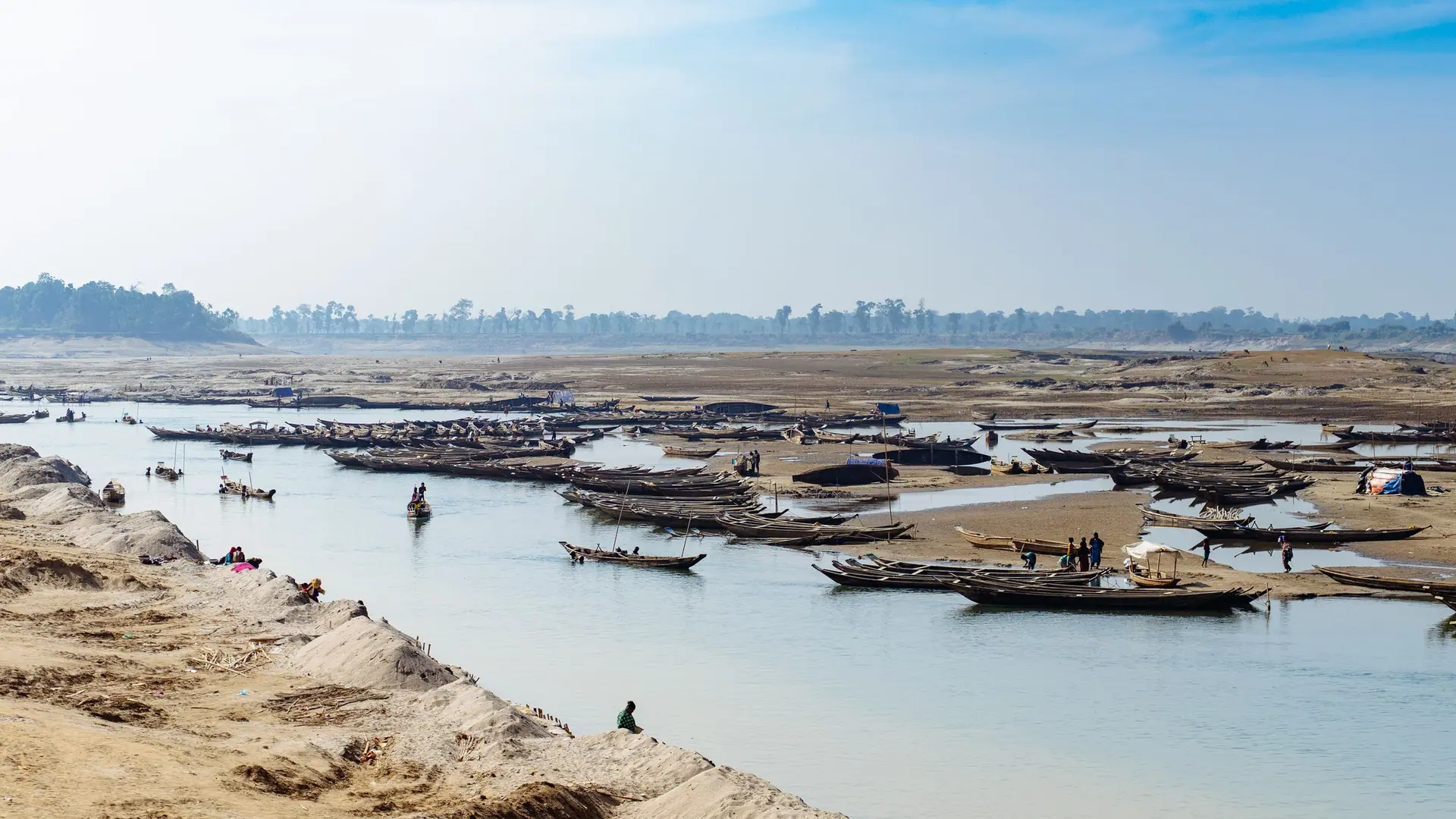
Jaflong is the busier and more open of the two. A broad river, the Piyain, runs over stones below hills on the Indian side, and wooden boats wait on the bank for a ride along the shore. It is a popular weekend outing for Bangladeshi families, with a lot of stalls and a lot of people. Come on a weekday morning if you can.
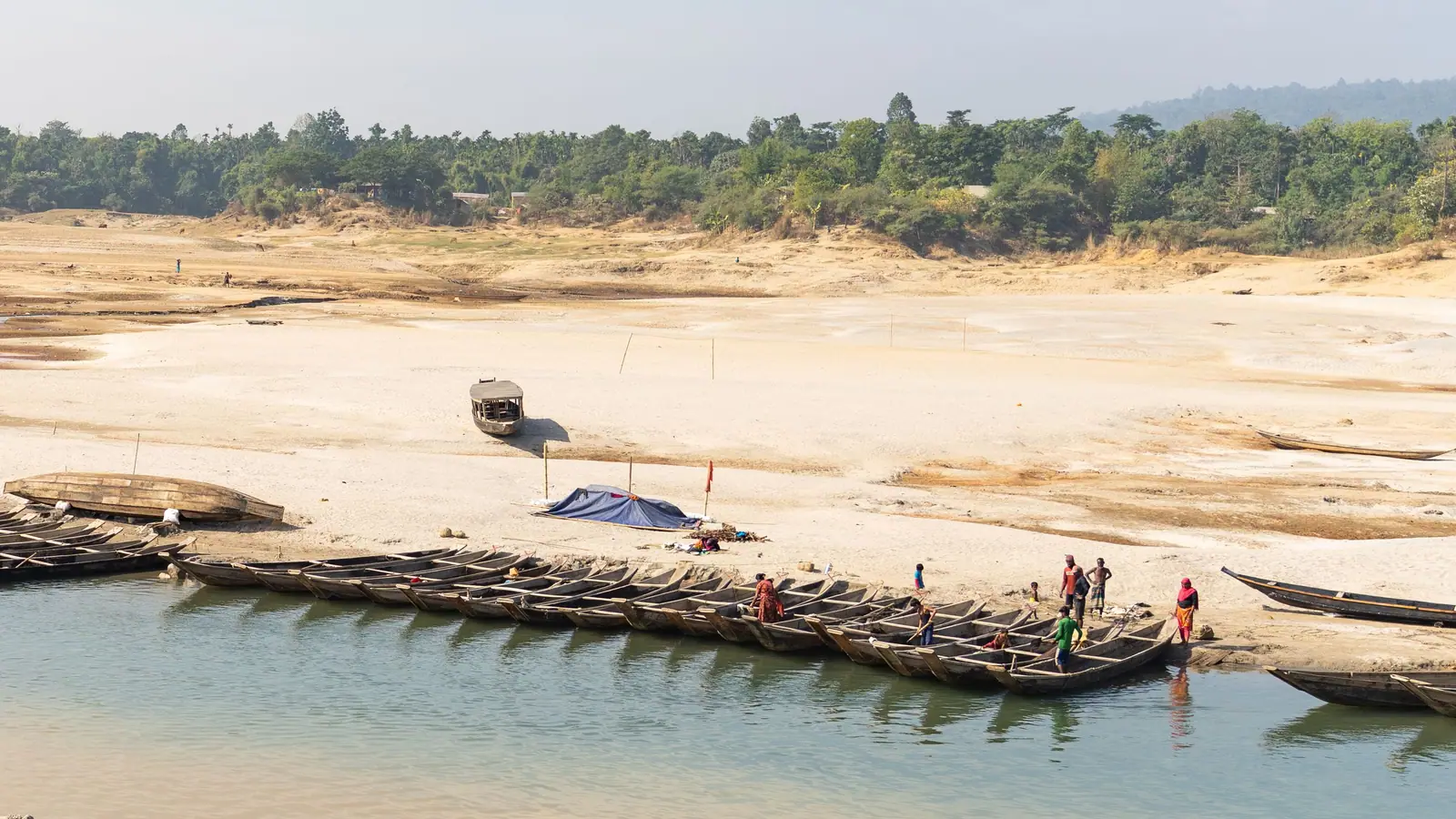
Lalakhal is smaller and calmer. The Shari river runs clear over pale sand and stones, and in the dry season the water takes on a blue-green colour that makes it one of the most photographed rivers in the north-east. The ride is slow, the banks are green and the surrounding country is tea and betel gardens rather than market stalls.
Neither place is a wilderness. Both have boats, stalls and a good deal of local day-trip traffic, and both have working stone quarries or piles of stone that show how the rivers have been used. Expect a pleasant river day rather than an empty landscape, and you will not be disappointed.
Jaflong, stones and the Khasi hills
At Jaflong you walk down to the river bed, hire a boat for a ride along the bank and look up at the hills across the border. The boats are long, narrow and open, with a covered section, and they follow the shore for a short loop. Ask the price and the route before you board, and expect to share the river with plenty of other boats.
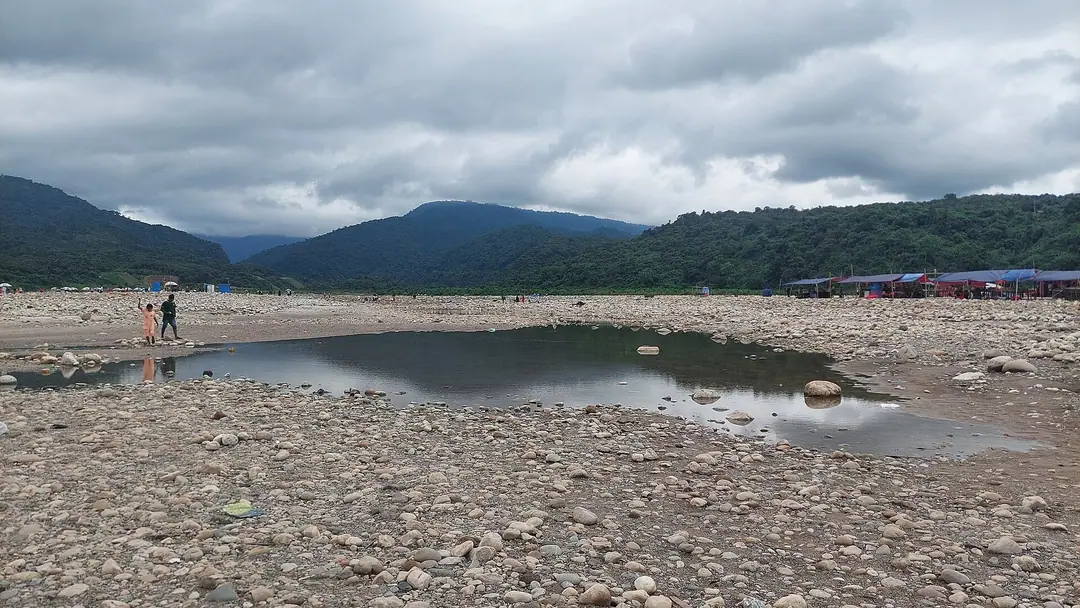
The stones are the point of the place and also its problem. People collect stones from the river and break them by hand or crush them for building, and the sound of quarrying is part of the day. Illegal extraction has scarred several of the north-eastern rivers, and the authorities have restricted it at various times, so conditions change. Look at the work without photographing individual workers unless they agree.
Walk along the bank before you take a boat. Stalls sell tea, snacks and the local betel leaf, and small groups sit on the stones to eat. On clear days the Khasi hills show as a green wall. Do not wade far from the bank without asking: currents are stronger than they look after rain.
Khasi villages and the border
The Khasi people live in the hills on both sides of the border and in villages on the Bangladesh side known for betel leaf and areca nut. A few communities near Jaflong receive visitors, but a village is a home, not an attraction. Go only with a local guide or a hotel contact, ask permission before entering, and do not photograph people or houses without asking first.
Tamabil is the Bangladeshi border post on the road to Jaflong, with Dawki on the Indian side. It is a working land border, not a viewpoint. Do not approach the line, climb the fences or point a camera at border guards or posts, and obey any instruction you are given. Visitors cannot cross here without the correct visa and immigration arrangements, which are a matter for the official authorities.
Jaintiapur, a short drive from Lalakhal, is the old seat of the Jaintia kingdom and has stone monuments and a ruined palace compound that some visitors add to the day. Opening and access vary, and local advice is better than a printed one. For the border itself, check UK travel advice and your own government's page before you go.
Lalakhal and the Shari river
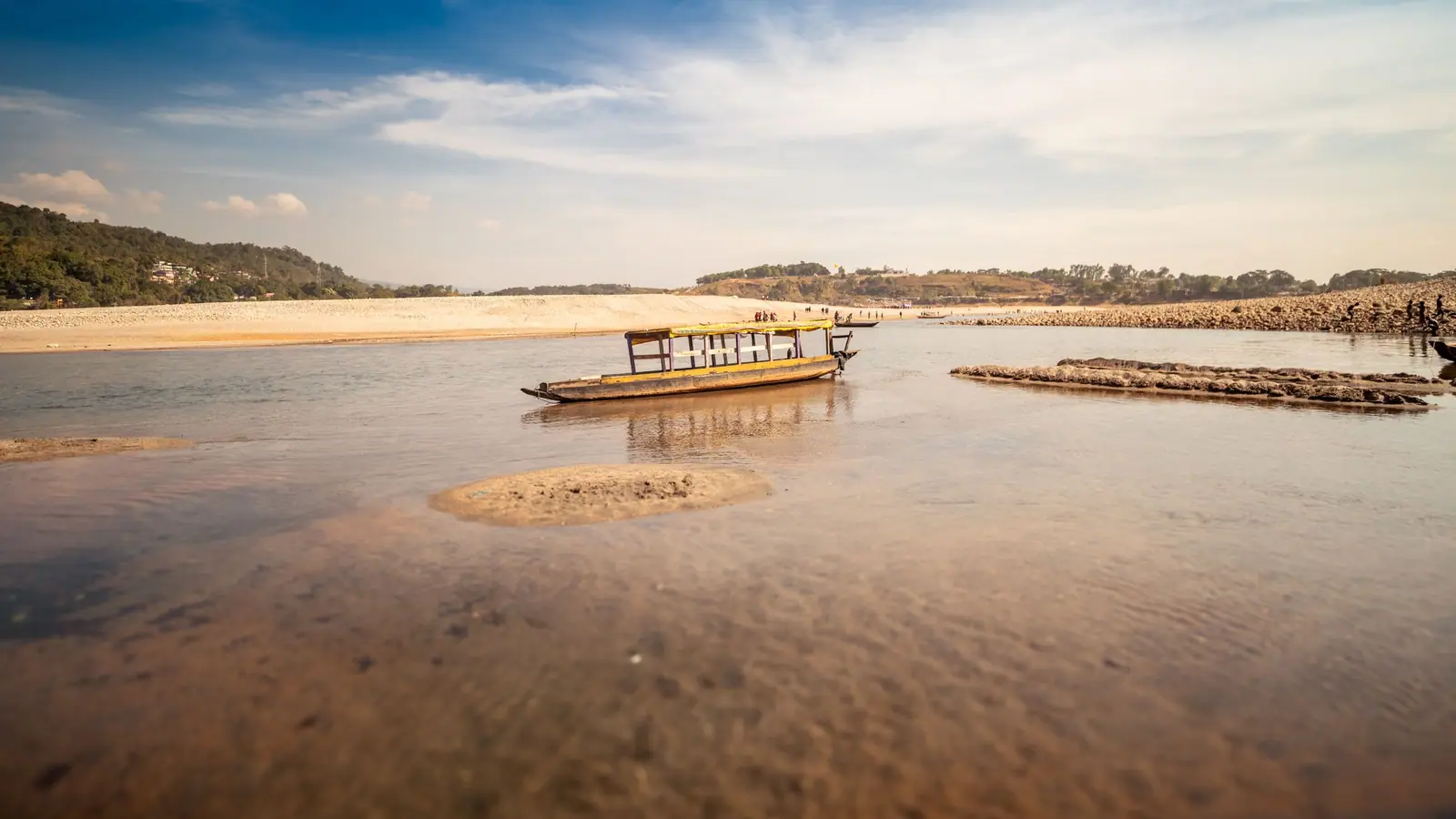
Lalakhal is in Jaintiapur upazila, about an hour to an hour and a half from Sylhet by road. The boat landing is on the Shari, and the ride goes up and down a short reach of river between green banks, with the hills beyond. Boats are smaller than at Jaflong, and the pace is gentler. Take your time and put the camera away for a few minutes.
The colour of the water changes through the year. In the dry season it can be strikingly blue-green over the pale bed. After heavy rain it can turn cloudy or brown, and in the monsoon the river is high and fast, so boats may not run. Ask your hotel in Sylhet about conditions that week before you commit to the drive.
There is little shade on the water, and the banks are exposed. Bring a hat and drinking water, and wear shoes that can get wet. Local children sometimes play in the shallows, and swimming is a local habit, but as a visitor you should stay in the boat unless a local guide tells you that a particular stretch is safe.
The order of the day
- First light
Leave Sylhet early with a hired car and driver. Roads are slower on weekends and holidays, so a head start is worth more than a long lunch.
- Mid morning, Jaflong
Arrive before the crowds, walk the bank, take a boat along the shore and look at the hills. Keep well away from the border line and guards.
- Midday meal
Eat simply near Jaflong or on the way back. Choose busy stalls and food cooked in front of you, and drink bottled or filtered water.
- Afternoon, Lalakhal
Drive to the Shari for the boat ride in the softer light. Allow time for the road, which is slow in places.
- Late afternoon
Return to Sylhet while there is still some light. Add Jaintiapur only if you have started very early and the road is clear.
Some visitors reverse the order and do Lalakhal first, because the water is cleaner and calmer in the morning. If you have two nights in Sylhet, split the trip: Jaflong on one day with the road and the stalls, Lalakhal with a slower plan on another, and Ratargul after that.
Seasons and water
The north-east is the wettest part of the country, and the rivers react quickly to rain in the hills. The table sets out what to expect, using the national season pattern: dry and cool from November to February, hot in April and May, monsoon from June to September. Check local conditions before you go, because one hard shower upstream can change a river in an afternoon.
| Months | Rivers and weather | What it means for the day |
|---|---|---|
| November to February | Low, clear water; cool mornings and some fog | The most comfortable season; Lalakhal at its bluest; start late if fog delays the road |
| March | Warming, water still clear | Good light and fewer people than in winter weekends |
| April and May | Hot, with nor'wester storms | Go early; storms can end a boat ride and make the roads slow |
| June to September | Monsoon; high, brown, fast water | Waterfalls on the hills, but boats may not run and the colour is lost; check before travelling |
| October | Easing rain, falling water | A good compromise if the rivers have cleared; cyclone warnings can disrupt travel |
Winter weekends are the most crowded time because the weather is good and many families travel to Sylhet. A weekday visit makes a big difference at Jaflong, where parking, boat queues and stalls can all become tiring on a Friday or Saturday.
Rules, quarrying and water safety
Photography rules apply here more than almost anywhere else in the country. Do not photograph border guards, border posts, fences or military vehicles, and do not fly a drone: it needs permission, and near a border it can cause real trouble. If a guard asks you to stop or move, do so politely, and ask your driver if you are unsure.
Quarrying is part of the economics of these rivers, and the authorities have stopped or restricted it at different times. You may see machines, stone piles and lorries. Do not photograph individual workers without their agreement, and do not buy stones or take them as souvenirs, because removing material from the river bed is part of the damage.
Take your rubbish with you, avoid plastic bags and bottles, and keep your voice and any music low. The river is a shared place for visitors, workers and the Khasi families who live nearby, and the few boatmen who work it value quiet, patient passengers over groups that shout for the echo.
What to bring and where to stay
Pack a hat, sunscreen, a light long-sleeved shirt, water shoes or sandals with grip, insect repellent and a rain jacket in the wetter months. Bring taka in small notes for boat hire, snacks and parking, since cards are rarely accepted at the river. Keep a copy of your passport and visa, because police and border checkpoints can ask for ID on the road. The getting around guide explains the road and rail options from Dhaka.
Stay in Sylhet city, which has business-style hotels, restaurants and the airport for flights from Dhaka. Two nights is enough to do the border rivers and Ratargul at an easy pace, and a third lets you see the shrines and the Keane Bridge on the Surma. If tea estates are your main interest, move on afterwards to Sreemangal and use the tea trail guide.
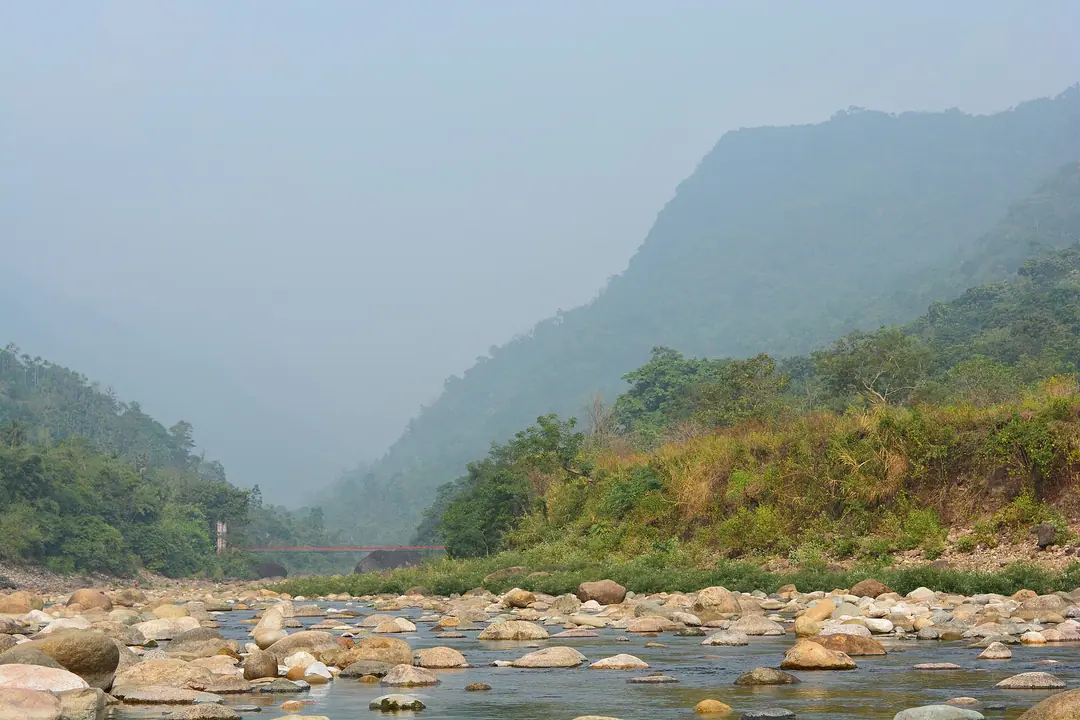
Two lesser-known stops can extend a longer stay: Bisnakandi, a stony river below green hills, and Bholaganj with its pale stone fields known as Sada Pathor. Both are within reach of Sylhet by road, and both share the same rules about quarrying, water and the border. Ask your driver about current access and the condition of the roads.
Questions and answers
How far are Jaflong and Lalakhal from Sylhet?
Jaflong is about 33 km from Sylhet in a straight line and takes roughly one and a half to two hours by road. Lalakhal is about 39 km in a straight line and takes around one to one and a half hours. Traffic, weather and holidays stretch both times, so start early.
Can you visit Jaflong and Lalakhal in one day?
Yes, if you leave Sylhet at first light and use a hired car with a driver. Do Jaflong in the morning and Lalakhal in the afternoon, and be back before dark. If you prefer a slower pace, split them over two days and add Ratargul swamp forest on a third morning.
Can you cross into India at Jaflong?
Not as a casual visitor. Tamabil is a working border post, and crossing needs the correct visas and permissions on both sides, which are decided by the official authorities. Treat the border line as off limits, do not photograph guards or posts and ask your hotel or a government source about any crossing.
Is it safe to swim at Jaflong or Lalakhal?
Swimming is not a good idea for visitors. Rivers rise quickly after rain in the hills, the beds are uneven and currents are stronger than they look. Stay in the boat or on the bank, keep children close and follow the advice of your boatman or a local guide.
When is Lalakhal's water at its bluest?
The dry season, from November to February, is when the Shari river is clearest and bluest, with cool mornings that make the boat ride comfortable. After heavy rain the water can turn cloudy or brown, so ask locally before the drive and avoid the days directly after a big storm.
Can you visit the Khasi villages near Jaflong?
Only with permission and, ideally, a local guide or hotel contact. A village is a home and a working farm, mostly of betel leaf and areca nut. Ask before entering, do not photograph people or houses without agreement, dress modestly and accept it if the answer is no.
Why does Jaflong have stone quarries?
The rivers carry stone down from the hills, and collecting and crushing it has long been a source of income for local people. Illegal extraction has scarred several rivers, and the authorities restrict it at times. Do not buy stones as souvenirs, and keep your camera away from individual workers unless they agree.
Is Jaflong crowded at weekends?
Yes. Friday and Saturday are the weekend in Bangladesh, and winter weekends bring many families from Sylhet and Dhaka. Parking, boat queues and stalls can be tiring. A weekday morning is much calmer, and an early start on any day gets you a quieter boat ride along the bank.