On this page
The Marine Drive is the road most visitors to Cox’s Bazar end up on, because it turns a long beach town into a coast with variety. It opened in 2017 and runs about 80 km between hills and sea from Cox’s Bazar to Teknaf. This page covers the first part of it, the run to Inani, which is the most popular outing and fits comfortably into a half day or a long day.
The short version
- The Marine Drive runs along the coast from Cox’s Bazar towards Teknaf, and the stretch to Inani makes an easy half-day or full-day outing.
- Stops in order are Himchari, fishing villages, the Reju Khal creek and Inani’s rock shelf; leave early and check the tide.
- Swim only between flags where lifeguards are on duty, and read the official advice before going further south than Inani.
- Go in the dry season for clear days; the monsoon brings rough sea and slippery rock.
This is a day-out page, not a place-to-stay guide. If you are still deciding where to sleep, read the Cox’s Bazar guide. Here the questions are practical: how to go, where to stop, what to do at each stop, and what the tide and the weather will change.
How the Marine Drive works
The road follows the shore, with the Bay of Bengal on one side and a ridge of forested hills on the other. In places the sea is a few metres from the tarmac, in others the road swings inland past ponds and salt fields. It is a normal public road, used by buses, trucks, motorbikes and fishing families, so traffic is real and drivers overtake without much warning.
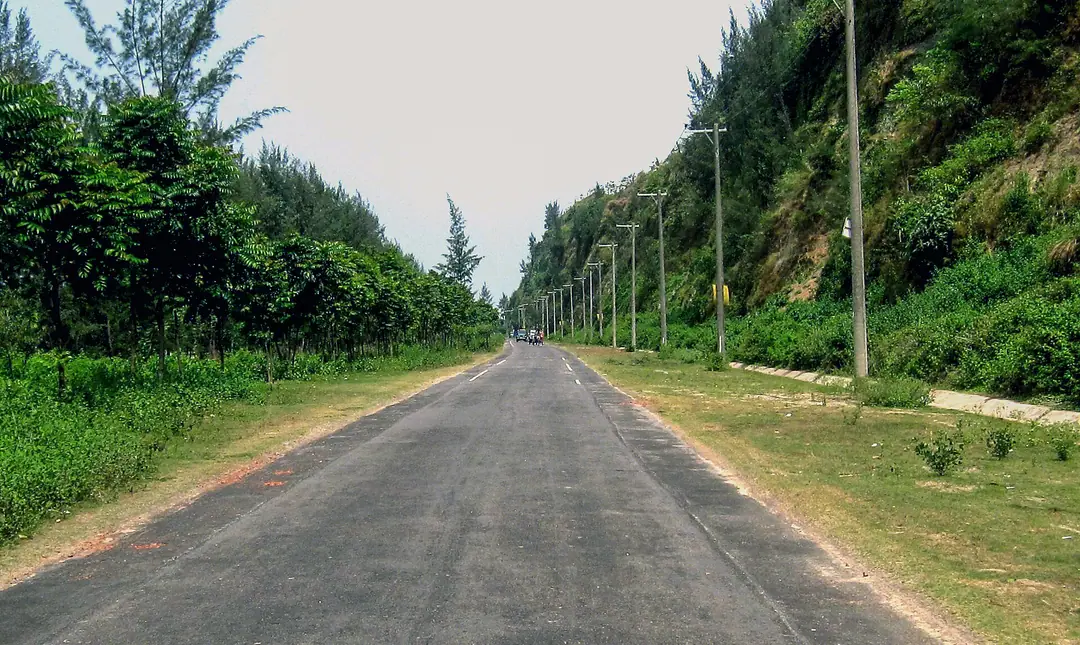
Because it is a long strip with few services, the order of the day matters. The fixed points are Himchari near the start, then several fishing villages, the tidal creek of Reju Khal and the rock shelf at Inani, about an hour’s drive from Cox’s Bazar. Everything beyond Inani heads towards Teknaf and is treated differently, as the last section explains.
A good day works backwards from the tide and the sun. If you want the rocks at Inani with water around them, check the tide table the evening before. If you want the sunset over the sea, plan to turn back late enough for the light but early enough to be on the road before dark.
Getting there and getting around
The easiest option is a hired vehicle with a driver for the whole outing. A car, a microbus or a CNG auto-rickshaw can be arranged at your hotel or at the roadside in town; agree the stops, the waiting time and the total before you leave. For a group, a microbus is the comfortable choice. For two people, a CNG is a lighter choice, but the open sides mean dust and sun on a long road.
Motorbike taxis are popular and give the freedom of the road, though the Marine Drive is fast and the drivers vary. Wear a helmet if one is offered, and do not accept a ride if the rider seems careless. Public buses and shared vehicles run along sections of the road, but they do not stop where you want, so they suit a one-way trip better than a loop.
Distances help planning. Himchari is about 9 km from Cox’s Bazar in a straight line and Inani about 22 km, but the road is longer and slower, so treat the hour to Inani as an average and allow more on weekends and public holidays. See the guide to getting around Bangladesh for more on CNGs and fares in general.
Himchari: hills and a seasonal fall
Himchari is the first stop and the one closest to town. A short climb from the road leads to a viewpoint over the sea, and nearby there is a waterfall that runs after rain. In the dry season the fall is thin or dry, so do not make the trip for the water alone. The hills and the coast viewed together are the reason to stop.
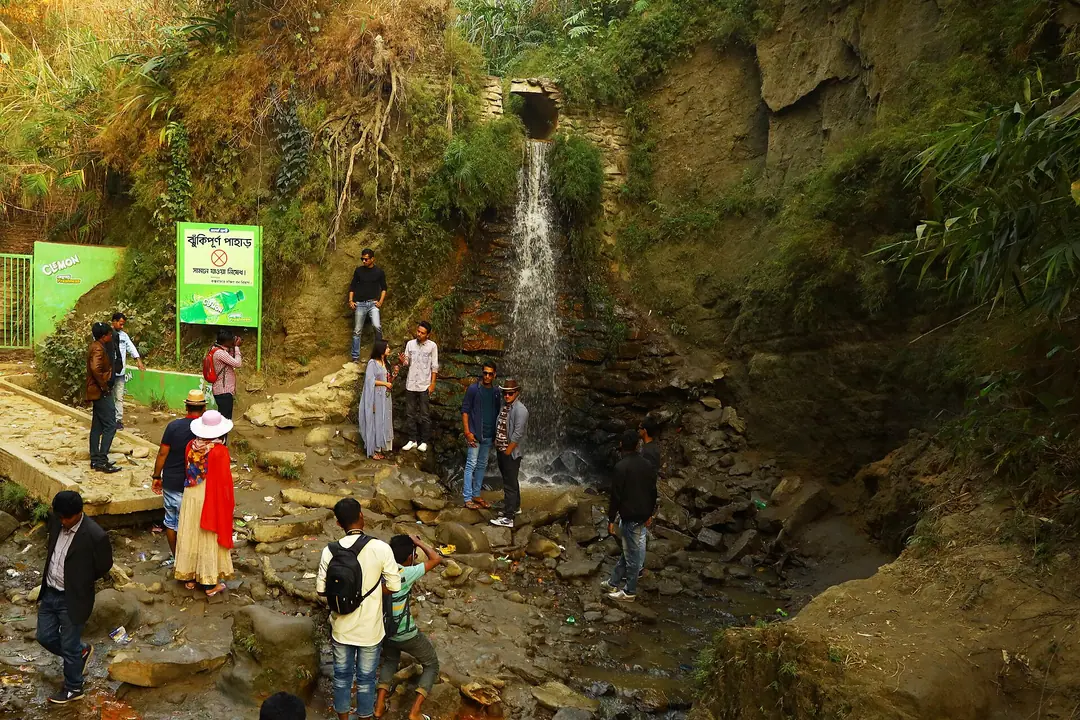
Himchari is also a good place for a first tea. Stalls beside the road sell snacks, coconuts and tea, and there is often a line of motorbikes and buses at the lay-by. The climb is short, but the steps can be slippery after rain, so wear shoes with grip. Arrive early to avoid the crowds that gather at weekends.
If the sun is out, the late afternoon view from the coast here is soft and golden, and many people choose to come back to Himchari at the end of the day for the sunset instead of staying at Inani. This is a good plan if you are limited on time, since it keeps the long section south of Himchari to the morning.
Fishing villages along the road
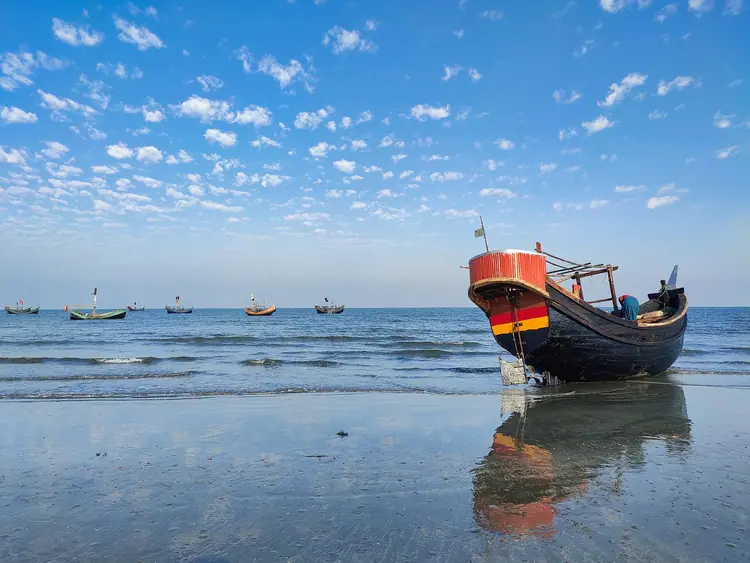
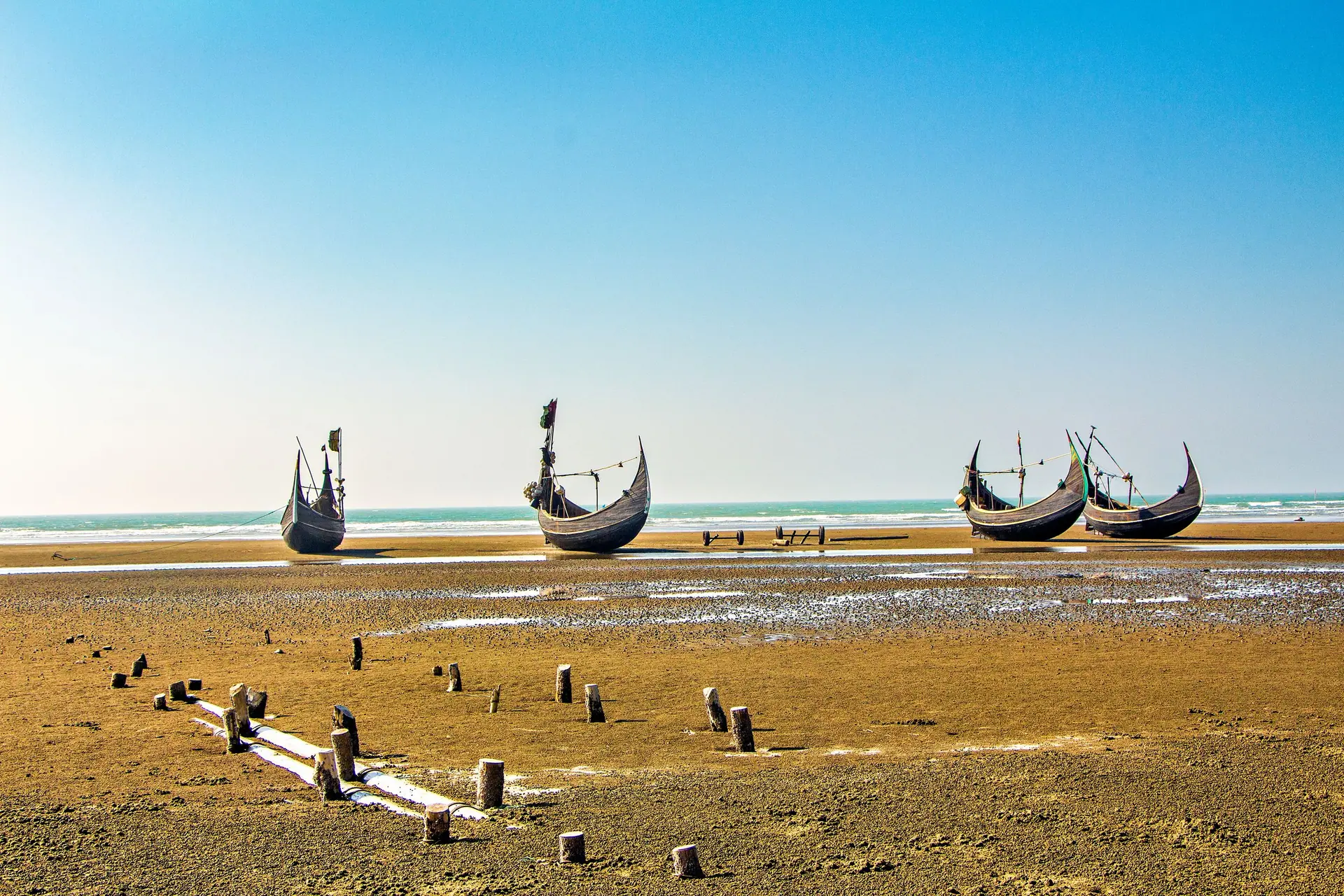
Beyond Himchari the road passes a series of fishing settlements. Boats are pulled up on the sand, nets are spread on frames, and dried fish is laid on mats and racks to cure in the sun. The drying yards can be smelly in the heat, but they are a working part of the coast and one of the clearest sights of the day.
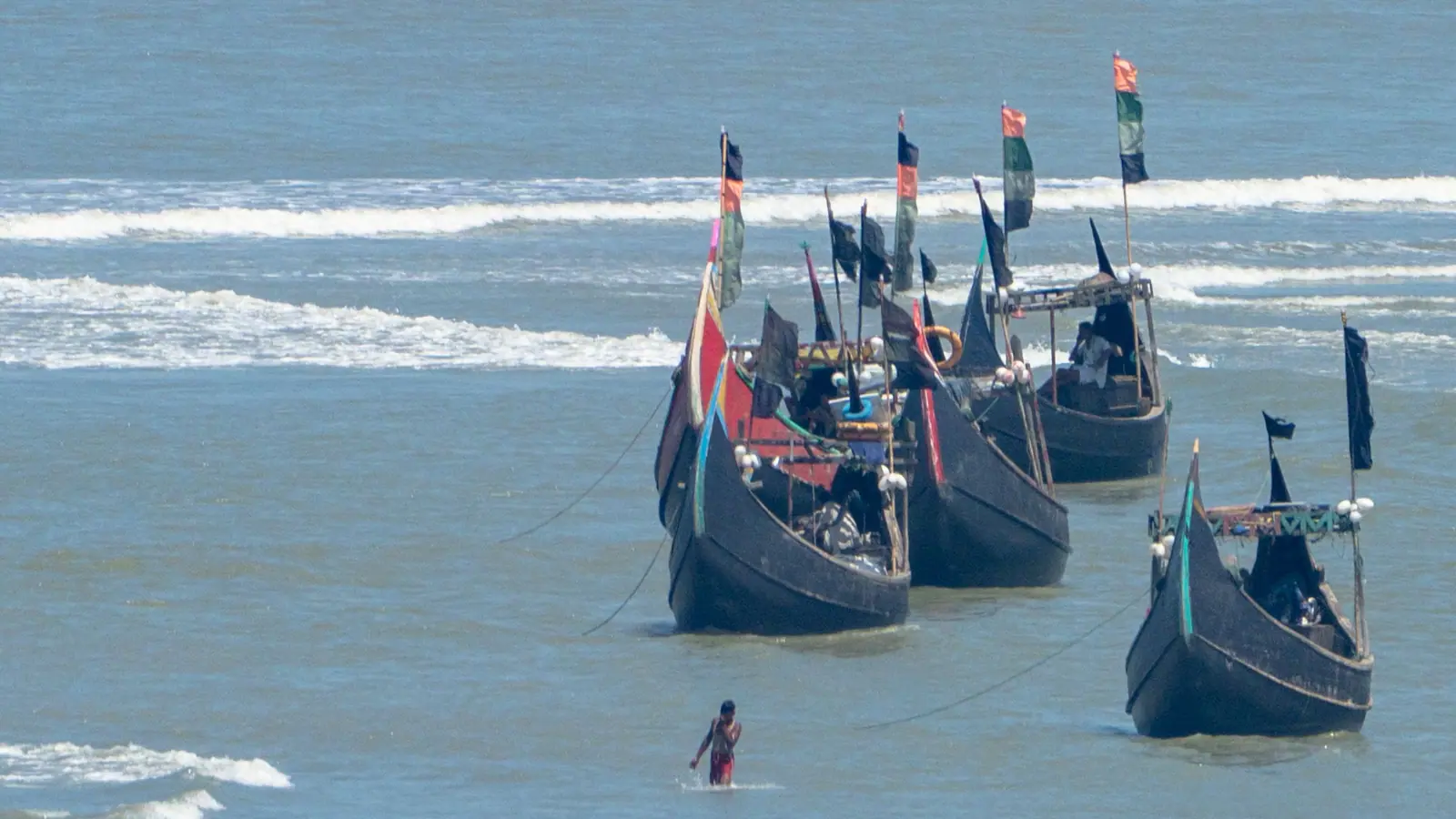
Stop only where the road is wide and the driver agrees. Ask before photographing people, and avoid pointing a camera at women or children without a gesture of permission. If someone asks you to move aside from a boat or a net, do it without argument; these are tools of a living. Buying fresh fish or a coconut from a stall is a better way to say thanks than handing out money.
The villages are also where the sea feels most present. Waves roll in at an angle to the beach, the air is salty, and the mood changes from the resort strip behind you. Take a few minutes at a quiet spot, but do not wander far from the road in unfamiliar places.
Reju Khal and the long bridge
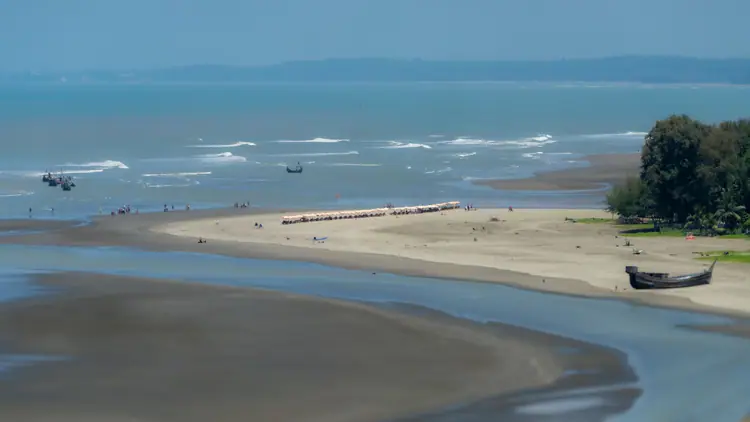
Further on, the road crosses the tidal creek of Reju Khal on a long bridge. The creek meets the sea here, so the water level and colour change with the tide. At high tide the channel fills and fishing boats move out; at low tide the mud and sandbanks show, and wading birds come to feed.
Many drivers stop at the bridge for a short break, and it is a practical place for a quick photograph, a drink and a stretch. The view of the creek, the hills behind and the open sea in front makes a clear picture of the geography of this coast.
Do not swim in the creek. Tidal channels carry strong currents, and the bottom is soft mud. If you want to go down to the sand, check the tide first and keep away from the edge of the channel.
Inani: the rocks at low tide
Inani is the main goal of the outing. The beach here is wide and quieter than the main beach at Cox’s Bazar, and at low tide a shelf of dark, coral-like rock appears across the sand. Pools form in the hollows, small crabs and fish dart between the stones, and the surface is rough and sharp. It is an unusual shoreline for Bangladesh and a favourite for photographs.
Wear shoes with a firm sole, because the rocks are uneven, wet and covered in algae in places. Do not take shells, coral or live animals; this is a natural area, and removing them harms it. Keep an eye on the waves and the tide, since the shelf can be cut off as water returns.
A visit of an hour or two is enough. After that, find shade, drink water and have lunch before the road back. Access, parking and temporary restrictions can change, so ask your driver what is allowed on the day.
| Time of tide | What you see at Inani | Notes |
|---|---|---|
| Low tide | Rock shelf, pools, wide sand | Wear sturdy shoes, watch the return |
| Rising tide | Water fills hollows | Move back before pools join |
| High tide | Waves reach the sand edge | Rocks hidden, sit and watch |
Sea safety and swimming
The sea along this coast has rip currents, and the beaches have steep drops in places. Swim only between the flags where lifeguards are on duty, and do not swim alone. If there are no flags and no lifeguards, stay out of the water above your knees. The waves can look gentle from the shore, but a current can pull you out in seconds.
If you are caught in a rip, do not swim against it. Float, signal for help and swim across the current towards the shore. Children should stay within arm’s reach and wear a life vest in the shallows. Alcohol and swimming do not mix, and the heat of the day makes cramps more likely.
The monsoon months bring heavy surf, strong winds and storm warnings. Do not enter the water when red or black flags are displayed or when a warning is announced. Check the weather forecast at bmd.gov.bd and follow lifeguard instructions without arguing.
Food, sunset and what to bring
The coast has plain, filling food. Fresh seafood is cooked at roadside restaurants and simple stalls near Inani, with rice, dal and fried or curried fish. Ask what has arrived that morning, and choose places where food is cooked in front of you. Drink bottled water, and avoid ice if you are not sure about the source.
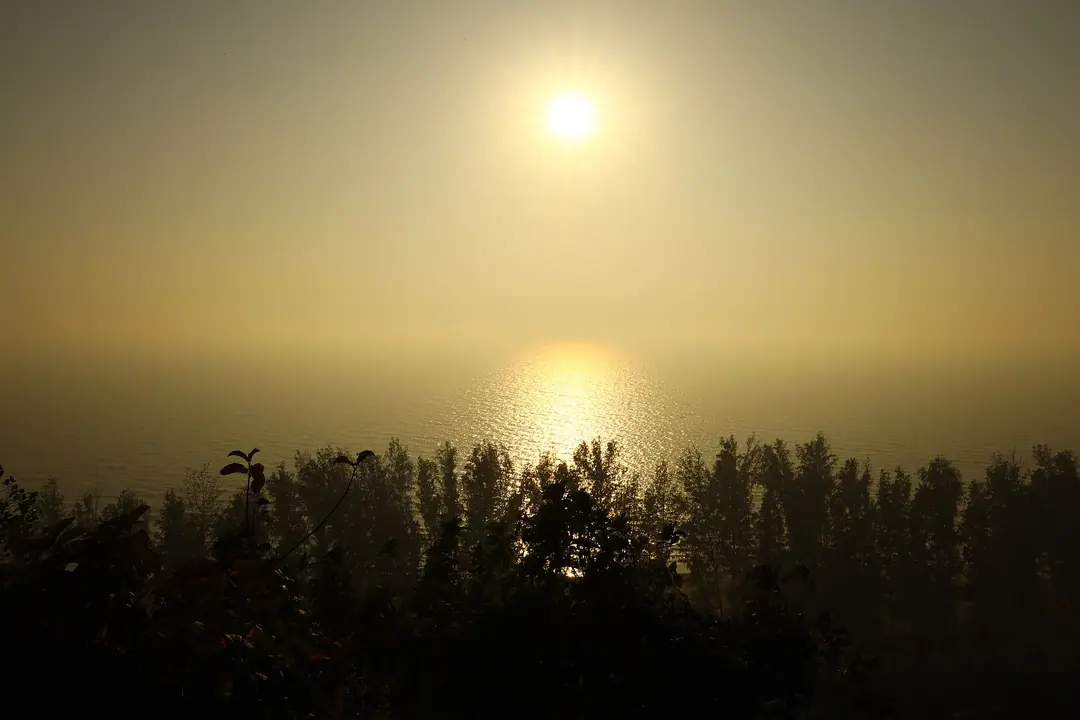
Sunset over the sea is one of the day’s rewards, since the Bay of Bengal lies to the west of this coast. A sensible plan is to eat a late lunch at Inani, return north in the late afternoon, and pause at a viewpoint on the way back to watch the light go. Keep an eye on the clock; the road is not well lit and fishing carts and buses share it.
Bring a hat, sunscreen, water, a light layer for the wind and a bag for wet shoes. For clothing at the beach and on the road, see what to wear in Bangladesh. Carry cash in small notes, since cards are not accepted at stalls and ATMs are scarce beyond the town. Keep your phone and passport in a waterproof pouch.
A timed plan for the day
This plan fits a full day with a hired vehicle. Shorten it by skipping the village stops, or turn it into two half days if the weather is uncertain.
- Early morning
Leave Cox’s Bazar after an early breakfast, with water, a hat and a plan agreed with the driver.
- Morning, Himchari
Climb to the viewpoint, look at the waterfall if it runs, and have tea at the roadside stalls.
- Late morning
Drive on through the fishing villages, stopping where it is safe, and pause at the Reju Khal bridge.
- Midday, Inani
Reach the rock shelf near low tide, walk with care, and eat lunch in the shade.
- Afternoon
Start back before the heat peaks, with a short stop if you want to swim between the flags.
- Late afternoon
Return to Himchari or another viewpoint for the sunset, then drive back to town before dark.
If you are planning a longer stay on this coast, there are hotels in and around Cox’s Bazar. A trip to Saint Martin’s Island is a separate matter with its own rules; the Saint Martin’s and Teknaf guide explains the season, the travel pass and where the ships leave from.
Questions and answers
How long does the Marine Drive to Inani take from Cox’s Bazar?
The drive from Cox’s Bazar to Inani takes about an hour each way on average, longer in traffic or on busy weekends and holidays. With stops at Himchari, the fishing villages, the Reju Khal bridge and Inani’s rocks, most people need half a day, and a full day if they want lunch, a swim and the sunset.
What is the easiest way to travel along the Marine Drive?
A hired car, microbus or CNG auto-rickshaw with a driver gives control over stops and time. Motorbike taxis are popular but the road is fast and drivers vary, so ask for a helmet and do not accept a careless rider. Public buses run on parts of the road, but they do not stop at viewpoints, so they suit one-way trips.
When are the rocks at Inani visible?
The coral-like rock shelf at Inani shows best at low tide, when pools form and the sand is wide. At high tide the waves cover most of it. Check a tide table the evening before and plan to arrive near low tide. Wear sturdy shoes, because the rocks are sharp and slippery, and keep watching the water as the tide returns.
Can you swim along the Marine Drive near Cox’s Bazar?
Swimming is possible only at places where lifeguards are on duty and flags mark a safe zone. The coast has rip currents and steep drops, so do not swim alone or in bad weather. If there are no flags, stay in shallow water and keep children at arm’s length. Never swim in tidal creeks such as Reju Khal.
Is the Himchari waterfall on the Marine Drive worth visiting in the dry season?
In the dry season the Himchari waterfall can shrink to a thin stream or run dry, so it is not the main reason to go. The viewpoint over the sea, the short climb and the roadside tea stalls still make a pleasant first stop. The fall looks its fullest after rain, in the monsoon months.
Can you take the Marine Drive beyond Inani towards Teknaf?
The road continues towards Teknaf, but there are checkpoints, and the FCDO reports violence in and around the Rohingya camps and drug-gang violence and kidnappings in Teknaf. The camps are closed to visitors. Read the UK foreign travel advice and ask your hotel about the current position before going south of Inani.
What should you bring for a day on the Marine Drive?
Bring a hat, sunscreen, bottled water, shoes with a firm sole for the rocks, a light layer for the wind and a waterproof pouch for your phone and passport. Carry small notes in cash, since stalls do not take cards and cash machines are scarce beyond town. Dress modestly, covering shoulders and knees away from the beach.
Where is a good place for sunset on the Marine Drive?
The Bay of Bengal lies to the west, so viewpoints along the road face the setting sun. Himchari is the easiest place to return to late in the day, because it is close to Cox’s Bazar. Leave early enough to drive home in the light, as the road is dark at night and shared with buses and carts.