On this page
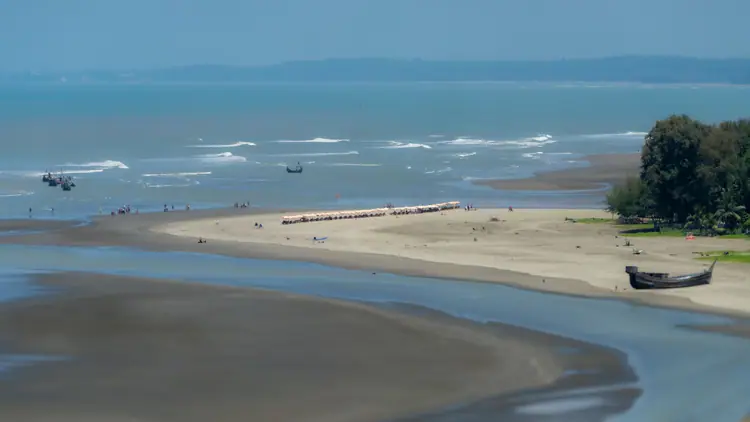
Saint Martin’s Island, known in Bangla as Narikel Jinjira, the coconut island, lies in the Bay of Bengal at the southern end of the Bangladesh coast. It is the country’s only coral island, a small place of sand, coconut palms and rocky ledges that glow at low tide. It belongs to the Teknaf upazila, at the tip of the mainland peninsula beside the Naf River and the border with Myanmar.
The short version
- Check the current season rules before booking anything: dates, visitor caps and overnight permission change every year.
- For 2026-27 the island is open from 1 November to 15 March, with day trips only in November and overnight stays only in December and January.
- Ships leave from the Nuniyachhara jetty in Cox’s Bazar, not from Teknaf, so most visitors sleep in Cox’s Bazar or along the Marine Drive.
- Teknaf, at the southern tip, is covered by official travel advice, so read it before going south of Inani.
The island is now managed tightly because heavy visitor numbers have put pressure on the reef. The authorities set the season, limit the number of visitors, and restrict what people may do. This guide starts with the rules, then covers where to base yourself, how to get there, what the island and Teknaf are like, and when to go.
The rules for the 2026-27 season
Official rules for the 2026-27 season set the island open from 1 November 2026 to 15 March 2027, with up to 3,500 visitors a day. Day trips are allowed only in November, and overnight stays only in December and January. The published rules cover those months, so check what applies from February to 15 March. Rules change every season, so confirm everything with the Ministry of Environment and the Bangladesh Tourism Board before you plan.
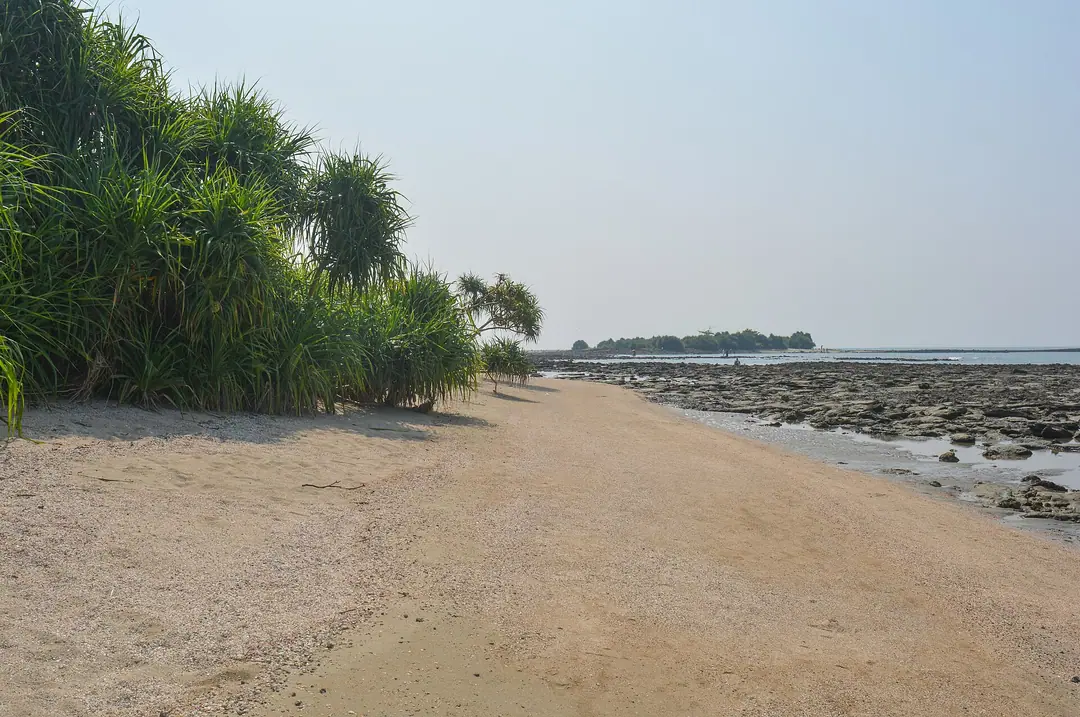
You need a travel pass with a QR code, which you obtain through the Bangladesh Tourism Board portal, and a conservation fee applies, so keep the receipt with your documents. A Marine Protected Area was declared around the island in 2022, and the rules exist to protect the reef, the turtles and the beach. The restrictions are not optional, and enforcement is strict.
- No lights on the beach at night: they confuse turtles and disturb the reef.
- No loud music or noise, and no barbecues on the sand.
- No motor vehicles on the beach.
- No taking coral, shells, sea turtles or keya fruit from the island, living or dead.
Where to base yourself
Because the ships leave from Cox’s Bazar, and because overnight stays on the island are limited to two months, most visitors sleep on the mainland and go to the island for a day, or stay one night in the winter. Teknaf is nearer the island, but ships do not leave from there this season, and the road south is covered by official advice.
| Base | Feel | Suits | Watch for |
|---|---|---|---|
| Cox’s Bazar, around Kolatoli and Laboni | Seaside town with the most hotels | The ship, an early start, evenings in town | Weekend crowds |
| Marine Drive resorts, towards Inani | Quieter coastal road, hills on one side | A calmer pair of nights | Longer transfer to the jetty |
| Teknaf town | Border town on the Naf River | Few visitors; check official advice first | Limited services, advisories |
| Saint Martin’s Island | Small guesthouses and shacks | One night in the open months | Limited power, rough weather |
For most, the sensible plan is two or three nights in Cox’s Bazar, with one early morning on the ship. The Cox’s Bazar guide covers the town’s areas, and the Marine Drive page covers the coast road south of it.
The seafront hotel zone in Cox’s Bazar runs along Kolatoli Road between Laboni Point and Kolatoli, where the Marine Drive begins at the Dolphin Circle. Himchari is about 9 km from the town in a straight line and Inani about 22 km, so resorts on that road add a transfer to the jetty. Whichever you choose, settle your pass and your ship booking first, then fit the hotel around the departure time rather than the other way round.
Getting to the island
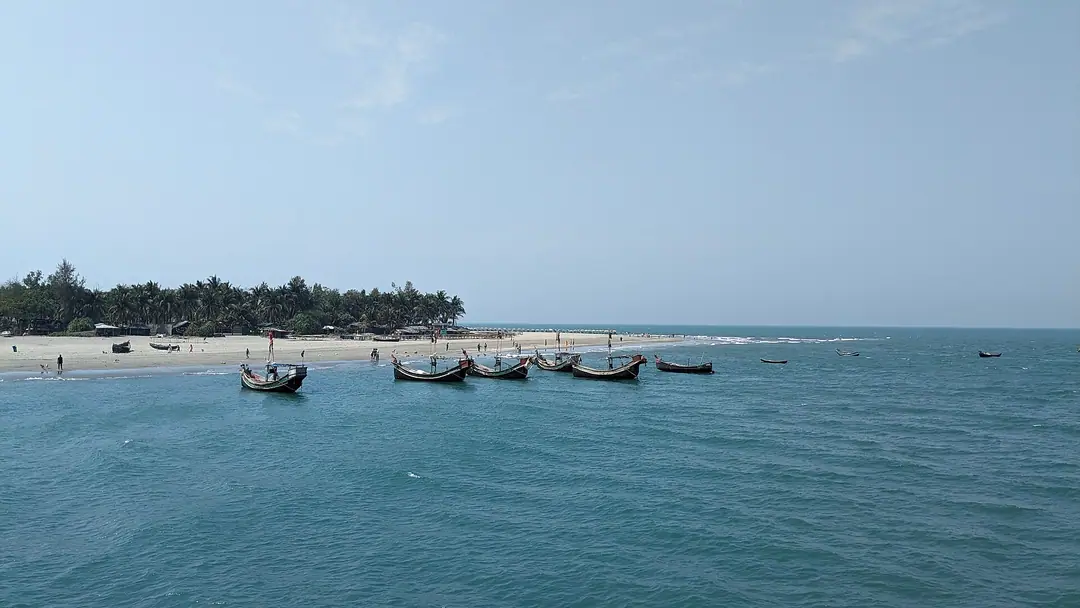
In the 2026-27 season, ships to Saint Martin’s leave from the BIWTA jetty at Nuniyachhara in Cox’s Bazar, not from Teknaf. Straight-line, the island is about 26 km from Teknaf, and Teknaf is about 70 km south of Cox’s Bazar, so the crossing from Nuniyachhara is a long stretch of open sea. Ask the operator for the current sailing time, plan a very early start, and expect a long day.
Book through an operator that holds your travel pass, carry your passport, and arrive at the jetty before the stated time. Sea crossings stop in rough weather, and cyclone warnings can cancel sailings at short notice, so keep your hotel night flexible. For the shared inland water transport rules, see the BIWTA site. Never board an overcrowded vessel, and wear a life jacket if one is offered.
A day trip or a night
A day trip in November gives you a few hours on the island: a walk along the beach, a swim where it is allowed, lunch, and the ship home before the light fades. It is tiring, since the crossing takes a large part of the day, and it can feel rushed. If your dates fall in December or January, a night on the island is the better trade, because the evening and the early morning are the quiet hours.
An overnight stay means simple lodging, limited electricity, and a dark beach where lights are not allowed. Food is simple, with fish and rice the staples. Bring cash, since ATMs are not reliable, charge your phone and a power bank in advance, and take a torch for the path, shielded so that it does not shine on the sand.
On the island
The island is small, about eight square kilometres by the figure often given, and is walked in a morning. It has three named parts from north to south: Uttar Para, around the north jetty, with the bazaar and most shops; Golachipa, in the middle; and Dakshin Para in the south. Past Dakshin Para lies Chhera Dwip, a tip of sand and rock that is joined to the main island at low tide and reached on foot.
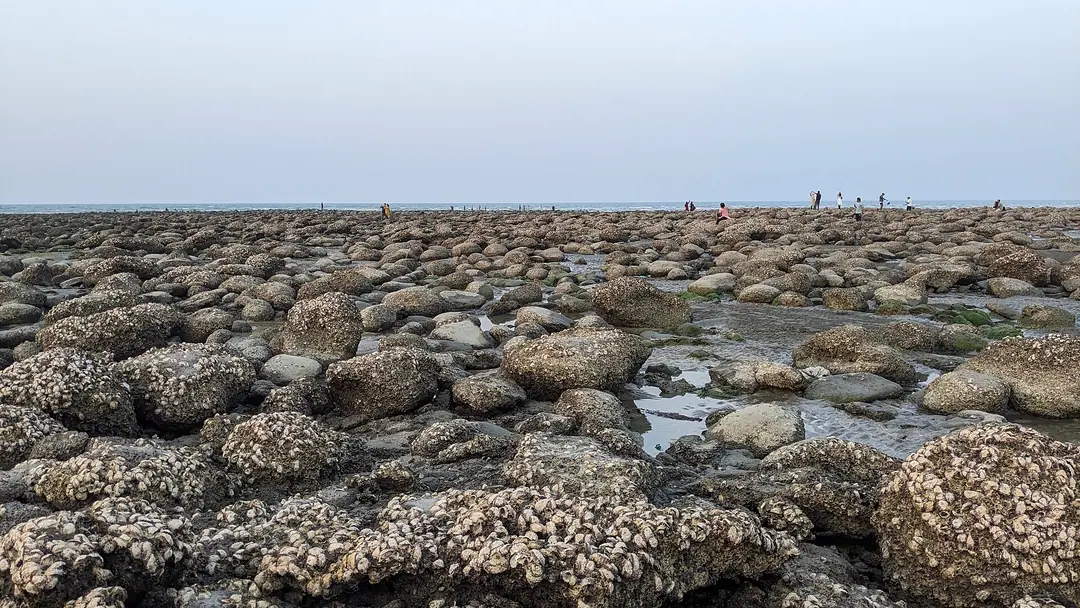
Chhera Dwip has its own restrictions, and access can be closed, so ask locally before you walk out and watch the tide, which can cut you off. The rocks at low tide are alive with coral and small creatures. Walk only where others walk, leave everything where it lies, and keep your feet off the living reef.
The reef, the beach and the islanders
The island is home to a community of fishers and farmers who live on the same sand you come to visit. Dress modestly in the villages, ask before photographing people, and buy from local shops rather than expecting a resort. Rubbish does not leave the island on its own: carry your wrappers and bottles back to the mainland, and bring a refillable bottle instead of buying plastic.
At the water’s edge, treat the reef as a living thing. Do not stand on or touch coral, do not pick up shells or starfish, and keep your hands off turtles and any nesting sites. If you swim or snorkel, stay in water deep enough to keep your feet clear of the reef, and use sun protection that you apply well before you go in. Early morning and late afternoon are the calmer hours on any beach here.
Pack light for the crossing: a small bag, a hat, sunscreen, water, a tablet for seasickness if you are prone to it, a copy of your pass, and cash. Large cases are hard to carry on a jetty and a sandy path, and the ship can be crowded. Wear shoes with grip for wet landings, and keep your phone in a waterproof pouch.
Teknaf
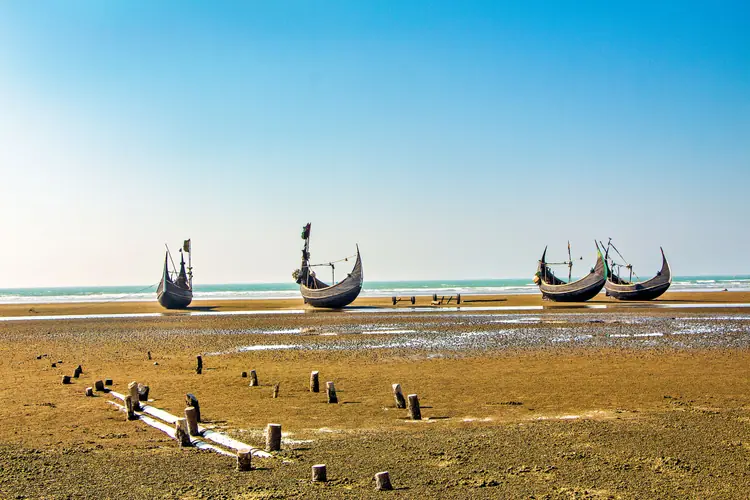
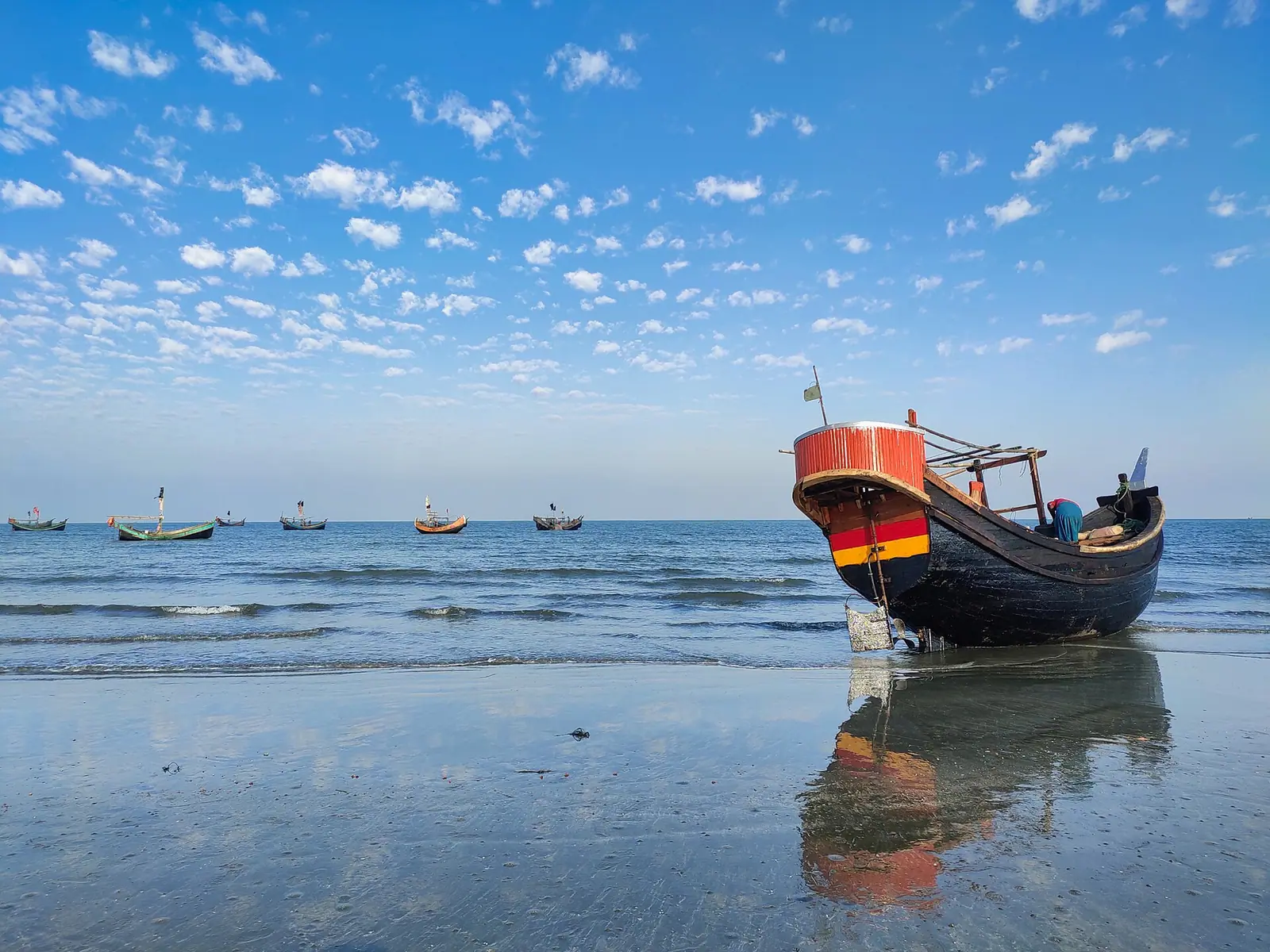
Teknaf is a long peninsula at the southern end of Bangladesh, with the Naf River on one side marking the border with Myanmar and the sea on the other. Hills run down its spine, with a wildlife sanctuary in the forest. Fishing boats pull up on the beach in the evening, and the town is a working border town rather than a resort.
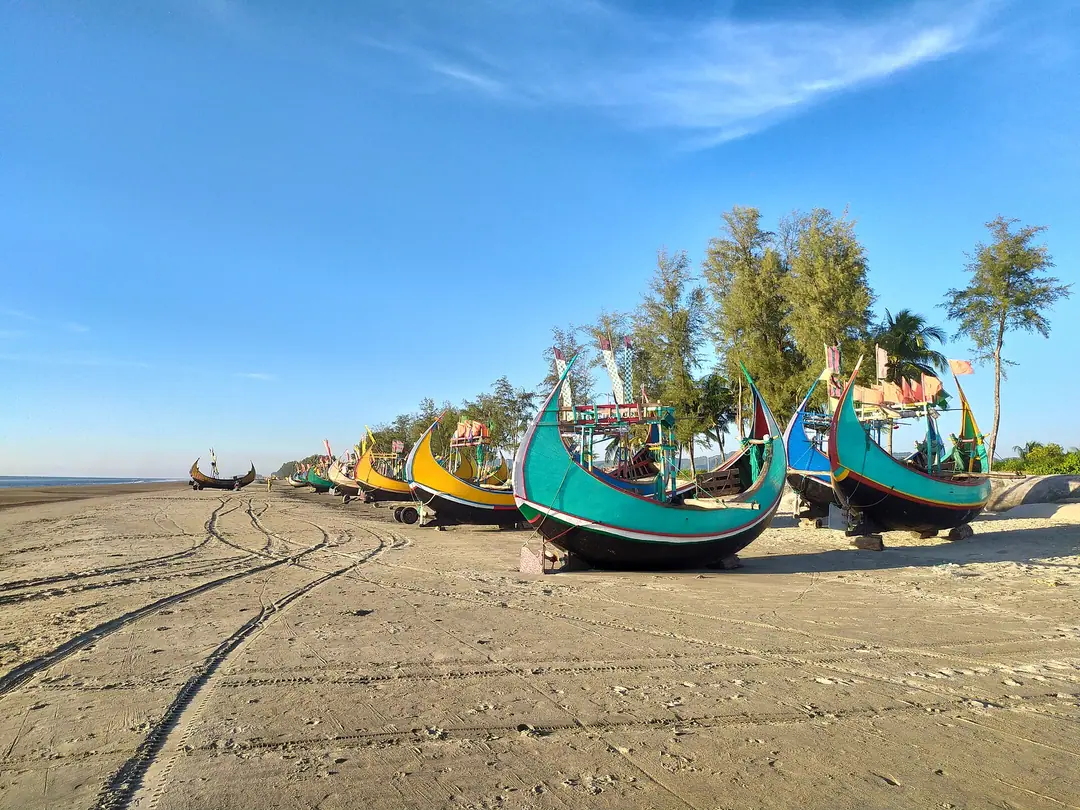
Most visitors do not stay in Teknaf. Do not photograph checkpoints, and carry your passport. If you do pass through on the way to a boat, travel by day, keep to the main road, and do not wander.
When to go
The open season runs from 1 November to 15 March, which is also the dry, cool time of year in Bangladesh and the calmest for the Bay of Bengal. December and January are the busiest weeks, with the clearest water. Cyclone risk in the Bay of Bengal is higher in October and November, so watch the forecast, read the guide to when to visit, and expect a cancellation if a storm builds.
Outside the season the island is closed to visitors. Do not look for ways round the rules: boats that run out of season carry risks and breach the protection that keeps the reef alive. For general safety advice in the country, read the safety guide.
Sample plans
- Day trip in November
Be at the Nuniyachhara jetty before dawn with your pass and passport. Cross, walk the north bazaar and the beach, take lunch, watch the tide at the south end, and sail back in the afternoon.
- A night in December or January
Take the morning ship, settle in, and walk to the south at low tide. Spend the evening without lights on the shore, and return on the next day’s ship.
- A mainland alternative
If the island is closed or full, spend a day on the Marine Drive to Himchari and Inani, and go no further south without reading the official advice.
Hotels to consider
Questions and answers
What are the Saint Martin’s Island dates for 2026-27?
Official rules set the island open from 1 November 2026 to 15 March 2027, with up to 3,500 visitors a day, day trips only in November and overnight stays only in December and January. Rules change every season, so check the Ministry of Environment and the Bangladesh Tourism Board before booking.
Where do ships to Saint Martin’s Island leave from?
In the 2026-27 season, from the BIWTA jetty at Nuniyachhara in Cox’s Bazar, not from Teknaf. That is why most visitors sleep in Cox’s Bazar or along the Marine Drive. Check the departure point and the time with your operator, since arrangements can change.
Do I need a travel pass for Saint Martin’s Island?
Yes. The 2026-27 rules require a travel pass with a QR code, obtained through the Bangladesh Tourism Board portal, and a conservation fee applies. Have the pass and your passport ready at the jetty. Do not rely on buying a place on the day, since the daily cap is enforced.
Can I stay overnight on Saint Martin’s Island?
Only in the months the rules allow: for 2026-27, overnight stays are permitted in December and January, and day trips only in November. The published rules cover those months, so check what applies from February to 15 March. Accommodation is simple, and electricity is limited.
What is not allowed on Saint Martin’s Island?
No lights on the beach at night, no loud noise, no barbecues, and no motor vehicles on the beach. You must not take coral, shells, sea turtles or keya fruit. These rules protect the reef, the turtles and the nesting beach, and they are enforced, so follow them strictly.
Is Teknaf safe to visit?
Official advice should decide that. The UK FCDO reports violence in and around the Rohingya camps and drug-gang violence and kidnappings in Teknaf. The camps are closed to visitors, and there are checkpoints on the southern Marine Drive. Read the advice before going south of Inani, and use a licensed operator.
Are there ATMs or reliable power on Saint Martin’s Island?
Do not count on either. Power on the island is limited, and ATMs are few or not reliable, so bring enough cash from the mainland and charge your devices before you go. Take a torch for the paths, and shield it from the beach and the sea.
What is Chhera Dwip on Saint Martin’s Island?
It is a small tip of sand and rock at the southern end, joined to the main island at low tide and reached on foot. It has its own restrictions, and access can be closed, so ask locally before walking out. Watch the tide, and keep your feet off the coral.