On this page
On a map, Gulshan and Banani look like one neighbourhood. On the ground they are a set of blocks divided by water, avenues and checkpoints, and each block has a different noise level, a different mix of shops and a different walk to dinner. Both belong to Gulshan thana, which also takes in Baridhara, Niketan, Mohakhali and a few smaller localities, so the name on a booking can mean a street that is a long way from the one you have in mind.
The short version
- Gulshan and Banani are two halves of one lakeside district, and the choice between them is smaller than the choice between a main avenue and a side road.
- Gulshan 2 and Banani Road 11 have the most restaurants; Baridhara and the quiet blocks have the least noise.
- The metro does not reach either area, so plan on cars, CNG auto-rickshaws and ride-hailing for every trip south.
- One long day at a time works best: finish the sightseeing before the afternoon traffic builds, then come back to rest.
This guide is about choosing a block, not about choosing a city. The page on where to stay in Dhaka compares the whole capital; here the question is narrower: once you have decided on north Dhaka, which corner of it suits your days, how far each corner sits from the airport and the old city, and what you can do without getting into a car at all.
Two lakes, several neighbourhoods
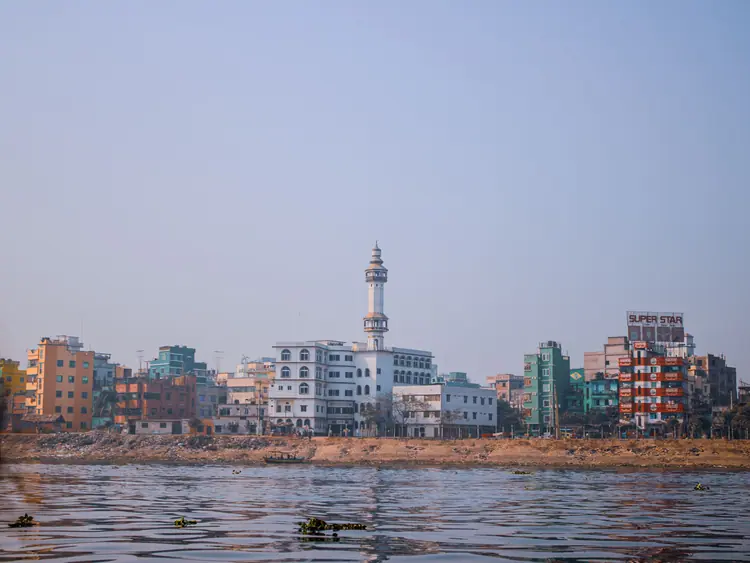
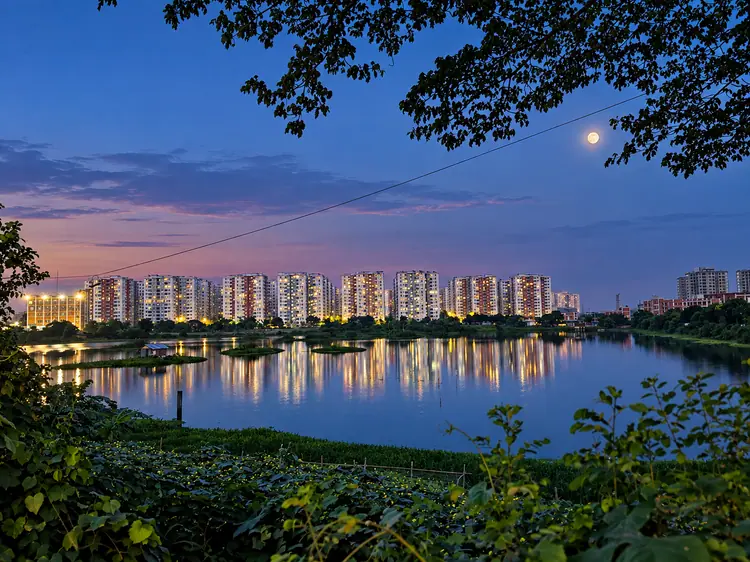
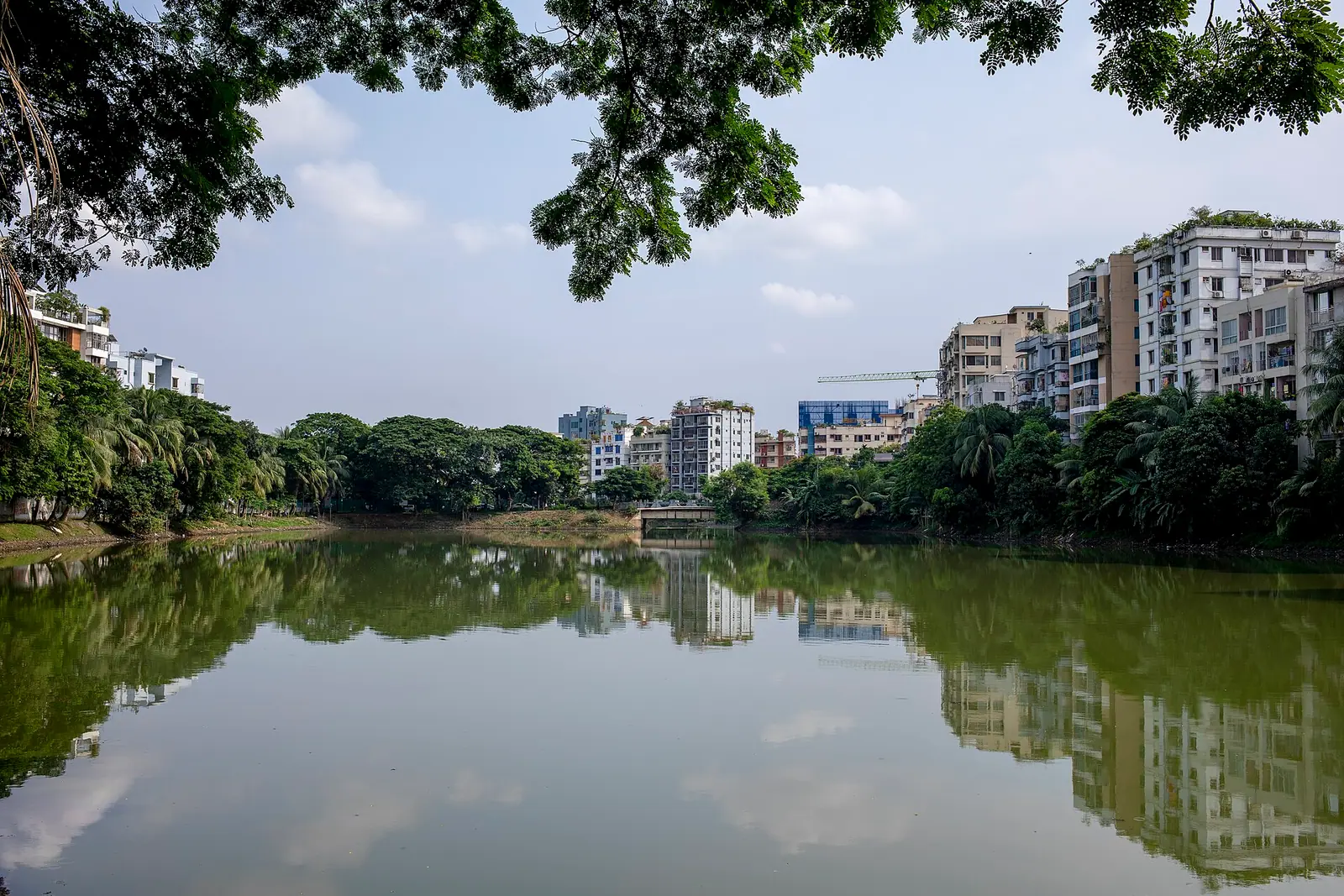
Gulshan Lake and Banani Lake run through the district and cut it into pieces. Gulshan sits on the east and south-east side, Banani on the west, and Baridhara curls round the north-east end of the water. A few bridges and causeways link the pieces, and those crossings are where traffic knots first. A hotel that looks ten minutes from a restaurant on the map can sit on the wrong side of a lake, which turns a short walk into a car ride.
| Block | Character | Suits | Watch for |
|---|---|---|---|
| Gulshan 1 | Banks, shops and offices around a busy circle | Short business stays, errands | Noise and horns at the circle |
| Gulshan 2 | Restaurants, serviced apartments and larger hotels | First visits, families, dining out | Heavy traffic on the avenue |
| Banani | Dense grid of cafes and boutiques along Road 11 | Evenings out, longer stays | Crowded lanes at weekends |
| Baridhara | Embassies and large houses on wide, quiet roads | Peace and a car with a driver | Checkpoints, few places to walk to |
| Niketan and Mohakhali | Residential edge with an intercity bus terminal at Mohakhali | Early coaches, budget-minded stays | Less polish, longer walks |
Distances between blocks are short on paper and unpredictable on the road. Treat the table as a guide to character rather than to journey time, and book on the side of the lake where you expect to spend most of your evenings.
Gulshan 1 and Gulshan 2
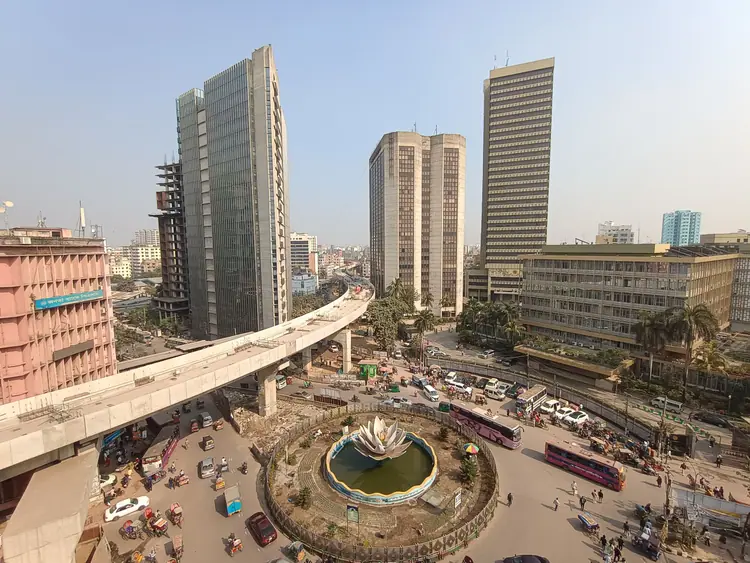
Gulshan 1 and Gulshan 2 each grew around a roundabout, and the two circles sit a short drive apart on the same main avenue. Gulshan 1 is the older commercial end: banks, clinics, small supermarkets, stationery and mobile shops, and offices above them. It works well if your business is practical, for example money changing, a SIM registration or a visit to an office, because everything is within one short stretch.
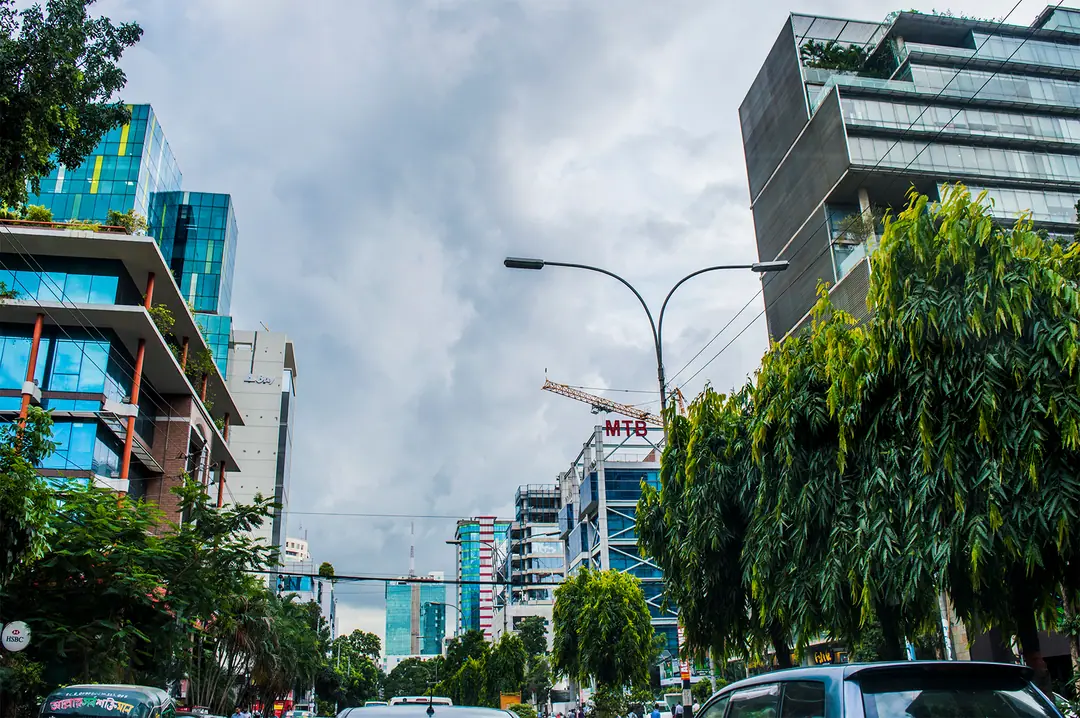
Gulshan 2 is the more lived-in half. The roads behind the circle are lined with restaurants, serviced apartments and guesthouses, and the larger hotels sit on or just off the avenue. Many embassies and international organisations are in this part of the district, so security guards at gates are normal and some roads have barriers. You will see more expatriate residents here than anywhere else in the country, and menus and shop signs follow them.
For a first visit, Gulshan 2 is the easiest block to explain to a driver and to walk around on foot after dark. The pavements are better than in most of Dhaka, though they are interrupted by parked cars, so expect to step into the road now and then. Gulshan 1 suits you better if your days are full of appointments and you want the evening to be quiet.
Banani, from Road 11 to the lake
Banani is organised around two long streets: Kemal Ataturk Avenue, which carries the traffic, and Road 11, which carries the evening crowd. Restaurants, coffee shops, clothing boutiques and small galleries line Road 11, and the side roads behind it are numbered blocks of apartments and guesthouses. After the offices close, the street fills with families and groups of students, and the noise stays up late.
The lake edge is calmer. Banani Lake has a walkway in places and a few quiet roads on the far side where mid-range hotels and serviced apartments cluster. A room here costs you the convenience of Road 11 but gives you a morning walk before the heat and the horns begin. Check the map: some hotels advertise a lake view from a block that is still a fair walk from the water.
Banani suits travellers who like to eat out and walk between meals, and those staying a week or more who want a kitchen and a laundry service. It is slightly closer to the airport than most of Gulshan, which helps with early departures. The main drawback is that Road 11 feels crowded on Friday and Saturday evenings, when the weekend arrives and half of north Dhaka goes out to eat.
Baridhara and the diplomatic streets
Baridhara lies at the north-east end of the lake and holds the main diplomatic enclave. Roads are wide and tree-lined, houses sit behind walls, and police posts and barriers appear at junctions. It is the quietest part of the district and has few shops, so most people who stay here arrive by car and leave by car. A few hotels and serviced apartments suit visitors on official business or with a driver at their disposal.
Rules in this part of town are stricter than elsewhere. Expect to show a passport or a booking at some checkpoints, and do not photograph embassy buildings, guard posts or the officers on duty. Some streets are closed to through traffic during events or visits, so a route that worked yesterday may be blocked today. Your hotel will know the current position; ask before you set out on foot.
Getting in and out of the district
Gulshan and Banani have no metro station. MRT Line 6 runs on the western side of the city, through Pallabi, Mirpur, Agargaon, Farmgate and Karwan Bazar, so you reach it by a short car, CNG or ride-hailing trip, which then saves you the worst of the road south. For a journey to Motijheel or Shahbagh, this combination is often faster than staying on the road all the way.
The airport is north of Gulshan and Banani, roughly five to eight kilometres away in a straight line, depending on the block. Banani is the nearer end. In clear traffic the transfer is short; in the evening it can take well over an hour. The guide to getting from the airport to the city describes the options at arrival, and a pre-booked car is the calmest choice after a long flight.
For Old Dhaka, the National Museum or the Parliament complex, count on a long journey whichever way you go. The elevated expressway from near the airport towards Farmgate has been open since September 2023 and cuts time for some trips, but its entry points and tolls change, so ask the driver which route is working that day. Leave early in the morning, return before the evening rush and treat the afternoon as rest time.
What to do without crossing the city
The district rewards a slow day. A morning walk beside either lake is the simplest start: joggers, school groups and older residents use the paths before the heat builds. Both lakes have gaps in their walkways, so follow the water for as long as the path lasts and then cut inland rather than trying to circle them.
Galleries and craft shops give a second layer. Several small art spaces in Gulshan and Banani show contemporary Bangladeshi painting, photography and textiles, and craft boutiques sell jamdani, nakshi kantha and block-printed cloth. Opening hours are irregular and most spaces close on one weekday, so check by phone or with your hotel before making a special trip. The note on Bangladesh crafts to look for explains what to ask for and how to tell a handwoven piece from a machine copy.
The area also works as a rest stop in a long itinerary. After a week of trains and launches, a few days here give you a reliable power supply, laundry, a doctor if you need one and a choice of food from many countries. That is its real strength: it takes pressure off the rest of the journey.
Evenings, food and weekends
Gulshan 2 and Banani hold the largest concentration of restaurants in Bangladesh. You can find Bangladeshi regional cooking, Chinese, Thai, Japanese, Indian, Italian and Middle Eastern kitchens within a short ride of each other, as well as hotel buffets and rooftop terraces. Most places take card payments; smaller cafes and food stalls prefer cash. Ask your hotel to book a table on Friday or Saturday night, when waits can be long.
Alcohol is served only in licensed hotels and bars, not in ordinary restaurants, and some venues ask to see a passport. Dress is relaxed compared with the rest of the country, but shoulders and knees are still the sensible standard in public. The Bangladeshi food guide lists dishes to try, and Gulshan is a good place to start with the gentler ones before you head out to the old city.
Noise is the main complaint of guests. Horns, generators, construction and, on some evenings, loudspeakers from events or weddings can reach rooms near the main roads. Ask for a room at the back of the building and carry earplugs; the difference between a street room and a back room is large.
How long to stay, and a first day
Two or three nights are enough for most trips. A single night suits a transit stop before an early flight, while a week makes sense for a longer assignment, a family visit or a base for several day trips. Because the district is calm and the shops are close, it is also a sensible place to recover from jet lag before any harder travel.
- Early morning
Walk beside the lake before the traffic starts, then take breakfast at a cafe on Road 11 or in your hotel.
- Mid-morning
Take a car south while the road is still open. Aim for one destination only, such as the Liberation War Museum or the Parliament complex.
- Early afternoon
Return to the district before the evening rush builds and rest during the hottest hours.
- Late afternoon
Visit a gallery, a craft boutique or the shops around the Gulshan circle before they close.
- Evening
Book a table on Road 11 or in Gulshan 2 and walk back, or take a short ride if the pavements are blocked.
When north Dhaka is the wrong choice, the alternatives are clear. Travellers who want the old city on their doorstep should read the notes on basing yourself for Old Dhaka. Those with a very early flight can compare the airport side in Uttara and the airport, and travellers who prefer a lived-in district with a lake, cafes and a student crowd can look at Dhanmondi, covered in its own guide.
Hotels to consider
Questions and answers
Is Gulshan or Banani closer to the airport?
Banani is nearer, and most of its blocks lie about five to six kilometres from the terminal in a straight line, while Gulshan 1 and Niketan are closer to eight. The real difference is the road, not the map: both can take a long time at rush hour, so leave generous time for a flight.
Are there metro stations in Gulshan or Banani?
No. MRT Line 6 runs through Pallabi, Mirpur, Agargaon, Farmgate and Karwan Bazar, west and south of both areas. To use it from Gulshan or Banani, take a car, CNG or ride-hailing trip to the nearest station, then ride on from there if your destination is on the line.
Can I walk around Gulshan and Banani after dark?
Many visitors walk Road 11 in Banani and the streets behind the Gulshan 2 circle in the evening, because these are lit and busy with people. Pavements are uneven and broken by parked cars. Avoid quiet side roads late at night, and ask your hotel which streets are comfortable.
What is the difference between Gulshan 1 and Gulshan 2?
Gulshan 1 is the older commercial end with banks, clinics and offices around its circle. Gulshan 2 has more restaurants, serviced apartments and larger hotels, and more embassies. Choose Gulshan 1 for errands and appointments, and Gulshan 2 for evenings out and first visits.
Is Baridhara in Gulshan a good place to stay as a visitor?
It suits visitors who value quiet and travel by car. The roads are wide and calm, but there are few shops or restaurants within walking distance, and checkpoints are common near embassies. Most travellers on holiday find Gulshan 2 or Banani more convenient for food and walks.
How noisy are Gulshan and Banani at night?
Noise is a regular complaint, mainly from horns, generators, construction and weekend events near main roads such as Road 11 and Gulshan Avenue. Rooms at the back of a building or on higher floors help. The quiet blocks of Baridhara are far calmer, though they are further from restaurants.
Can I withdraw cash and pay by card in Gulshan?
Banks and cash machines are easy to find, above all around the Gulshan 1 and Gulshan 2 circles and along Road 11 in Banani. Hotels, larger restaurants and supermarkets take cards. Carry some taka for rickshaws, small cafes and street food, where cards are rarely accepted.
Is Banani suitable for a long stay of a week or more?
Yes. Banani has serviced apartments with kitchens, laundry services, supermarkets and many restaurants within a short walk. It is also slightly closer to the airport than Gulshan. The weekend crowds on Road 11 are the main drawback, so choose a block set back from the street.